

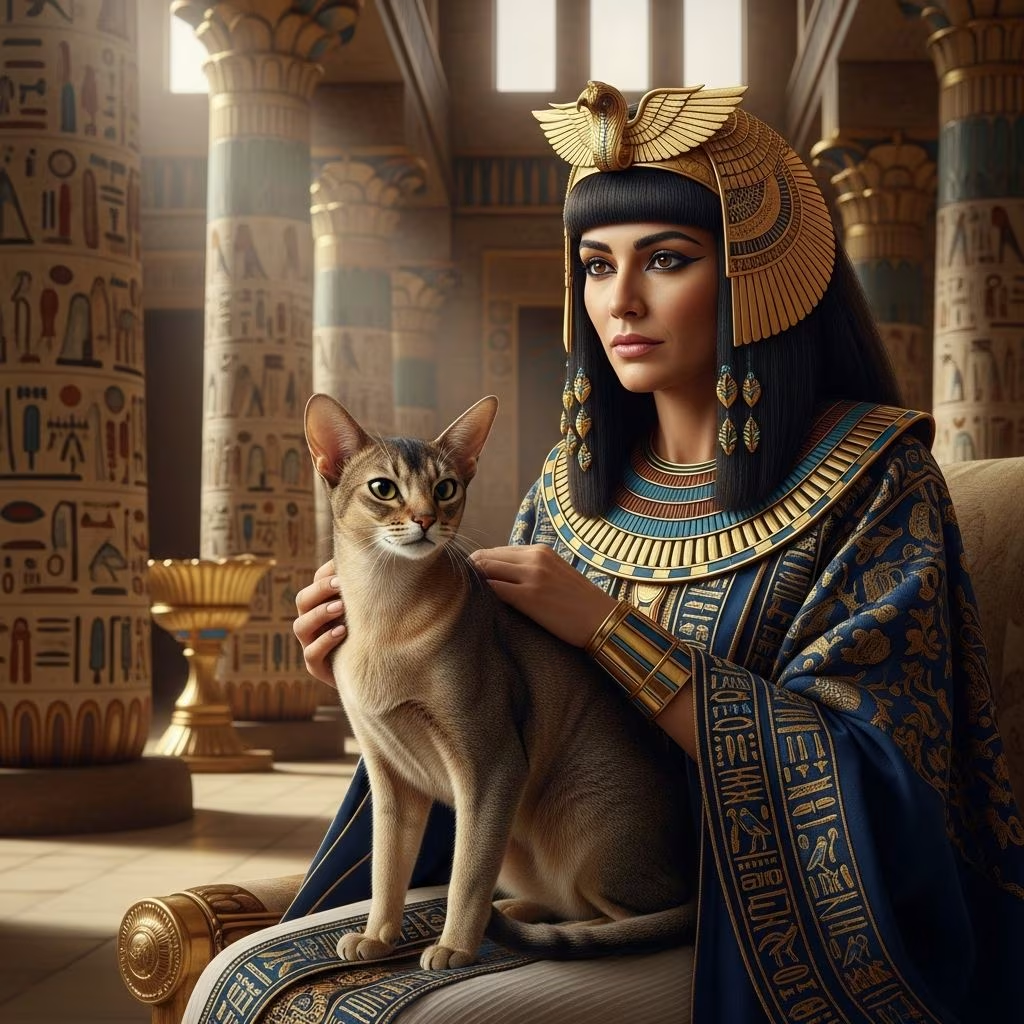
Ancient Egypt’s fascination with cats is legendary, evolving from practical pest controllers to divine symbols of protection and fertility. While tales often link Cleopatra VII, the iconic Ptolemaic queen, to these creatures, direct evidence remains elusive. This article examines the historical context of cats in Egypt during Cleopatra’s time (69–30 BCE), their cultural and religious roles, and assesses the likelihood of her personal affinity for felines.
The Dawn of Feline Companionship in the Nile Valley
Cats entered Egyptian society around 4000 BCE, initially as wild predators drawn to human settlements by abundant rodents in granaries. Archaeological evidence places cats in the predynastic period, nearly 5,000 years ago, where their rodent-hunting prowess safeguarded agriculture—a cornerstone of Egyptian economy.
By 2000 BCE, closer human-cat interactions emerged. Tomb paintings from the New Kingdom depict cats under chairs at banquets or hunting alongside humans, signaling domestication. These felines, likely African wildcats, earned their place through utility: protecting grain stores and slaying venomous snakes that threatened homes.
- Rodent control: Essential for preserving food supplies in farming communities.
- Snake protection: Reduced poisoning risks in rural and domestic settings.
- Symbolic companionship: Often shown with women, embodying fertility and household guardianship.
From Utility to Divinity: Cats in Egyptian Mythology
Egyptians gradually elevated cats to sacred status, associating their grace, nocturnal prowess, and sun-basking habits with deities. Early lioness goddesses like Mafdet, linked to justice and execution, paved the way for domestic cat reverence.
The paramount feline deity was Bastet, originally a fierce lioness daughter of Ra, who morphed into a domestic cat figure by the Late Period. Bastet embodied protection, fertility, music, and joy, her cult peaking at Bubastis with massive temples attracting hundreds of thousands of pilgrims annually.
| Deity | Attributes | Era of Prominence |
|---|---|---|
| Mafdet | Justice, snake-slaying | Old Kingdom (c. 2686–2181 BCE) |
| Sekhmet | War, healing, pharaonic protection | New Kingdom |
| Bastet | Fertility, protection, joy | Late Period to Ptolemaic |
Herodotus, in the 5th century BCE, described Bubastis festivals as Egypt’s grandest, with revelry and offerings underscoring cats’ elevated role.
Mass Mummification: A Testament to Devotion
By 1000 BCE, cat cemeteries proliferated, housing tens of thousands of mummified felines. These were not just pets but votive offerings to Bastet, elaborately wrapped and buried at sacred sites.
Temples bred cats industrially for sacrifice; pilgrims purchased mummified kittens to dedicate, fueling a vast economy. While revered, this practice reveals a complex dynamic: cats as disposable intermediaries to the divine rather than pampered pets.
- Prince Thutmose’s sarcophagus (c. 1350 BCE): Earliest known elite cat burial.
- Bubastis excavations: Millions of cat remains, necks often broken for ritual.
- Ptolemaic surge: Temples self-funded via cat mummy sales.
Cats in Ptolemaic Egypt: Cleopatra’s Era
Cleopatra ruled during the Ptolemaic dynasty (305–30 BCE), a Hellenistic period blending Greek and Egyptian traditions. Bastet’s cult thrived, associating with Isis, ensuring cat veneration persisted.
Despite this, no contemporary records name Cleopatra’s pets. Ptolemaic art favors dogs and horses, possibly reflecting Greek influences where cats held less prominence. Legends, like Cambyses II’s Battle of Pelusium (525 BCE) using cats to demoralize Egyptians, highlight strategic feline symbolism—but predate Cleopatra by centuries.
Her image as a cat lover stems from modern romanticism, conflating her with pharaonic traditions. Portraits show regal poise akin to Bastet’s grace, but evidence for ownership is circumstantial at best.
Everyday Life with Cats: Beyond the Elite
Cats permeated all social strata. Murals portray them dining on fish or meat at feasts, hunting birds, or lounging domestically. Amulets and statues warded homes, embodying Bastet’s protection.
Even commoners traveled distances to bury deceased cats properly, with killing one punishable severely—per Roman accounts. This reverence coexisted with ritual sacrifice, illustrating nuanced affection.
Decline of Cat Worship and Lasting Legacy
Roman conquest (30 BCE) gradually eroded temple economies, diminishing mass mummification. Christianity later suppressed animal cults, yet cats’ mystique endured in folklore.
Today, Egypt’s cat legacy influences global pet culture. Modern Cairo streets teem with strays, echoing ancient bonds.
Did Cleopatra Keep Cats? Weighing the Evidence
Direct proof is absent: no tomb artifacts, inscriptions, or Greek/Roman texts mention Cleopatra’s cats. Her court emphasized serpents (uraeus) for royalty, not felines.
However, as Isis-Bastet incarnate in propaganda, she likely patronized cat temples for legitimacy. Personal pets? Plausible given ubiquity, but unverified—more myth than history.
FAQs
Why were cats sacred in ancient Egypt?
Cats symbolized protection and fertility, linked to Bastet; their pest control and snake-killing sealed divine status.
Were all mummified cats pets?
No, most were bred for votive offerings, not beloved companions.
Did Cleopatra worship Bastet?
As Ptolemaic ruler, she aligned with Egyptian gods like Isis-Bastet for political gain, though personally Hellenized.
How did cats enter Egyptian homes?
Via agriculture-induced rodent plagues around 4000 BCE, fostering mutual benefit.
Is cat worship still practiced?
No, but cultural reverence lingers in modern Egypt.
References
- Why Ancient Egyptians Loved Cats So Much — JSTOR Daily. 2023-06-12. https://daily.jstor.org/why-ancient-egyptians-loved-cats-so-much/
- Did the ancient Egyptians really love cats? The dark truth — History Extra. 2023-05-15. https://www.historyextra.com/period/ancient-egypt/did-they-really-worship-love-cats-dark-truth/
- Cats in ancient Egypt — Wikipedia (citing primary sources). 2024-01-10. https://en.wikipedia.org/wiki/Cats_in_ancient_Egypt
- Why did Ancient Egyptians Love Cats? — UCL Blogs. 2018-04-17. https://blogs.ucl.ac.uk/researchers-in-museums/2018/04/17/why-did-ancient-egyptians-love-cats/
- Cats: The Archeological Site! — Carnegie Museum of Natural History. 2022-08-05. https://carnegiemnh.org/cats-the-archeological-site/



