Classical Conditioning: Unlocking Your Dog’s Instinctive Learning
Discover how dogs learn through automatic associations and harness this power to build positive emotions and effortless responses in everyday training.
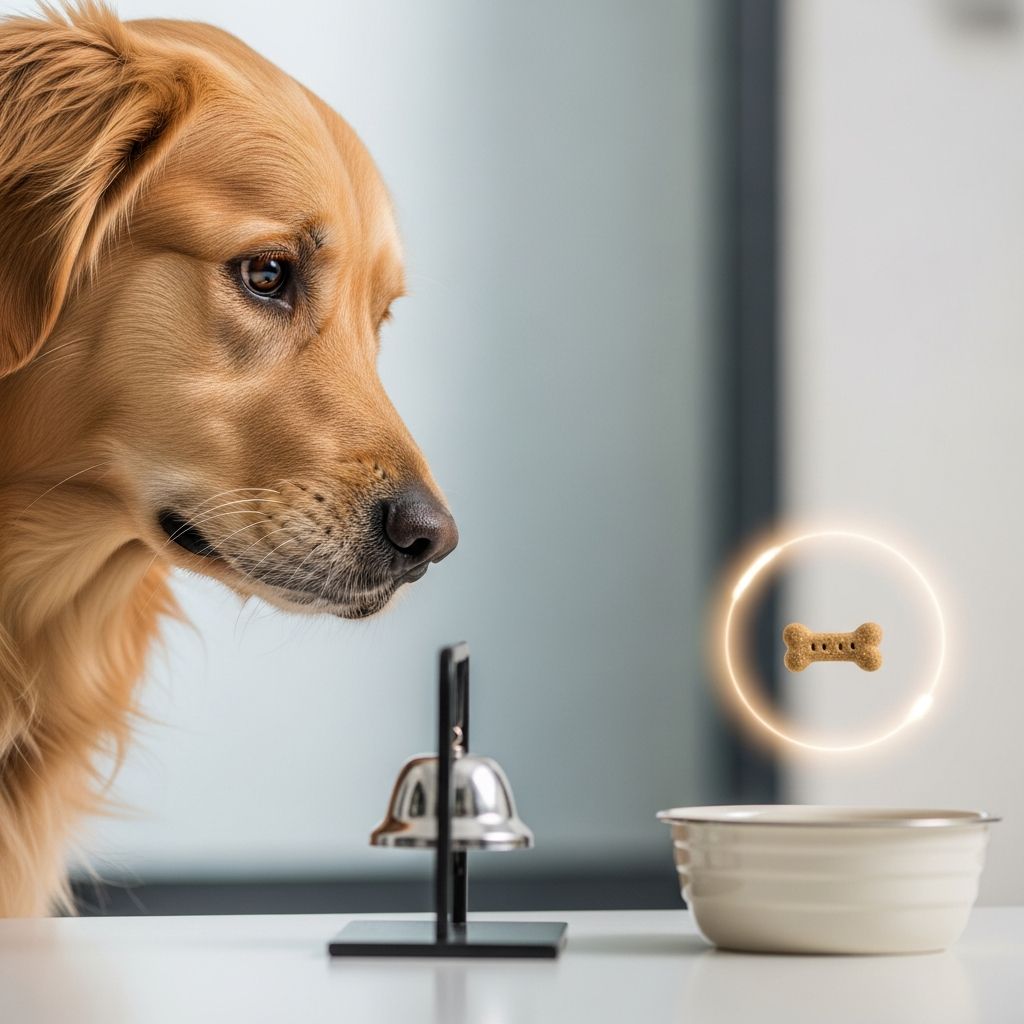
Classical conditioning is a foundational learning process where dogs form automatic, emotional associations between stimuli, leading to reflexive responses without conscious thought. This method, pioneered by Ivan Pavlov, enables trainers to reshape a dog’s feelings toward people, places, or objects, paving the way for improved behavior through subconscious shifts.
The Science Behind Associative Learning in Canines
At its core, classical conditioning involves pairing a neutral stimulus with one that naturally triggers a response. Over time, the neutral stimulus alone elicits the same reaction. For dogs, this creates hardwired emotional links that influence behavior profoundly.
- Unconditioned Stimulus (UCS): An event or item that instinctively provokes a reaction, such as food prompting salivation.
- Unconditioned Response (UCR): The automatic reaction to the UCS, like drooling at the sight of food.
- Conditioned Stimulus (CS): Initially neutral, such as a specific sound, that gains significance through repeated pairing.
- Conditioned Response (CR): The learned reflexive reaction to the CS, mirroring the UCR.
Pavlov’s landmark experiments in the late 1890s demonstrated this when he rang a bell before feeding dogs. Eventually, the bell alone caused salivation, proving how neutral cues become powerful triggers.
Differentiating Classical from Operant Conditioning
Understanding classical conditioning requires distinguishing it from operant conditioning. Classical focuses on involuntary reflexes and emotions, while operant involves voluntary behaviors shaped by consequences like rewards or corrections.
| Aspect | Classical Conditioning | Operant Conditioning |
|---|---|---|
| Response Type | Involuntary, reflexive (e.g., salivation, fear) | Voluntary, chosen (e.g., sitting, staying) |
| Focus | Emotional associations | Behavior consequences |
| Dog’s Role | Passive receiver | Active participant |
| Example | Bell signals food, causing excitement | Treat reinforces sitting on cue |
This table highlights why classical conditioning excels at altering feelings first, which then supports operant methods for lasting change.
Real-Life Examples of Classical Conditioning at Work
Dogs encounter classical conditioning daily, often unintentionally. A can opener’s whir might start as neutral but becomes a dinner cue after repeated pairings with meals, sparking eager anticipation. Conversely, negative associations form if a vet visit coincides with pain, leading to fear of the car ride.
Positive examples abound: pairing a clicker sound with treats turns it into a predictor of good things, fostering joy. In training yards, dogs scared of agility equipment can learn to associate it with fun through strategic treats.
Practical Techniques for Positive Emotional Shifts
To apply classical conditioning effectively, prioritize precise timing and consistency. Present the CS just before the UCS, ensuring the association forms strongly—ideally within seconds.
- Identify the Target: Choose a stimulus needing a better emotional link, like a doorbell causing barking.
- Select UCS: Use high-value rewards like chicken or play that evoke joy.
- Pair Repeatedly: Play the doorbell sound softly, immediately followed by treats, in low-stress settings.
- Monitor Progress: Watch for the CR, such as tail wags at the sound alone.
- Generalize Gradually: Introduce real-life scenarios once the association solidifies.
Start sessions short—five pairings per day—to avoid saturation. Vary UCS types to build robust responses.
Overcoming Fear and Reactivity with Associations
Fear-based issues like leash reactivity stem from negative classical conditioning. A dog lunging at other dogs associates leashes with tension from owner pulls. Counter this by feeding treats whenever leashed near triggers, transforming the leash into a predictor of positivity.
For separation anxiety, pair departure cues (keys jingling) with stuffed toys or long-lasting chews. Over time, these cues signal good outcomes, reducing distress. Patience is key; undoing strong negative links takes hundreds of pairings.
Advanced Applications: Building Confidence in Challenging Environments
In competitive settings like agility or obedience trials, classical conditioning builds venue confidence. Arrive early, pair arena sounds and sights with play or food. This shifts the environment from intimidating to rewarding.
For noise phobias (thunder, fireworks), desensitize with recordings at low volumes paired with comfort items. Gradually increase intensity while maintaining positive UCS delivery.
Common Mistakes and How to Avoid Them
Trainers often err by poor timing—delivering rewards after the CS fades, weakening links. Flooding (overexposure without pairing) intensifies fears. Solution: Controlled, brief exposures.
- Avoid Punishment Pairing: Scolding during CS presentation links negativity to the stimulus.
- Don’t Rush: Expect gradual shifts; track with a journal.
- Prevent Accidental Conditioning: Notice unintended associations, like excited greetings reinforcing jumping.
Integrating Classical Conditioning into Comprehensive Training Plans
Best results come from blending with operant methods. Use classical to prime positive emotions, then operant for skill-building. For instance, condition a happy crate response, then reinforce calm stays inside.
Professional trainers emphasize this hybrid: Classical handles ‘gut feelings,’ operant refines actions. Track progress with data: Note CR strength on a 1-10 scale weekly.
FAQs on Classical Conditioning for Dog Owners
Can all dogs benefit from classical conditioning?
Yes, it’s universal across breeds and ages, ideal for emotional issues in puppies to seniors.
How long does it take to see results?
Varies by history; simple associations form in days, deep fears may need months of consistent work.
Is it ethical?
Absolutely, especially positively reinforced versions promote welfare without coercion.
What if my dog doesn’t respond?
Check timing, UCS value, and stress levels; consult a certified trainer for tailored plans.
Does it replace other training?
No, it complements operant techniques for holistic development.
Long-Term Benefits for Dog-Human Bonds
Mastering classical conditioning deepens trust, as dogs associate owners with positivity. Reduced reactivity means safer walks; confident dogs thrive in social settings. Owners gain tools for lifelong harmony.
Commit to daily micro-sessions: 2-3 minutes suffice. Over years, these build resilient, happy companions.
References
- What Is Classical Conditioning in Dog Training? Pavlov’s Method — Tip Top K9. 2023. https://tiptopk9.com/tips/what-is-classical-conditioning-dog-training/
- Classical Conditioning and Your Dog: Understanding How It Shapes — FY Dog Training. 2024. https://fydogtraining.com/training-tips/classical-conditioning
- Classical Conditioning for Dogs — Whole Dog Journal. 2023-10-01. https://www.whole-dog-journal.com/training/classical-conditioning-how-your-dog-learns-by-association/
- How it Works: Operant Conditioning and Classical Conditioning — Fenzi Dog Sports Academy. 2022. https://www.fenzidogsportsacademy.com/blog/operant-conditioning-and-classical-conditioning
- What Is the Difference Between Operant and Classical Conditioning — The Dog Wizard. 2024. https://thedogwizard.com/blog/difference-between-operant-and-classical-conditioning/
- Classical and Operant Conditioning in Dog Training — Thriving Canine. 2023. https://www.thrivingcanine.com/blog/classical_operant_conditioning/
- Learning theory basics, part 1- Classical conditioning in dogs — Smart Animal Training. 2014-02-24. https://blog.smartanimaltraining.com/2014/02/24/classical-conditioning-in-dogs-beyond-the-training-session/
Similar Articles






Read full bio of medha deb