

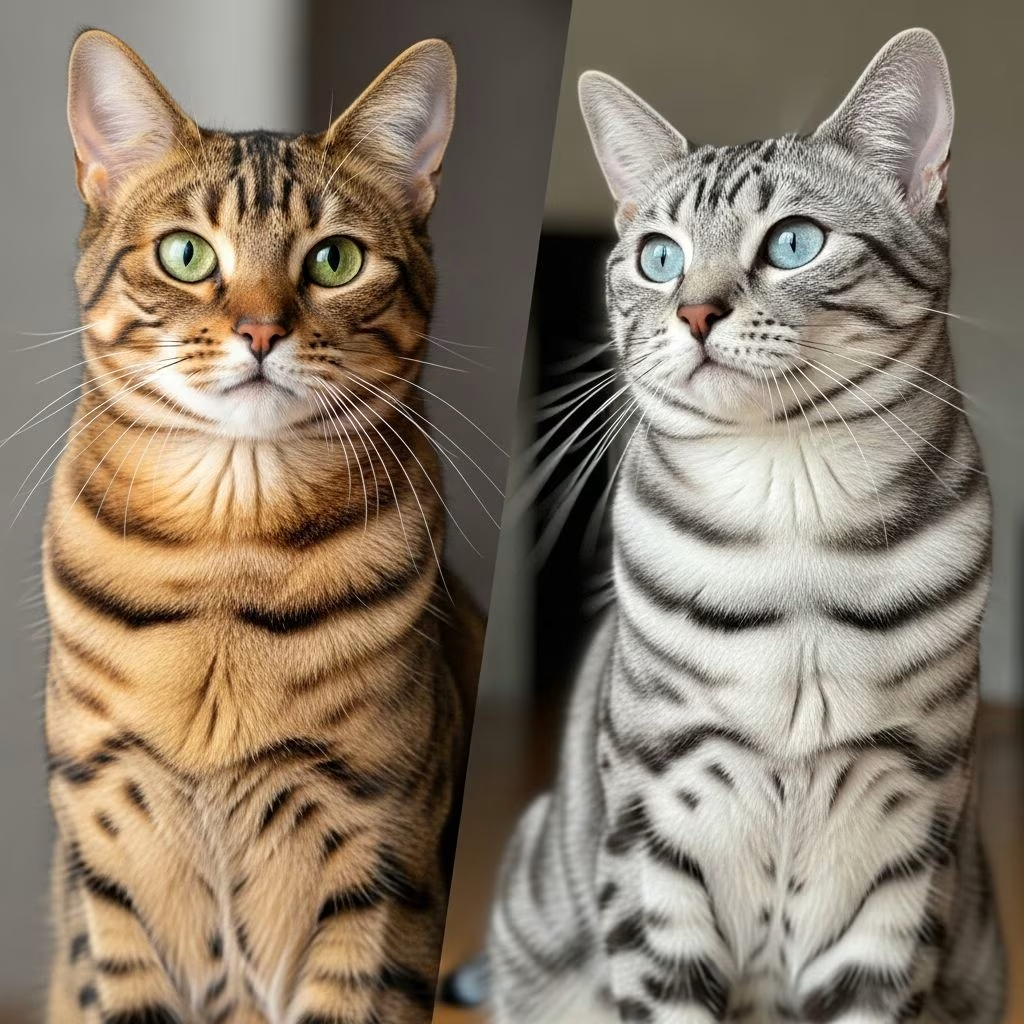
The Tabby pattern, caused by the agouti gene, features individual hairs with bands of light and dark coloring, resulting in stripes, spots, or combinations thereof. Among the most popular Tabby patterns are the **Classic Tabby** and **Mackerel Tabby**, each with distinct visual and genetic traits. This comprehensive guide breaks down their differences, origins, personalities, care requirements, and more to help cat enthusiasts identify and appreciate these beautiful coat variations.
Classic Tabby vs Mackerel Tabby At a Glance
| Trait | Classic Tabby | Mackerel Tabby |
|---|---|---|
| Average Height (Adult) | 10–16 inches | 12–16 inches |
| Average Weight (Adult) | 8–12 pounds | 8–12 pounds |
| Lifespan | 15–20 years | 14–20 years |
| Exercise Needs | 30–60 minutes a day | 30–60 minutes a day |
| Grooming Needs | Low to moderate | Low to moderate |
| Family-Friendly | Often | Mostly |
| Other Pet-Friendly | Often | Often |
| Trainability | Intelligent and generally easy to train | Intelligent, friendly, and easy to train |
This comparison table highlights the similarities and subtle differences in size, lifespan, and temperament between Classic and Mackerel Tabbies, which can appear in various breeds.
Classic Tabby Overview
The **Classic Tabby**, also known as marbled or blotched tabby, is characterized by thick, curving bands of color that often form a prominent bullseye on the cat’s side. All Tabbies share the iconic “M” marking on the forehead, matching the darker bands on their body. In the United Kingdom, this is the most common Tabby pattern, while it’s the second most prevalent in the United States.
Classic Tabbies typically display light-colored butterfly markings on their shoulders, three distinctive stripes along the spine (with the center one thicker and darker), and bold stripes on legs, tail, and cheeks. These swirling, randomized patterns give them a dramatic, marble-like appearance, setting them apart from more linear Tabby types.
Personality / Character
Classic Tabby cats are generally intelligent, friendly, and sociable, regardless of their underlying breed. Owners often describe them as affectionate, playful, and rarely aggressive. Their long history of domestication makes them excellent family pets, thriving in homes with children and other animals when properly socialized.
These cats enjoy interactive play and mental stimulation, forming strong bonds with their humans. While individual personalities vary, the pattern correlates with outgoing traits in anecdotal reports from breeders and owners.
Mackerel Tabby Overview
The **Mackerel Tabby**, the most common Tabby pattern worldwide, features slender, curving stripes that may break into spots, particularly on the belly and legs. They share the forehead “M” and have dark stripes from the eye corners toward the ears. A single dark stripe runs down the spine, branching into a fish skeleton-like pattern around the body—hence the name, inspired by the mackerel fish.
Mackerel stripes are thinner and more evenly spaced than Classic patterns, resembling tiger markings. This is considered the ancestral wild-type pattern, similar to the African wildcat, Felis silvestris lybica, from which domestic cats descend.
Personality / Character
Mackerel Tabbies are typically friendly, affectionate, and easy-going, with high intelligence and adaptability. They’ve co-evolved with humans for millennia, making them ideal companions. Ginger or red Mackerel Tabbies may exhibit feisty or bossy tendencies, linked more to the red coat gene than the Tabby pattern itself.
They excel as family pets, enjoying playtime and showing curiosity. Their sociable nature suits multi-pet households, though early socialization enhances compatibility.
What Are the Differences?
Both patterns occur across breeds in various colors and sizes, with similar care needs, but their coat markings are distinctly different. **Classic Tabbies** feature swirled, thick bands, shoulder butterflies, side bullseyes, and three spinal stripes for a bold, artistic look.
In contrast, **Mackerel Tabbies** have narrow, vertical stripes (sometimes spotted), a single branching spinal stripe forming the fishbone pattern, and uniform lines across the body.
Visual Differences
- Classic Tabby: Thick whorls, bullseye on sides, butterfly on shoulders, multiple thick spinal stripes.
- Mackerel Tabby: Thin curved stripes, fish skeleton spine, eye lines to ears, potential spots on flanks.
Genetically, the Mackerel pattern (T^m allele) is dominant over Classic (T^b allele). A T^m T^b cat shows Mackerel traits, while T^b T^b expresses Classic. About 80% of cats carry the recessive Classic allele.
Genetics and Inheritance
The Tabby gene at the Taqpep locus determines patterns: Mackerel is wild-type and dominant, originating from African wildcats. Mutations produced Classic (blotched), spotted, and ticked variants. Breeding two Mackerels can yield Classic kittens if both carry the recessive gene.
Care and Health Considerations
Both types have low-to-moderate grooming needs due to short-to-medium coats; weekly brushing prevents hairballs. They require 30-60 minutes of daily exercise via play to maintain ideal weight (8-12 lbs). Lifespans reach 14-20 years with proper veterinary care, diet, and spaying/neutering.
Common health issues in Tabbies include dental disease and obesity; regular check-ups are essential. No pattern-specific conditions exist, but mixed breeds may inherit breed traits.
History and Popularity
Tabby patterns trace to ancient Egypt, where cats with striped coats were revered. Mackerel, resembling wildcats, spread globally first. Classics gained popularity in Europe, becoming UK favorites. Today, both dominate domestic cat populations.
Frequently Asked Questions (FAQs)
What is the main difference between Classic and Mackerel Tabby cats?
Classic Tabbies have thick swirling bands and bullseyes, while Mackerels feature thin stripes in a fishbone pattern.
Which Tabby pattern is more common?
Mackerel is the most common worldwide, considered the original pattern; Classic is prevalent in the UK.
Do Tabby patterns affect personality?
No, personalities are breed-influenced, but Tabbies are generally friendly and intelligent.
Can any cat breed have these patterns?
Yes, Tabby is a coat pattern, not a breed, appearing in Persians, Maine Coons, and mixes.
How do I groom a Tabby cat?
Brush weekly, provide scratching posts, and ensure dental care for low-maintenance coats.
References
- Classic vs Mackerel Tabby: Key Differences (With Pictures) — Catster. 2023-10-15. https://www.catster.com/cat-breeds/classic-tabby-vs-mackerel-tabby/
- Tabby cat — Wikipedia. 2024-01-01. https://en.wikipedia.org/wiki/Tabby_cat
- All About Tabby Cats on National Tabby Day — Alley Cat Allies. 2023-09-29. https://www.alleycat.org/all-about-tabby-cats-on-national-tabby-day/
- Which type of tabby is your cat? — Catit. 2023-05-20. https://www.catit.com/spotlight/which-type-of-tabby-is-your-cat/
- Cat coat: tabby and genetics — The Little Carnivore. 2024-02-10. https://thelittlecarnivore.com/en/blog/cat-coat-tabby-patterns-genetics



