

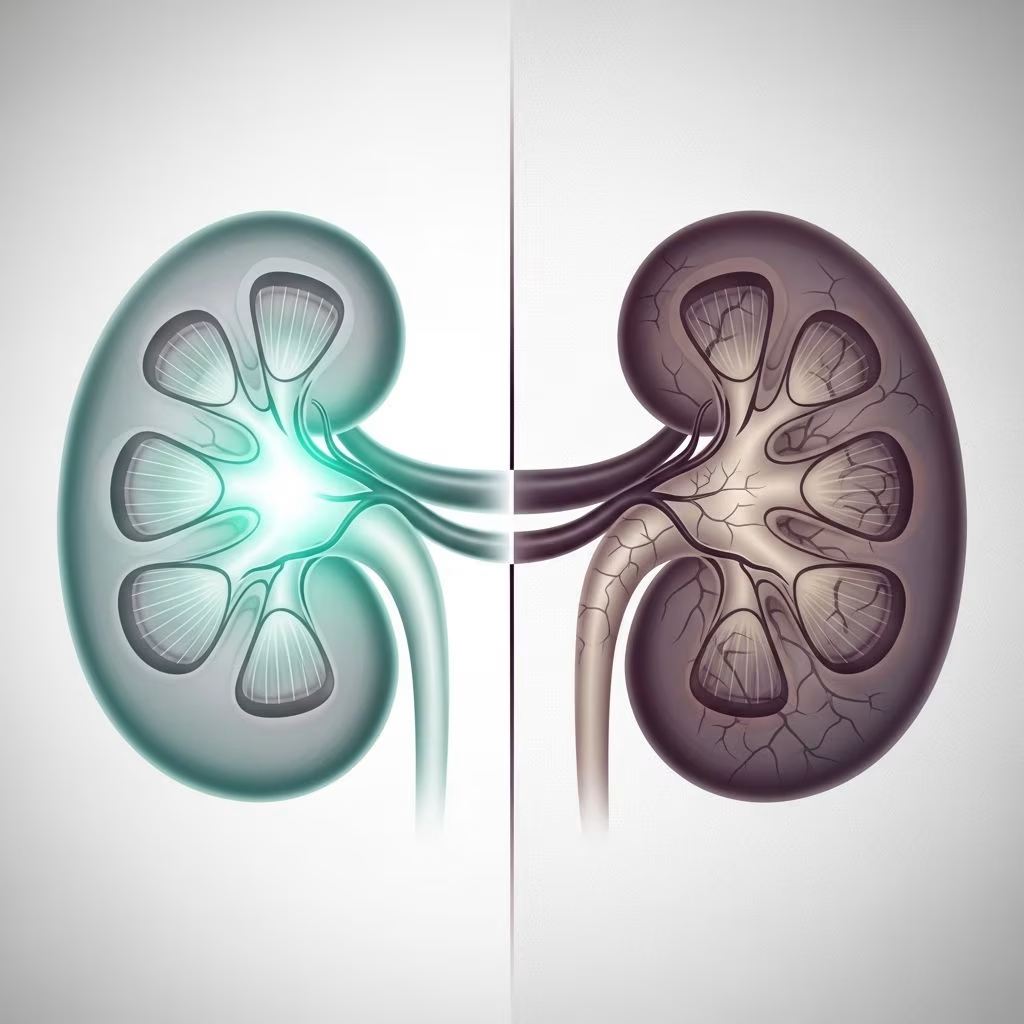
Chronic kidney disease (CKD) and chronic renal failure represent points on a spectrum of kidney dysfunction, where CKD describes a gradual decline in kidney function while chronic renal failure, often termed end-stage renal disease (ESRD), marks the irreversible final phase requiring intensive intervention.
Defining Kidney Conditions: From Disease to Failure
The kidneys filter waste, regulate fluids, and maintain electrolyte balance. When impaired, conditions like CKD emerge. CKD involves persistent damage over months or years, reducing filtration efficiency without immediate total shutdown. In contrast, chronic renal failure occurs when kidneys function at less than 15% capacity, necessitating dialysis or transplant.
Medical experts classify CKD into five stages based on glomerular filtration rate (GFR), a measure of kidney filtering speed. Stages 1-2 show mild loss with GFR above 60 mL/min, progressing to stage 5 (ESRD) below 15 mL/min. Renal failure specifically aligns with this advanced stage, highlighting why the terms overlap yet differ in scope.
Core Distinctions in Onset and Progression
- Gradual vs. Terminal: CKD builds silently over years, often asymptomatic early on, whereas chronic renal failure is the endpoint where kidneys can no longer sustain life independently.
- Reversibility: Early CKD may stabilize with lifestyle changes; renal failure demands lifelong therapy.
- Prevalence: Millions live with CKD stages 1-4; only a fraction advance to ESRD requiring dialysis.
This progression underscores the value of early detection. Factors like diabetes and hypertension accelerate damage, turning manageable CKD into failure.
Primary Causes Driving Kidney Decline
High blood pressure and diabetes top the list for CKD initiation, damaging nephrons over time. Other contributors include glomerulonephritis, polycystic kidney disease, and prolonged medication use. In renal failure, these culminate in scarring and atrophy.
| Factor | Role in CKD | Role in Renal Failure |
|---|---|---|
| Diabetes | High sugar harms vessels | Leads to 44% of ESRD cases |
| Hypertension | Strains filtration units | 28% of ESRD triggers |
| Obesity | Promotes inflammation | Exacerbates end-stage damage |
| Family History | Increases susceptibility | Hastens progression |
Addressing these root causes halts advancement, emphasizing preventive care.
Recognizing Symptoms Across Stages
Early CKD often lacks signs, detected via routine tests. As it worsens, fatigue, swelling, and hypertension appear. Renal failure intensifies these: uremia causes nausea, itching, and confusion; anemia leads to weakness; bone issues from mineral imbalance emerge.
- Early CKD Indicators: Mild fatigue, foamy urine, elevated blood pressure.
- Advanced CKD/Pre-Failure: Anemia, bone pain, sleep disturbances.
- Renal Failure Signs: Severe swelling, shortness of breath, seizures, coma risk.
Fluid retention causes leg edema in both, but failure adds pulmonary issues from overload.
Diagnostic Approaches for Accurate Assessment
Diagnosis relies on blood tests like serum creatinine and GFR calculation, urine albumin checks, and imaging. CKD requires three months of abnormal results; renal failure confirms via persistently low GFR under 15.
- Blood urea nitrogen (BUN) and creatinine levels.
- Urine tests for protein leakage.
- Ultrasound or biopsy for structural insights.
- Staging via Kidney Disease Improving Global Outcomes (KDIGO) guidelines.
Regular screening in at-risk groups catches CKD early, preventing failure.
Treatment Strategies: Managing CKD to Averting Failure
CKD therapy focuses on slowing progression: ACE inhibitors for blood pressure, SGLT2 inhibitors for diabetes protection, low-protein diets. Renal failure mandates dialysis—hemodialysis thrice weekly or peritoneal at home—or transplant, with living donors offering best outcomes.
| Treatment | CKD Application | Renal Failure Use |
|---|---|---|
| Medications | Blood pressure, diabetes control | Symptom relief, anemia meds |
| Diet | Low sodium, potassium moderation | Strict protein/fluid limits |
| Dialysis | Rare, late stages | Essential, life-sustaining |
| Transplant | Not typical | Curative option |
Multidisciplinary care improves survival; transplants extend life by decades versus dialysis.
Complications and Long-Term Risks
Untreated CKD breeds cardiovascular disease, the top killer. Renal failure amplifies: hyperkalemia risks heart rhythm issues, metabolic acidosis weakens muscles, infections surge from immune compromise.
- Heart disease/stroke from vessel damage.
- Anemia via low erythropoietin.
- Bone disease from calcium-phosphate dysregulation.
Monitoring averts these, enhancing quality of life.
Prevention: Safeguarding Kidney Function
Lifestyle fortifies kidneys: balanced diet, exercise, smoking cessation, hydration. Control chronic conditions aggressively; annual checks for high-risk individuals.
- Maintain BMI under 25.
- Limit NSAIDs.
- Monitor blood sugar under 7% A1C.
Public health initiatives stress awareness, reducing ESRD incidence.
Prognosis: Outcomes and Hope
Early CKD boasts excellent prognosis with management; stage 5 without dialysis is fatal within weeks. Dialysis sustains life, but transplants yield 85-95% one-year survival. Advances like bioengineered kidneys loom promising.
Frequently Asked Questions (FAQs)
Is chronic kidney disease curable?
No, but early stages are manageable to prevent progression.
What defines end-stage renal disease?
GFR below 15 mL/min, requiring dialysis or transplant.
Can diet reverse CKD?
Not reverse, but slows advancement significantly.
How often should at-risk people test kidneys?
Annually, or more with diabetes/hypertension.
Does acute injury lead to chronic failure?
Yes, if unresolved, increasing CKD risk.
Understanding these nuances empowers proactive health decisions, bridging CKD management to failure prevention.
References
- Acute Renal Failure Vs. Chronic Kidney Disease — Healthline. 2023-10-15. https://www.healthline.com/health/kidney-disease/acute-renal-failure-vs-chronic-kidney-disease
- Renal failure vs. kidney failure: Are they the same? — Medical News Today. 2024-05-20. https://www.medicalnewstoday.com/articles/is-renal-failure-the-same-as-kidney-failure
- Chronic Kidney Disease (CKD) — National Kidney Foundation. 2024-01-12. https://www.kidney.org/kidney-topics/chronic-kidney-disease-ckd
- Kidney Failure: Stages, ESRD, Causes, Symptoms & Treatment — Cleveland Clinic. 2024-08-05. https://my.clevelandclinic.org/health/diseases/17689-kidney-failure
- Chronic Kidney Disease, End-Stage Renal Disease, and Dialysis — Ohio Department of Health. 2023-11-30. https://odh.ohio.gov/wps/portal/gov/odh/know-our-programs/healthcare-associated-infections/hais-in-dialysis/dialysis-general-info



