

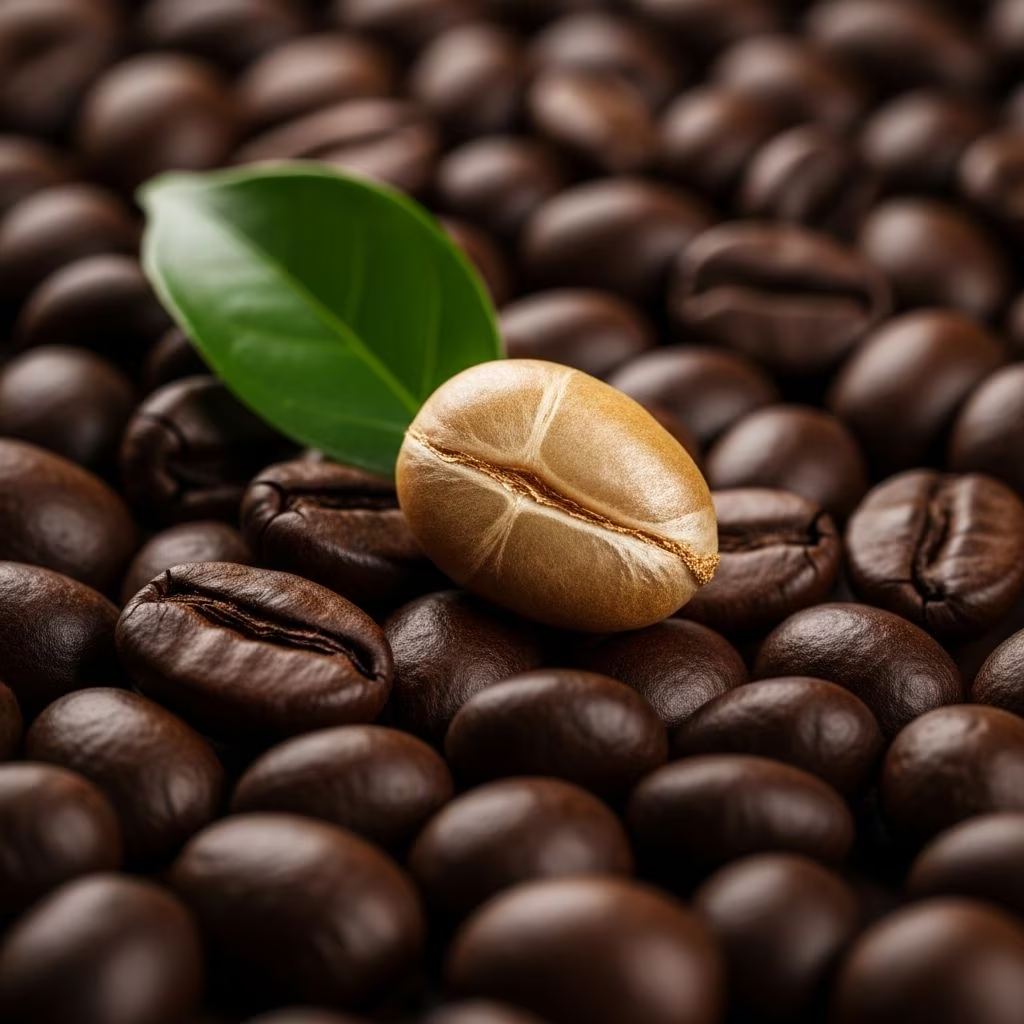
Civet coffee, celebrated as one of the world’s most luxurious and peculiar beverages, emerges from an extraordinary natural process involving the Asian palm civet. These small, nocturnal mammals consume ripe coffee cherries, partially digest the beans through unique enzymatic action, and excrete them intact. Farmers then collect, clean, and roast these beans, resulting in a coffee prized for its smooth, low-acidity taste.
The Natural Origins of This Rare Specialty
In the lush forests of Indonesia, Vietnam, and the Philippines, wild Asian palm civets roam at night, selectively eating only the ripest coffee cherries. This selective feeding ensures superior quality, as the animals ignore unripe or inferior fruit. During digestion, the civet’s stomach acids and enzymes break down proteins in the cherry’s outer layers, fermenting the bean without fully digesting it. This process reduces bitterness and acidity, creating a distinctive flavor profile.
Historically, locals discovered these beans by scavenging civet droppings on forest floors—a labor-intensive practice that kept supply limited and prices high. The name “Kopi Luwak” derives from Indonesian words for coffee (kopi) and civet (luwak), while in Vietnam, it’s dubbed “weasel coffee” due to similar small carnivores involved.
Step-by-Step Production Journey
The transformation from droppings to delicacy demands meticulous care across several stages:
- Collection: Wild beans are foraged from scattered droppings in jungles or plantations, requiring keen eyes and patience. Farmed versions are gathered from under enclosures.
- Cleaning: Beans are meticulously washed multiple times in fresh water to remove residue and bacteria, ensuring hygiene.
- Drying: Spread under the sun for days, beans are turned regularly to prevent mold and achieve even moisture loss.
- Hulling: The parchment layer is removed by hand or machine, yielding green beans ready for roasting.
- Roasting: At around 200°C, beans develop their signature flavors—chocolatey, nutty notes with minimal bitterness.
This artisanal process preserves the enzymes’ effects, distinguishing civet coffee from conventional brews.
Flavor Science: What Makes It Exceptional?
Producers attribute the coffee’s allure to dual mechanisms: civet selection of prime cherries and digestive alterations. Enzymes degrade storage proteins into shorter peptides, softening the bean’s structure and yielding smoother brews. Roasting amplifies earthy, caramel-like tones with low acidity, appealing to connoisseurs.
Independent cupping tests often rate it highly for body and aftertaste, though preferences vary. Its rarity—only about 500 pounds produced annually from wild sources—fuels exclusivity.
Comparing Civet Coffee to Standard Varieties
| Attribute | Civet Coffee | Regular Arabica |
|---|---|---|
| Acidity | Low, smooth | Medium to high |
| Bitterness | Minimal | Present |
| Flavor Notes | Chocolate, nuts, earth | Fruity, floral |
| Price per Pound | $300–$600 | $10–$20 |
| Production Method | Animal digestion | Machine harvesting |
This table highlights why civet coffee stands out, though its premium comes from scarcity and process.
Ethical Shadows in a Lucrative Trade
Demand has exploded, with prices soaring from jungle finds to luxury status. Unfortunately, this spurred unethical farming: civets caged in cramped batteries, force-fed low-quality cherries, leading to stress, poor health, and death. Such practices undermine the natural appeal, producing inferior beans.
Wild-sourced alternatives, certified ethical, prioritize free-roaming civets, though harder to obtain. Initiatives like those with World Animal Protection aim to set welfare standards. Consumers should seek certifications verifying wild or humane methods.
Global Variations and Imitations
Beyond Indonesia’s Kopi Luwak, Vietnam produces “chồn coffee” using civet-like weasels, while the Philippines gathers from binturongs in Palawan. Imitations employ enzyme soaks to mimic digestion, slashing costs but lacking authenticity. These flood markets, often mislabeled, diluting true product’s value.
Health and Safety Realities
Properly processed civet coffee poses no risks: thorough cleaning and high-heat roasting eliminate pathogens. No verified cases link it to illness when sourced responsibly. However, fakes may harbor contaminants, emphasizing verified purchases.
How to Brew the Perfect Cup
To maximize flavors:
- Grind coarsely just before brewing.
- Use 20g beans per 8oz water at 90–96°C.
- Pour-over or French press for 4 minutes.
- Savor black to appreciate nuances.
Pair with dark chocolate or nuts for enhancement.
Purchasing Guide: Spotting Authentic Beans
- Verify wild-sourced or ethical certifications.
- Avoid suspiciously cheap offers—true Kopi Luwak exceeds $50/cup equivalent.
- Check for uniform green beans pre-roast.
- Research suppliers with transparency on civet welfare.
The Future of Civet Coffee
Sustainable shifts toward ethical wild harvesting and lab-enzyme alternatives promise preservation without exploitation. Consumer awareness drives change, balancing indulgence with responsibility.
Frequently Asked Questions (FAQs)
What exactly is civet coffee?
Civet coffee is made from beans eaten and excreted by Asian palm civets, processed through their digestion for unique flavors.
Is it safe to drink?
Yes, cleaning and roasting at 200°C kill bacteria, making it safe.
Why is it so expensive?
Rarity, labor-intensive collection, and ethical production limit supply.
Are there ethical options?
Yes, seek wild-sourced or certified humane products.
How does it taste different?
Smoother, less acidic, with nutty, chocolatey notes from enzymatic fermentation.
What’s the difference between Kopi Luwak and weasel coffee?
Kopi Luwak is Indonesian civet coffee; weasel coffee is Vietnam’s version using similar animals.
References
- How Kopi Luwak Coffee Is Made | Civet Cats Coffee Making Process — YouTube (Factory View). 2025-03-10. https://www.youtube.com/watch?v=0kLLyqAH_1c
- What is Kopi Luwak? The Civet Coffee from Cat Poo — The Basic Barista. N/A. https://thebasicbarista.com/en-us/blogs/article/what-is-kopi-luwak-the-civet-coffee-from-cat-poo
- How Civet make World Most Expensive Coffee — YouTube. N/A. https://www.youtube.com/watch?v=Ox7dQO-7Gss
- Kopi luwak — Wikipedia. N/A. https://en.wikipedia.org/wiki/Kopi_luwak
- From Droppings to Delicacy: How Civet Coffee Is Made — YouTube. N/A. https://www.youtube.com/watch?v=6pyE4yeYJxE
- Civet Coffee — The Civet Project. N/A. https://www.thecivetproject.com/civetcoffee



