

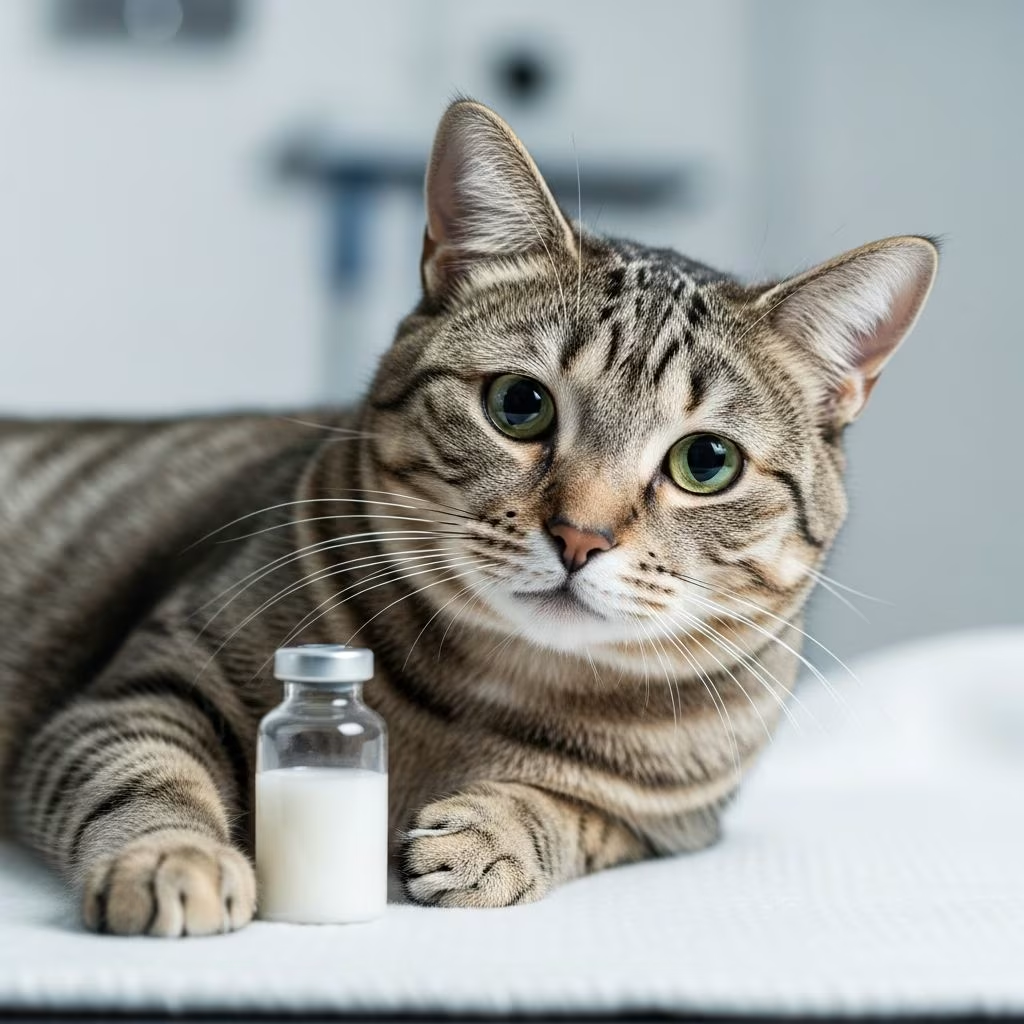
Chylothorax is a serious veterinary condition in cats characterized by the accumulation of chyle—a milky lymphatic fluid rich in fat—in the pleural space surrounding the lungs. This buildup compresses the lungs, leading to labored breathing and potentially life-threatening respiratory distress if not addressed promptly. Early recognition and intervention are crucial for improving outcomes in affected cats.
What Is Chylothorax?
Chylothorax occurs when chyle leaks from the thoracic duct, the primary vessel transporting lymph and digested fats from the intestines to the bloodstream, into the chest cavity. Normally, the thoracic duct functions to drain lymphatic fluid, but rupture, blockage, or increased pressure can cause leakage. In cats, this condition is relatively rare but grave, often idiopathic (no identifiable cause) or linked to underlying issues like trauma, heart disease, or neoplasia.
The pleural space is a thin cavity between the lungs and chest wall that contains a small amount of lubricating fluid. When chyle accumulates, it creates pleural effusion, restricting lung expansion. Chyle’s high fat content (triglycerides and chylomicrons) gives it a distinctive milky appearance, distinguishing it from other effusions like transudates or exudates.
Causes of Chylothorax in Cats
Identifying the root cause is challenging, as many cases (up to 50-80% in some studies) are idiopathic. Known causes include:
- Trauma: Blunt chest injuries, such as from falls or car accidents, can rupture the thoracic duct.
- Neoplasia: Tumors, particularly lymphosarcoma, compressing or invading the duct.
- Cardiomyopathy or heartworm disease: Increased venous pressure obstructing lymphatic drainage.
- Congenital defects: Abnormal thoracic duct anatomy in kittens.
- Inflammatory or infectious diseases: Fungal infections or mediastinitis rarely implicated.
In a retrospective study of 37 cats, no primary cause was found in most cases, highlighting the idiopathic nature. Chronic cases may lead to fibrosing pleuritis, a thickening of the pleura that further impairs lung function even after fluid resolution.
Clinical Signs of Chylothorax in Cats
The hallmark symptom is **labored breathing (dyspnea)** or rapid shallow breaths (tachypnea), often with a pause between inhalation and exhalation. Cats may adopt an upright sternal position or extend their neck to maximize airflow.
Other common signs include:
- Coughing (unique to chylothorax among pleural effusions).
- Muffled heart and lung sounds on auscultation (41-84% of cases).
- Increased dorsal lung sounds due to ventral fluid compression.
- Tachycardia (heart rate >200 bpm in 16%).
- Depression, anorexia, weight loss, lethargy.
- Pale gums, cyanosis (bluish tint) in severe cases.
In one case, a cat presented with 96 breaths/min, muffled heart sounds, and normal temperature, resolving to 16 breaths/min post-thoracocentesis. Symptoms can develop acutely after trauma or insidiously in idiopathic cases.
Diagnosis of Chylothorax in Cats
Diagnosis begins with history and physical exam, suspecting chylothorax from dyspnea and coughing. Key diagnostics:
- Thoracocentesis: Needle aspiration yields milky fluid; confirmed by triglyceride levels >100 mg/dL (higher than serum) or chylomicrons on cytology.
- Radiography: Chest X-rays show pleural effusion (blunted angles, widened mediastinum); fluid obscures lung fields.
- Ultrasound or CT: Visualizes fluid, heart, and thoracic duct abnormalities.
- Fluid analysis: High lymphocytes, macrophages, triglycerides; rules out blood, pus, or transudate.
Anesthesia may be needed for uncooperative cats, as in a case using propofol and sevoflurane. Echocardiography assesses cardiac causes.
Treatment Options for Chylothorax in Cats
Treatment prioritizes stabilizing respiration, addressing causes, and preventing recurrence. No single cure-all exists; multimodal approaches are standard.
Emergency Stabilization
Immediate **thoracocentesis** drains fluid (often 20-50 mL/kg), relieving distress. Fluid reforms in 24-72 hours, necessitating indwelling chest drains (thoracostomy tubes) for daily drainage.
Medical Management
- Low-fat diet: Reduces chyle production; high MCT oil diets aid reabsorption.
- Rutin supplementation: 50-100 mg/kg PO q8h stimulates macrophages to clear chyle fats. Success in 25-75% of cases; one cat showed rapid radiographic improvement.
- Octreotide (Sandostatin): Decreases chyle flow variably.
- Diuretics (furosemide), steroids, antibiotics: Supportive if inflammation present.
Surgical Interventions
For refractory cases, **thoracic duct ligation (TDL)** via thoracotomy or thoracoscopy seals the duct. Often combined with **pericardiectomy** to remove constrictive sac. Success rates high (80-90%), but requires chest tubes post-op.
In a clinical trial, thoracoscopic TDL is evaluated for idiopathic cases. Conservative management tried first unless malignancy suspected.
Prognosis for Cats with Chylothorax
Prognosis is guarded but improves with early intervention. Good if:
- Breathing stabilizes post-drainage.
- Underlying cause treatable.
- No fibrosing pleuritis develops (rare but fatal).
- Response to medical/surgical therapy.
Idiopathic cases may resolve spontaneously or with rutin/diet (e.g., 10-month follow-up showed minimal fibrosis). Mortality high if undrained (respiratory failure). Long-term monitoring essential.
Prevention and Home Care
Prevent trauma (supervise outdoor cats). No specific prevention for idiopathic cases. Home care: monitor breathing, administer meds/diets, return for taps if dyspnea recurs. Routine vet checks for years post-recovery.
Owners should recognize early signs like coughing or lethargy. Low-fat prescription diets and rutin (available over-the-counter) can be vet-guided.
Frequently Asked Questions (FAQs)
What causes chylothorax in cats?
Most cases idiopathic; others from trauma, cancer, heart disease, or congenital defects.
Is chylothorax fatal in cats?
Potentially if untreated, but many stabilize with drainage and improve with therapy.
How is chylothorax diagnosed?
Via thoracocentesis (milky fluid), X-rays, and fluid analysis.
Does rutin work for chylothorax?
Promising; stimulates chyle clearance in 25-75% of cats.
What surgery is done for chylothorax?
Thoracic duct ligation ± pericardiectomy, often thoracoscopically.
Can chylothorax resolve without surgery?
Yes, with medical management in some idiopathic cases.
References
- Chylothorax in Cats — VCA Animal Hospitals. Accessed 2026. https://vcahospitals.com/know-your-pet/chylothorax-in-cats
- Medical management of idiopathic chylothorax in a cat — PMC (PubMed Central). 2007-01-01. https://pmc.ncbi.nlm.nih.gov/articles/PMC539228/
- Chylothorax in Cats — PetMD. Accessed 2026. https://www.petmd.com/cat/conditions/respiratory/c_ct_chylothorax
- Chylothorax — UC Davis School of Veterinary Medicine. Accessed 2026. https://healthtopics.vetmed.ucdavis.edu/health-topics/chylothorax
- Buffy the Chylothorax Cat — Mississippi State University College of Veterinary Medicine. 2017-10-27. https://www.vetmed.msstate.edu/sites/www.vetmed.msstate.edu/files/presentations/10.27.17%20Buffy%20the%20Chylothorax%20Cat%20(Rachel%20Kuhar).pdf
- Thoracoscopic Thoracic Duct Ligation for Chylothorax Trial — University of Florida College of Veterinary Medicine. Accessed 2026. https://research.vetmed.ufl.edu/research-programs/clinical-trials/small-animal/prospective-clinical-trial-of-cats-undergoing-thoracoscopic-thoracic-duct-ligation-for-idiopathic-chylothorax/



