

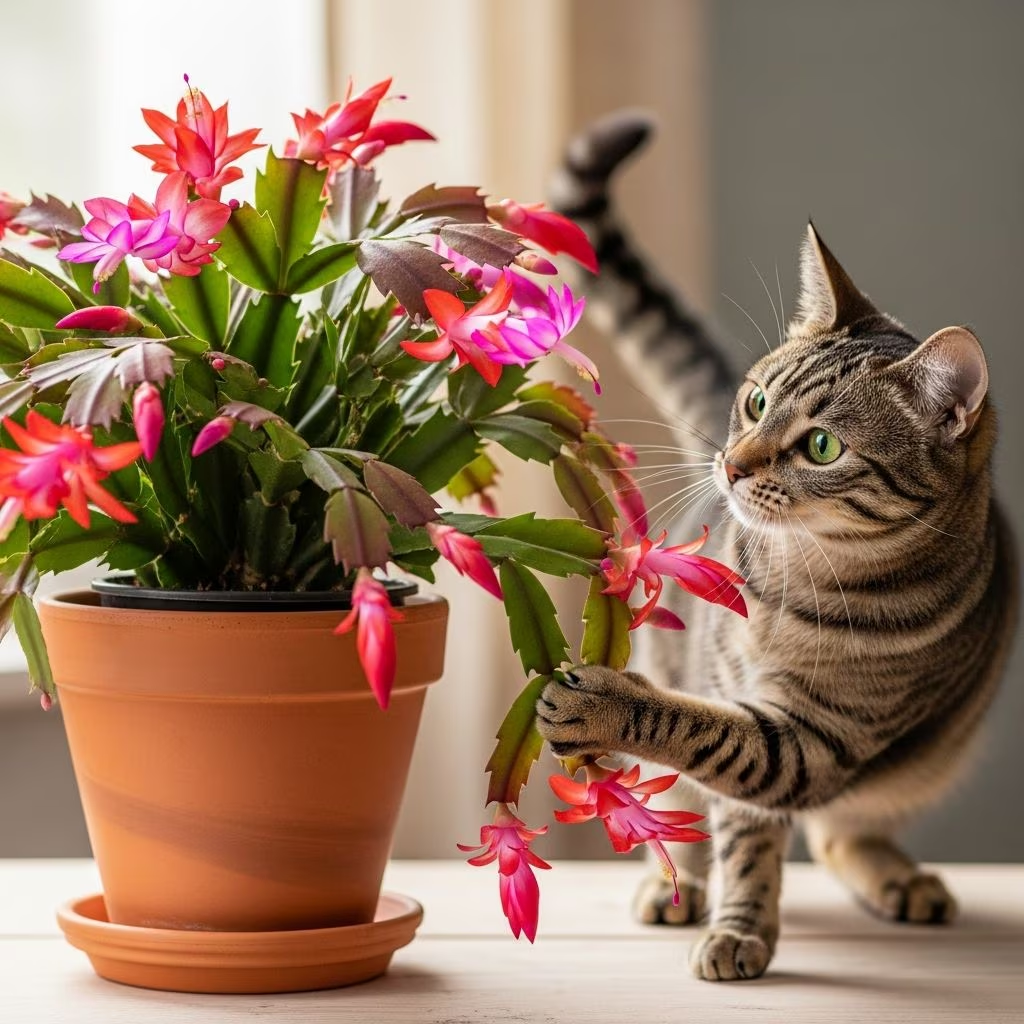
The holiday season brings festive decorations and colorful plants into our homes, and the Christmas cactus stands out as a popular choice for adding seasonal cheer. However, if you share your living space with feline companions, you may wonder whether this beloved holiday plant poses any dangers to your cats. Understanding the safety profile of Christmas cactus and learning how to minimize risks can help you create a secure environment for both your botanical displays and your beloved pets.
Understanding Christmas Cactus Toxicity in Felines
One of the most reassuring facts for cat owners is that the Christmas cactus carries a relatively benign toxicity profile when compared to other popular holiday plants. According to the American Society for the Prevention of Cruelty to Animals (ASPCA), Christmas cactus is classified as non-toxic to cats, meaning the plant does not contain compounds that would cause systemic poisoning in feline animals. This designation provides peace of mind for households where cats have access to these festive plants.
However, the classification of non-toxic does not mean the plant is completely risk-free. The distinction between truly non-toxic and merely low-toxicity is important for pet owners to understand. While Christmas cactus will not poison a cat in the traditional sense, the plant material itself can still cause gastrointestinal distress when ingested, particularly if consumed in significant quantities. The fibrous nature of the plant’s stems and leaves presents a digestive challenge for cats, whose stomachs are not optimally designed to break down large amounts of plant material.
How Christmas Cactus Differs from Other Cacti
An important distinction to make is that despite its name, the Christmas cactus is not a true cactus in the botanical sense. Unlike their desert-dwelling cousins, Christmas cacti (scientifically known as Schlumbergera × buckleyi) do not possess the sharp, needle-like spines characteristic of traditional cacti. This fundamental difference eliminates one category of potential harm: your cat cannot suffer puncture wounds or oral injuries from coming into contact with the plant’s surface or taking small bites from its leaves and stems.
This structural difference is significant because it means the primary concern with Christmas cactus consumption is not physical injury but rather digestive system irritation. The plant’s soft, succulent stems can be nibbled without causing the lacerations that would result from contact with spined varieties. Nevertheless, the absence of sharp spines should not encourage casual plant consumption, as other digestive complications can still arise.
Gastrointestinal Effects and Symptom Recognition
When a cat ingests Christmas cactus material, the consequences depend primarily on the quantity consumed. Small, incidental nibbles of the plant typically produce minimal effects, while larger consumption can trigger more noticeable digestive disruptions. Pet owners should be familiar with the signs that indicate their cat has experienced an adverse reaction to the plant.
The most commonly observed symptoms include:
- Vomiting: Often occurs as the digestive system responds to irritation or attempts to expel plant material
- Diarrhea: Results from gastrointestinal tract irritation and may persist for several hours or longer
- Reduced appetite: Cats experiencing stomach discomfort frequently show reluctance to eat their regular meals
- Lethargy: Unusual tiredness and decreased activity levels may indicate systemic discomfort
- Nausea symptoms: Drooling, lip-smacking, or repeated swallowing can signal mild nausea
These symptoms typically manifest within hours of plant ingestion and may resolve independently if only a small amount was consumed. However, the persistence or severity of these signs should guide your decision about whether veterinary consultation is necessary.
The Risk of Gastrointestinal Blockage
While mild digestive upset represents the most common outcome of Christmas cactus consumption, a more serious complication can occasionally develop. The fibrous plant material may accumulate in the cat’s digestive tract, creating a partial or complete blockage that prevents normal passage of food and liquids. This condition constitutes a medical emergency requiring prompt professional intervention.
Blockages often announce themselves through persistent vomiting, as the body attempts to expel the obstruction. Other warning signs include complete loss of appetite, severe lethargy, and inability to produce normal bowel movements. If you observe these symptoms following confirmed or suspected Christmas cactus ingestion, immediate veterinary attention is warranted. Your veterinarian may recommend diagnostic imaging such as X-rays to identify and locate any blockages.
The risk of blockage increases with the quantity of plant material consumed and is more likely when a cat has repeatedly chewed on the plant over time rather than consuming a single small piece. This distinction helps explain why some cats experience serious complications while others recover without intervention.
Protective Measures for Plant-Loving Pet Owners
Creating a cat-safe environment while still enjoying festive plants requires thoughtful placement and strategic use of deterrents. Since the Christmas cactus is non-toxic, you need not eliminate the plant entirely, but rather manage access and exposure.
Effective protective strategies include:
- Elevated placement: Position your Christmas cactus on high shelves, wall-mounted brackets, or tall plant stands that your cat cannot easily access
- Hanging planters: Suspend the plant from the ceiling using hanging baskets or macramé holders, keeping it completely out of reach
- Barrier deterrents: Apply bitter apple spray or double-sided tape around the base of the pot or on nearby surfaces to discourage investigation
- Physical barriers: Use plant cages or glass enclosures designed to allow light penetration while preventing direct contact
- Room separation: Keep the plant in a room where your cat spends limited time, such as a home office with a closed door
Beyond the plant itself, consider the potting materials and soil additives. Some fertilizers and soil treatments may contain compounds harmful to cats, making proper pot placement important even if the plant material is safe. Broken pottery from a knocked-over pot can also cause injury, providing another reason to prioritize secure placement.
Comparative Holiday Plant Safety
Understanding how Christmas cactus ranks among holiday plants helps contextualize its relative safety. Many festive plants present significantly greater risks to feline health and should be strictly avoided in households with cats.
| Plant Name | Toxicity Level | Primary Concerns |
|---|---|---|
| Christmas Cactus | Non-toxic | Mild digestive upset if large amounts consumed |
| Lily | Highly toxic | Kidney failure, often fatal without treatment |
| Mistletoe | Toxic | Vomiting, diarrhea, cardiac and nervous system effects with large amounts |
| Holly | Moderately toxic | Stomach upset, difficulty walking in severe cases |
| Christmas Tree (fresh) | Mildly toxic | Digestive upset, needle obstructions |
| Poinsettia | Mildly toxic | Digestive irritation, rarely severe |
This comparison underscores that Christmas cactus is among the safer options for holiday plant decoration in cat households. True lilies, in particular, present a dramatically higher risk level and should never be brought into homes with cats.
Response Protocol When Ingestion Occurs
Despite preventive measures, cats are curious creatures, and ingestion may still occur. Knowing how to respond appropriately can make a significant difference in outcomes.
Immediate steps include:
- Remain calm and assess your cat’s immediate condition for signs of distress
- Contact your veterinarian or the Pet Poison Helpline to report the incident and describe symptoms
- Monitor your cat closely for the development or progression of symptoms
- Keep track of bowel movements to watch for signs of blockage
- Note the approximate quantity of plant material consumed, if possible
Your veterinarian will provide guidance based on your cat’s specific situation. Minor ingestion of small plant pieces may require only observation at home, while larger consumption might warrant examination and treatment. The vet may prescribe anti-nausea medication or administer fluids to support comfort and hydration. In suspected blockage cases, diagnostic imaging will help determine whether surgical intervention is needed.
The encouraging news is that cats who consume Christmas cactus typically recover well with appropriate care and show no long-term effects. Most return to normal within days, and many recover without any medical intervention beyond monitoring.
Creating a Comprehensive Pet-Safe Plant Strategy
For cat owners who love surrounding themselves with plants and natural decorations, understanding plant safety represents an essential skill. Christmas cactus can absolutely be part of your holiday décor when managed thoughtfully, but complementing your plant collection with truly cat-safe options creates additional security.
Many houseplants pose no risk to cats and can be displayed with confidence. Learning which plants are safe allows you to build a visually appealing home environment without constant worry about accidental poisoning. Research reputable sources and consult your veterinarian when introducing new plants to your home.
Frequently Asked Questions
Is Christmas cactus poisonous to cats?
No, Christmas cactus is non-toxic to cats according to the ASPCA. However, ingesting large quantities can cause digestive upset including vomiting and diarrhea.
What should I do if my cat eats Christmas cactus?
Monitor your cat for symptoms and contact your veterinarian or Pet Poison Helpline if concerning signs develop. Watch for persistent vomiting, diarrhea, or signs of blockage requiring emergency care.
How much Christmas cactus would make a cat sick?
Small nibbles typically cause no problems, but consumption of larger quantities increases risk of gastrointestinal upset and potential blockage.
Are there safe alternatives to Christmas cactus for cat owners?
Yes, many plants are completely safe for cats. Consider safe succulents like Haworthia and Echeveria, or other non-toxic houseplants.
How can I prevent my cat from eating Christmas cactus?
Place the plant on high shelves, use hanging planters, apply bitter apple spray deterrents, or keep the plant in a room where your cat has limited access.
References
- Is a Christmas Cactus Poisonous to Cats? — PetMD. 2024. https://www.petmd.com/cat/poisoning/is-a-christmas-cactus-poisonous-to-cats
- Is Christmas Cactus Poisonous to Cats? — Gardenia.net. https://www.gardenia.net/guide/is-christmas-cactus-poisonous-to-cats
- Is Christmas Cactus Poisonous to Cats? — BaxterBoo. https://www.baxterboo.com/blog/a.cfm/is-christmas-cactus-poisonous-to-cats
- Christmas Cactus – Toxic and Non-toxic Plants — ASPCA. https://www.aspca.org/pet-care/aspca-poison-control/toxic-and-non-toxic-plants/christmas-cactus
- How to Care for a Christmas Cactus — The Sill. https://www.thesill.com/blogs/plants-101/christmas-cactus-care-guide-how-to-care-for-a-christmas-cactus



