

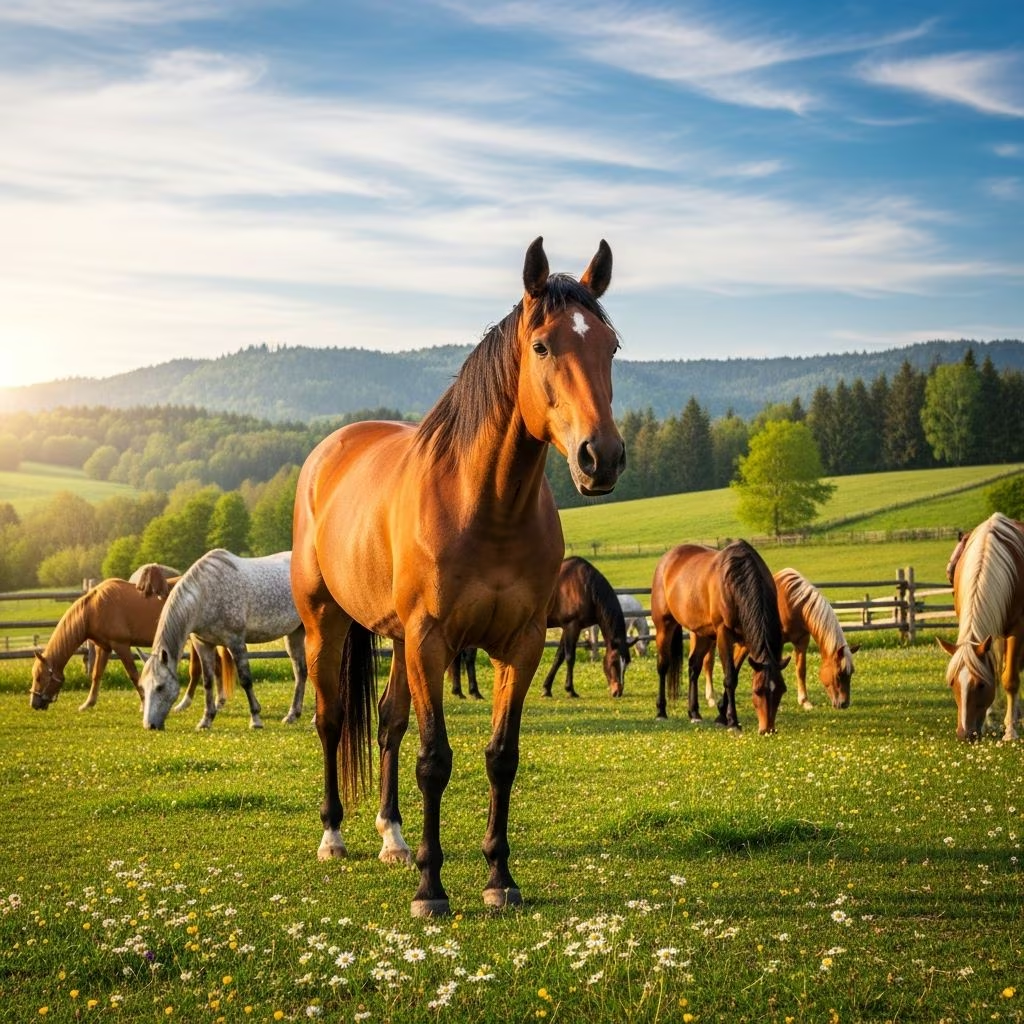
Selecting the right horse is a pivotal decision for any prospective owner, blending personal aspirations with practical considerations to foster a lasting bond. This guide explores key factors like temperament, physical attributes, and experience alignment to help you make an informed choice.
Assessing Your Personal Readiness and Goals
Before viewing any horse, clarify your objectives and capabilities. Beginners should prioritize calm, experienced animals, while seasoned riders might seek energetic prospects for competition. Evaluate your time availability, budget for care, and riding discipline—trail, dressage, or jumping—to narrow options effectively.
- Determine skill level: Novices benefit from horses aged 6-12 with proven training.
- Set budget: Factor in purchase price, ongoing feed, vet bills, and farrier costs.
- Define usage: Leisure riders need versatile mounts; competitors require specialized breeds.
Research breeds suited to your needs. Quarter Horses excel in Western disciplines for their agility, Arabians offer endurance, and Morgans provide versatility for families.
Evaluating Temperament and Behavior
**Temperament** stands as the cornerstone of a successful match, especially for novices. Seek horses that remain composed during handling, grooming, and riding. Observe reactions to touch, saddling, and cues; a forgiving nature prevents accidents and builds confidence.
During interactions, note compatibility with your energy. High-strung horses suit advanced riders, but beginners thrive with steady personalities. Test in varied environments—arena, trails, with others—to reveal true character. Inquire about stable vices like cribbing or weaving, which signal stress.
| Trait | Ideal for Beginners | Red Flags |
|---|---|---|
| Response to Aids | Responsive yet gentle | Resistant or explosive |
| Social Behavior | Calm with herd mates | Aggressive or fearful |
| Handling Tolerance | Relaxed under touch | Pinning ears or biting |
Physical Health and Soundness Inspection
A thorough health check ensures longevity. Watch for lameness—head bobbing, uneven strides—or stiffness. Conformation impacts performance: balanced proportions, straight legs, and strong hooves reduce injury risk. Poor structure often leads to chronic issues, shortening usable years.
Mandate a pre-purchase veterinary exam by a neutral professional. This includes flexion tests, X-rays, and bloodwork to uncover hidden problems like navicular disease or joint degeneration. For weight-bearing, horses comfortably carry 15-20% of body weight; exceed this, and stress mounts, particularly in young or senior equines.
Age, Training, and Experience Match
Age correlates with reliability. Younger horses (under 5) demand expert handling; opt for 6-12-year-olds for novices, offering maturity without excessive wear. Review training history: competition records verify skills in your discipline.
Match experience levels—never pair green riders with green horses. Trial rides in diverse settings confirm responsiveness. Lease trials allow extended assessment, revealing quirks over time.
Selecting the Best Breed for Your Needs
Breeds influence aptitude. Here’s a comparison:
| Breed | Strengths | Best For | Size Range |
|---|---|---|---|
| Quarter Horse | Speed, agility, calm | Western, ranch work | 14.3-16 hands |
| Arabian | Endurance, intelligence | Distance riding | 14.1-15.1 hands |
| Thoroughbred | Athleticism, speed | Racing, eventing | 15-17 hands |
| Morgan | Versatile, willing | Family, driving | 14.1-15.2 hands |
| Tennessee Walker | Smooth gait, gentle | Trail, pleasure | 14.3-16 hands |
Choose based on goals; drafts suit heavy work but not speed events.
Practical Steps in the Buying Process
- Research Thoroughly: Study breeds and care via extension resources.
- Shortlist Candidates: Use listings matching criteria.
- Visit and Observe: Assess in natural settings.
- Test Ride Extensively: Multiple sessions, varied terrains.
- Vet Exam: Comprehensive, including history review.
- Negotiate and Contract: Include guarantees, trial periods.
- Plan Transition: Quarantine, gradual acclimation.
Common Pitfalls to Avoid
- Ignoring vices: They escalate in new environments.
- Rushing decisions: Impulse buys lead to mismatches.
- Skipping vet checks: Hidden issues cost thousands.
- Overlooking costs: Annual upkeep rivals purchase price.
- Mismatched size: Ensure rider-horse weight ratio stays safe.
Building a Lasting Partnership Post-Purchase
After acquisition, invest in bonding through consistent routines. Regular training reinforces behaviors, while health monitoring prevents issues. Join clinics for skill-building, ensuring mutual growth.
Frequently Asked Questions (FAQs)
What is the best horse for a first-time owner?
A calm, 8-12-year-old gelding with trail and lesson experience, vetted sound.
How much should I spend on a beginner horse?
$5,000-$15,000, plus 10-20% annually for care.
Is a pre-purchase exam negotiable?
No—it’s essential for uncovering issues.
Can I buy a young horse as a beginner?
Not recommended; they require advanced skills.
How do I test horse personality?
Observe over days: handling, riding, group dynamics.
References
- AS-465 – Purdue Extension — Purdue University Extension. 2005 (authoritative extension guide on horse selection criteria). https://www.extension.purdue.edu/extmedia/as/as-465.html
- Buying a Horse: 11-Step Checklist — Farmhouse Tack. 2023. https://www.farmhousetack.com/blogs/barn-blog/buying-a-horse-11-step-checklist-for-a-first-time-horse-owner
- How To Choose The Absolute Horse for Beginner Riders — Happy Comly Sport Horses. 2023. https://www.happycomlysporthorses.com/how-to-choose-the-absolute-horse-for-beginner-riders/
- The (short) ultimate guide to find the right horse match — Primi Horse. 2023-02-12. https://www.primi.horse/2023/02/12/the-short-ultimate-guide-to-find-the-right-horse-match/
- What Makes a Beginner Horse? — A Equestrian Life. 2023-08. https://anequestrianlife.com/2023/08/what-makes-a-beginner-horse/



