

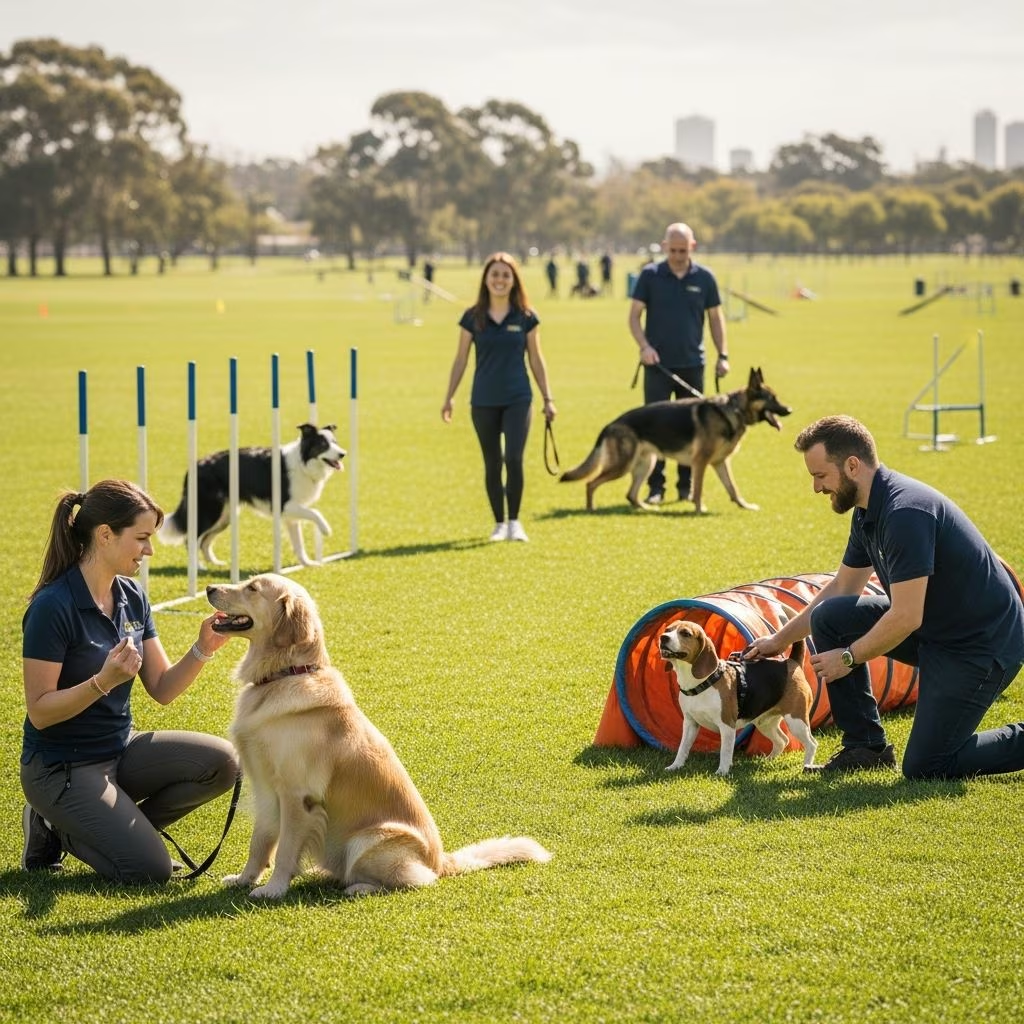
Finding the right dog trainer transforms challenging behaviors into harmonious companionship. Prioritize professionals with verified credentials, proven methods, and a personalized approach to match your dog’s unique profile.
Understanding Your Dog’s Training Requirements
Begin by clarifying what your dog needs. Basic obedience suits puppies learning sit and stay, while reactive adults demand specialists in fear or aggression management. Assess breed tendencies, age, and specific issues like leash pulling or separation anxiety to guide your search.
Different dogs thrive under tailored strategies. Energetic breeds may benefit from agility-focused experts, whereas anxious ones require behavior consultants skilled in desensitization. Document your observations—frequency of barking, triggers for jumping—to share accurately during consultations.
Key Certifications That Signal Expertise
Credentials from recognized bodies ensure trainers adhere to ethical, science-based practices. The Certification Council for Professional Dog Trainers (CCPDT) offers benchmarks like CPDT-KA, requiring 300 hours of experience and a rigorous exam on training principles. CPDT-KSA adds a skills assessment, demonstrating hands-on proficiency.
For complex issues, seek CBCC-KA, which demands 300 hours in behavior consulting and expertise in modification techniques. Other respected options include IAABC for consultants and Karen Pryor Academy certifications, emphasizing force-free learning. Verify active status on issuing websites, as lapsed credentials undermine reliability.
| Certification | Focus Area | Requirements |
|---|---|---|
| CPDT-KA | General Training | 300+ hours experience, exam |
| CPDT-KSA | Skills Assessment | 300+ hours, exam + practical demo |
| CBCC-KA | Behavior Consulting | 300+ hours behavior work, exam |
Evaluating Training Philosophies and Methods
Opt for trainers committed to positive reinforcement, using rewards to encourage desired actions without force or punishment. This aligns with modern animal learning science, promoting faster retention and stronger bonds. Avoid those endorsing dominance theory or aversive tools like shock collars, which can heighten fear and aggression.
- Force-Free Indicators: Emphasis on treats, toys, and praise; keywords like ‘reward-based’ or ‘fear-free’.
- Red Flags: Terms such as ‘alpha rolls’, prong collars, or unbalanced focus on corrections.
- Science-Backed: Ongoing education in operant conditioning updates.
During initial talks, request method demonstrations. A quality trainer explains how rewards shape behavior, adapting to your dog’s motivation—food for food-driven pups, play for others.
Assessing Experience and Specialization
Years in the field matter, with 5+ ideal for diverse challenges. Inquire about breeds handled, from tiny Chihuahuas to powerful shepherds, and issues resolved like resource guarding or storm phobias. Specialists in puppy socialization prevent future problems, while aggression pros use counter-conditioning protocols.
Real-world proof comes via case studies or anonymized successes. A trainer versed in your dog’s profile—say, herding breed reactivity—offers targeted plans over generic ones.
Personal Qualities of Top Trainers
Beyond skills, seek patience, clear communication, and empathy. They remain composed amid setbacks, tailoring pace to your dog’s learning curve. Effective trainers teach owners too, breaking down techniques for home reinforcement. Gauge rapport via phone: Do they listen actively, explain jargon-free, and inspire confidence?
Comfort is mutual—your dog should relax around them, tail wagging not tucked. Observe interactions if possible; pros read subtle cues like ear position or yawns signaling stress.
Practical Steps to Vet Potential Trainers
- Gather Referrals: Ask vets, groomers, or friends for recommendations tied to positive outcomes.
- Online Research: Review websites for professionalism, blogs on learning theory, and video demos.
- Contact Multiple: Schedule 15-minute calls; prepare questions on philosophy, success rates, session formats.
- Check Reviews: Platforms like Yelp or Google, prioritizing detailed client stories over star ratings.
- Observe Sessions: Attend a class or request a trial to witness group dynamics and individual attention.
Logistics: Classes, Private Sessions, and Costs
Group classes build socialization affordably ($100-200 for 6 weeks), suiting mild issues. Private sessions ($50-150/hour) provide customization for severe behaviors. Hybrid options blend both. Factor location, virtual availability, and guarantees like progress tracking.
Budget wisely—cheapest isn’t best, but transparency on pricing avoids surprises. Inquire about packages, cancellations, and homework support.
Questions to Ask Every Prospective Trainer
- How long have you trained dogs, and what certifications do you hold?
- Describe your primary methods and why you use them.
- Have you worked with dogs like mine (age, breed, issues)?
- Can you share client references or testimonials?
- What does a typical session involve, and how do you measure progress?
- Are you affiliated with professional groups like APDT or CCPDT?
Common Pitfalls to Avoid
Steer clear of ‘quick fixes’ promising miracles in days—sustainable change takes weeks. Beware self-proclaimed ‘behaviorists’ lacking degrees; true ones hold advanced ethology qualifications. Ignore trainers dodging questions or lacking transparency on limits—ethical pros refer out when needed, like to vets for medical roots.
Don’t overlook ongoing education; fields evolve with research, so prioritize CCPDT members pursuing CEUs.
Building a Lasting Partnership
The best trainer-dog-owner trio fosters trust and consistency. Commit to homework, track improvements via journals, and celebrate milestones. This collaboration yields obedient, confident dogs and empowered owners.
Frequently Asked Questions
What if my dog has aggression issues?
Choose CBCC-KA certified behavior consultants experienced in modification, starting with safety assessments and vet clearances.
How many sessions does training take?
Varies by issue—basics in 4-6, behaviors in 10+ with home practice.
Are online trainers effective?
Yes, for many via video, especially basics, if interactive and credentialed.
What breeds need specialized trainers?
High-drive like Malinois or reactive bully breeds benefit from experts.
Can I train my dog myself?
Basics yes, but pros accelerate complex fixes safely.
References
- How to Choose a Professional Dog Trainer or Behavior Consultant — Certification Council for Professional Dog Trainers (CCPDT). Accessed 2026. https://www.ccpdt.org/dog-owners/how-to-choose-a-dog-trainer/
- How to Choose the Right Dog Trainer — Shelby Semel Dog Training. 2024-10-29. https://www.shelbydogtraining.com/blog/2024/10/29/how-to-choose-the-right-dog-trainer
- Selecting the Perfect Dog Trainer: A Tailored Approach — Paw Commons. Accessed 2026. https://www.pawcommons.com/selecting-the-perfect-dog-trainer-a-tailored-approach/
- Tips for Finding a Dog Trainer — Zoetis Petcare. Accessed 2026. https://www.zoetispetcare.com/blog/article/tips-finding-dog-trainer
- Choosing the Best Dog Trainer | What to Look For — Pet Assure. Accessed 2026. https://www.petassure.com/maxscorner/what-to-look-for-in-a-dog-trainer/
- What to Look for When Choosing the Best Dog Trainer for Your Pet — Inquisitive Canine. Accessed 2026. https://inquisitivecanine.com/what-to-look-for-when-choosing-the-best-dog-trainer-for-your-pet/



