

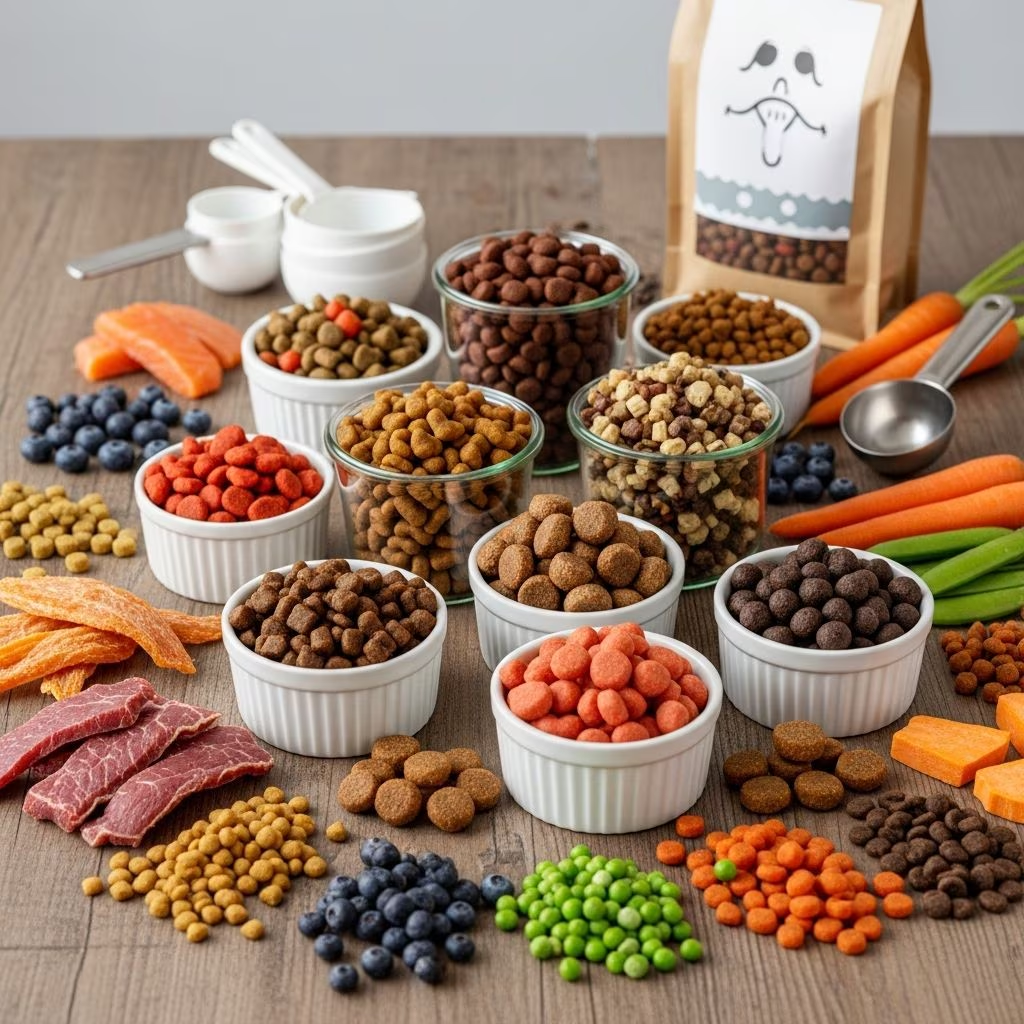
Dry dog food, or kibble, remains a popular choice for pet owners due to its convenience, affordability, and long shelf life. Selecting the right formula requires understanding nutritional standards set by authoritative bodies like the Association of American Feed Control Officials (AAFCO), which ensure complete and balanced nutrition for dogs at various life stages. This guide explores key factors to consider, from essential nutrients to label decoding, helping you provide optimal nutrition for your canine companion.
Understanding Essential Nutrients in Dry Dog Food
A balanced dry dog food must supply six core nutrient categories: proteins, fats, carbohydrates, vitamins, minerals, and water. While water is added separately, kibble formulations prioritize the others to support metabolic functions, growth, and disease prevention. Protein serves as the building block for muscles and tissues, with AAFCO mandating a minimum of 22.5% dry matter (DM) for growing puppies and 18% DM for adults. High-quality proteins from animal sources like meat meals offer superior digestibility, ideally above 86%.
Fats provide concentrated energy and essential fatty acids for skin, coat, and brain health. Adult maintenance diets typically range from 5-15% fat on a DM basis, while puppy formulas may reach 8-20%. Carbohydrates, often from whole grains or vegetables, contribute fiber for digestion and additional vitamins without excess calories. Vitamins and minerals, such as calcium (minimum 0.5-1.2% DM depending on life stage) and vitamin D (500-3,000 IU/kg), are crucial for bone health and immune function.
| Nutrient | Growth/Reproduction Min-Max (DM % or IU/kg) | Adult Maintenance Min-Max | Key Sources | Health Role |
|---|---|---|---|---|
| Protein | 22.5% min (up to 30% max) | 18% min | Meat meals, animal proteins | Muscle repair, enzymes |
| Fat | 8-20% | 5-15% | Fish oil, animal fats | Energy, skin/coat |
| Calcium | 1.2-2.5% | 0.5-2.5% | Meat meals, flaxseed | Bone structure, nerves |
| Vitamin D | 500-3,000 IU/kg | Same | Fish, liver, eggs | Bone maintenance |
This table summarizes AAFCO-guided minima and maxima, adapted for dry food contexts. Exceeding upper limits, like calcium over 2.5%, risks skeletal issues in large-breed puppies.
Decoding Dog Food Labels for Quality
The nutritional adequacy statement on packaging is your primary checkpoint. It confirms if the food meets AAFCO profiles for ‘growth/reproduction’ or ‘adult maintenance’ via lab analysis or feeding trials. Look for phrases like ‘complete and balanced’ backed by AAFCO protocols. Ingredient lists prioritize by weight pre-cooking; named meats first indicate higher protein content.
- AAFCO Statement: Ensures all nutrients hit required levels.
- Guaranteed Analysis: Lists minimum protein/fat, maximum fiber/moisture percentages.
- Calorie Content: Helps portion control; treats should not exceed 15% daily intake.
- Life Stage Match: Puppies need higher protein/calcium; seniors may benefit from joint-support additives.
Avoid vague terms like ‘meat by-products’ without specifics, as quality varies. Whole grains are not fillers but provide digestible energy and fiber, per veterinary research.
Life-Stage Specific Dry Food Recommendations
Dogs’ needs evolve: puppies require nutrient-dense kibble for rapid growth, adults for maintenance, and seniors for moderated calories with added antioxidants.
Puppy Nutrition Priorities
For puppies 4-14 weeks, aim for 45g protein per 1,000 kcal; older puppies need 35g. Formulas with DHA from fish oil support brain development. Large breeds need controlled calcium (max 1.8%) to prevent hip dysplasia.
Adult Dog Balance
Active adults thrive on 20-45g protein/1,000 kcal, balancing energy without obesity risk. Indoor dogs benefit from lower-fat options with fiber for satiety.
Senior and Special Needs
Older dogs often need 18%+ protein to combat muscle loss, plus glucosamine for joints. Consult vets for health conditions like allergies or obesity.
Pro Tip: Transition foods gradually over 7-10 days to avoid digestive upset.
Ingredient Quality and Common Pitfalls
Premium dry foods emphasize recognizable, whole-food ingredients. Animal proteins should dominate over plant fillers for amino acid completeness—dogs require 10 essentials like arginine and lysine. Rendered meat meals can be nutrient-rich if from quality sources, concentrating proteins post-water removal.
Watch for:
- Fillers: Excessive corn or wheat may suit some but trigger allergies in others.
- Preservatives: Natural options like mixed tocopherols over synthetics.
- Artificial Additives: Colors/flavors unnecessary for nutrition.
Grains provide B vitamins and beta-glucans for gut health, debunking ‘grain-free’ myths unless medically needed.
Evaluating Dry Food Brands Objectively
No single ‘best’ exists; match to your dog’s profile. Check independent reviews, but prioritize AAFCO compliance. Cost per nutrient (e.g., protein/lb) offers value insight. Sample via trial sizes.
| Criteria | High-Quality Indicator | Red Flag |
|---|---|---|
| Protein Source | Named meats first (e.g., chicken meal) | Generic ‘meat’ |
| AAFCO Status | Feeding trial complete | ‘For intermittent feeding’ |
| Digestibility | 86%+ protein digest | High ash/filler content |
| Fat Levels | Matches activity/life stage | >20% for sedate adults |
Storage, Feeding, and Health Monitoring
Store kibble in airtight containers away from light/moisture to preserve nutrients. Feed based on calorie needs: calculate via weight/activity using label guides. Monitor weight, stool quality, coat shine, and energy; adjust as needed. Annual vet checkups validate diet efficacy.
Frequently Asked Questions (FAQs)
What makes dry dog food ‘complete and balanced’?
It meets AAFCO nutrient profiles or passes feeding trials, supplying all essentials for specified life stages.
Is grain-free dry food better?
Not inherently; whole grains offer benefits unless allergies exist. Research shows they’re nutrient contributors.
How much protein does my adult dog need?
Minimum 18% DM or ~20g/1,000 kcal, higher for active breeds.
Can I mix dry food with wet or homemade?
Yes, but ensure overall balance; consult a veterinary nutritionist.
How do I know if the food suits my dog?
Observe vitality, digestion, and body condition; switch if issues persist after proper transition.
References
- Dog Nutrition: Guide to Dog Food Nutrients — PetMD. 2023. https://www.petmd.com/dog/nutrition/evr_dg_whats_in_a_balanced_dog_food
- Nutritional Requirements of Small Animals — Merck Veterinary Manual. 2024. https://www.merckvetmanual.com/management-and-nutrition/nutrition-small-animals/nutritional-requirements-of-small-animals
- Essential Dog Food Ingredients for Healthy Dogs — American Kennel Club. 2023. https://www.akc.org/expert-advice/nutrition/essential-dog-food-ingredients-for-healthy-dogs/
- Nutrition – General Feeding Guidelines for Dogs — VCA Animal Hospitals. 2024. https://vcahospitals.com/know-your-pet/nutrition-general-feeding-guidelines-for-dogs
- Nutrition – Canine Welfare Science — Purdue University. 2023. https://caninewelfare.centers.purdue.edu/health/nutrition/
- Best Dog Food Nutrition at Each Lifestage — Hill’s Pet Nutrition. 2024. https://www.hillspet.com/dog-care/nutrition-feeding/dog-nutrition-for-every-lifestage
- “Complete and Balanced” Pet Food — FDA. 2023-01-15. https://www.fda.gov/animal-veterinary/animal-health-literacy/complete-and-balanced-pet-food



