

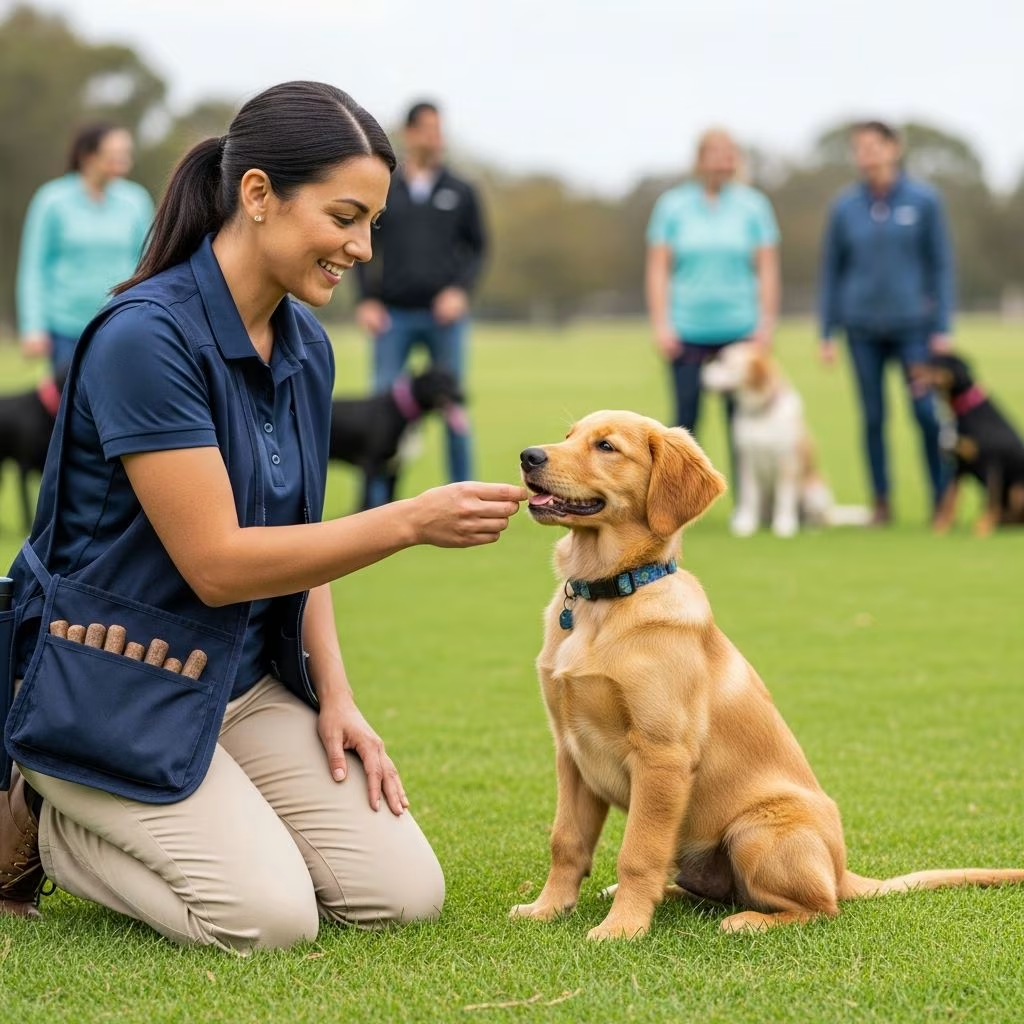
Finding a qualified, humane dog trainer can make the difference between daily frustration and a comfortable life with your dog. This guide walks you through what dog trainers do, how to understand different training methods, how to evaluate qualifications, and how to choose a professional who fits your dog, your goals, and your values.
What Does a Dog Trainer Do?
A professional dog trainer helps you and your dog learn skills that make everyday life safer, easier, and more enjoyable. They work with both dogs and humans, because behavior change only truly sticks when everyone in the household understands what to do and why.
Broadly, a trainer can help you with:
- Life skills and manners such as sit, down, stay, recall, and polite greetings.
- Puppy foundations including socialization, crate training, and house training.
- Problem behaviors like jumping, pulling on leash, barking, or chewing.
- Behavior concerns such as fear, anxiety, or aggression (often in collaboration with a behaviorist or veterinarian).
- Dog sports and enrichment including agility, rally, nosework, parkour, and trick training.
Modern trainers increasingly rely on welfare-friendly, evidence-based techniques that focus on reinforcing desired behaviors rather than punishing mistakes.
Different Types of Dog Trainers
Not all trainers offer the same services. Understanding the main categories helps you look for the right fit for your situation.
| Type of Trainer | What They Focus On | Best For |
|---|---|---|
| Pet dog trainer | Basic manners and everyday skills for family dogs. | New dog guardians, common behavior issues. |
| Puppy specialist | Socialization, early learning, prevention of problem behaviors. | Puppies in their first year; first-time dog guardians. |
| Behavior consultant | Fear, anxiety, aggression, and complex behavior problems. | Dogs who are reactive, fearful, or have bite history (often with veterinary input). |
| Sport trainer | Competition skills for agility, rally, obedience, nosework, and more. | Handlers interested in performance or enrichment through sports. |
| Day training / board-and-train | Trainer works directly with the dog for part of the day or full-time stays. | Busy households needing extra support, with owner coaching built in. |
Some professionals combine several of these roles; what matters most is that they use humane, science-based methods and communicate clearly about what they do.
Key Dog Training Methods Explained
When you compare trainers, you will see different labels for training styles. Behind the marketing terms, there are a few key concepts drawn from learning theory. Reputable organizations such as the American Veterinary Society of Animal Behavior (AVSAB) and the American College of Veterinary Behaviorists recommend approaches that prioritize positive reinforcement and minimize fear or pain.
Positive Reinforcement
Positive reinforcement means adding something the dog likes (often food, toys, or access to activities) immediately after a behavior, so that the behavior becomes more likely in the future. Examples include:
- Rewarding your dog with a treat when they come when called.
- Giving a chew or praise for calmly settling on a mat.
- Playing a quick game of tug after a great recall.
This approach is strongly supported by behavioral science and is associated with better welfare and fewer behavior problems compared with punishment-based methods.
Management and Setting Up for Success
Good trainers also emphasize management: arranging the environment so your dog is less likely to practice unwanted behaviors.
- Using baby gates or tethers to prevent door-dashing.
- Providing chew items and supervising to protect furniture.
- Avoiding overwhelming situations for fearful dogs while they are learning.
Management does not replace training, but it buys you peace of mind and prevents rehearsals of the very behaviors you want to change.
Reward-Based vs. Aversive Methods
Reward-based trainers focus on teaching dogs what to do and reinforcing those choices. Aversive methods rely on pain, fear, or discomfort to stop behavior, such as shock collars, prong collars used to cause pain, leash jerks, or yelling.
Research links aversive training methods with:
- Increased signs of stress, such as lip-licking and lowered body posture.
- Higher risk of aggression or fear toward people and other dogs.
- Worse overall welfare when used frequently or at high intensity.
For these reasons, many veterinary and behavior organizations advise avoiding trainers who rely on fear or pain, especially for dogs who are already anxious or reactive.
Understanding Credentials and Certifications
The dog training industry is largely unregulated in many countries, which means anyone can call themselves a trainer. Recognized certifications and professional memberships help you identify people who have met certain education and ethics standards, though they are not a guarantee of quality.
Common credentials include (examples, not endorsements):
- CPDT-KA / CPDT-KSA – Certified Professional Dog Trainer (Knowledge Assessed / Skills Assessed), requiring exams, experience, and continuing education.
- CAAB / ACAAB – Certified (Applied) Animal Behaviorist, typically with graduate degrees and research or clinical experience.
- Veterinary behaviorists (DACVB) – Veterinarians who completed a behavior residency and board certification; they can diagnose and treat behavior disorders and prescribe medication.
When you review a trainer’s website or materials, look not only at letters after their name but also for:
- A clearly stated humane, reward-based philosophy.
- Mention of continuing education (seminars, conferences, courses).
- Membership in reputable organizations that publish ethics guidelines.
How to Choose the Right Trainer for Your Dog
Choosing a trainer is part research project, part gut check. Use these steps to narrow your options and then evaluate the best fit.
Clarify Your Goals
First, write down what you want help with. Be as specific as you can:
- “My puppy bites my hands when excited and chews furniture.”
- “My dog lunges and barks at other dogs on walks.”
- “I want to prepare my dog for therapy work.”
Clear goals help you find someone who regularly works with those issues and lets you measure progress.
Questions to Ask a Potential Trainer
Reputable trainers are usually happy to answer questions. Consider asking:
- What methods do you use? Look for answers centered on positive reinforcement, management, and humane handling.
- How do you handle unwanted behavior? You want to hear about preventing triggers, teaching alternative behaviors, and avoiding pain or fear.
- What is a typical session or class like? Ask about class size, safety protocols, and how they support shy or reactive dogs.
- What education and certifications do you have? Follow up by looking them up when possible.
- Can I observe a class before enrolling? Observation days are a good sign of transparency.
Red Flags to Watch Out For
Certain claims or practices should prompt caution or further questions, especially when they conflict with current behavioral science and veterinary recommendations.
- Guarantees of instant fixes or very short timelines for complex behavior problems.
- Frequent use of painful tools (shock collars, prong collars used harshly) or intimidating techniques.
- Statements that dogs are trying to be “dominant” or “alpha” and must be “put in their place,” which conflict with modern understanding of dog behavior.
- Discouraging you from being involved in training or asking questions.
- Refusal to work with your veterinarian or a behavior specialist when needed.
Private Lessons vs. Group Classes vs. Day Training
Most training services fall into a few main formats. Each has advantages depending on your needs, budget, and schedule.
| Format | Pros | Considerations |
|---|---|---|
| Group classes |
|
|
| Private lessons |
|
|
| Day training / board-and-train |
|
|
Preparing for Your First Training Session
Once you choose a trainer, a little preparation helps you get the most from your time together.
Gather Information About Your Dog
Before the first session, many trainers will send an intake form. Be honest and detailed about:
- Your dog’s age, breed or mix, and health history.
- Previous training, including any use of aversive tools.
- Specific situations where behavior is challenging (who, what, when, where).
- Household members, including children and other pets.
For behavior concerns like fear or aggression, your trainer may coordinate with your veterinarian or suggest a veterinary behaviorist for a complete assessment.
Essential Training Supplies
Having the right tools on hand makes learning smoother for both of you. Common items include:
- Comfortable, well-fitted harness or collar that does not restrict breathing or cause pain.
- Standard 1.8–2 m (6 ft) leash for control without tension.
- High-value treats cut into very small pieces (e.g., soft commercial treats, cooked chicken).
- A treat pouch for easy access and quick timing.
- A mat or bed to teach settle and relaxation behaviors.
Setting Realistic Expectations
Behavior change takes time, especially when emotions like fear or frustration are involved. A good trainer will:
- Explain what progress might look like over weeks or months.
- Break big goals into smaller skills you can practice daily.
- Adjust the plan if your dog struggles, rather than pushing harder.
Consistent, short training sessions built into your daily routine—at mealtimes, on walks, or during play—are often more effective than long, occasional sessions.
Working as a Team: You, Your Dog, and Your Trainer
The most successful training outcomes come when guardian, dog, and trainer work together. Think of your trainer as a coach: they guide you, but your daily interactions with your dog are what truly build habits.
To keep progress moving:
- Ask questions whenever something is unclear.
- Practice the homework exercises as assigned, in short, frequent sessions.
- Share updates about what is working well and where you feel stuck.
- Celebrate small wins—calmer walks, quicker settles, or fewer rehearsals of problem behaviors.
If something in a session makes you uncomfortable—such as a technique that seems harsh—speak up. Ethical trainers are usually open to adjusting strategies and explaining their reasoning; if they cannot, it may be time to seek another professional.
Frequently Asked Questions (FAQs)
Q: When should I start training my puppy?
You can begin gentle, positive reinforcement training as soon as your puppy comes home. Early socialization and basic skills during the first few months support better behavior and lower risk of fear or aggression later in life.
Q: How do I know if a trainer is using humane methods?
Look for clear statements about using positive reinforcement, avoiding fear and pain, and following guidelines from veterinary behavior organizations. Avoid trainers who rely heavily on shock, pain, intimidation, or outdated “dominance” ideas.
Q: Can group classes help with serious behavior problems?
Group classes are excellent for basic manners and controlled social exposure, but serious issues such as reactivity, fear, or aggression usually require individualized help from a trainer or behavior professional, often in coordination with your veterinarian.
Q: How long will it take to fix my dog’s behavior?
Timelines vary based on your dog’s history, health, environment, and how consistently you practice. Simple manners can improve in a few weeks, while fear or aggression often require longer-term plans and careful management.
Q: Do I still need to train if I use day training or board-and-train?
Yes. Even when a professional does much of the initial repetition, your dog must learn to respond to you in your real-life environment. Quality programs include owner coaching so you can maintain and generalize new behaviors at home.
References
- AVSAB Position Statement on Humane Dog Training — American Veterinary Society of Animal Behavior. 2021-10-01. https://avsab.org/resources/position-statements/
- Companion Animal Welfare and Training Methods — Vieira de Castro AC, et al., Journal of Veterinary Behavior. 2020-04-01. https://doi.org/10.1016/j.jveb.2019.10.008
- How to Train a Rescue Dog — Guidelines to Follow — Kinship. 2023-06-01. https://www.kinship.com/dog-behavior/rescue-dog-training
- How to Integrate Training Into Your Puppy’s Daily Life — Kinship. 2023-05-01. https://www.kinship.com/dog-behavior/daily-puppy-training
- Guidelines for the Behavioral Assessment of Dogs — American College of Veterinary Behaviorists. 2018-01-01. https://www.dacvb.org/page/PositionStatements



