

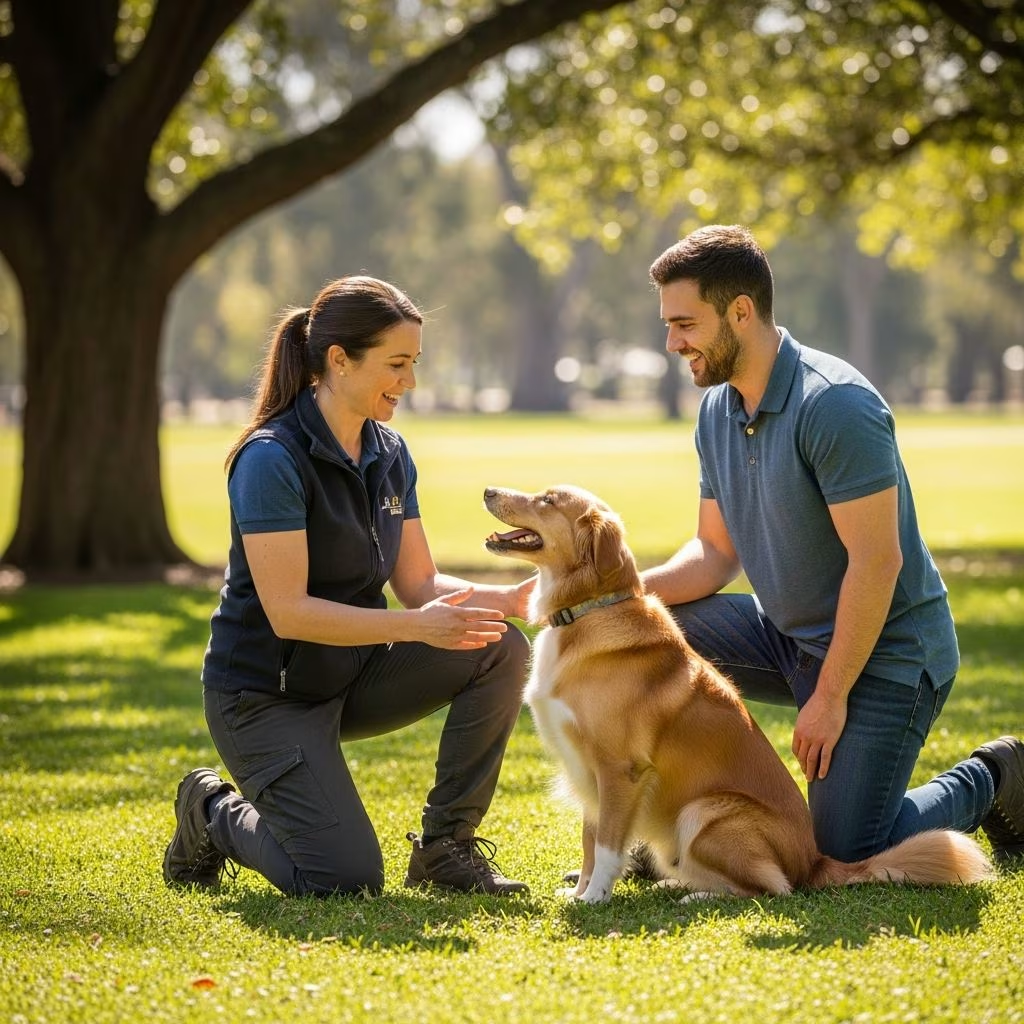
Finding the right dog trainer transforms challenging behaviors into harmonious companionship. Prioritize professionals with verified credentials, humane techniques, and proven results to match your dog’s specific needs.
Understanding Your Dog’s Training Requirements
Begin by assessing what your dog truly needs. Identify whether the focus is on basic obedience, addressing aggression, managing separation anxiety, or preparing for specialized activities like agility or therapy work. Every canine has distinct temperament traits influenced by breed, age, and past experiences, so tailor your search accordingly.
Consider these factors:
- Age and developmental stage: Puppies require socialization-focused programs, while adult dogs might need behavior correction.
- Specific challenges: Note issues like excessive barking, leash reactivity, or housebreaking difficulties.
- Your lifestyle: Group classes suit social dogs; private sessions benefit those with severe issues or busy schedules.
Document these details to communicate effectively during consultations, ensuring the trainer can address them precisely.
Key Certifications That Signal Expertise
Credentials from recognized bodies demonstrate rigorous education, testing, and ongoing commitment to best practices. The Certification Council for Professional Dog Trainers (CCPDT) offers benchmarks like CPDT-KA, CPDT-KSA, and CBCC-KA, requiring exams, skills assessments, and substantial experience hours.
| Certification | Requirements | Best For |
|---|---|---|
| CPDT-KA | Comprehensive exam + 300+ hours training experience | General obedience and skills trainers |
| CPDT-KSA | Exam + skills assessment + 300+ hours | Hands-on trainers with demonstrated proficiency |
| CBCC-KA | Behavior modification exam + 300+ hours consulting | Complex behavior consultants |
Other respected options include Karen Pryor Academy (KPA) programs, which emphasize science-based learning. Always verify current status on official registries, as renewals demand continuing education.
Evaluating Training Philosophies and Methods
Opt for trainers grounded in modern animal learning science, favoring positive reinforcement over outdated compulsion techniques. Force-free approaches use rewards to encourage desired behaviors, reducing stress and fostering enthusiasm for learning.
Red flags include promoters of dominance theory, shock collars, or prong chains, which can exacerbate fears and damage trust. During interviews, probe their stance:
- Do they prioritize operant conditioning principles?
- Can they explain reward timing and marker signals?
- Have they adapted to recent research on canine cognition?
A 2024 analysis highlights that positive methods yield higher long-term compliance and stronger human-canine bonds.
Assessing Professional Experience and Track Record
Years in the field matter, but depth trumps quantity. Seek trainers with 5+ years handling diverse breeds and issues, from rescues to competition dogs. Request specifics on case successes, such as resolving resource guarding or improving recall in distractions.
Client testimonials and references provide unfiltered insights. Check online reviews across platforms, focusing on patterns in outcomes rather than isolated praises. Professional affiliation with groups like the Association of Professional Dog Trainers (APDT) indicates adherence to ethical standards.
Conducting Thorough Trainer Interviews
Schedule consultations to gauge compatibility. Prepare targeted questions:
- What formal education or programs have you completed?
- How do you handle setbacks, like a dog regressing on commands?
- Can you share references from similar cases?
- What is your policy on progress guarantees or session adjustments?
Observe their communication: clear, patient explanations signal effectiveness. Ensure they listen to your concerns without dismissing them. Your dog should appear relaxed in their presence during meet-and-greets.
Balancing Cost, Logistics, and Personal Fit
Quality training investments range from $100-300 per private session or $150-400 for packages, varying by location and expertise. Group classes offer affordability but less customization. Factor in travel, scheduling, and trial policies.
Personal rapport is paramount—you’ll collaborate closely, so mutual respect ensures follow-through on homework. If your dog shows stress or avoidance, explore alternatives promptly.
Common Pitfalls to Avoid in Your Search
Steer clear of “self-proclaimed experts” lacking verifiable credentials, those relying on anecdotal or YouTube-sourced knowledge, or anyone evading questions on methods. Beware of guarantees of instant fixes, as ethical training acknowledges individual variability.
True behaviorists hold advanced degrees for severe cases; distinguish them from general trainers. Unregulated fields breed inconsistencies, so prioritize transparency and science-backed integrity.
Building a Successful Training Partnership
Once selected, commit fully: consistency in applying techniques at home amplifies results. Track progress with journals, celebrating incremental wins. Reassess quarterly to adapt plans.
Trainers excelling in people skills empower you, turning you into your dog’s primary guide. This collaborative model sustains behaviors long-term.
FAQs
What if my dog has aggression issues?
Seek CBCC-KA certified consultants experienced in counter-conditioning and desensitization. Rule out medical causes via vet first.
How many sessions does training typically take?
Basic obedience: 4-8 sessions. Complex behaviors: 10-20+, depending on consistency and severity.
Are group classes suitable for reactive dogs?
Often not initially; start with private sessions to build foundations safely.
What ongoing education should trainers pursue?
Conferences, webinars on ethology, and renewals via CCPDT or APDT.
Can I train my dog myself?
Yes for basics, but professionals accelerate progress and handle nuances effectively.
References
- How to Choose a Professional Dog Trainer or Behavior Consultant — Certification Council for Professional Dog Trainers (CCPDT). Accessed 2026. https://www.ccpdt.org/dog-owners/how-to-choose-a-dog-trainer/
- How to Choose the Right Dog Trainer — Shelby Semel Dog Training. 2024-10-29. https://www.shelbydogtraining.com/blog/2024/10/29/how-to-choose-the-right-dog-trainer
- Finding the Right Dog Trainer — Tufts University Cummings School of Veterinary Medicine (TVMF). Accessed 2026. https://www.tvmf.org/articles/finding-right-dog-trainer-2/
- Selecting the Perfect Dog Trainer: A Tailored Approach — Paw Commons. Accessed 2026. https://www.pawcommons.com/selecting-the-perfect-dog-trainer-a-tailored-approach/
- Tips for Finding a Dog Trainer — Zoetis Petcare. Accessed 2026. https://www.zoetispetcare.com/blog/article/tips-finding-dog-trainer



