

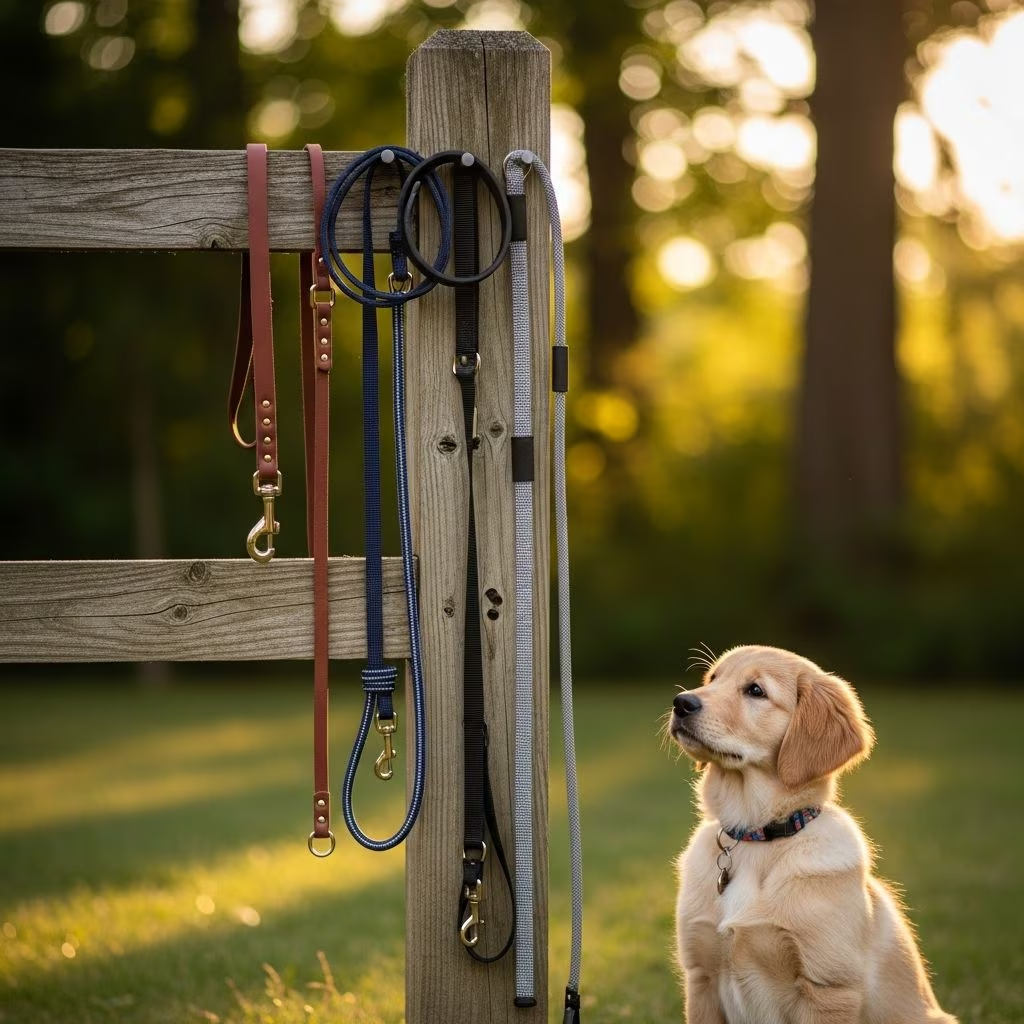
Selecting the appropriate leash length is fundamental to successful dog training, as it directly influences control, safety, and your dog’s ability to learn. Different lengths serve specific purposes, from close management during early stages to extended freedom for building reliable responses at distance. This guide breaks down ideal lengths for various scenarios, helping you equip your dog for effective training across everyday walks, behavior correction, and advanced skills.
Understanding Leash Length Basics
Leash lengths typically range from a few inches to over 50 feet, each designed for particular training needs. Shorter options provide maximum control, ideal for beginners or reactive dogs, while longer ones promote natural movement and exploration, fostering better engagement without tension. Factors like your dog’s size, strength, training level, and environment play key roles in selection. For instance, a 4-6 foot leash suits most standard walks, offering slack for polite heeling without excess slack that could tangle.
Material and width also matter: narrower leashes (5/8 inch) work for small or well-trained dogs, while wider 3/4-inch versions with robust clips suit larger breeds in training. Always prioritize durability to withstand pulling or chewing, especially with puppies.
Short Leashes for Precision Control
Leashes under 4 feet excel in high-control situations, preventing pulling, jumping, or lunging. A 3-4 foot length keeps new puppies or unfamiliar dogs close, perfect for crowded areas like city streets or markets where distractions abound.
- 3-foot leash: Best for tall dogs needing tight management or initial heel training; maintains side-by-side positioning.
- 4-foot leash: Versatile for neighborhoods, offering control during greetings or unexpected stimuli like squirrels.
These lengths discourage poor habits by limiting reach, allowing you to guide without constant tension. Transition to longer only after consistent success.
Standard Leashes for Everyday Walking
The 4-6 foot range is the gold standard for routine outings, balancing freedom and oversight. A 6-foot leash lets dogs potty comfortably and explore mildly while enabling loose-leash walking, where slack reduces instinctive pulling.
| Length | Best For | Pros | Cons |
|---|---|---|---|
| 4-5 feet | Training pullers, urban walks | High control, easy handling | Limited exploration |
| 6 feet | Daily parks, neighborhoods | Slack for natural gait, versatile | May need gathering in tight spots |
Opt for adjustable models with stops for growing puppies, shortening as needed for better manners. Reflective versions enhance night safety.
Long Lines for Advanced Freedom and Recall
Extending 8-50 feet, long lines (also called longlines or check cords) are training powerhouses for recall, stay, and leave-it at distance. They provide safety in open areas without full off-leash risk, ideal for hikes or yards where reliability is building.
- 8-10 feet: Extended walks for polite walkers; trains responses without full commitment.
- 15-30 feet: Core recall practice; allows sniffing and movement while reeling in for success.
- 30-50 feet: Advanced hiking or tracking; maximizes exploration for confident dogs.
Attach to a back-clip harness to avoid neck strain. Manage by picking up slack dynamically, preventing snags on obstacles. Weight increases with length, so choose lightweight materials for small dogs.
Specialized Tools: Tabs and Drag Lines
Tabs—short 3-6 inch stubs—offer hands-free control indoors or for collar acclimation. They’re invaluable for tense dogs, providing a quick grab point without full leashes. Drag lines, similar but longer (10-15 feet), serve as outdoor backups, preventing escapes during play.
Puppies benefit from dragging standard 6-foot leashes at home post-collar habituation, aiding potty training grabs and preventing door dashes.
Tailoring Leash Choice to Your Dog’s Profile
Puppies and Novices
Start with 4-6 feet for balance: thick enough against teething (3/4-1 inch wide), long for dragging indoors. Shorten for reactivity as they learn side-positioning.
Reactive or Strong Pullers
Stick to 3-4 feet until manners improve; longer exacerbates issues by reducing leverage.
Well-Behaved Adults
Upgrade to 10-15 feet for routine walks, enhancing sniffing to curb boredom-pulling.
Training Techniques by Leash Length
Loose-Leash Walking (4-6 ft): Reward heel position with treats; slack teaches non-pulling.
Recall Drills (15-30 ft): Call from distance, gently reel if needed; builds distance obedience.
Heel Refinement (3-4 ft): Practice in low-distraction zones, gradually adding length.
Common Mistakes and Solutions
- Using retractables: Avoid; they encourage pulling and lack training control.
- Premature lengthening: Maintain short until 80% compliance.
- Ignoring width/weight: Match to size for comfort.
FAQs
What is the best leash length for puppy training?
A 4-6 foot standard leash balances control and habituation, transitioning to drags for house training.
When should I use a long line?
For recall in open spaces or giving freedom to reliable walkers; 15-30 feet is versatile.
Can I use one leash for everything?
No—specialize: short for control, standard for walks, long for training.
How do I handle long leash tangles?
Use harnesses, pick up slack proactively, and choose flat or rope materials.
Is a 10-foot leash good for daily walks?
Yes, for trained dogs—it reduces stress via more sniffing.
Building a Leash Collection
Invest in 3-5 leashes: short tab, 4ft control, 6ft standard, 20ft long line, adjustable hybrid. Rotate based on goals, tracking progress by easing to longer lengths. This methodical approach accelerates training, strengthens your bond, and ensures safe, enjoyable outings tailored to your dog’s journey.
References
- What Length Should I Choose for My Dog’s Leash? — RuffGrip. Accessed 2026. https://www.ruffgrip.com/pages/what-length-should-i-choose-for-my-dogs-leash
- Leash length; the long and short of it. — Sit Pretty Behavior & Training. Accessed 2026. https://www.sit-pretty.ca/blog/leash-length-the-long-and-short-of-it
- Selecting the Correct Leash Length for Your Various Leash Training Exercises. — Whole Dog Journal. Accessed 2026. https://www.whole-dog-journal.com/training/selecting-the-correct-leash-length-for-your-various-leash-training-exercises/
- Long vs. Short Dog Leashes: How To Choose. — Orvis News. Accessed 2026. https://news.orvis.com/dogs/long-vs-short-dog-leashes-choose
- Teach your dog to walk on a loose leash. — Animal Humane Society. Accessed 2026. https://www.animalhumanesociety.org/resource/teach-your-dog-walk-loose-leash



