

Choosing and Fitting Hoof Boots for Horses
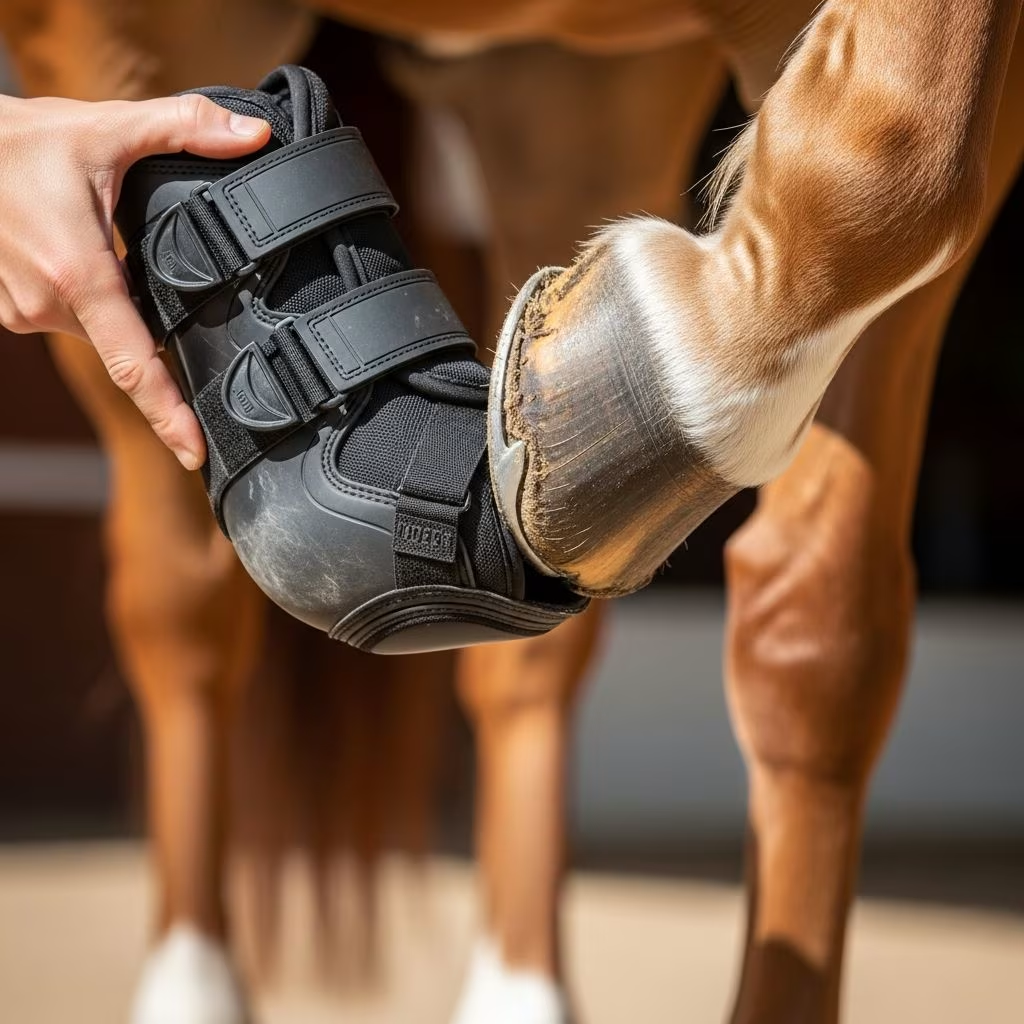
Hoof boots are essential protective equipment for horses, whether they’re used for trail riding, therapeutic purposes, or transitioning to barefoot living. Selecting the right hoof boots and ensuring they fit properly can make the difference between a comfortable, protected hoof and one that suffers from blistering, rubbing, or instability. This comprehensive guide will walk you through everything you need to know about choosing and fitting hoof boots for your equine partner.
Why Proper Hoof Boot Fit Matters
A well-fitted hoof boot provides protection and support while allowing your horse’s hooves to function naturally. Boots that are too tight can restrict hoof expansion and cause discomfort, while boots that are too loose may shift during movement, leading to rubbing and potential loss of the boot on the trail. The stakes are high, which is why taking time to measure accurately and understand your horse’s specific hoof characteristics is crucial.
Understanding Your Horse’s Hoof Shape
Before you even consider which brand or style of hoof boot to purchase, you need to understand your horse’s unique hoof anatomy. Every horse’s hooves are different, and hoof boots are manufactured to accommodate varying hoof shapes and characteristics. Recognizing your horse’s hoof shape will help you narrow down which boot styles are most likely to fit properly.
Round Hooves
Round hooves are nearly as wide as they are long. Horses with round hooves often do better with certain boot brands and styles specifically designed to accommodate this broader hoof shape. If your horse’s hoof width is nearly equal to its length, look for boots that are marketed for round hooves.
Oval Hooves
Oval hooves are significantly longer than they are wide. These elongated hooves require boot styles specifically designed for their shape. If the width of your horse’s hoof is substantially less than the length, seek out boots marketed for oval hooves.
Heel Considerations
Heel structure plays a critical role in boot fit. Horses with underrun heels or low heel bulbs may need to size up in length and consider choosing a slim size for a better overall fit. Conversely, horses with prominent heel bulbs need boots designed to accommodate this feature comfortably. The heel bulbs should protrude through the back of the boot without pinching or causing discomfort.
Front vs. Hind Hooves
Don’t assume your horse’s front and hind hooves are identical—they rarely are. Front hooves typically have a different shape and size compared to hind hooves. Measure each hoof individually and be prepared to purchase different sizes if necessary. Yes, this might mean a bigger investment upfront, but it saves money in the long run by preventing the purchase of ill-fitting boots that cause problems or get lost during riding.
The Importance of Timing: Fresh Trim Measurements
One of the most critical mistakes horse owners make when fitting hoof boots is measuring at the wrong time in the trimming cycle. Always measure your horse’s hooves immediately after a fresh trim. This represents the smallest the hoof will be in its trim cycle, giving you the most accurate baseline for fitting.
If you measure weeks after a trim, you’ll likely end up with boots that would be too loose. Conversely, a boot that fits snugly right after a trim will probably become too tight as the hoof grows over the next four to eight weeks. The trimming cycle typically spans four to eight weeks, and your hoof boots need to accommodate your horse’s natural hoof growth throughout this entire period while remaining snug and secure.
It’s also helpful to take measurements at three different points in your trimming cycle: immediately after a fresh trim, in the middle of the cycle, and at the very end. This data will tell you whether your horse grows more toe or width, helping you understand if your horse may need different boot sizes throughout their trim cycle.
How to Measure Your Horse’s Hooves Accurately
Accurate measurement is the foundation of proper hoof boot fitting. Follow these steps to ensure you’re taking measurements correctly.
Preparing for Measurement
Start by cleaning your horse’s hooves thoroughly. Dirt and debris can interfere with accurate measurements and could cause issues such as bruises or rubs once the boots are applied. Place the hoof squarely on a sturdy surface like concrete or a hard, flat piece of corrugated cardboard.
Length Measurement
Measure the length of the hoof from the buttress line (where the heel wall meets the heel bulb) to the toe. Make sure you’re not including the heel bulbs in your measurement. Use a metric, rigid metal tape measure with clearly visible numbers. If your horse has been freshly trimmed, it’s recommended to add approximately four millimeters (one-eighth inch) to the length measurement to accommodate for natural hoof growth during the trimming cycle.
Width Measurement
Find the widest point of the hoof—usually across the middle—and measure straight across. Keep your measuring device level and snug against the hoof wall. Place the zero of your tape measure right at the edge of the hoof wall at the widest point. Measure perpendicular to the center line of the hoof, making sure the tape measure is not at an angle.
Recording Individual Measurements
Take measurements of each hoof individually and record them. Many horses have front hooves of one size and hind hooves of another size. Some horses may even have one front hoof that differs significantly from the other front hoof. Detailed record-keeping helps you track changes throughout the trimming cycle and assists you when ordering future boots.
Interpreting Your Measurements and Boot Selection
Once you have your hoof measurements, you need to understand what they mean in terms of boot selection.
Shape Factor Analysis
Compare your length and width measurements to determine your horse’s hoof shape category. If the width and length measurements are nearly identical, wide boots might be suited for your horse. If the length measurement is between five and ten millimeters longer than the width measurement, classic boots will be a better option. If the hoof is more than five millimeters wider than long, it may be flared, which is primarily a trimming issue that should be addressed first.
Sizing Between Categories
If your horse’s length and width measurements indicate different boot sizes, select the larger of the two sizes. This approach accommodates hoof expansion and flexibility while promoting your horse’s natural movement and breakover. Your hoof boots need to allow the hoof to function naturally within the boot.
Comparing to Manufacturer Charts
Compare your measurements to the specific manufacturer’s sizing chart. Sizing varies from product to product, so it’s vital you consult the exact chart for the boots you’re considering. If your horse’s measurements fall at the maximum width and length for a specific size and they have big heel bulbs, the boot might not fit well. In such cases, sizing up or considering a custom boot may be necessary.
Accommodating Hoof Growth and Trim Cycles
Understanding your horse’s hoof growth pattern is essential for maintaining proper boot fit throughout the trimming cycle.
Hoof Growth Patterns
As hooves grow longer, they also get wider. If the width of your horse’s hoof is exactly the same as a particular boot size, you should consider your horse’s trimming interval and how long they grow between trims. You may want to go up one boot size to allow for this growth. Additionally, some horses grow new hoof at a particularly fast rate and may not fit in the same boot size by the end of their trim cycle.
Maintaining Fit During the Cycle
It’s suggested to keep your horse on a shorter trim cycle or rasp between trims when using hoof boots. This helps maintain proper boot fit as the hooves grow out. If your horse’s hoof growth is extreme, you may need to invest in two sizes of boots—a larger size for later in the trim cycle and a smaller size for right after trimming.
Fitting Considerations and Common Mistakes
Beyond measurement, several fitting considerations will help ensure your horse’s hoof boots perform as intended.
Loose vs. Tight Fit
Experience has shown that a boot which fits loose is more stable than a boot which fits too tight. However, boots should still fit like a glove (unless used for therapeutic purposes where you need room to add pads). The key is finding the sweet spot where the boot is snug without restricting hoof function or causing discomfort.
If the boot shell does not fit easily onto the hoof, or if you cannot seat the toe into the boot with a tap from the palm of your hand, the boots are too tight. Similarly, if boots are so loose that they shift significantly during movement, they may cause rubbing or be lost on the trail.
Therapeutic Boots and Padding
Many therapeutic and medical hoof boots are sold with pads already inside for treating hoof ailments. Pads tend to work better in completely enclosed hoof boot styles, as pads in more open styles have a higher potential to cause your hoof boots to become ill-fitting. Open-style hoof boots are meant to fit very close to the hoof sole and wall, and pads elevate your horse’s hooves higher in the shell for an even tighter fit. Always consider the thickness of the pads in relation to how your hoof boots fit your horse.
Surface and Cleanliness
Always place boots on clean hooves. Dirt and debris caught under a boot can cause bruises, rubs, and discomfort. Be especially cognizant of this if your horse is on pasture turnout. Before applying boots, ensure the hoof surface is clean and dry.
Special Considerations for Different Situations
Transitioning to Barefoot
If your horse is transitioning to being barefoot, you may need to measure their hooves and change boot sizes a few times throughout this process. Hooves grow and can change depending on nutrition, exercise changes, and the environment. As hooves strengthen and adjust to barefoot living, their shape may alter slightly, requiring boot size adjustments.
Customizing Boot Length
If you will be riding in deep mud, crossing streams with rocks and boulders, or riding fast, it becomes more important to match boot length to hoof length precisely. Horses known to over reach, forge, or interfere should also be more closely matched for boot length. Many manufacturers offer cutback options or allow for custom trimming in the field using hoof nippers and finishing tools like a rotary grinder.
Not Using Horseshoe Sizes
Don’t order hoof boots based on your horseshoe sizes, as they typically don’t correlate with hoof boot sizes. The measurements and sizing systems are completely different, and using shoe sizes will likely result in an ill-fitting boot.
When to Seek Professional Help
If your horse’s measurements differ by more than one size between the width or length, consider consulting the boot manufacturer or speaking with an equine professional. Many boot manufacturers offer sizing advice and can review photos of your horse’s hooves with measurements to help you make the best selection. When in doubt, always contact the manufacturer for sizing advice before purchasing.
Frequently Asked Questions
Q: How often should I re-measure my horse’s hooves?
A: It’s recommended to measure your horse’s hooves each time you purchase a new pair or style of boots since brands and styles can vary significantly. Additionally, measure at different points in your trimming cycle to understand your horse’s growth patterns.
Q: Can I use the same boot size for both front and hind hooves?
A: Not necessarily. Front and hind hooves are often different sizes and shapes. Measure each hoof individually and be prepared to purchase different sizes if needed to ensure proper fit and function.
Q: What should I do if my measurements fall between two boot sizes?
A: Always choose the larger of the two sizes. This accommodates hoof expansion and allows for natural hoof function within the boot throughout the trimming cycle.
Q: How do I know if my hoof boots are too tight?
A: If the boot shell does not fit easily onto the hoof or if you cannot seat the toe into the boot with a gentle tap from your palm, the boots are too tight. Tight boots can restrict hoof expansion and cause discomfort.
Q: Should I measure my horse’s hooves if they’re not freshly trimmed?
A: While fresh trim measurements are ideal, it’s helpful to have measurements at various points in the trimming cycle. This data helps you understand your horse’s growth patterns and whether they need different sizes as hooves grow out.
Q: What if my horse has underrun heels or low heel bulbs?
A: You may need to size up in length and consider choosing a slim size for a better overall fit. Boots designed specifically for horses with these heel characteristics may provide more comfortable and secure fit.
References
- Hoof Boot Fitting Guide: Avoid Common Mistakes & Find the Perfect Fit — Equinavia. Accessed November 28, 2025. https://equinavia.com/hoof-boot-fitting-guide-mistakes/
- Choose the Right Size — Flex Hoof Boots. Accessed November 28, 2025. https://flexhoofboots.com/choose-the-right-size/
- Horse Hoof Boot Guide: Types & How to Measure — Riding Warehouse. Accessed November 28, 2025. https://www.ridingwarehouse.com/lc/training/tack/how-to-choose-horse-hoof-boots.html
- Hoof Boot Size Charts — Renegade Hoof Boots. Accessed November 28, 2025. https://renegadehoofboots.com/pages/renegade-hoof-boot-sizing
- From the Trail to Therapy – A Guide to Hoof Boots for Horses — SmartPak Equine. Accessed November 28, 2025. https://www.smartpakequine.com/learn-products/hoof-boots-for-horses
- How to Properly Measure Your Horse’s Hoof — EasyCare Inc. Accessed November 28, 2025. https://www.easycareinc.com/content/measure.asp



