

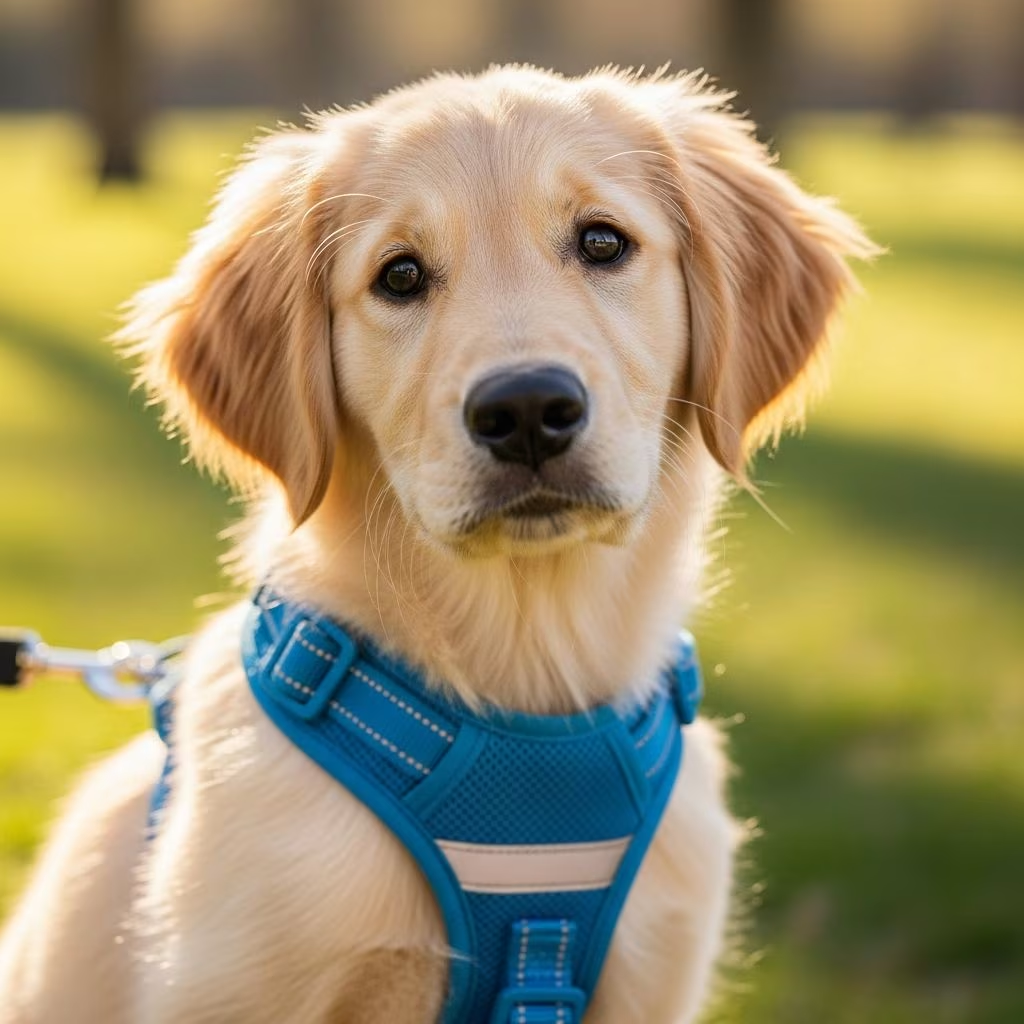
Choosing the Best No-Pull Dog Harness for Your New Puppy
It’s not unusual to witness a dog pulling relentlessly on a leash while their owner looks visibly frustrated behind them. This behavior is especially common among puppies who are still learning proper leash etiquette. The encouraging news for frustrated pet parents is that there are straightforward and effective solutions available for this common behavioral challenge. A no-pull dog harness represents one of the most practical and humane solutions for managing excessive pulling during walks.
Understanding No-Pull Dog Harnesses
What Is a No-Pull Dog Harness?
A no-pull dog harness is specifically engineered with the leash attachment positioned at the front of the dog’s chest, directly underneath the throat area, rather than at the typical upper back location found on standard harnesses. This strategic design difference fundamentally changes how a harness responds to pulling behavior. When your puppy pulls, the front-clip design turns them to the side rather than allowing them to lunge forward uncontrollably.
The mechanism behind this innovative design is straightforward yet highly effective. When you attach the leash to the D-ring positioned on the front of your dog’s chest, you gain complete control over the dog’s upper body—which is precisely the part your dog uses to generate pulling force. This gives you significantly more leverage and control than traditional back-clip harnesses, making walks more manageable and enjoyable for both you and your puppy.
How No-Pull Harnesses Work
No-pull dog harnesses operate by minimizing your dog’s ability to pull forward with full force and tug hard on the lead during walks. Most feature the leash attachment at the front, which changes the direction of force during pulling and naturally guides the dog inward for greater control. This differs fundamentally from traditional collars or back-clip harnesses that allow dogs to lean into the pull and use their full body weight to move forward.
The physics of front-clip design means that when your puppy attempts to pull ahead, the harness redirects their chest and shoulders, causing them to turn toward you rather than continuing forward. This self-correcting mechanism requires no harsh corrections or painful jerks—it’s purely based on mechanical redirection.
Types of No-Pull Dog Harnesses
When searching for the best no-pull dog harness for your pup, you’ll likely encounter a couple of different types, each with distinct advantages depending on your training goals.
Single Front-Clip Harnesses
The first type of no-pull dog harness allows you to attach a leash exclusively to the front of the chest, enabling you to steer your pup with maximum control. Products like the PetSafe Easy Walk no-pull dog harness feature straps in complementary colors, allowing you to see at a glance which strap goes over the shoulders and which goes under the belly. This straightforward design is ideal for puppies that are just beginning their leash training journey and haven’t yet developed severe pulling habits.
Dual-Clip Harnesses
The second type of no-pull dog harness features leash attachment points on both the front of the chest and the back, providing versatility as your puppy progresses in training. The Frisco Padded Front Lead Harness exemplifies this dual-clip approach. It’s designed to redirect your dog’s attention back to you without causing neck strain. This harness comes with an additional D-ring on the back, allowing for traditional leash attachment once you’ve successfully broken your pup’s pulling habit. This transitional design is excellent for long-term use throughout your dog’s life, as it can evolve with your puppy’s training progress.
What to Consider When Choosing a No-Pull Dog Harness
Size and Fit
Selecting the correct size is absolutely critical for both comfort and effectiveness. A harness should be snug but not so tight that it restricts movement or causes discomfort. You should be able to fit two fingers comfortably between the harness and your dog’s body. For most harnesses, you’ll need to measure your dog’s girth—the circumference around the widest part of the body, right behind the front legs. Always consult the manufacturer’s size chart and don’t hesitate to measure your puppy multiple times as they grow.
Material and Durability
Consider harnesses constructed from durable, high-quality materials that can withstand regular use and your puppy’s growth spurts. Many experts recommend harnesses like the 2 Hounds Design Freedom no pull harness specifically for their durability and quality construction. These harnesses are built to last through years of walking while maintaining their effectiveness and comfort.
Ease of Use
Front-clip harnesses should be relatively simple to put on and take off. Look for designs with quick-snap buckles or easy-to-adjust straps that you can manage quickly, even with an excited or wiggly puppy. The easier a harness is to use, the more likely you are to use it consistently, which is essential for successful training.
Design Features
Some no-pull harnesses come as combo packages that include specially designed training leads with multiple attachment points for added control during training sessions. These enhanced training leads can provide an extra layer of control while your puppy is learning proper leash manners.
How to Stop a Puppy from Pulling on His Leash
Combining Equipment with Training
While a no-pull harness is an invaluable tool, experts emphasize that equipment alone isn’t sufficient. To effectively discourage leash pulling in puppies, you should use the harness in combination with dedicated training and positive reinforcement techniques. Positive reinforcement is widely recognized as the most effective way to make training fun and enjoyable for both you and your puppy, ultimately leading to better results and a stronger bond.
Loose-Leash Walking Commands
One of the most effective training methods involves teaching loose-leash walking using verbal commands. While on your walk, use commands such as “Stay with me” or “Heel.” Every few steps you take with your pup staying by your side, immediately reward them with a yummy treat they love. This creates a positive association with walking beside you rather than pulling ahead. Each time your puppy pulls and gets in front of you, turn around and call them back to you using the “Stay with me” or “Heel” command. Speak firmly and clearly, but never yell—harsh corrections undermine your positive reinforcement approach and can create anxiety around walks.
Stop and Go Method
Another highly effective training technique is the “stop and go” method. Each time your dog pulls, you simply stop walking until they return to your side. Once they’ve settled into position beside you, you can start walking again. This method teaches your puppy that pulling doesn’t get them anywhere and that calm, loose-leash walking is what allows forward progress. Consistency is key—every instance of pulling should result in a stop, and every successful moment of loose-leash walking should be rewarded with forward motion and treats.
Individual Variation
It’s important to remember that every dog is an individual with their own personality, learning style, and motivations. Therefore, it can be difficult to predict which approach will work best for your specific pup. Some puppies respond immediately to treat-based rewards, while others might be more motivated by verbal praise or play. You may need to experiment with different techniques and even combine multiple methods to find the perfect approach for your puppy’s unique temperament and learning style.
When to Use No-Pull Harnesses
Ideal Situations
No-pull dog harnesses are especially effective for training purposes and work well as an introductory harness for dogs new to leash walking. They’re particularly valuable during the critical early stages when your puppy is first learning that walks are enjoyable experiences with rules and expectations. The gentle redirection they provide helps puppies understand boundaries without causing discomfort or fear.
Special Considerations
Some experts recommend against using no-pull harnesses exclusively for sport dogs or more muscular breeds that might require different equipment for specialized activities. Others suggest using front-clip harnesses for a limited time during the training phase, then transitioning to back-clip harnesses once your dog has mastered loose-leash walking. The key is understanding that a no-pull harness is typically a training tool rather than a permanent solution, though some dogs benefit from using them throughout their lives.
Proper Harness Fitting Guide
Step-by-Step Instructions
To ensure maximum comfort and effectiveness, it’s crucial to fit your no-pull harness correctly. Here’s how to properly put on a front-clip or no-pull harness:
- Unbuckle all the straps completely to make the harness easier to put on
- Place the harness over your pup’s head gently and calmly
- Drape the buckles over your dog’s body and around their chest and midsection
- Reach for the other side of the buckles under your dog’s front legs
- Buckle into place, ensuring all connections are secure
- Adjust the harness straps as needed to ensure a proper, comfortable fit
After putting the harness on, double-check the fit by sliding two fingers under any strap. If you can’t fit two fingers, it’s too tight. If you can fit more than two fingers, it may be too loose and could slip off during a pull.
Benefits Over Traditional Collars
No-pull harnesses offer numerous advantages compared to traditional dog collars. A properly fitted no-pull harness prevents neck strain and associated health concerns from long-term pulling while wearing a collar. This is particularly important for puppies whose necks and tracheas are still developing. Additionally, no-pull harnesses give you significantly more control and provide a gentler, more humane approach to managing pulling behavior compared to corrective collars or prong collars.
Frequently Asked Questions About No-Pull Harnesses
Q: At what age can I start using a no-pull harness on my puppy?
A: You can introduce a no-pull harness once your puppy is large enough to wear one comfortably—typically around 8-12 weeks of age or when they weigh at least 5-10 pounds. Always measure your puppy and check sizing charts before purchasing.
Q: Will a no-pull harness hurt my puppy?
A: When properly fitted and used correctly, a no-pull harness is a humane, pain-free training tool. It works through gentle redirection rather than punishment or pain, making it safe and comfortable for your puppy.
Q: How long does it take to see results with a no-pull harness?
A: Many owners notice immediate improvements in controllability with a no-pull harness on the first walk. However, fully training a puppy to walk without pulling typically takes several weeks to months of consistent practice and positive reinforcement.
Q: Can I use a no-pull harness as a permanent solution?
A: While no-pull harnesses work well as training tools, the goal is typically to teach your puppy loose-leash walking skills so they eventually don’t need the special harness. However, some owners choose to continue using them indefinitely, especially with particularly strong pullers.
Q: What’s the difference between a front-clip and back-clip harness?
A: Front-clip harnesses have the leash attachment on the chest and are designed specifically to discourage pulling by redirecting your dog’s movement. Back-clip harnesses attach at the back and are better for calm dogs; they don’t provide anti-pulling features.
Q: Do I still need to train if I use a no-pull harness?
A: Yes, a no-pull harness is most effective when combined with positive reinforcement training. The harness makes training easier by giving you more control, but consistent training is what teaches your puppy proper leash manners.
Conclusion
Choosing the best no-pull dog harness for your puppy involves considering size, material, ease of use, and your specific training goals. Combined with consistent positive reinforcement training and proven techniques like loose-leash walking commands and the stop-and-go method, a no-pull harness can transform your puppy’s leash behavior. Remember that every puppy is unique, so what works perfectly for one may need adjustment for another. Stay patient, remain consistent, and celebrate small victories as your puppy learns to walk calmly by your side. With the right equipment and training approach, you’ll soon enjoy relaxed, pleasant walks with your well-mannered companion.
References
- How to Choose and Fit a No-Pull Dog Harness — PetMD. 2024. https://www.petmd.com/dog/training/how-choose-and-fit-no-pull-dog-harness
- How to Measure a Dog for a Harness — Chewy. 2024. https://www.chewy.com/education/dog/general/measuring-dog-harness
- How to Put On a Dog Harness: A Simple, Step-By-Step Guide — Chewy. 2024. https://www.chewy.com/education/dog/general/how-to-put-on-a-dog-harness
- How to Leash Train a Dog: A Step-by-Step Guide — Chewy. 2024. https://www.chewy.com/education/dog/training-and-behavior/leash-train-dog
- Choosing the Right Dog Harness for Your Pet — Chewy. 2024. https://www.chewy.com/education/dog/pet-parenting/choosing-the-right-dog-harness-for-your-pet
- Best No Pull Dog Harnesses — Chewy. 2024. https://www.chewy.com/b/no-pull-dog-harness-2573



