

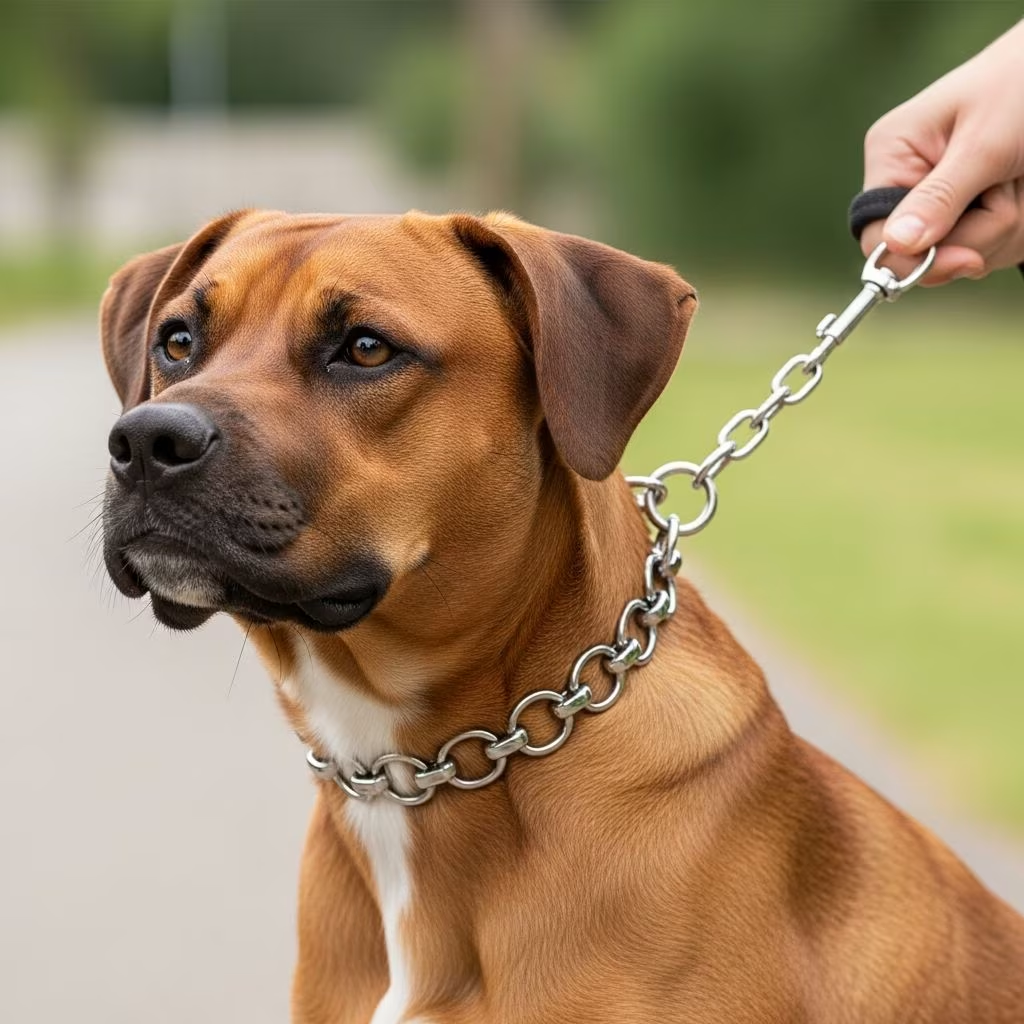
Dog owners face numerous decisions when it comes to selecting appropriate equipment for their pets. Among the most debated choices is the type of collar to use during walks and training sessions. While choke chain collars have been marketed for decades as effective training and control tools, growing evidence suggests they pose significant risks to canine health and well-being. This comprehensive guide examines the mechanics of these devices, their potential dangers, and explores evidence-based alternatives that prioritize both safety and humane training practices.
The Mechanics Behind Restrictive Collar Designs
To understand why certain collars raise concerns among veterinarians and animal behaviorists, it’s important to examine how these devices function. Restrictive collars operate on a fundamental principle: applying pressure or discomfort to a dog’s neck in response to pulling or unwanted behavior.
How Choke Chains Work
A choke chain collar consists of metal links that form a loop around a dog’s neck. When a dog pulls forward on the leash or experiences tension from the handler, the collar tightens progressively around the neck. Unlike standard collars with fixed widths, choke chains lack a built-in stopping mechanism, meaning they can continue contracting with additional force. This design allows for progressively greater pressure application, which can quickly escalate from minor discomfort to dangerous levels of constriction.
Prong and Pinch Collars
Another commonly used restrictive device features inward-facing metal prongs or points positioned around the collar. Proponents claim this design mimics the corrective sensation of a bite from another dog. When tension is applied to the leash, these prongs press into the skin and soft tissues of the neck. Over time, repeated pressure can create cumulative damage to the surrounding tissues and nerves.
Slip and Fabric Variations
Some trainers recommend slip collars made from fabric or leather materials rather than metal. While these may seem gentler, they operate on the same restrictive principle as choke chains and share similar risk profiles when tension is applied.
Physical Consequences of Restrictive Collar Use
Veterinary professionals and animal behaviorists have documented numerous physical injuries associated with choke chain and similar restrictive collar use. These injuries can range from temporary discomfort to permanent, life-altering damage.
Tracheal and Throat Damage
The most immediately concerning risk involves the delicate structures of a dog’s neck and throat. When a choke chain tightens, it exerts direct pressure on the trachea (windpipe) and esophagus. Repeated pressure application or sudden jerks can cause damage to these vital structures, potentially resulting in complete tracheal collapse—a serious condition where the windpipe loses its structural integrity.
Even temporary restriction of airflow can compromise oxygen delivery to the brain and vital organs. In extreme cases, this oxygen deprivation can lead to fainting, loss of consciousness, or more severe neurological consequences. Small dog breeds face heightened vulnerability due to their naturally delicate neck structures.
Spinal and Neck Injuries
The whiplash effect created by sudden jerking forces applied through a choke chain can damage the vertebrae and supporting structures of the spine. These injuries extend beyond immediate pain, potentially causing long-term complications including:
- Intervertebral disc disease affecting mobility and comfort
- Nerve damage leading to chronic neuropathy
- Spinal cord injuries potentially resulting in partial or complete paralysis
- Dislocated or fractured vertebrae
Soft Tissue Damage
The cumulative effect of choke chains creates what veterinarians term a “garroting effect.” This sustained or repeated pressure causes bruising and damage to the skin and underlying tissues of the neck region. Over time, damaged tissue transforms into scar tissue, which lacks normal sensory function. This presents a particularly troubling cycle: as sensation diminishes in scarred areas, dogs may become less responsive to the collar’s signals and continue pulling, prompting handlers to apply greater force and potentially causing additional injury.
Additional Physical Complications
Beyond the primary injury mechanisms, documented complications include:
- Crushing or fracture of laryngeal bones
- Dislocated neck bones
- Esophageal bruising
- Damaged blood vessels
- Laryngeal nerve paralysis
- Prolapsed eyes caused by sudden pressure increases in the head region
Behavioral and Psychological Effects
Beyond physical injury, restrictive collars create psychological consequences that fundamentally affect a dog’s emotional well-being and behavior patterns.
Development of Fear and Anxiety
Dogs experiencing discomfort or pain associated with collar tightening often develop fear responses to the equipment itself and to situations that trigger its use. A dog may begin to associate the collar with impending discomfort, leading to anxiety during dressing or the prospect of walks. This fear response can generalize to other contexts, creating broader behavioral challenges.
Aggression and Reactivity
When pain becomes paired with specific situations or people, dogs may develop reactive or aggressive responses. A dog that previously showed no aggression may become defensive when the collar is approached or when it anticipates the sensation of tightening. This pain-based aggression presents safety concerns for family members, other pets, and the broader community.
Erosion of Owner Trust
Training methods based on pain and correction fundamentally alter the dog-owner relationship. Rather than associating their handler with positive experiences and security, dogs trained through aversive techniques may develop resentment or wariness. This breakdown in trust extends beyond training contexts and can affect the overall bond between pet and owner.
Impact on Walking Behavior
Counterintuitively, restrictive collars often fail to achieve their intended behavioral outcome. Dogs may develop a negative association with walks themselves, leading to reluctance or anxiety about leaving home. Some dogs become more reactive during walks rather than improving their leash manners.
Vulnerability Across Dog Populations
While all dogs face risks from restrictive collars, certain populations face elevated danger:
| Population | Specific Vulnerability |
|---|---|
| Small Breed Dogs | Naturally delicate neck structures and smaller tracheal diameter increase injury risk from pressure |
| Brachycephalic Breeds | Flat-nosed breeds (Bulldogs, Pugs) have compromised airways; additional pressure dramatically increases breathing difficulties |
| Puppies | Developing skeletal and respiratory structures are more susceptible to permanent damage |
| Senior Dogs | Age-related weakening of bones and tissues increases fracture and injury risk |
| Dogs with Pre-existing Conditions | Dogs with respiratory issues, heart conditions, or previous neck injuries face compounded risks |
Evidence-Based Safer Alternatives
Modern canine training science and veterinary recommendations strongly support alternative approaches that maintain control while prioritizing safety.
Martingale Collars
Martingale collars represent a significant safety improvement over choke chains. These collars feature a specialized design with two loops: the main collar loop and a control loop connected by short pieces of material.
Key safety features include:
- Limited contraction that prevents the collar from tightening beyond a safe point
- Prevention of accidental slipping off the dog’s head, important for dogs attempting to escape from frightening stimuli
- Improved positioning on the dog’s neck that reduces strain on the trachea
- No pain or constriction when properly fitted
Front-Clip Harnesses
Harnesses distribute pressure across the broader surface of the dog’s chest and body rather than concentrating force on the delicate neck region. Front-clip designs redirect forward-pulling force to the side, naturally discouraging pulling without applying corrective pressure.
Head Collars
Head collars, when used appropriately during walks rather than left on continuously, provide control similar to leading a horse. They allow redirection of the dog’s head and body without applying pressure to the throat. Important note: head collars should never be left on unattended dogs or used as permanent equipment.
Positive Reinforcement Training Methods
Modern behavioral science demonstrates that dogs can be effectively trained to heel and walk politely using lure-reward techniques. Treats, toys, and verbal praise encourage desired behaviors far more effectively and humanely than pain-based correction. Dogs trained using these methods maintain trust in their owners and develop genuinely improved walking manners rather than merely suppressing behavior through fear.
Frequently Asked Questions
Are choke chains ever appropriate for large, strong dogs?
No. While some handlers believe choke chains are necessary for managing large or strong dogs, research demonstrates that alternative methods provide superior control without injury risk. Proper harnesses and positive reinforcement training prove more effective at achieving long-term behavioral improvement.
What if my dog has already been using a choke chain?
Transitioning to safer equipment should begin immediately. Consult with a veterinarian to assess whether any damage has occurred. A certified professional dog trainer can help your dog adjust to new equipment and relearn walking behaviors using positive methods.
Do restrictive collars work better for training?
Research consistently shows that aversive training methods produce less reliable long-term results than positive reinforcement. While restriction may produce immediate compliance through fear, it fails to create genuine behavior change and damages the dog-owner relationship.
What’s the difference between a choke chain and a martingale collar?
Choke chains tighten progressively without limit, while martingale collars have built-in safety stops that prevent excessive tightening. This fundamental design difference makes martingale collars significantly safer.
Making the Transition to Safer Equipment
Switching from restrictive to safer collars represents a commitment to your dog’s physical and psychological well-being. Begin by selecting appropriate equipment suited to your dog’s size, age, and specific needs. Invest time in positive reinforcement training to help your dog associate the new equipment with rewards and positive experiences rather than correction. Professional trainers certified in force-free methods can provide valuable guidance during this transition.
The evidence supporting safer alternatives is compelling and continues to grow. Veterinary organizations, animal welfare groups, and behavioral science research all point toward the same conclusion: restrictive collars carry unacceptable risks while safer options provide equal or superior control and create more positive outcomes for dogs and their owners.
Conclusion
The choice of collar represents more than a practical decision—it reflects our commitment to protecting our dogs from unnecessary harm. While choke chain collars have deep historical roots in dog training, scientific understanding of canine anatomy and behavior has evolved significantly. Modern handlers have access to equipment and training methods that achieve all practical goals of control and behavior modification without the serious risks posed by restrictive collars. By prioritizing safety, comfort, and humane training practices, dog owners can build stronger relationships with their pets while ensuring their long-term health and well-being.
References
- Are Metal Dog Collars Safe? Chain Collar Risks and Safer Alternatives — The Lillebjørn. 2024. https://thelillebjorn.com/blogs/dog-style-and-health-diaries/do-metal-or-chain-collars-harm-dogs
- Dog Collars: Are They a Choke Hazard? — Company of Animals. 2020. https://companyofanimals.com/us/are-dog-collars-a-choke-hazard/
- Are Choke Collars Bad for Dogs? — ElleVet Sciences. 2024. https://www.ellevetsciences.com/blog/are-choke-collars-bad-for-dogs/
- What are the dangers of using choke and prong collars? — PETA. https://www.peta.org/faq/what-are-the-dangers-of-using-choke-and-prong-collars/
- The Dangers of Choke Chains and Pinch Collars — Homeward Bound Goldens. http://www.homewardboundgoldens.org/wp-content/uploads/bsk-pdf-manager/22_Dangers-of-Choke-Chains.pdf
- Is Your Dog’s Collar Dangerous? — Santa Cruz SPCA. 2018. https://spcasc.org/wp-content/uploads/2018/10/Dangerous_Collars.pdf



