

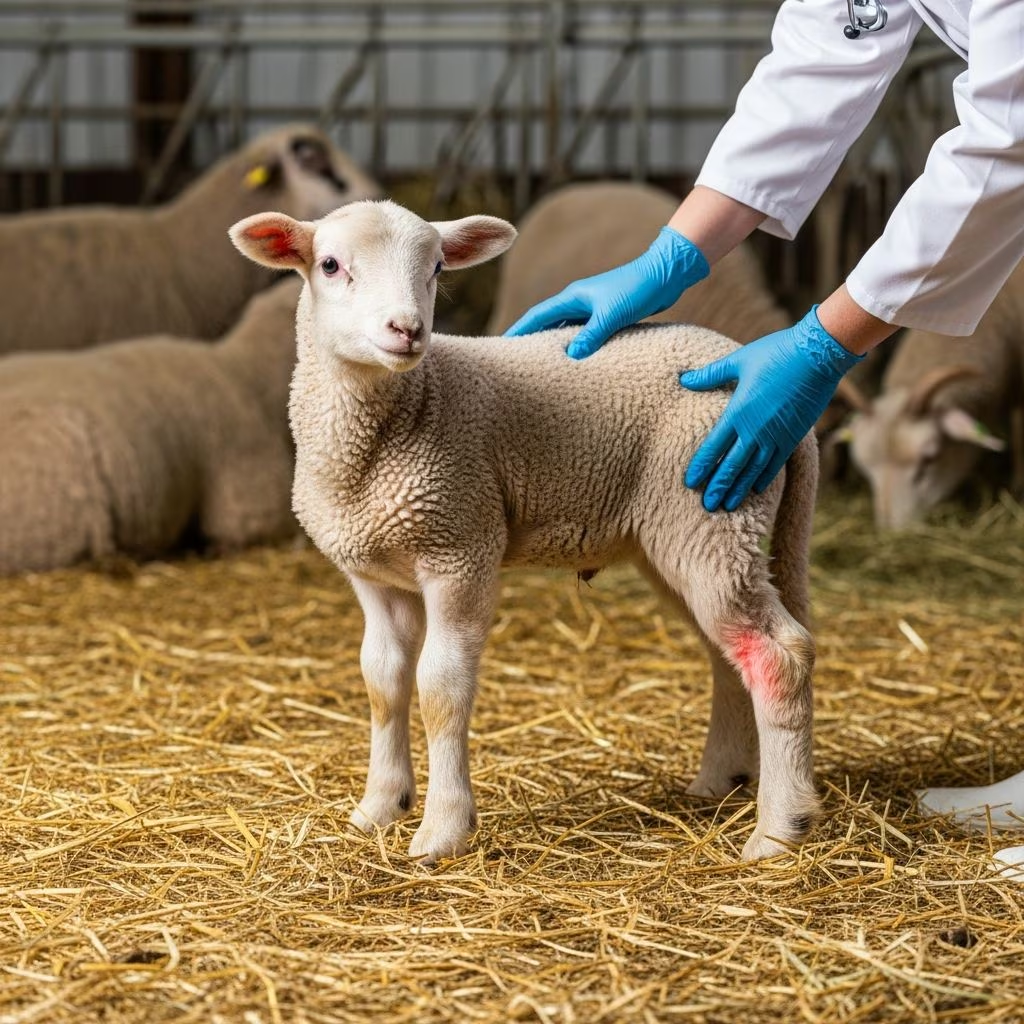
Chlamydial polyarthritis represents a significant infectious challenge in large animal veterinary practice, primarily affecting young sheep, cattle, and occasionally goats. Caused predominantly by Chlamydia pecorum, this condition leads to inflammation across multiple joints, resulting in stiffness, lameness, and reduced mobility that can impact flock productivity. Understanding its pathology, transmission dynamics, and control measures is crucial for effective herd management.
Understanding the Pathogen Behind Joint Inflammation
The primary culprit, C. pecorum, is an obligate intracellular bacterium known for causing a spectrum of diseases in ruminants. Unlike other chlamydial species, it often establishes persistent infections, evading complete clearance even after antimicrobial intervention. In lambs aged 3 to 6 months, it manifests as polyarthritis, with synovial inflammation triggered by bacterial replication within joint tissues.
Transmission occurs via fecal-oral route, inhalation of contaminated aerosols, or conjunctival exposure from infected discharges. Carrier animals shed the organism asymptomatically, perpetuating flock-level spread, especially in intensive feedlot settings. Rapidly growing breeds like White Suffolk or Border Leicester crosses may be predisposed due to physiological stress on developing joints.
Clinical Manifestations in Affected Animals
Early signs include fever, lethargy, and reluctance to move, progressing to noticeable joint stiffness. Affected lambs exhibit swollen hocks, stifles, or fetlocks filled with cloudy, purulent fluid. Gait abnormalities vary from mild lameness to recumbency in severe cases, with morbidity reaching up to 80% in outbreaks, though mortality remains low.
- Fever and systemic illness: Initial pyrexia often precedes locomotor issues.
- Joint-specific symptoms: Multiple synovial effusions, particularly in carpi, tarsi, and atlanto-occipital joints.
- Concurrent conditions: Conjunctivitis, pneumonia, or encephalomyelitis in some cases.
In chronic presentations, seropositivity declines over months despite persistent lameness, complicating field assessments. Goats show similar patterns, though less documented, with polyarthritis alongside keratoconjunctivitis.
Diagnostic Approaches for Accurate Identification
Presumptive diagnosis relies on clinical signs like joint effusion paired with elevated antibody titers via complement fixation test (CFT). Definitive confirmation involves PCR detection of C. pecorum DNA in synovial fluid, feces, or swabs, offering higher specificity than serology alone.
Post-mortem examination of affected joints reveals fibrinopurulent synovitis and elementary bodies on cytology. Blood sampling for CFT, combined with qPCR, supports flock-level screening, though challenges persist in distinguishing pathogenic from commensal strains.
| Diagnostic Method | Advantages | Limitations |
|---|---|---|
| CFT Serology | Routine, cost-effective for flocks | Detects past exposure, not active infection |
| qPCR | Specific for C. pecorum | Not widely available in field labs |
| Joint Cytology/PCR | Confirms synovial involvement | Invasive, requires necropsy |
| ELISA | Detects antibodies rapidly | Cross-reactivity with other chlamydiae |
Integrating these tools enhances diagnostic confidence, especially in variable presentations across flocks.
Treatment Protocols and Expected Outcomes
Antimicrobial therapy centers on long-acting tetracyclines, such as oxytetracycline at 20-30 mg/kg intramuscularly, repeated weekly for 2 doses. Improvements in mobility and reduced recumbency occur within 24-48 hours, with most cases resolving in 10-14 days. Alternatives like erythromycin or tylosin accelerate recovery but are less commonly used.
Mass treatment yields limited flock benefits compared to targeted therapy for clinical cases. Persistent shedding post-treatment underscores the need for supportive care, including anti-inflammatories and improved hygiene. In foals or calves, prolonged dosing (5-6 days) targets C. abortus-related polyarthritis.
Key Treatment Guidelines
- Administer oxytetracycline (300 mg/mL, 1 mL/10 kg) IM weekly x2.
- Monitor for 24-hour response in ambulation.
- Avoid in advanced chronic cases with low seropositivity.
- Combine with NSAIDs for pain relief.
Prevention Strategies for Flock Health
Control hinges on biosecurity: isolate affected animals, disinfect environments, and minimize overcrowding to curb fecal shedding. Vaccination remains unavailable for C. pecorum, emphasizing early weaning and nutrition to bolster immunity in high-risk lambs.
Breeding for slower growth rates in susceptible lines may reduce incidence, as rapid weight gain correlates with joint stress. Routine surveillance via serology identifies carriers before outbreaks.
Epidemiology and Risk Factors in Large Animals
Outbreaks peak in weaned lambs (1-8 months), with higher prevalence in non-mulesed flocks, suggesting transmission independent of skin wounds. Beef cattle experience subclinical infections, occasionally progressing to arthritis or mastitis. Zoonotic risk is low, but handlers should use PPE during necropsies.
Factors like breed (meat crosses), housing density, and co-infections (e.g., E. rhusiopathiae) amplify severity. Seasonal patterns tie to weaning stress in autumn.
Challenges in Managing Persistent Infections
C. pecorum‘s intracellular persistence resists full eradication, with re-isolation post-antibiotics in respiratory models. Diagnostic gaps, including strain pathogenicity, hinder targeted interventions. Future research prioritizes molecular epidemiology and novel therapies.
Frequently Asked Questions (FAQs)
What age groups are most at risk for chlamydial polyarthritis?
Lambs aged 3-6 months in feedlots, with extension to 8-10 months in chronic cases.
Is chlamydial polyarthritis fatal in livestock?
Mortality is low (<5%), but morbidity up to 80% affects growth and carcass value.
Can tetracyclines fully cure infected animals?
They promote clinical recovery, but persistent shedding occurs in some.
How do you differentiate from other arthritides?
Combine clinical signs, CFT titers, and qPCR; rule out Trueperella or mycoplasma via culture.
Are vaccines available?
No commercial vaccines for C. pecorum; focus on management.
Chlamydial polyarthritis demands vigilant monitoring and prompt action to safeguard livestock productivity. By integrating diagnostics, targeted treatments, and biosecurity, producers can mitigate its economic toll.
References
- Mini Review: Antimicrobial Control of Chlamydial Infections in Animals — Frontiers in Microbiology. 2019-01-25. https://www.frontiersin.org/journals/microbiology/articles/10.3389/fmicb.2019.00113/full
- Clinical, diagnostic and pathologic features of presumptive cases of ovine chlamydial arthritis — PMC/NCBI. 2016-08-26. https://pmc.ncbi.nlm.nih.gov/articles/PMC5017062/
- Bacterial arthritis in lambs — NSW Department of Primary Industries. 2005-01-01. https://www.dpi.nsw.gov.au/__data/assets/pdf_file/0017/111167/bacterial-arthritis-in-lambs.pdf
- Small ruminant joint disorders — University of Minnesota Large Animal Surgery. 2023-01-01. https://open.lib.umn.edu/largeanimalsurgery/chapter/small-ruminant-joint-disorders/
- Chlamydiosis in Animals — MSD Veterinary Manual. 2023-07-01. https://www.msdvetmanual.com/infectious-diseases/chlamydiosis/chlamydiosis-in-animals
- Zoonotic Chlamydiae Maintained in Mammals — Center for Food Security & Public Health, Iowa State University. 2017-01-01. https://www.cfsph.iastate.edu/Factsheets/pdfs/chlamydiosis.pdf
- A Review on Chlamydial Diseases in Animals: Still a Challenge for Pathologists? — SAGE Journals. 2018-01-03. https://journals.sagepub.com/doi/10.1177/0300985817751218



