

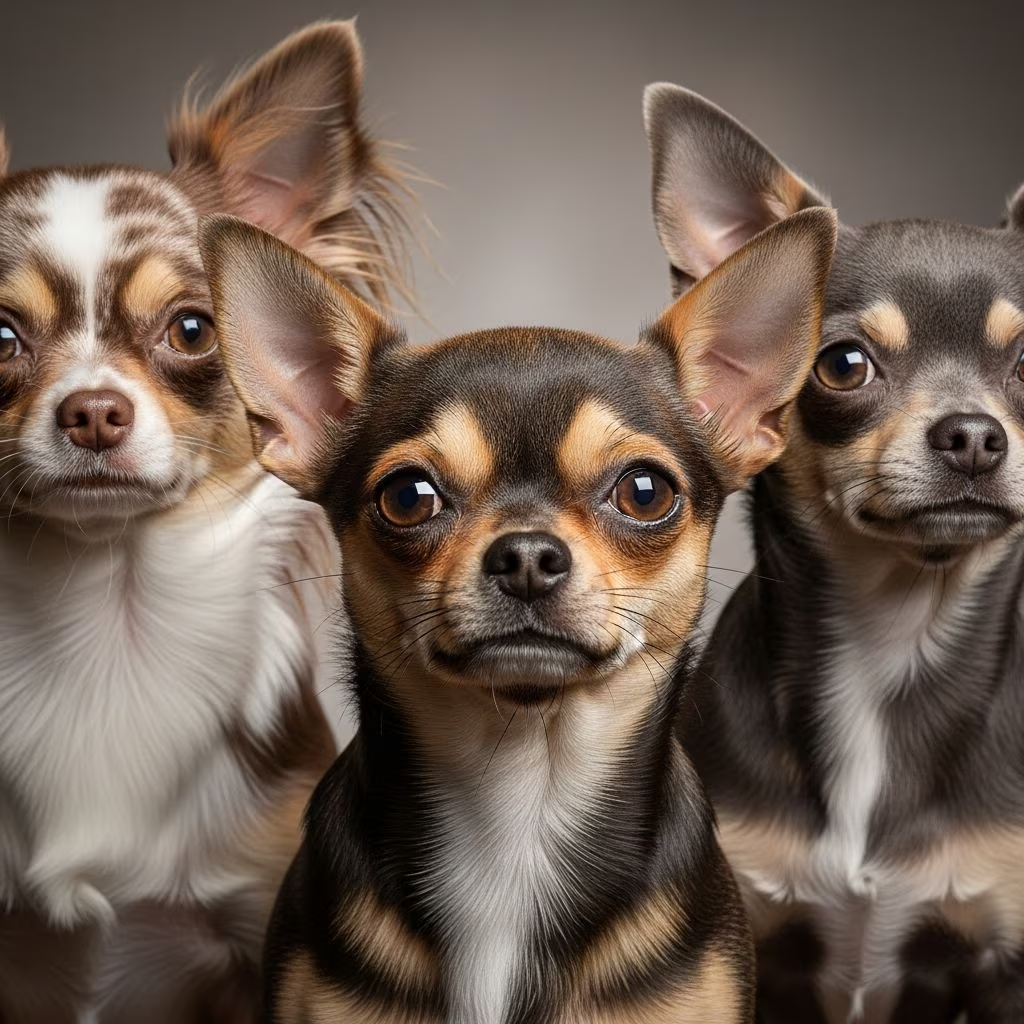
The Chihuahua, one of the smallest dog breeds, displays an astonishing variety of coat colors and patterns, ranging from solid blacks and rich chocolates to diluted blues and intricate merles. This diversity stems from complex interactions between two primary pigments: eumelanin, responsible for black, brown, gray, or taupe shades, and phaeomelanin, which produces tans, reds, golds, and creams. Over eight verified genes in the canine genome influence these colors, each with multiple alleles at specific loci, creating the 39+ variations seen in Chihuahuas.
Core Pigments in Chihuahua Coats
At the heart of canine coat coloration lie eumelanin and phaeomelanin. Eumelanin forms the dark pigments, defaulting to black but modifiable to brown (liver or chocolate) or diluted grays. Phaeomelanin handles lighter tones, varying from pale cream to deep mahogany reds. These pigments can alternate within a single hair shaft, banded by agouti signaling, leading to patterns like sable or brindle.
Genetic switches at various loci determine where and how these pigments express. For instance, some alleles restrict eumelanin to certain body areas, while others allow phaeomelanin dominance, resulting in red or cream coats. Intensity modifiers further tweak shade richness, with higher copy numbers yielding deeper golds and chestnuts.
Major Genetic Loci Shaping Chihuahua Colors
Several key loci orchestrate Chihuahua coat diversity. Understanding these helps breeders predict offspring colors accurately.
The A (Agouti) Locus: Pattern Architect
The A locus, governed by the agouti protein, controls melanin distribution along the hair, switching between eumelanin and phaeomelanin. Common alleles include:
- ay (sable/dominant yellow): Produces tipped hairs with phaeomelanin base and eumelanin tips; highly dominant in Chihuahuas, creating clear, tipped, or shaded sable patterns where black appears on head, back, and tail.
- at (tan points): Places eumelanin on body with phaeomelanin tan on muzzle, legs, and chest, as in chocolate tan Chihuahuas requiring B locus mutations.
- a (recessive black): Solid eumelanin coverage, overriding other patterns.
This locus interacts with others for complex results, like sable merles.
B (Brown) Locus: From Black to Chocolate
The TYRP1 gene at the B locus alters eumelanin from black (B) to brown/chocolate (b). Homozygous bb dogs show liver noses and chocolate coats, common in sporting breeds and Chihuahuas. The mutation reshapes pigment granules, lightening and rounding them.
D (Dilute) Locus: Softening Strong Colors
Dilution occurs via the melanophilin (MLPH) gene at D, where dd (two recessive alleles) lightens eumelanin to blue/gray and phaeomelanin to cream/beige. Chihuahuas need dd for blue coats ranging from charcoal to powder blue, often with tan points on paws and ears. Three dilute alleles exist: d1 (linked to Color Dilution Alopecia or CDA), d2, and d3, with d1 most common in breeds like Chihuahuas.
Breeding blue x blue (dd x dd) is viable, producing dilute offspring, unlike some myths.
E (Extension) Locus: Masks and Red Coats
The MC1R gene at E controls black extension and masks. Alleles in dominance order: Em (melanistic mask), Eg (grizzle), E (normal black), e (recessive red/yellow). Em adds dark facial masks; ee yields phaeomelanin-only coats in reds or creams, overriding A locus patterns.
K (Dominant Black) Locus: Solid and Striped Patterns
DEFB103 at K offers KB (dominant black/solid eumelanin), kbr (brindle stripes on tan), and ky (allows A/E expression). Brindle Chihuahuas show black stripes over phaeomelanin bases.
Special Patterns and Modifiers in Chihuahuas
Beyond basics, modifiers create unique looks.
Merle: Marbled Marvels
The M locus introduces merle, a dominant pattern diluting random patches to gray with black speckles. Double merle (MM) risks deafness and blindness, so ethical breeding avoids it. Chihuahua merles blend with sables or tris for eye-catching effects.
Sable Variations
Sable’s dominance means one ay allele suffices. Clear sable is mostly phaeomelanin with black undersides; tipped limits black to tips; shaded concentrates it on back/neck.
Intensity and Other Dilutions
UC Davis notes an intensity gene diluting phaeomelanin to cream/white in Chihuahuas. Roaning (R), ticking (T), and spotting (S) add white hairs or spots.
Popular Chihuahua Color Combinations
| Color/Pattern | Genetic Basis | Key Features |
|---|---|---|
| Blue | dd + black base | Gray to powder blue coat, beige nose; tan points possible. |
| Chocolate Tan | bb + at + dd optional | Brown body, tan markings; uncommon combo. |
| Red | Rich phaeomelanin | Mahogany to bright red, dark guard hairs. |
| Sable | ay dominant | Tipped/shaded black on red base. |
| Merle | M dominant | Marbled patches; avoid MM. |
These represent just a fraction; mixes like blue merle or chocolate sable abound.
Breeding Considerations and Health Links
Color genetics aids planned litters but demands health priority. Dilute colors (dd) link to CDA, causing hair loss and skin issues via d1 allele—monitor closely. Double merles heighten risks. Always verify pedigrees and test for loci like B, D, E.
Predicting colors: Punnett squares for single loci, but polygenic nature requires software or experts. Pheomelanin richness varies by parental genetics.
Frequently Asked Questions
Can two blue Chihuahuas produce black puppies?
No, blue requires dd recessive; blue x blue yields only blues (dd).
What’s the rarest Chihuahua color?
Chocolate tan or extreme dilutes like Isabella (dilute liver); rarity ties to recessive combos.
Do coat colors affect Chihuahua health?
Dilutes may predispose to CDA; merles to eye/ear issues if double-dosed.
How many genes control Chihuahua colors?
At least eight major loci (A,B,C,D,E,G,M,S) with alleles; more modifiers.
Is sable more common in longcoat or smooth Chihuahuas?
Equally common; coat length is separate (smooth dominant).
Conclusion
Chihuahua coat genetics reveal a tapestry of science and beauty, empowering informed breeding. From agouti’s patterns to dilution’s subtlety, each locus adds depth to this tiny breed’s palette. Prioritize health testing for vibrant, thriving litters.
References
- The Dilute Gene – Blue x Blue is Okay! — AA Chihuahuas. 2023. https://www.aachihuahuas.com/single-post/the-dilute-gene-blue-x-blue-is-okay
- 39 Chihuahua Colors & Patterns — SpiritDog Training. 2024. https://spiritdogtraining.com/breeds/chihuahua-colors/
- Chihuahua Genetics Explained — ChihuahuaPuppies.net (via Scribd). 2015. https://www.scribd.com/document/318432747/chihuahua-puppies-net-chihuahua-genetics-size-colors-and-hair-coats-2
- Dog coat genetics — Wikipedia (sourced from peer-reviewed). 2024-02-17. https://en.wikipedia.org/wiki/Dog_coat_genetics
- Genetics Basics: Coat Color Genetics in Dogs — VCA Animal Hospitals. 2024. https://vcahospitals.com/know-your-pet/genetics-basics-coat-color-genetics-in-dogs
- Chihuahua — Veterinary Genetics Laboratory, UC Davis. 2024. https://vgl.ucdavis.edu/breed/chihuahua



