Chicken Diets for All Life Stages
Complete guide to feeding chickens at every stage of life for optimal health and egg production.
Understanding Chicken Nutrition Across All Life Stages
Providing proper nutrition is one of the most critical aspects of raising healthy chickens. Just as nutritional requirements change throughout a human’s life, chickens have different dietary needs depending on their age and purpose. Whether you’re raising baby chicks, growing pullets, or maintaining a productive laying flock, understanding the specific nutritional requirements at each stage is essential for ensuring optimal health, proper development, and consistent egg production.
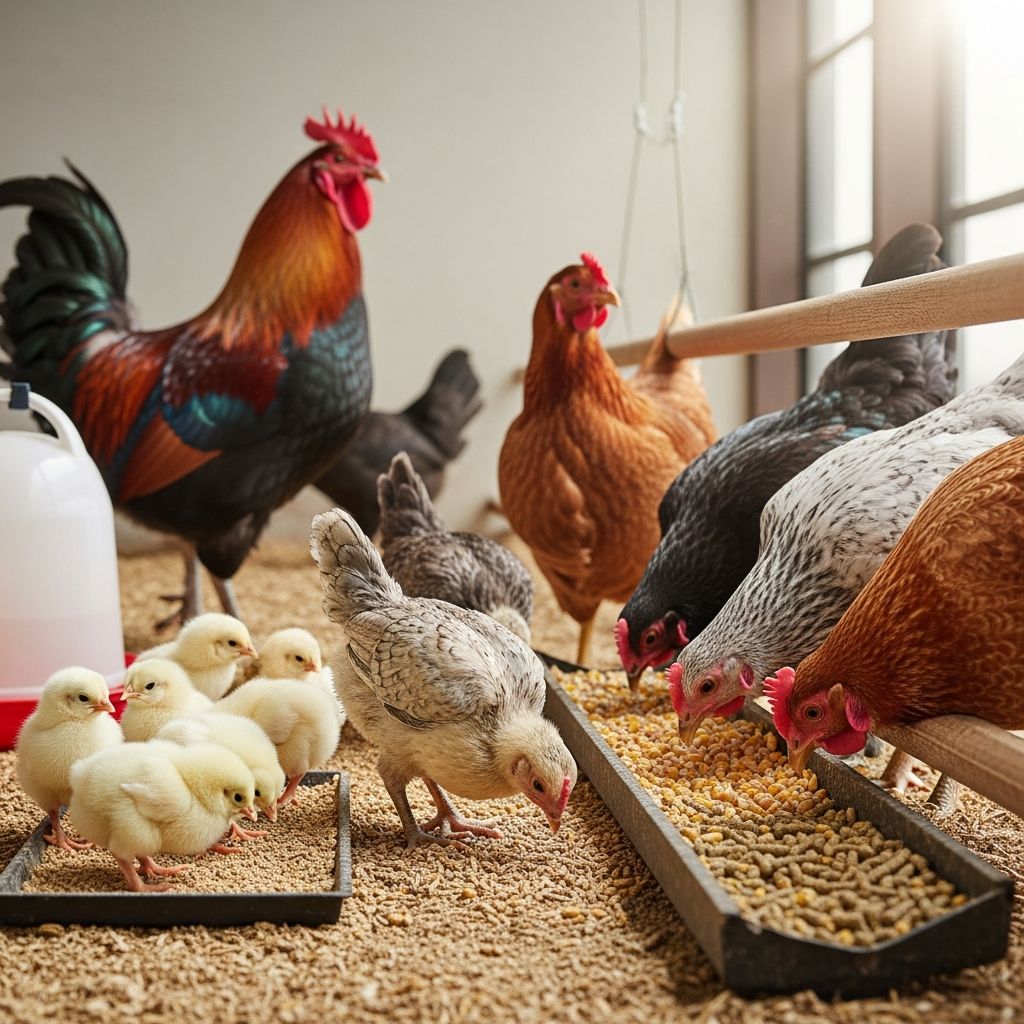
Most adult chickens consume approximately 4 ounces (133 grams) of food per day. Food should always be available, as chickens of all ages graze throughout the entire day. A commercial, high-quality diet will supply the proper nutrition to ensure your chickens obtain a nutritionally complete diet. Homemade or feed-store mixed rations are often not complete and may lead to serious malnutrition issues. Fresh water must be available at all times to support your flock’s health and productivity.
Baby Chicks: Building the Foundation for Growth
The first weeks of a chick’s life are critical for establishing strong growth patterns and overall health. During this foundational period, chicks require specialized nutrition to support their rapid development and high metabolic demands.
Chicks less than 8 weeks of age need a high protein diet to support their rapid growth. A starter feed or ration is essential for young chicks. The protein content should range from 18% to 22%, while the calcium content of the ration should be 1%. This high protein level is vital for building strong muscles, bones, and feathers in your growing chicks.
When selecting starter feed for your chicks, look for a complete starter-grower feed with additional beneficial components. The feed should include amino acids for chick development, prebiotics and probiotics for immune health, and vitamins and minerals to support bone health. Chicks are particularly susceptible to illness during their early weeks. If chicks were not vaccinated for coccidiosis by the hatchery, choose a medicated chick starter feed to provide protection against this common disease.
During the first 8 weeks, it’s important to avoid introducing treats or scratch grains to your chicks. Keep their diet primarily centered on quality starter feed for optimal health and development. This focused approach ensures they receive the proper balance of nutrients without unnecessary supplements that could interfere with their growth.
Growing Chicks: Transition and Development
As your chicks mature beyond the critical first 8 weeks, their nutritional needs shift to support continued growth while preparing them for their adult roles in your flock.
Chicks over 8 weeks of age and up to 20 weeks of age should be fed a slightly lower protein content, as they do not have the increased requirements for new feather and muscle growth characteristic of younger birds. Protein levels should be 16%-18% in growing hens and roosters, while calcium levels should remain around 1%. This adjustment reflects the birds’ transition from rapid muscle and feather development to more stable growth patterns.
Continue to feed a complete starter-grower feed during the teenage stage, ensuring the feed contains no more than 1.25 percent calcium. Too much calcium can have a detrimental effect on growth, but a complete starter feed has just the right balance for growing birds. Some breeds, like the Golden Comet and Australorp, can lay earlier than 20 weeks of age, so it is important to know your chicken’s breed when selecting a diet.
Around weeks 16-17, you should begin checking nesting boxes and considering layer feed options to make a smooth transition. This preparation period is crucial for ensuring your birds have the proper nutrition when they begin producing eggs.
Adult Laying Hens: Supporting Egg Production
Once your chickens reach maturity and begin laying eggs, their nutritional requirements change significantly to support continuous egg production and maintain their health.
Most breeds of chickens over 20 weeks of age will need an increased level of calcium to support egg laying in female chickens. The protein can remain between 16% and 18%, but the calcium level of the diet should be 2.5%-4%. Layer pellets (pellet feed) will supply both these requirements, making them an excellent choice for laying hens. Fresh water must always be available to support the high metabolic demands of egg production.
When birds reach 18 weeks old or when the first egg arrives, slowly transition to a layer feed. Make the transition gradually to prevent digestive upset. Mix the starter and layer feed evenly for four or five days. If birds are used to crumbles, start with a crumble layer feed. The same goes with pellets—the more similar the two feeds are, the smoother the transition will go.
Choose a high-quality, complete all-natural or organic layer feed to provide the perfect balance of protein, vitamins, and minerals. The key feature to look for is higher calcium content, which is important to form strong, durable eggshells and for preventing issues like thin or brittle shells. Higher calcium content also supports your flock’s bone health, helping replenish the calcium that’s naturally lost through regular egg production.
Many chicken owners follow the 90/10 rule—a common guideline when feeding laying hens. This rule suggests that 90% of a hen’s diet should consist of a high-quality, complete layer feed that provides a balanced and nutritious foundation. The remaining 10% can be supplemented with healthy additions such as organic scratch grains, oyster shells, fresh vegetables, herbs, and bugs.
Roosters and Show Chickens: Special Feeding Considerations
Roosters and chickens that are not regularly laying eggs have different nutritional requirements than productive laying hens, requiring a modified approach to feeding.
Roosters and show chickens that are not regularly laying eggs may do well on either layer pellets or growing pellets, but they do not need the higher levels of calcium that are in layer pellets. In backyard flocks where it may be difficult to separate the roosters from the flock, you may find it easier to feed adult roosters and hens the layer pellets together. This approach simplifies feeding management while still providing adequate nutrition for non-laying birds.
Supplementary Foods and Treats
While a high-quality commercial feed should form the foundation of your chicken’s diet, supplementary foods can provide additional nutrition and enrichment.
Greens
Most chickens love fresh leafy greens. Leafy greens are a great way to add extra nutrition to their diet. Some good greens for chickens include kale, spinach, and Swiss chard. These vegetables provide essential vitamins and minerals that support overall health and immune function.
Fruits and Vegetables
Chickens enjoy eating fruits and vegetables besides greens, and some good options include apples, grapes, carrots, and tomatoes. You can also introduce carrot tops, cabbage, watermelon rinds, pumpkin, and zucchini as occasional treats. Be sure to avoid anything salty, sugary, moldy, or toxic, such as onions, chocolate, or avocado.
Grains
Grains are another essential part of a chicken’s diet. Some good options include oats, barley, and wheat. Grains provide energy and additional nutrients that complement the primary diet.
Insects and Protein Supplements
Insects, like mealworms, are an excellent source of protein for chickens, and they love to eat them! Chickens love black soldier fly larvae, otherwise known as grub bugs—these are fantastic protein-packed supplements, particularly useful during molting season when hens need more protein to regrow feathers. If you have an insect problem in your garden, you can use your chickens as natural pest control by letting them loose in the affected area. Otherwise, you can purchase insects from a local pet store or online retailer.
Scratch and Treats
Chicken scratch is not a complete ration. It is meant as a treat and should never be fed as the main diet. Scratch should only make up a small portion of your chicken’s overall dietary intake, serving primarily as an enrichment activity or occasional reward.
Molting Season: Increased Protein Requirements
During the molting season, your flock has significantly increased nutritional needs, particularly for protein, as birds work to regrow their feathers.
Protein is the key nutrient in a flock’s diet to keep them strong during molt. This is because feathers are made of 80-85 percent protein, whereas eggshells are primarily calcium. When molt begins, switch to a complete feed with 20 percent protein. A high-protein complete feed can help hens channel nutrients into feather regrowth. Once birds begin producing eggs again, switch back to a layer feed to match their energy needs.
Quick Feeding Timeline Reference
To help you navigate the various stages of chicken development, here’s a quick reference guide for feed types and protein requirements:
| Life Stage | Age | Feed Type | Protein Content | Calcium Content |
|---|---|---|---|---|
| Chick Starter | 0–8 weeks | Chick Starter | 18–22% | 1% |
| Growing Chicks | 8–20 weeks | Grower Feed | 16–18% | 1% |
| Adult Laying Hens | 20+ weeks | Layer Feed | 16–18% | 2.5–4% |
| Roosters/Show Birds | 20+ weeks | Layer or Grower Feed | 16–18% | Variable |
| Molting Birds | Variable | High-Protein Feed | 20% | Variable |
Frequently Asked Questions About Chicken Nutrition
Q: How much should I feed my chickens daily?
A: Most adult chickens eat about 4 ounces (133 grams) of food per day. Food should always be available, as chickens of all ages graze throughout the entire day. Adjust portions based on your flock’s size and the specific needs of each bird.
Q: Can I use homemade or store-mixed chicken feed?
A: While it’s tempting to mix your own feed, commercial, high-quality diets are recommended. Homemade or feed-store mixed rations are often not complete and may lead to serious malnutrition issues. A complete commercial feed ensures your chickens receive all necessary nutrients in proper proportions.
Q: When should I switch my chicks from starter to grower feed?
A: Chicks should transition from starter to grower feed at 8 weeks of age. At this point, their protein requirements decrease slightly, and you should feed a diet with 16%-18% protein instead of the higher 18%-22% starter feed.
Q: What’s the best way to transition my birds to layer feed?
A: Make the transition gradually to prevent digestive upset. Mix the starter and layer feed evenly for four or five days. If birds are used to crumbles, start with a crumble layer feed; if they prefer pellets, transition to pellet layer feed. The more similar the two feeds are, the smoother the transition will go.
Q: Why do laying hens need more calcium than other chickens?
A: Laying hens require significantly more calcium—2.5%-4% in their diet—because calcium is essential for producing strong eggshells and maintaining bone health. The calcium is partially drawn from the hen’s skeletal reserves, which must be continuously replenished through diet.
Q: Can I feed my rooster layer feed if he’s in a mixed flock?
A: Yes, roosters can eat layer feed even though they don’t need the high calcium content. If it’s difficult to separate roosters from the flock, feeding everyone the same layer pellets is a practical solution and won’t harm the roosters.
Q: How much of my chicken’s diet should be supplements versus complete feed?
A: Follow the 90/10 rule: 90% of a hen’s diet should consist of high-quality, complete layer feed, while the remaining 10% can be supplemented with treats like scratch grains, oyster shells, fresh vegetables, herbs, and insects.
Q: What should I feed my chickens during molting season?
A: During molt, switch to a complete feed with 20% protein, since feathers are made of 80-85% protein. High-protein complete feeds help hens channel nutrients into feather regrowth. Once birds begin producing eggs again, switch back to layer feed.
Q: Is fresh water as important as feed for chickens?
A: Absolutely. Fresh water must be available at all times for your chickens. Water is essential for digestion, nutrient absorption, and overall health, especially during egg production.
Q: Are there any foods I should avoid feeding to my chickens?
A: Yes, avoid feeding chickens anything salty, sugary, moldy, or toxic. Specifically, keep away onions, chocolate, and avocado, as these can harm your birds. Stick to treats like fresh vegetables, fruits, and insects in moderation.
Conclusion: Providing Optimal Nutrition Throughout Your Flock’s Life
Feeding your chickens properly at each life stage is one of the most important investments you can make in their health, productivity, and longevity. By understanding the specific nutritional requirements of chicks, growing birds, laying hens, and roosters, you can ensure your flock receives the proper nutrition for optimal development and performance. Start with a quality commercial feed appropriate for each stage, supplement thoughtfully with fresh greens and insects, ensure constant access to fresh water, and adjust your feeding program based on your flock’s specific needs and circumstances. With this knowledge and commitment to proper nutrition, you’ll raise a healthy, productive, and thriving flock.
References
- Chickens Diets for All Life Stages — VCA Animal Hospitals. 2024. https://vcahospitals.com/know-your-pet/chickens-diets-for-all-life-stages
- Six Milestones of Chicken Growth Stages — Purina Animal Nutrition. 2024. https://www.purinamills.com/chicken-feed/education/detail/six-milestones-of-chicken-growth-stages
- The Life Stages and Nutritional Requirements of the Modern Hen — Barastoc Poultry. 2024. https://barastocpoultry.com.au/the-life-stages-and-nutritional-requirements-of-the-modern-hen/
- Nutrient requirements of egg laying chickens — Poultry Hub Australia. 2024. https://www.poultryhub.org/all-about-poultry/nutrition/nutrient-requirements-of-egg-laying-chickens
- Guide to Chicken Feed: Feeding Your Flock from Chick to Layer — Small Pet Select UK. 2024. https://smallpetselect.co.uk/blogs/care-resources/guide-to-chicken-feed-feeding-your-flock-from-chick-to-layer
Similar Articles







Read full bio of medha deb