

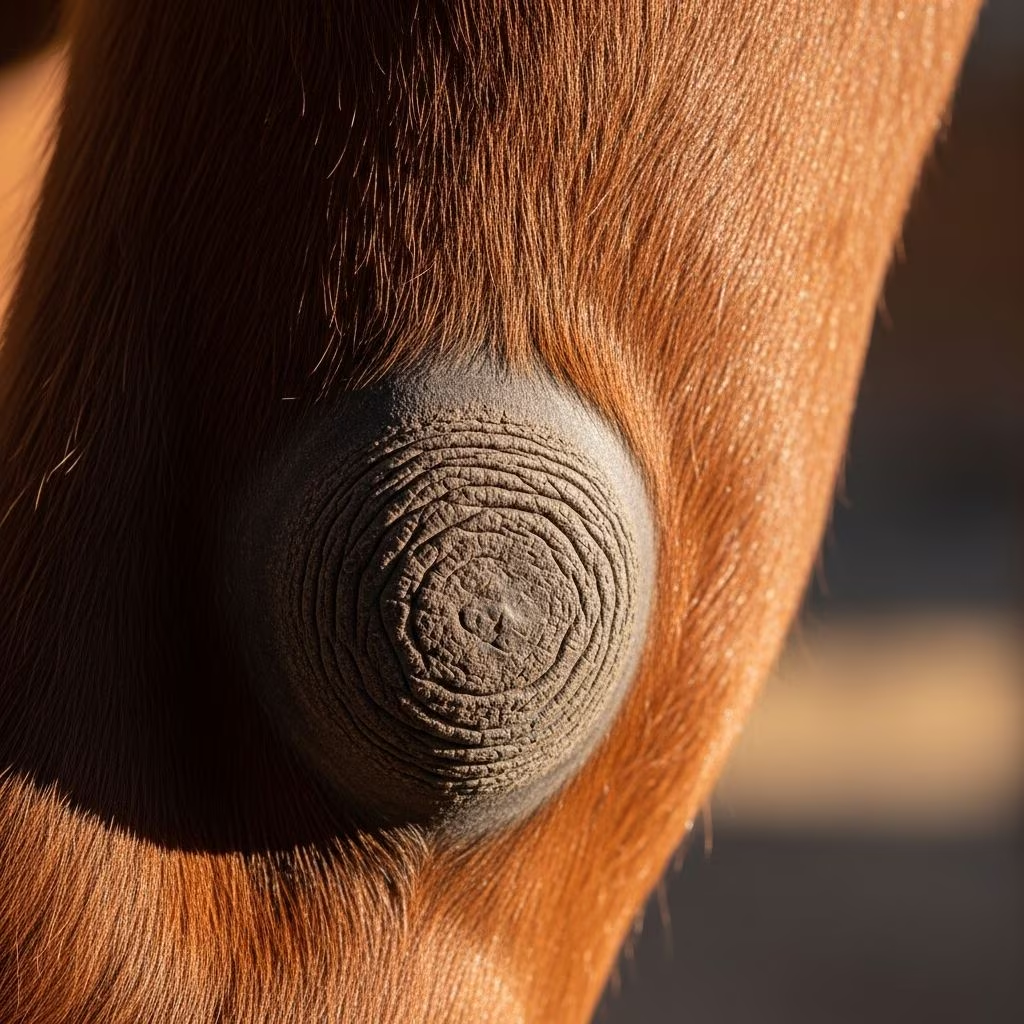
Chestnuts on Horses: What Are They and Why Do Horses Have Them
If you’ve ever run your hand along your horse’s legs, you may have felt those distinctive rough, callous-like growths on the inside of their limbs. These structures, known as chestnuts, are a fascinating aspect of equine anatomy that often puzzles horse owners and enthusiasts alike. While they might seem like quirky oddities with no real purpose, chestnuts actually tell an intriguing story about horse evolution and continue to play subtle roles in equine biology today. Understanding what chestnuts are, why horses have them, and how to care for them is essential knowledge for any responsible horse owner.
What Exactly Are Horse Chestnuts?
Chestnuts are hard, callous-like protrusions found on the inner sides of a horse’s legs. Anatomically, they are keratinized epithelial structures, meaning they are composed of tough protein cells similar to the material that makes up human fingernails and horse hooves. This unique composition gives them their characteristic rough, dry texture. Each chestnut is entirely unique to the individual horse, much like human fingerprints, making them useful for identification purposes.
Chestnuts grow continuously throughout a horse’s life, similar to how human nails grow, and they naturally shed and regenerate over time. Despite their hardened appearance, they are completely painless for horses because they lack nerve endings. This is good news for horse owners who may be concerned about their horse’s comfort.
Location and Variations Across Breeds
The primary locations of chestnuts vary between front and hind legs. On the front legs, chestnuts are typically found above the knee, while on the hind legs, they appear just below the hock on the inner side. The front leg chestnuts tend to be more pronounced and visible than those on the hind legs, which are often smaller or occasionally entirely absent.
Breed-specific variations are quite significant. Certain horse breeds, particularly gaited breeds, have been selectively bred over many generations to have smaller or less visible chestnuts. This demonstrates how genetics profoundly influences the presence and size of chestnuts, with each horse displaying unique characteristics based on its breeding heritage.
The Evolutionary Mystery: Why Do Horses Have Chestnuts?
The primary theory explaining the existence of chestnuts relates to horse evolution. Horses are believed to have evolved from multi-toed ancestors over millions of years. The modern horse’s single-hoof structure represents a dramatic evolutionary change from their predecessors. As horses evolved and adapted to running at high speeds across open terrain, they gradually lost their multiple toes in favor of a single, elongated toe that provided greater speed and efficiency.
According to the vestigial toe theory, chestnuts are leftover remnants of these ancient toe structures from equine ancestors. Rather than being complete toes, contemporary research suggests that chestnuts may actually be vestiges of foot pads—the tough, cushioned structures found on the bottoms of modern carnivore feet, similar to those on dogs and cats. These foot pads would have provided shock absorption and protection for ancestors with multiple toes.
Modern Functions of Horse Chestnuts
While chestnuts are primarily understood as evolutionary remnants, they appear to retain several practical functions in modern horses:
- Sensory feedback: Chestnuts may act as tactile sensors, providing horses with sensory information as they navigate various terrain, potentially assisting in limb positioning during movement.
- Physical protection: These structures may serve as natural padding, helping protect the horse’s legs from abrasions and injuries during daily activities.
- Scent marking: Some researchers suggest that chestnuts play a role in social recognition among horses. Their distinctive odor—often described as a strong ‘horsey’ smell—may contribute to horse-to-horse communication.
- Skin shedding: Chestnuts may assist in the natural process of skin renewal and hygiene maintenance.
Distinguishing Chestnuts from Ergots
Horse owners frequently confuse chestnuts with another similar structure called ergots. While these two growths share evolutionary origins and similar composition, they are distinctly different features that serve different purposes.
| Feature | Chestnuts | Ergots |
|---|---|---|
| Location | Inner side of front legs above the knee; inner side of hind legs below the hock | Back of the fetlock joint (above the hoof) |
| Size | Larger, more pronounced | Smaller and often hidden under hair |
| Texture | Rough, dry, and flat; resembles calluses | Harder and more irregular; resembles tiny hooves |
| Composition | Keratinized epithelial tissue | Mixture of soft tissue and cartilage |
| Primary Function | Sensory feedback and protection | Injury prevention and moisture management |
Ergots are believed to have served different evolutionary purposes than chestnuts, likely deriving from toe or dewclaw structures. They function primarily as anchoring points for ergot ligaments and may help guide water away from the heel during wet conditions.
How to Properly Identify and Care for Horse Chestnuts
Recognizing and understanding chestnuts is crucial for effective horse management. Identifying these structures correctly helps you distinguish them from other skin conditions or growths that might require veterinary attention.
Identification Tips
To identify chestnuts on your horse, examine the inner surfaces of all four legs. On the front legs, feel above the knee area on the inside of the leg. On the hind legs, locate them just below the hock on the inner side. Chestnuts will feel like raised, rough callouses made of hardened tissue. They should be firmly attached to the leg and not tender to gentle touch.
Basic Maintenance and Care
While chestnuts are natural parts of equine anatomy and cannot be completely removed, some maintenance may be necessary:
- Gentle trimming: If chestnuts become excessively thick or rough, you can gently peel or trim them. Since they naturally shed over time, most horses don’t require frequent maintenance.
- Grooming: Regular grooming helps keep the area clean and allows you to monitor for any unusual changes.
- Avoid aggressive removal: Never forcibly remove chestnuts, as they are living tissue attached to the horse’s body.
- Monitor for changes: While extremely rare, unusual changes in appearance or growth patterns could indicate underlying health concerns worth discussing with your veterinarian.
The Significance of Chestnuts in Horse Health and Breeding
For horse breeders and geneticists, chestnuts hold particular significance. The presence, size, and appearance of chestnuts serve as indicators of health, lineage, and breed-specific characteristics. Variation in chestnut appearance among different horses reflects genetic diversity and offers insights into evolutionary adaptations within horse populations.
The study of horse chestnuts contributes to our broader understanding of equine biology and genetics, which in turn improves care and management practices throughout the global equine community.
Common Questions About Horse Chestnuts
Q: Do chestnuts hurt horses?
A: No, chestnuts are completely painless for horses. Because they are made of keratin and lack nerve endings, horses feel nothing when chestnuts naturally peel off or are gently trimmed.
Q: Can you completely remove horse chestnuts?
A: No, chestnuts are permanent fixtures of equine anatomy and cannot be wholly removed. They are natural parts of the horse’s body structure. However, you can gently trim them if they become excessively thick or rough.
Q: Are all horses’ chestnuts the same size?
A: No, chestnuts vary significantly in size, shape, and texture among different horse breeds and individual horses. Front leg chestnuts are typically more pronounced than those on the hind legs, which may be smaller or occasionally absent entirely.
Q: Can I use my horse’s chestnuts for identification?
A: Yes, like human fingerprints, each horse’s chestnuts are unique and can serve as distinctive biological markers for individual identification purposes.
Q: What’s the difference between chestnuts and ergots?
A: The primary differences are location, size, and composition. Chestnuts are found on the inner legs and are larger and rougher, while ergots are smaller structures located on the back of the fetlock joint. Chestnuts are purely keratinized tissue, while ergots contain both soft tissue and cartilage.
Q: Do chestnuts grow throughout a horse’s life?
A: Yes, chestnuts grow continuously throughout a horse’s lifetime, similar to human fingernails, and naturally shed and regenerate over time.
Conclusion
Horse chestnuts represent a fascinating window into equine evolution and biology. These humble callouses tell the story of horses’ evolutionary journey from multi-toed ancestors to the swift, single-hoofed creatures we know today. While their primary function remains somewhat mysterious, current research suggests they contribute to sensory feedback, physical protection, scent communication, and overall equine health. Understanding what chestnuts are, recognizing their breed-specific variations, and knowing how to care for them properly are essential components of responsible horse ownership. By appreciating these subtle anatomical wonders, we deepen our connection to our equine companions and enhance our ability to provide them with optimal care.
References
- What Is a Chestnut on a Horse? Significance & Care Explained — Equine Institute. https://equineinstitute.org/blogs/horse-care-tips/what-is-a-chestnut-on-a-horse-significance-care-explained
- Why Do Horses Have Chestnuts and Ergots? — Benefab Products. https://benefabproducts.com/blogs/blog/why-do-horses-have-chestnuts-and-ergots
- A Closer Look at Chestnuts and Ergots — Caribu. https://www.caribu.com.au/blogs/health/a-closer-look-at-chestnuts-and-ergots
- Chestnuts and Ergots on Horses — PetMD. https://www.petmd.com/horse/chestnuts-and-ergots-horses
- Chestnuts on Horses: What They Are and Why They Have Them — Vet Today. https://vettoday.com/blog/blogs/chestnuts-on-horses/
- Chestnut: Not Just a Coat Color — Kentucky Equine Research. https://ker.com/equinews/chestnut-not-just-coat-color/
- Vet’s 2025 Guide to Chestnuts & Ergots in Horses — Ask a Vet. https://askavet.com/blogs/news/vet-s-2025-guide-to-chestnuts-ergots-in-horses-by-dr-duncan-houston



