

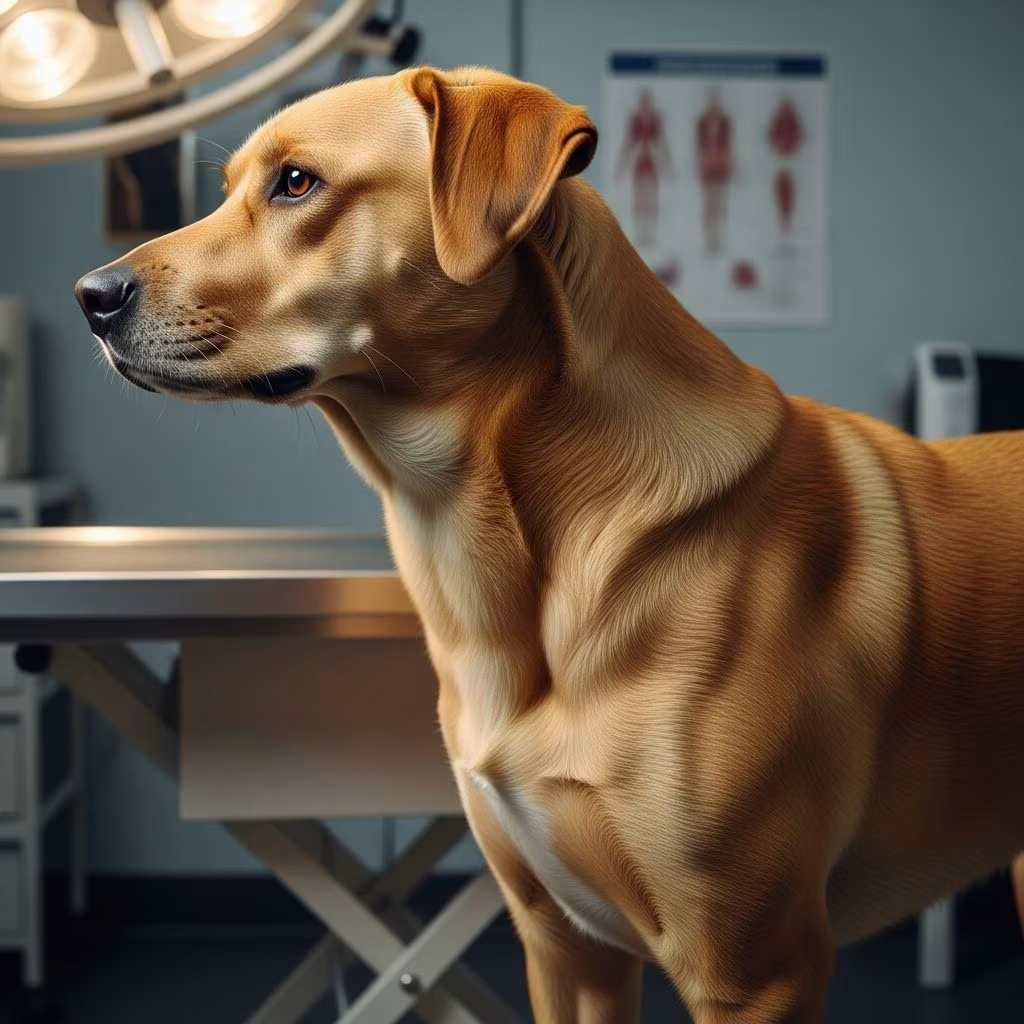
Congenital chest bone deformities, primarily pectus excavatum and pectus carinatum, alter the sternum and rib cage structure in dogs, potentially compressing vital organs and impairing breathing or heart function. These conditions, though rare, demand early detection for optimal management.
Understanding the Anatomy of Canine Chest Deformities
The canine chest comprises the sternum—a flat, elongated bone at the thorax’s center—and costal cartilages linking it to the ribs. In healthy dogs, this forms a convex thoracic cavity supporting lung expansion and heart positioning. Deformities disrupt this, with pectus excavatum causing sternal depression and narrowing, while pectus carinatum leads to protrusion.
These anomalies arise during fetal development, affecting osteogenesis and chondrogenesis. Brachycephalic breeds face heightened risk due to genetic factors and respiratory pressures.
Primary Types of Chest Wall Abnormalities
Two main deformities dominate veterinary literature:
- Pectus Excavatum (Funnel Chest): The sternum indents inward, creating a sunken appearance, especially caudally. This compresses lungs and shifts the heart leftward, reducing thoracic volume.
- Pectus Carinatum (Pigeon Chest): The sternum protrudes outward, forming a convex bulge. Impacts are milder but can involve cardiac issues in severe instances.
Less common is flat chest syndrome, emerging post-birth, where ventral flattening and lateral rib bowing hinder lung expansion.
Recognizing Clinical Signs in Puppies
Symptoms vary by severity and type but often manifest within weeks of birth. Owners may observe:
- Rapid or labored breathing (tachypnea, dyspnea)
- Exercise intolerance and rapid fatigue
- Coughing, wheezing, or recurrent respiratory infections
- Weight loss, poor appetite, or failure to thrive
- Vomiting or cyanosis in advanced cases
| Deformity Type | Key Physical Sign | Common Symptoms |
|---|---|---|
| Pectus Excavatum | Sunken sternum (visible/palpable indentation) | Breathing difficulty, exercise intolerance, heart shift |
| Pectus Carinatum | Protruding sternum (pigeon-breast shape) | Milder; occasional breathing issues, congenital heart links |
| Flat Chest | Ventral flattening, bowed ribs | Panting, coughing, poor lung expansion |
Mild cases might evade notice until activity reveals limitations; severe ones threaten survival.
Breeds Predisposed to These Conditions
Genetic predisposition clusters in brachycephalic (short-nosed) breeds, though any dog can be affected. High-risk groups include:
- English Bulldog, French Bulldog, Pug
- Maltese, Shih Tzu, Pekingese
- Boston Terrier, Boxer, Chihuahua
- Dachshund, Welsh Terrier, Welsh Springer Spaniel
Environmental factors like slippery flooring during puppyhood may exacerbate flat chest by promoting poor posture.
Root Causes and Developmental Factors
Both deformities are congenital, present at birth, with heritability suspected but unconfirmed. Theories include:
- Abnormal cartilage/sternal growth
- Intrauterine pressures or ligament defects
- Nutritional/environmental influences
- Secondary to brachycephalic airway obstruction
Unlike acquired bone issues like hypertrophic osteodystrophy, these stem from embryonic malformation, not infection or nutrition post-birth. Progression halts after growth, but pectus excavatum rarely self-corrects.
Veterinary Diagnostic Approaches
Diagnosis begins with physical exam, palpating the chest for irregularities. Essential tools include:
- Thoracic Radiographs: Reveal sternal deviation, heart displacement, lung compression.
- Echocardiography: Assesses cardiac function and defects.
- CT Scans: Detail severity and comorbidities.
Bloodwork rules out infections; severity indices guide intervention. Early screening in at-risk litters proves crucial.
Treatment Strategies: From Conservative to Surgical
Management tailors to severity:
- Mild Cases: Monitor growth; many flat chests resolve spontaneously by adulthood. Supportive care includes soft bedding, weight management.
- Moderate: Physical therapy, splinting, or custom braces to reshape during growth phases.
- Severe: Surgery—sternal osteotomy, external splints, or Nuss procedure analogs—restores contour, often post-3-6 months when stable.
Prognosis excels with timely intervention; untreated severe excavatum risks heart failure. Post-op care involves pain control, restricted activity.
Preventive Measures for Breeders and Owners
Breeding vigilance curbs incidence: screen parents, avoid brachycephalic overbreeding. For puppies:
- Provide firm, non-slip surfaces
- Monitor litters closely from birth
- Ensure balanced nutrition supporting skeletal health
- Seek vet checks at 2-4 weeks
Awareness empowers early action, enhancing life quality.
Long-Term Prognosis and Quality of Life
Many dogs thrive post-correction, engaging normally. Complications like pneumonia or cor pulmonale loom in neglect. Regular vet follow-ups track respiratory/cardiac health. Owners report active lives in managed cases, underscoring intervention value.
Frequently Asked Questions (FAQs)
Can chest deformities develop later in life?
No, these are congenital; adult-onset changes signal other issues like trauma or tumors—consult a vet urgently.
Is surgery always necessary?
Not for mild cases, which may self-correct; severe ones compressing organs require it for survival.
Are these deformities fatal?
Untreated severe pectus excavatum can be, due to respiratory/cardiac failure; early treatment yields good outcomes.
How do I know if my puppy has it?
Look for chest indentation/protrusion, breathing struggles, or exercise limits; X-rays confirm.
Can diet fix it?
No, but proper nutrition aids growth; deformities stem from genetics/development.
Chest deformities challenge canine health yet respond to vigilant care. Prompt veterinary partnership safeguards affected puppies’ futures.
References
- Chest Bone Deformity in Dogs – PetMD — PetMD. 2023. https://www.petmd.com/dog/conditions/musculoskeletal/c_dg_chest_bone_deformity
- Chest Bone Deformities in Dogs: Our Vet Discusses Signs, Causes — Dogster. 2023. https://www.dogster.com/ask-the-vet/chest-bone-deformities-in-dogs
- Swimmers and pectus excavatum in Dogs (Canis) — Vetlexicon. 2024. https://www.vetlexicon.com/canis/internal-medicine/articles/swimmers-and-pectus-excavatum/
- Pectus Excavatum – Animal Surgical Center of Michigan — Animal Surgical Center. 2023. https://www.animalsurgicalcenter.com/pectus-excavatum
- Pectus Excavatum in Puppies and Kittens – MSPCA-Angell — MSPCA-Angell. 2022. https://www.mspca.org/angell_services/pectus-excavatum-in-puppies-and-kittens/



