

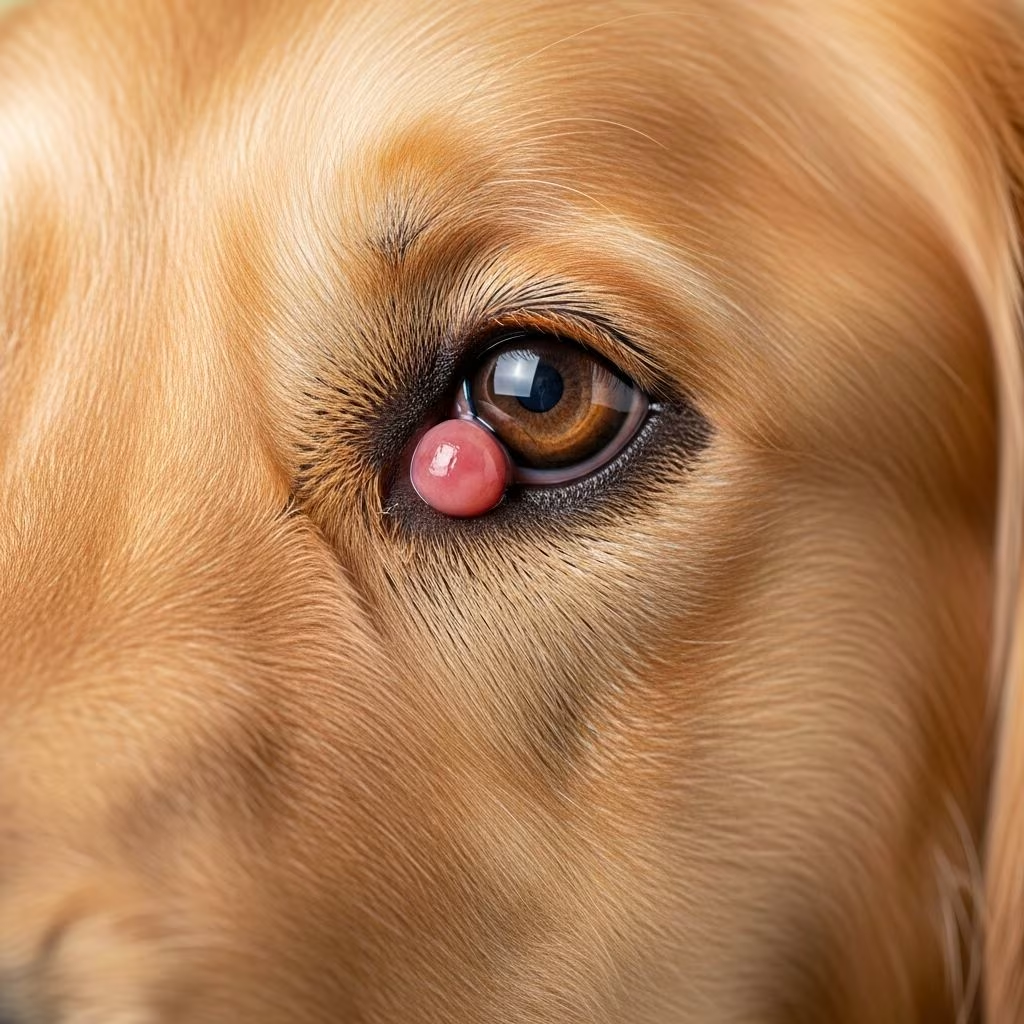
Cherry eye represents a prevalent ocular disorder in canines, characterized by the prolapse of the third eyelid’s tear gland. This condition manifests as a striking red mass protruding from the eye’s inner corner, often alarming pet owners. Prompt recognition and intervention are crucial to avert complications such as chronic dryness or infections that could impair vision.
Understanding the Anatomy Behind Cherry Eye
Dogs possess a third eyelid, also termed the nictitating membrane, situated in the medial canthus—the inner eye corner. This structure features a glandular component responsible for generating approximately 30-50% of the eye’s aqueous tear film, vital for lubrication and corneal protection. Typically anchored by fibrous connective tissue, the gland can dislodge when these tethers weaken, leading to exposure and the hallmark “cherry-like” appearance.
The prolapsed gland becomes vascularized and inflamed due to its new position, swelling into a fleshy, reddish protrusion. Unlike acute injuries, this is not immediately painful but can evolve into discomfort if neglected.
Primary Causes and Risk Factors
Several elements contribute to the onset of cherry eye. The core issue stems from laxity or congenital defects in the orbital connective tissues securing the gland. Breeds with brachycephalic (short-nosed) skulls or prominent eyes face heightened susceptibility owing to anatomical strain on ocular structures.
- Genetic Predisposition: Inherited weaknesses in glandular ligaments are common in certain lines.
- Trauma: Blunt force near the eye socket may displace the gland acutely.
- Age: Puppies under two years exhibit higher incidence, though adults can develop it.
- Nutritional Deficits: Suboptimal diets potentially undermine tissue integrity indirectly.
Recognizing the Signs Early
Early detection hinges on observing subtle changes. The most evident symptom is a pink-to-red, fleshy mass emerging from the nasal eye corner, resembling a cherry pit—hence the name. Accompanying signs include:
- Excessive tearing or mucoid discharge.
- Frequent blinking, squinting, or pawing at the eye.
- Mild ocular redness or swelling around the protrusion.
In initial stages, the mass may retract sporadically, but persistence signals progression. Owners of at-risk breeds should perform routine eye inspections during grooming.
Breeds Most Susceptible to This Condition
Certain breeds demonstrate elevated prevalence due to conformational traits. The table below outlines high-risk categories:
| Breed Category | Examples | Risk Notes |
|---|---|---|
| Brachycephalic | Bulldog, Pug, Boston Terrier | Shallow sockets increase prolapse likelihood. |
| Hunting/Spaniel | Cocker Spaniel, English Springer Spaniel | Prominent eyes strain ligaments. |
| Mastiff Types | Neapolitan Mastiff, Mastiff | Heavy heads contribute to tissue laxity. |
| Other | Beagle, Lhasa Apso, Shih Tzu | Genetic tendencies observed frequently. |
Mixed breeds sharing these traits may also be affected. Proactive screening in puppyhood benefits predisposed lines.
Treatment Pathways: From Conservative to Surgical
Management prioritizes gland preservation to sustain tear output. Non-invasive approaches serve mild cases temporarily, while surgery offers definitive resolution.
Non-Surgical Interventions
Topical anti-inflammatories and antibiotics reduce swelling and secondary infections. Steroid drops or ointments, alongside manual repositioning attempts, provide interim relief. Artificial tear lubricants prevent desiccation pre-surgery. These yield transient results, with recurrence common in moderate-severe instances.
Surgical Correction Techniques
Repositioning surgery is the gold standard, boasting high success rates—near 100% in early interventions. Procedures include:
- Imbrication: Suturing the gland into a subconjunctival pocket.
- Morgan Pocket Technique: Creating a tissue flap to secure the gland.
- Absorbable sutures minimize follow-up needs.
Gland excision is obsolete, as it precipitates keratoconjunctivitis sicca (dry eye) in most cases by halving tear volume. Veterinary ophthalmologists handle complex revisions if initial repairs falter.
Risks of Delaying Treatment
Procrastination invites sequelae:
- Dry Eye (KCS): Impaired tearing causes corneal ulcers, pigmentation, vision loss.
- Infections: Exposed tissue fosters bacterial conjunctivitis.
- Fibrosis: Chronic prolapse scars the gland, complicating surgery.
- Behavioral shifts like self-trauma exacerbate damage.
Timely action—ideally within weeks—optimizes outcomes and averts lifelong medication.
Step-by-Step Recovery Process
Post-operative care spans 2-4 weeks, emphasizing compliance:
- Immediate Phase (Days 1-7): Elizabethan collar prevents rubbing; administer prescribed drops 3-4x daily.
- Monitoring: Watch for discharge, swelling, or relapse signs; restrict activity.
- Follow-Ups: Rechecks at 10-14 days confirm healing; tear tests assess function.
- Long-Term: Omega-3 supplements bolster ocular health.
A quiet recovery space aids compliance. Most dogs resume normalcy by week 3.
Preventive Measures for At-Risk Dogs
While not fully preventable, strategies mitigate risk:
- Annual ophthalmic exams for predisposed breeds.
- Balanced nutrition supporting connective tissue resilience.
- Trauma avoidance via leashing in rough play.
- Early intervention on ocular irritations.
Frequently Asked Questions (FAQs)
Can cherry eye resolve without surgery?
Rarely; while drops may temporarily reduce it, permanent fixation demands surgical repositioning.
Is cherry eye painful for dogs?
Typically not acutely, but irritation and secondary issues cause discomfort over time.
How much does cherry eye surgery cost?
Varies by location and specialist; general ranges are $500-$2,500, often covered partially by pet insurance.
Will my dog get cherry eye in both eyes?
Possible, with 5-20% bilateral occurrence; treat independently.
What’s the success rate of cherry eye surgery?
90-100% for prompt cases, lower if chronic.
Long-Term Eye Health Maintenance
Beyond cherry eye, holistic care preserves vision: regular cleanings, allergen management, and prompt vet consults for anomalies ensure enduring ocular wellness.
References
- What is Cherry Eye in Dogs? — Taconic Veterinary Center. 2023. https://taconicvet.com/blog/cherry-eye-in-dogs/
- Treatment Options for Cherry Eye in Dogs: Weighing the Pros and Cons — AZ Vet Direct. 2024. https://azvet.direct/low-cost-cherry-eye-surgery-in-mesa-az/treatment-options-for-cherry-eye-in-dogs-weighing-the-pros-and-cons/
- Cherry Eye in Dogs — VCA Animal Hospitals. 2024-01-15. https://vcahospitals.com/know-your-pet/cherry-eye-in-dogs
- Understanding Cherry Eye In Pets: Causes, Symptoms, And Treatment — Village Oaks Veterinary. 2023. https://vovcbham.com/blog/understanding-cherry-eye-in-pets-causes-symptoms-and-treatment/
- Cherry Eye in Dogs: What Does It Look Like, and Why Does It Happen? — PetMD. 2025-06-12. https://www.petmd.com/dog/conditions/eyes/cherry-eye-in-dogs
- Cherry Eye in Dogs — Blue Cross. 2024. https://www.bluecross.org.uk/advice/dog/health-and-injuries/cherry-eye-in-dogs
- Cherry Eye in Dogs — Small Door Veterinary. 2024. https://www.smalldoorvet.com/learning-center/medical/cherry-eye-in-dogs
- Cherry Eye in Dogs: Signs, Symptoms, Treatments — American Kennel Club. 2024-09-20. https://www.akc.org/expert-advice/health/cherry-eye-in-dogs/



