

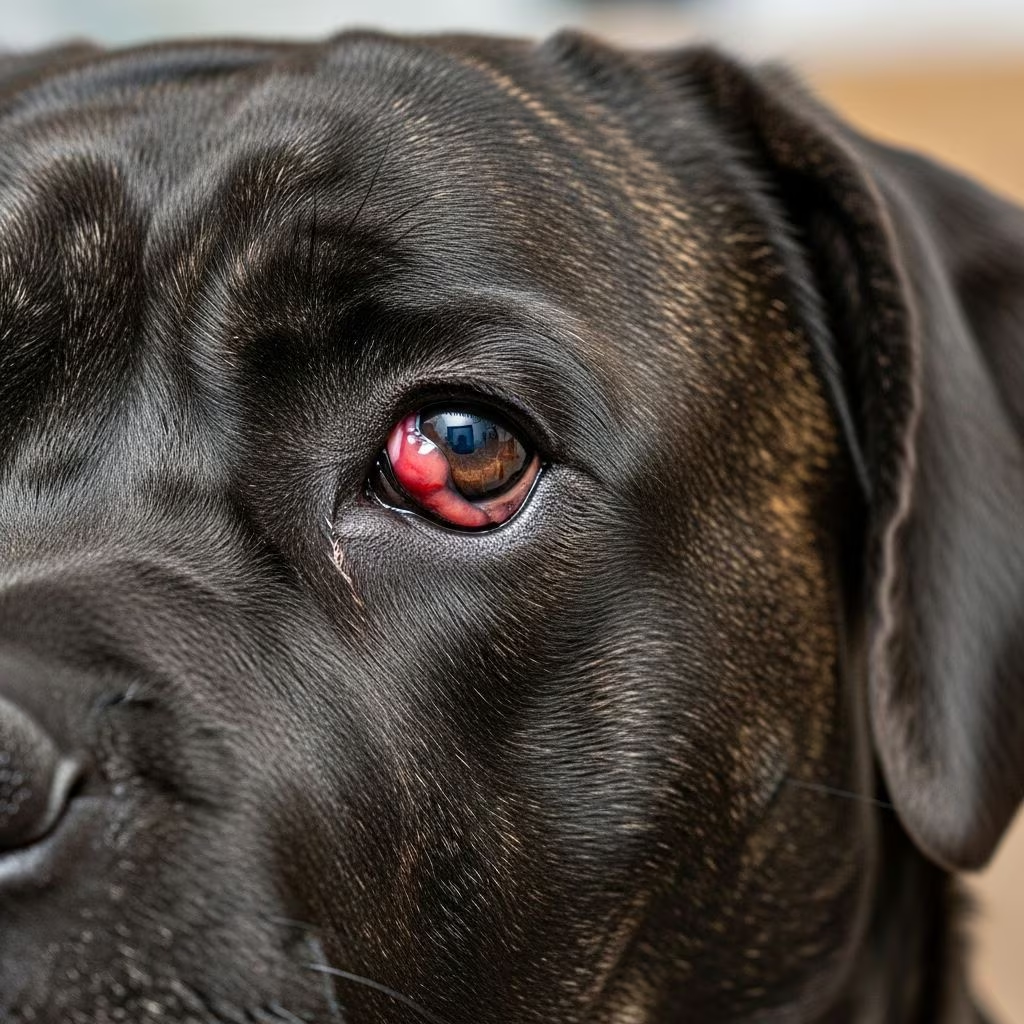
Cherry eye is a common yet manageable eye condition in Cane Corsos where the tear-producing gland from the third eyelid protrudes, appearing as a striking red mass. This guide explores its recognition, underlying factors, diagnostic approaches, treatment pathways, postoperative care, and strategies to safeguard your dog’s vision long-term.
Understanding the Anatomy Behind Cherry Eye
Cane Corsos possess a third eyelid, also called the nictitating membrane, located in the inner corner of each eye. This structure includes a vital lacrimal gland responsible for about 30% of the eye’s tear production, essential for lubrication and protection against infections. In cherry eye, the gland’s connective tissues weaken, allowing it to slip forward and become exposed. Breeds like Cane Corsos face heightened susceptibility due to genetic predispositions in large, muscular dogs with broad heads.
The prolapsed gland swells from inflammation and exposure, resembling a cherry pit—hence the name. While not immediately painful, ignoring it risks secondary issues like reduced tear flow leading to chronic dryness.
Key Indicators to Watch For
Early detection hinges on observing subtle changes in your Cane Corso’s eyes. Common signs include:
- A prominent pinkish-red lump at the medial canthus (inner eye corner), often sudden in onset.
- Excessive clear or sticky discharge, signaling irritation.
- Conjunctival redness or swelling around the eyeball.
- Dull or dry corneal surface, prone to scratches from pawing.
- Mild squinting or face-rubbing, though many dogs show no discomfort initially.
These symptoms can affect one or both eyes, with the second often following suit if untreated. Monitor puppies closely, as the condition frequently emerges between 6 months and 2 years.
Why Cane Corsos Are Prone to This Issue
Cane Corsos, as mastiff-type guardians, inherit a genetic laxity in the orbital ligaments anchoring the gland. Factors amplifying risk include:
- Breeding lines: Poor selective breeding overlooks weak connective tissues.
- Head structure: Their wide skulls exert pressure on eye sockets.
- Age and trauma: Young dogs or those with head injuries show higher incidence.
Statistics from veterinary reports indicate up to 40% of affected dogs belong to brachycephalic or giant breeds, underscoring Cane Corsos’ vulnerability.
Diagnostic Process for Accurate Assessment
Veterinarians diagnose cherry eye through a straightforward ocular exam. Key steps involve:
- Visual inspection to confirm the prolapsed gland.
- Schirmer tear test—a strip measures tear volume over one minute, flagging deficiencies early.
- Fluorescein dye application to reveal corneal ulcers or abrasions under blue light.
- Tonometry for intraocular pressure if glaucoma is suspected.
These non-invasive tests rule out mimics like tumors or allergies, ensuring targeted intervention. Board-certified ophthalmologists handle complex cases.
Non-Surgical Options: Temporary Relief
While surgery remains gold standard, initial medical management buys time:
- Topical steroids: Drops like prednisolone reduce swelling, easing repositioning.
- Artificial lubricants: Frequent application prevents dryness during flare-ups.
- Manual reduction: Gentle massage occasionally tucks the gland back, but recurrence is common.
This approach suits owners delaying surgery, yet risks keratoconjunctivitis sicca (KCS)—a painful dry eye syndrome—from impaired gland function.
Surgical Interventions: Restoring Normalcy
Surgery corrects over 90% of cases by repositioning the gland. Techniques include:
| Method | Description | Success Rate | Recurrence Risk |
|---|---|---|---|
| Pocket Technique | Conjunctiva forms an enveloping pocket to secure the gland. | High (95%+) | Low (<5%) |
| Tacking/Imbrication | Sutures anchor gland to sclera or nictitans. | Moderate-High | 10-20% |
| Gland Excision (Last Resort) | Removal if irreparable, risking KCS. | Palliative | N/A |
Performed under general anesthesia, procedures last 30-60 minutes per eye. Veterinary ophthalmologists excel in minimizing scarring.
Gland removal, once routine, is now discouraged by bodies like the American College of Veterinary Ophthalmologists due to 50%+ KCS rates.
Postoperative Care Essentials
Recovery spans 10-14 days, demanding diligence:
- E-collar mandatory: Prevents self-trauma 24/7.
- Medications: Antibiotic-steroid ointments 3-4x daily; artificial tears as needed.
- Activity limits: Leash walks only; no rough play.
- Follow-ups: Week 1 suture check, month 1 tear test.
Watch for dehiscence, infection, or asymmetry signaling retreatment.
Potential Complications and Risk Mitigation
Though rare (<10%), issues like corneal scarring or persistent prolapse arise. KCS monitoring via annual Schirmer tests is crucial, treatable with cyclosporine drops if detected.
Prognosis excels with prompt surgery: 95% achieve normal function. Bilateral cases benefit from simultaneous correction.
Preventive Measures for Cane Corso Owners
Proactive steps reduce incidence:
- Select breeders screening for hereditary laxity.
- Maintain ideal weight to lessen orbital strain.
- Routine eye exams during wellness visits.
- Protect from facial trauma during training.
Nutrition rich in omega-3s supports connective tissues.
FAQs on Cherry Eye in Cane Corsos
Is cherry eye painful for my Cane Corso?
Not acutely, but untreated progression causes discomfort via dryness or ulcers.
Can cherry eye resolve without surgery?
Rarely; temporary meds help, but surgery prevents recurrence.
How much does surgery cost?
Varies $500-$2500 per eye, depending on specialist and location.
Will my dog go blind from cherry eye?
No, if addressed timely; KCS risks blindness only if unmanaged.
Should I treat both eyes at once?
Yes, if one shows signs, as the contralateral often follows.
Long-Term Eye Health Strategies
Beyond treatment, integrate tear-stimulation drops and UV-protective goggles for outdoor activities. Annual ophthalmic evals catch subclinical KCS, preserving your Cane Corso’s alert gaze.
This condition, while alarming visually, responds excellently to modern veterinary care, ensuring your majestic companion enjoys a pain-free, sighted life.
References
- Cherry Eye in Cane Corsos: Signs, Causes & Treatment (Vet Answer) — Dogster. 2023. https://www.dogster.com/ask-the-vet/cherry-eye-in-cane-corsos-vet-answer
- Cherry Eye in Dogs — Blue Cross UK. 2024. https://www.bluecross.org.uk/advice/dog/health-and-injuries/cherry-eye-in-dogs
- Cherry Eye in Dogs: What Does It Look Like, and Why Does It Happen? — PetMD. 2024. https://www.petmd.com/dog/conditions/eyes/cherry-eye-in-dogs
- Cane Corso Cherry Eye Explained: Surgery Options — Encounter Cane Corso (YouTube). 2024-02-23. https://www.youtube.com/watch?v=PdvS6IdReCs
- Cherry Eye in Dogs: Causes, Symptoms & Treatment — Pawlicy Advisor. 2024. https://www.pawlicy.com/blog/cherry-eye-in-dogs/
- Cherry Eye in Dogs: Signs, Symptoms, Treatments — American Kennel Club. 2024. https://www.akc.org/expert-advice/health/cherry-eye-in-dogs/



