

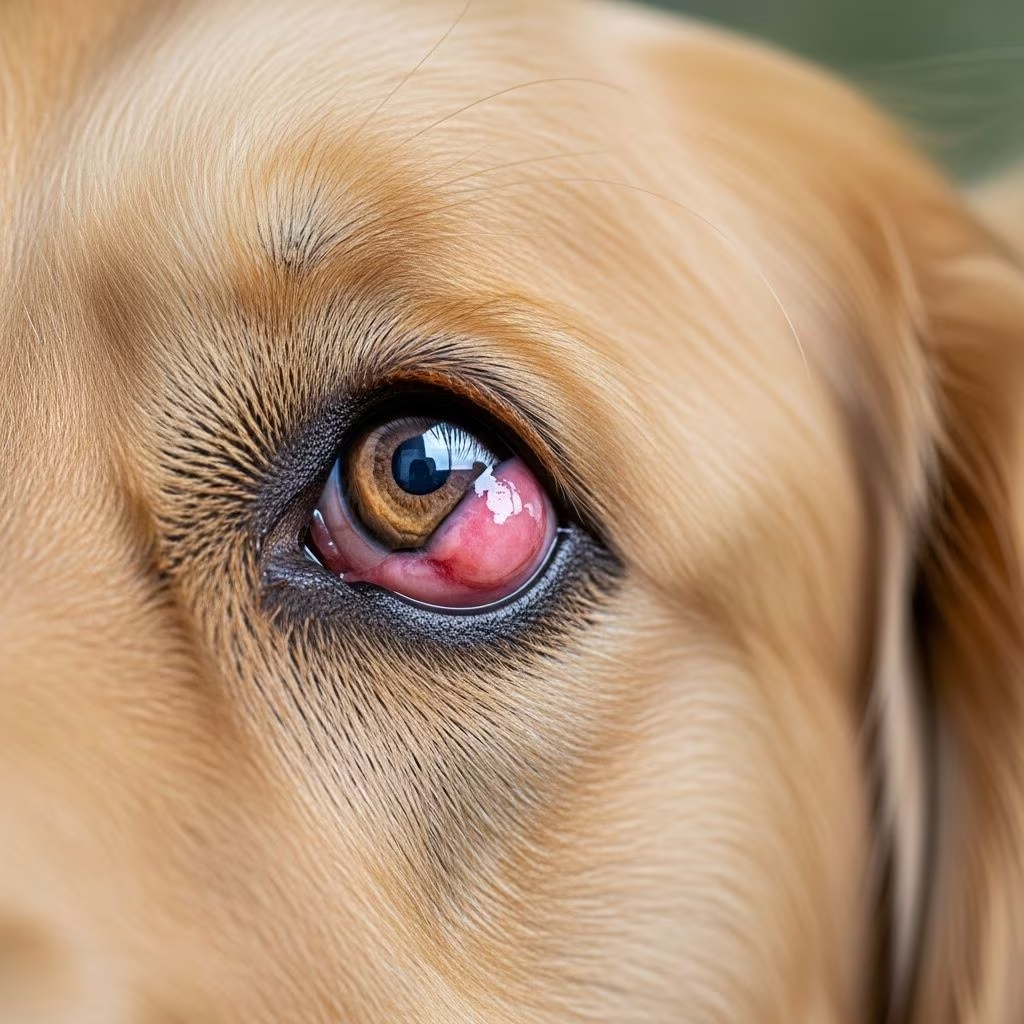
One of the more visually striking conditions that can affect your dog’s eyes is cherry eye, a condition that appears as a bright red swelling in the inner corner of the eye. Despite its alarming appearance, this is a treatable condition that requires prompt veterinary attention to prevent long-term complications affecting your pet’s vision and comfort.
Understanding the Anatomy Behind Cherry Eye
To understand cherry eye, it helps to know a bit about the anatomy of your dog’s eye. Dogs, like humans, have a third eyelid—a protective membrane also called the nictitating membrane or nictatating membrane that sits beneath the upper and lower eyelids. Unlike human eyes, canine eyes feature a tear-producing gland associated with this third eyelid.
This gland is particularly important because it contributes substantially to tear production, accounting for approximately 30 to 50 percent of a dog’s overall tear film. Tears serve critical functions in maintaining ocular health: they lubricate the eye surface, protect against infection, and provide essential nutrients to the cornea. When the gland functions properly, it works in concert with other structures to keep the eye healthy and comfortable.
What Happens When Cherry Eye Develops
Cherry eye occurs when the connective tissue that anchors the tear gland in its proper position beneath the third eyelid becomes weakened or compromised. This allows the gland to slip out and prolapse, appearing as a visible red or pink swelling in the inner corner of the eye—resembling a cherry, hence the condition’s common name.
The condition is not typically painful in its early stages, but the visible swelling represents a significant functional problem. Because the gland has moved out of its normal position, it cannot effectively perform its tear-production responsibilities, leading to reduced tear coverage of the eye surface.
Primary Risk Factors and Genetic Predisposition
Genetics plays the most significant role in determining whether a dog will develop cherry eye. Certain breeds demonstrate a substantially higher susceptibility to this condition, suggesting a hereditary weakness in the connective tissues that normally support the tear gland.
Breeds with elevated risk include:
- Bulldogs and French Bulldogs
- Cocker Spaniels
- Boston Terriers
- Beagles
- Shih Tzus
- Great Danes (in which scrolled cartilage may play a role)
Age is another critical factor. Cherry eye most commonly appears in dogs younger than two years of age, with studies showing a particularly high incidence in dogs under one year old. Young dogs may be more susceptible because their connective tissues are still developing and potentially not yet fully mature.
Beyond breed and age, additional contributing factors can increase the likelihood of gland prolapse. These include inflammation from allergies, direct trauma to the eye area, or underlying anatomical variations such as abnormal cartilage formation in larger breeds.
Recognizing the Signs and Symptoms
The most obvious sign of cherry eye is the appearance of a red or pink mass in the inner corner of the affected eye. This swelling may be continuously visible, or it might appear intermittently, particularly if your dog rubs the eye or during moments when the eye muscles are more relaxed.
Beyond the visible swelling, affected dogs often display additional symptoms that indicate eye irritation and discomfort:
- Increased tear production and discharge from the affected eye
- Frequent blinking or squinting
- Pawing at or rubbing the eye
- Sensitivity to bright light
- Redness in the white of the eye
- Behavioral changes such as reluctance to engage in normal activities
It is important to note that while cherry eye itself may not cause significant pain initially, the reduced tear production that results from the prolapsed gland can quickly lead to irritation and more serious complications if left untreated.
Why Untreated Cherry Eye Becomes Problematic
The consequences of leaving cherry eye untreated extend well beyond the cosmetic concern of the visible swelling. Because the prolapsed gland cannot effectively contribute to tear production, the eye becomes significantly drier than normal.
This reduction in tear coverage can lead to a condition called keratoconjunctivitis sicca, or dry eye (KCS). This chronic condition develops when the eye lacks sufficient tears to maintain proper hydration and protection. Unlike the acute irritation that may appear initially, dry eye is a lifelong condition that requires daily medication and management for the remainder of your dog’s life.
Additional complications that may develop from untreated cherry eye include:
- Chronic eye discharge and crusting
- Corneal ulceration and scarring
- Persistent inflammation of the eye surface
- Potential vision impairment or blindness in severe, long-neglected cases
For these reasons, veterinarians strongly recommend addressing cherry eye as soon as it is identified rather than hoping it will resolve on its own.
Myth: Cherry Eye Will Resolve Without Treatment
A common misconception is that cherry eye will spontaneously resolve or return to normal position without intervention. While in rare cases—particularly when allergic inflammation is the primary cause—the gland may briefly recede on its own, this resolution is typically temporary.
The gland may pop in and out of position initially, but over time the condition usually becomes permanent. The longer the gland remains prolapsed, the more inflamed and enlarged it becomes, making surgical correction increasingly difficult. This is why early intervention provides the best outcomes.
Initial Management Approaches
When cherry eye is first identified, your veterinarian may initially recommend conservative management, particularly if allergies appear to be contributing to the swelling. This approach typically includes topical medications designed to reduce inflammation and prevent secondary infection.
These initial treatments may include:
- Anti-inflammatory eye drops to reduce swelling and irritation
- Antibiotic eye drops or ointments to prevent bacterial infection
- In some cases, oral corticosteroids to address underlying inflammation
In a minority of cases—particularly in younger dogs where the gland is still relatively healthy and the inflammation is allergic in nature—these conservative measures may allow the gland to settle back into position without surgery. However, most cases eventually require surgical intervention.
Surgical Correction: The Most Effective Treatment
Surgery represents the definitive and most effective treatment for cherry eye. The modern surgical approach to this condition has evolved significantly from earlier techniques.
Historically, veterinarians removed the prolapsed tear gland entirely. This approach is no longer recommended because dogs who lose this gland face a very high risk of developing chronic dry eye (KCS) that persists for the remainder of their lives. This irreversible consequence led to a fundamental shift in surgical philosophy.
Modern surgical techniques focus on preserving the gland while repositioning it back to its normal anatomical location beneath the third eyelid. The surgeon creates a small pocket using tissue and sutures the gland back into place. These sutures are typically absorbable, meaning they dissolve naturally over time as healing occurs.
The surgical procedure is relatively straightforward for veterinarians experienced in ocular surgery. Many primary care veterinarians can perform this procedure, though some may refer particularly complicated cases to a veterinary ophthalmologist—a veterinarian with specialized training in eye conditions.
Expected Outcomes and Success Rates
When surgery is performed promptly after cherry eye develops—particularly in young dogs with minimal inflammation—success rates are exceptionally high, approaching nearly 100 percent in many cases. The gland typically remains in its corrected position permanently, allowing normal tear production to resume.
However, success rates decline if surgery is delayed. When the gland has been prolapsed for months or years, it becomes significantly inflamed and enlarged, making repair more difficult and less predictable. In these cases, while surgery can still provide benefit, complications are more common.
In a small percentage of cases, the gland may prolapse again following the initial surgery, necessitating revision surgery. Additionally, some dogs may require long-term tear supplementation in the form of eye drops to maintain ocular comfort if tear production remains slightly reduced even after successful surgical repositioning.
Recovery and Post-Surgical Care
Recovery from cherry eye surgery is typically rapid. Most dogs resume normal activities within a relatively short period following the procedure. Your veterinarian will provide specific post-operative instructions to ensure proper healing, which typically include:
- Preventing the dog from rubbing or traumatizing the surgical site
- Administering prescribed antibiotic and anti-inflammatory eye medications as directed
- Limiting strenuous activity during the immediate recovery period
- Following up with your veterinarian to assess healing progress
Adherence to post-operative instructions significantly influences the success of the surgical repair.
Prevention and Monitoring Strategies
While cherry eye cannot be entirely prevented—particularly in genetically predisposed dogs—certain management strategies may help reduce the risk or catch the condition early:
- Regular veterinary eye examinations, particularly in young dogs of predisposed breeds
- Prompt treatment of eye allergies and inflammation to reduce swelling of ocular structures
- Protection of your dog from ocular trauma and rough play
- Monitoring for any visible changes in your dog’s eyes and reporting them immediately to your veterinarian
For dogs at particularly high risk, such as young purebred dogs of susceptible breeds, regular eye assessments during the critical first two years of life may allow early intervention before complications develop.
Frequently Asked Questions
Can cherry eye be treated with eye drops alone?
While anti-inflammatory and antibiotic eye drops may temporarily reduce swelling and prevent infection, they cannot permanently reposition the prolapsed gland. Eye drops are best used as a preliminary treatment or in conjunction with surgical correction. Most cases ultimately require surgery.
Is cherry eye painful for dogs?
Cherry eye itself is not typically acutely painful in the early stages. However, the resulting dry eye and chronic irritation can cause significant discomfort, and untreated cases can lead to serious complications.
What is the cost of cherry eye surgery?
The cost varies depending on geographic location, the complexity of the case, and whether the surgery is performed by your primary veterinarian or a veterinary ophthalmologist. Your veterinarian can provide a cost estimate during your consultation.
Can cherry eye affect both eyes?
Cherry eye can affect one eye or both eyes. If one eye is affected, there is an increased likelihood that the other eye may eventually develop the condition as well, given the genetic predisposition factor.
How quickly should cherry eye be addressed?
Early intervention is important. Schedule a veterinary appointment as soon as you notice signs of cherry eye, as prompt surgical correction when the gland is still relatively healthy provides the best long-term outcomes.
When to Contact Your Veterinarian
Contact your veterinarian immediately if you notice a red swelling in the inner corner of your dog’s eye, if your dog shows signs of eye discomfort, or if you observe changes in tear production or eye discharge. Early professional evaluation and treatment can prevent complications and ensure your dog’s long-term ocular health.
References
- Cherry Eye in Dogs — Cornell University College of Veterinary Medicine, Riney Canine Health Center. https://www.vet.cornell.edu/departments-centers-and-institutes/riney-canine-health-center/canine-health-topics/cherry-eye-dogs
- Cherry Eye in Dogs: What Does It Look Like, and Why… — PetMD. https://www.petmd.com/dog/conditions/eyes/cherry-eye-in-dogs
- Cherry Eye Surgery for Dogs — Bliss Animal Hospital. https://blissanimalhospital.com/blog/cherry-eye-surgery-dogs-orange-county-ca/
- Understanding Cherry Eye In Pets: Causes, Symptoms, and Treatment — Veterinary Ophthalmology Virtual Clinic. https://vovcbham.com/blog/understanding-cherry-eye-in-pets-causes-symptoms-and-treatment/
- Understanding Pet Cherry Eye Surgery — South Park Animal Hospital, San Francisco. https://www.southparkanimalhospitalsf.com/blog/understanding-pet-cherry-eye-surgery-what-san-francisco-owners-should-know
- Cherry Eye in Dogs: Signs, Symptoms, Treatments — American Kennel Club. 2022. https://www.akc.org/expert-advice/health/cherry-eye-in-dogs/
- Cherry Eye in Dogs — Blue Cross UK. https://www.bluecross.org.uk/advice/dog/health-and-injuries/cherry-eye-in-dogs



