

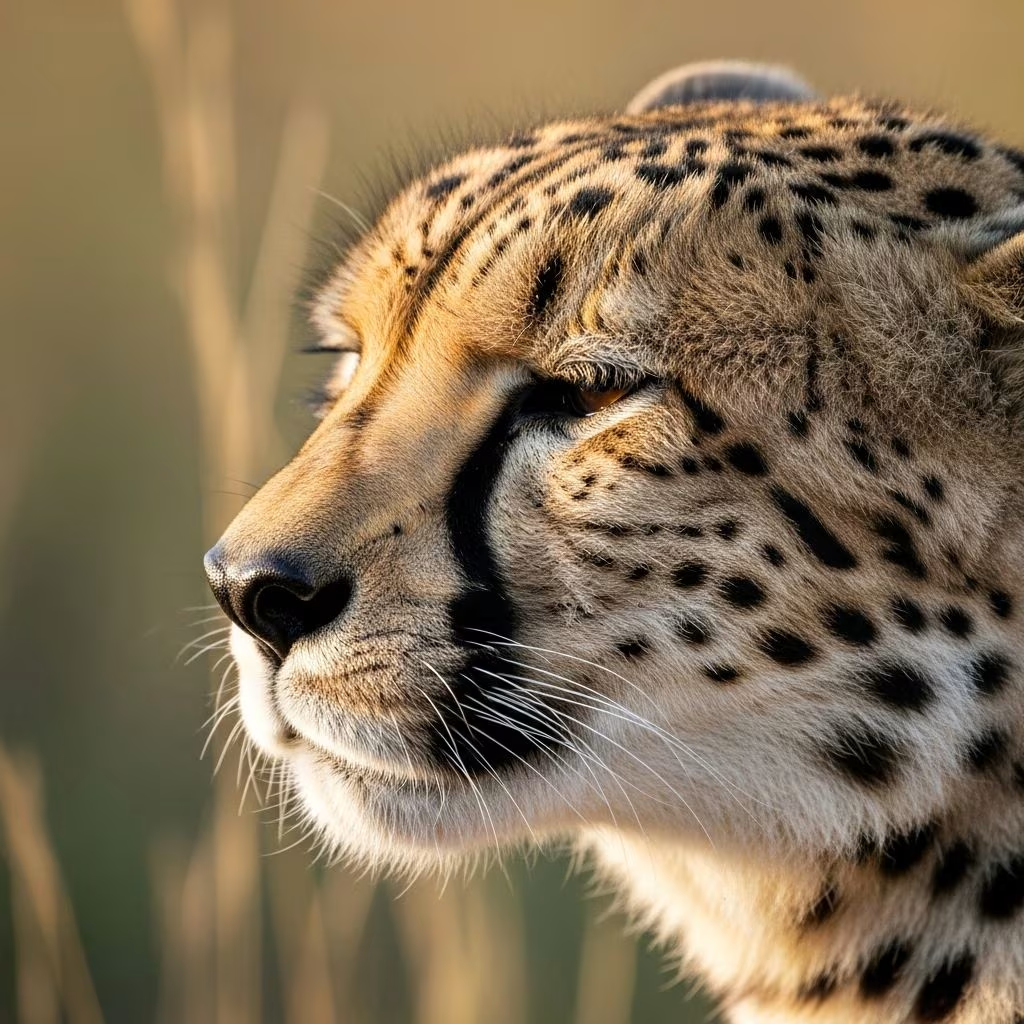
Understanding the Vocal Mystery of Africa’s Fastest Predator
When most people think of big cats, they envision the thunderous roar of a lion echoing across the African savanna or the powerful vocalization of a tiger in the wild. However, the cheetah, despite being classified among the large feline species, operates quite differently in terms of sound production. Rather than producing the earth-shaking roars associated with their larger cousins, cheetahs have developed a completely different vocal repertoire. One of the most surprising discoveries about these remarkable predators is their ability to purr continuously—a trait that sets them apart fundamentally from other members of the big cat family. This unique characteristic reveals much about the evolutionary adaptations and physical structure that have made cheetahs such efficient hunters across African landscapes.
The Anatomy Behind the Purr: Understanding the Hyoid Bone
The fundamental reason cheetahs purr instead of roar comes down to a single anatomical structure: the hyoid bone, also referred to as the epihyal bone in scientific literature. This small, specialized bone is located in the throat region and plays a crucial role in supporting both the tongue and the larynx. The difference between cheetahs and other large feline species lies not in the presence of this bone, but in how it is structured and composed.
In smaller cat species, including domestic house cats and cheetahs, the hyoid bone is characterized by being completely rigid and fully ossified, meaning it has hardened into solid bone throughout its entire structure. When the larynx vibrates during breathing, this rigid hyoid bone resonates in response, creating the distinctive low-frequency sound that we recognize as purring. This mechanical process occurs both when the animal inhales and exhales, allowing for continuous purring that can persist for extended periods.
The situation differs dramatically in other big cat species such as lions, tigers, leopards, and jaguars. In these animals, the hyoid bone is only partially ossified, meaning portions of it remain flexible or cartilaginous rather than completely hardened into bone. This structural difference fundamentally alters the acoustic properties of their vocal apparatus, enabling them to produce the powerful roars that can travel across vast distances. The flexible hyoid bone allows their voice box to function in a completely different manner, generating sounds at frequencies and volumes that small-framed cats simply cannot produce.
Why Roaring and Purring Are Mutually Exclusive
An important scientific principle governs the vocal abilities of cats: roaring and purring are mutually exclusive abilities. An animal cannot possess the physiological structures necessary to perform both functions simultaneously. If a cat species has the skeletal and muscular adaptations required to roar, it loses the capacity to purr, and vice versa. This represents an evolutionary trade-off that shaped the development of different cat lineages.
For cheetahs, this biological constraint meant that their evolution favored the purring mechanism rather than roaring capability. This choice appears to have served their survival and reproductive needs effectively, as cheetahs have thrived as predators across African territories for millennia. The loss of roaring ability has not hindered their success; instead, they have developed alternative communication strategies that work effectively within their ecological niche.
The Complete Vocal Range of Cheetahs
While purring is the most distinctive vocalization associated with cheetahs, these animals possess a remarkably diverse repertoire of sounds that they use for different communicative purposes. Understanding the full range of cheetah vocalizations provides insight into how these solitary and semi-social predators interact with their environment and with each other.
Contentment and Social Bonding Sounds
- Purring: Indicating contentment and relaxation, this sound occurs both during inhalation and exhalation at frequencies between 25 to 150 Hz
- Chirping and Trilling: High-pitched, bird-like vocalizations used particularly between mothers and their cubs, serving as a bonding and location-confirmation mechanism
- Moaning: Soft, melodic sounds that may indicate pleasure or mild distress depending on context
Defensive and Threat-Related Vocalizations
- Growling: A low, rumbling sound produced when the animal feels threatened or challenged
- Hissing: A sharp, aggressive sound indicating heightened threat levels and willingness to escalate conflict
- Spitting: An explosive vocalization often accompanied by forceful paw strikes against the ground
Distance Communication
- Explosive Yelp: A powerful vocalization capable of being heard from distances up to 2 kilometers, used for long-range communication across open terrain
- Growl-Chirp Combinations: Hybrid vocalizations that may serve multiple communicative purposes simultaneously
Purring Frequencies and Potential Health Benefits
Recent scientific research has revealed that the frequency range at which cats purr—between 25 to 150 Hz—falls within a band of sound frequencies that may have therapeutic properties for biological systems. Studies conducted on purring cats have demonstrated that sound produced within this frequency range can stimulate improvements in bone density, a process that appears particularly beneficial for animals that spend extended periods at rest.
This discovery has led researchers to propose a intriguing evolutionary hypothesis: purring may serve as a low-energy mechanism for stimulating bone and muscle healing. For cheetahs, which experience significant muscular exertion during high-speed hunts but also engage in extended periods of rest and recovery, this physiological benefit could represent an important adaptation. The continuous purring that occurs during relaxation periods might help mitigate the bone density loss and muscle atrophy that naturally occurs during prolonged inactivity, essentially providing a form of passive physical therapy.
The Evolution of Cheetah Anatomy for Speed and Hunting
The cheetah’s vocal limitations must be understood within the broader context of their evolutionary specialization for speed and agility. Unlike other big cats that evolved to be generalized predators capable of hunting a wide variety of prey through various strategies, cheetahs became hyper-specialized for one primary hunting method: the high-speed chase across open terrain.
This specialization shaped nearly every aspect of their anatomy. Their skeletal structure is more delicate and lightweight compared to other large felines, enabling rapid acceleration and high-speed pursuit. Their eyes are positioned high on a flattened skull, allowing them to maintain focus on fleeing prey during extended chases. Their claws, unlike those of other cats, do not fully retract, instead functioning like cleats on athletic footwear to provide traction during rapid directional changes and acceleration.
Within this framework of specialization, the retention of a fully ossified hyoid bone that enables purring rather than roaring makes sense. A roaring mechanism would have required additional muscular and skeletal support in the throat and neck region, adding weight and potentially compromising the sleek, aerodynamic profile that makes cheetahs such efficient runners. The evolutionary path that preserved their purring ability while sacrificing roaring capability represented an optimization for their particular ecological role.
Hunting Behavior and the Role of Communication
Understanding cheetah vocalizations becomes even more meaningful when examining how these animals actually hunt and survive in the African savanna. Unlike lions, which rely on cooperative hunting strategies with other pride members and use roars to communicate across distance and establish territorial boundaries, cheetahs are primarily solitary hunters. They do not need long-range acoustic communication for coordinating group hunting efforts.
The chirps and trills that cheetahs produce are used primarily for mother-cub communication and for brief social interactions when individuals encounter one another. The ability to purr during these interactions serves similar functions to purring in domestic cats—indicating comfort, relaxation, and positive social bonding. The growls, hisses, and spitting vocalizations provide necessary threat communication during competitive encounters over kills or during mating interactions.
Cheetahs famously cannot sustain high-speed chases for extended distances; if a chase exceeds approximately 0.27 miles, they must slow down and conserve energy. This hunting limitation means that the explosive yelp—their longest-range vocalization—becomes particularly valuable. It may serve functions such as locating separated cubs, communicating with potential mates across distance, or establishing presence in a territory without expending the energy required for a roar.
Comparative Vocalization Patterns in Felines
| Cat Species | Primary Long-Range Vocalization | Purring Ability | Hyoid Bone Structure | Social Hunting Strategy |
|---|---|---|---|---|
| Cheetah | Explosive Yelp | Yes (Continuous) | Fully Ossified | Solitary |
| Lion | Roar (up to 114 dB) | No | Partially Ossified | Cooperative (Pride) |
| Tiger | Roar | No | Partially Ossified | Solitary |
| Leopard | Roar | No | Partially Ossified | Solitary |
| House Cat | Yelp | Yes (Continuous) | Fully Ossified | Solitary |
Purring in Different Contexts: Beyond Simple Contentment
While purring is commonly associated with contentment and pleasure—a characteristic shared between cheetahs and domestic cats—researchers have documented that purring occurs in numerous other contexts. Cats, including cheetahs, may purr when they are experiencing pain, illness, stress, or anxiety. Mother cheetahs purr while caring for their cubs, providing comfort and security during vulnerable periods of development. Injured cheetahs may purr during recovery periods, potentially receiving the bone and muscle healing benefits provided by the therapeutic frequency range.
This multifunctional nature of purring demonstrates that interpreting a cheetah’s emotional or physical state based solely on its purring requires careful observation of accompanying behaviors and environmental context. A sudden increase in purring might indicate stress or discomfort rather than simple happiness, while purring during grooming and resting almost certainly indicates contentment and well-being.
Frequently Asked Questions
Can cheetahs produce roaring sounds?
No, cheetahs cannot roar. Their fully ossified hyoid bone makes roaring physically impossible. This represents a fundamental anatomical limitation that cannot be overcome through training or behavioral modification.
Do cheetahs purr exactly like domestic house cats?
Cheetahs purr very similarly to domestic house cats, with purring occurring during both inhalation and exhalation. However, the context and meaning of purring may differ, as cheetahs may purr in different social situations given their status as large predators rather than companion animals.
How do cheetahs communicate over long distances?
Cheetahs primarily use their explosive yelp, which can be heard from approximately 2 kilometers away. They also use scent marking and visual displays for territorial communication rather than relying on powerful vocalizations like roaring.
What is the frequency range of cheetah purring?
Cheetah purring occurs at frequencies between 25 to 150 Hz, similar to domestic cats. This frequency range has been associated with potential bone density improvements.
Why did cheetahs evolve to purr instead of roar?
The evolutionary trade-off appears related to cheetah specialization for speed hunting. A roaring mechanism would require additional throat and neck musculature, adding weight that would compromise their aerodynamic form. Retaining the purring mechanism allowed them to maintain lightweight, efficient body structure.
The Significance of Cheetah Vocalizations in Conservation
Understanding cheetah vocalizations has become increasingly important for conservation efforts and zoo management. Researchers studying wild cheetah populations use acoustic monitoring to assess population health, track individuals, and monitor behavioral patterns without direct physical interference. In captive settings, monitoring changes in vocalization patterns—particularly increases in purring, growling, or yelping—can alert caregivers to potential health issues or stress-related concerns.
The unique vocal profile of cheetahs also makes them distinctive subjects for behavioral research, helping scientists understand how solitary predators communicate and maintain social bonds despite spending much of their lives in isolation. This research contributes to broader understanding of feline behavior and has applications for managing both wild and captive populations effectively.
References
- Cheetah Communication — Cheetah.org. Accessed January 2026. https://cheetah.org/learn/about-cheetahs/
- About the Cheetah – Communication — SeaWorld Parks & Entertainment. Accessed January 2026. https://seaworld.org/animals/all-about/cheetah/communication/
- ASK THE EXPERT: What sounds do cheetahs make? — Cleveland Zoo Society. 2023. https://www.clevelandzoosociety.org/z/2023/12/01/ask-the-expert-what-sounds-do-cheetahs-make
- Why do cheetahs purr even though they’re usually so silent? — Dial A Vet. Accessed January 2026. https://www.dialavet.com/vet-answers/post/cheetah-purring-excessively-52462



