

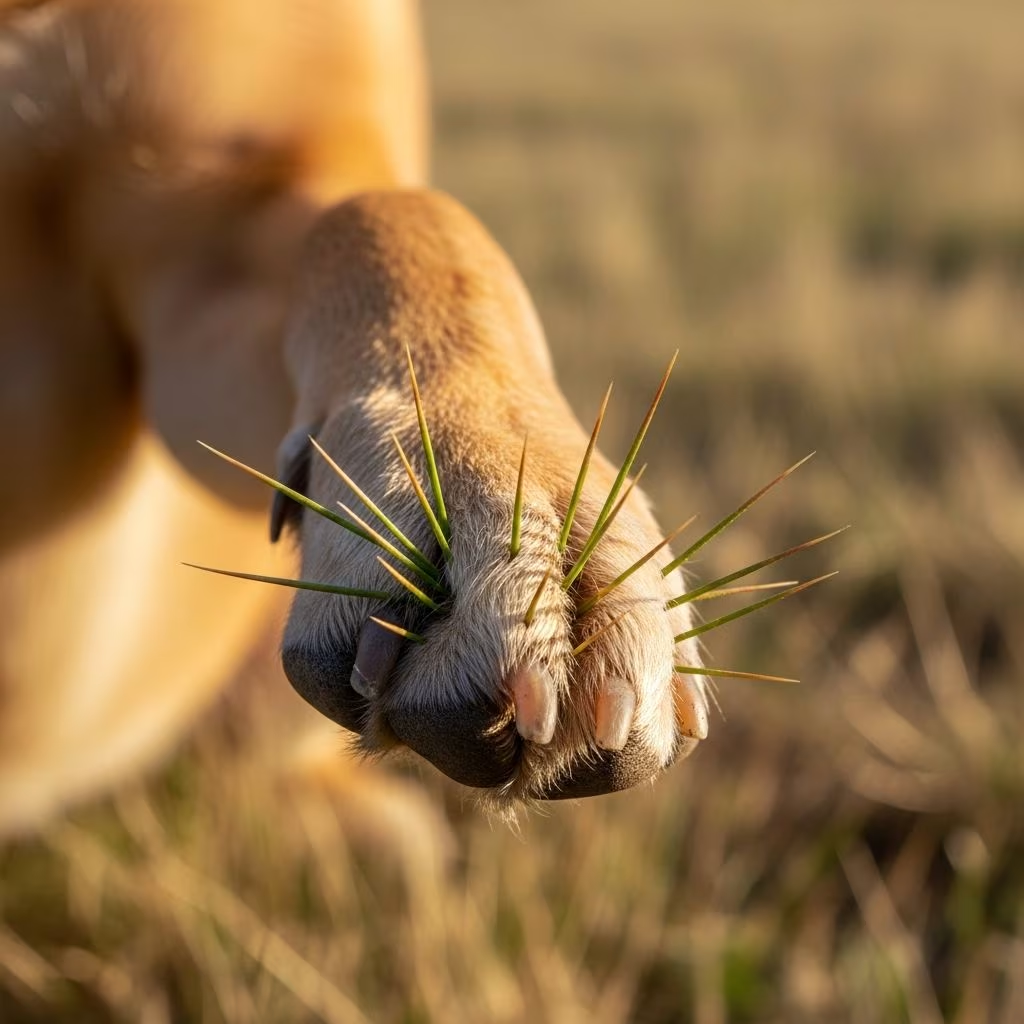
Outdoor activities offer wonderful opportunities for dogs to exercise and explore, yet seasonal hazards lurk in natural environments that many pet owners overlook. One particularly troubling threat comes from an invasive plant species that has become increasingly prevalent across Western landscapes. These tiny, barbed seeds can embed themselves in a dog’s body and cause complications ranging from minor irritations to life-threatening infections. Understanding this environmental hazard is essential for any dog owner who allows their pet to spend time in grasslands, foothills, or rural areas.
What Is This Invasive Plant and Where Does It Come From?
Cheatgrass, scientifically known as Bromus tectorum, is an invasive species also referred to as downy brome. Originally introduced from Europe and the Mediterranean region, this aggressive plant has spread throughout Western North America, where it outcompetes native vegetation and fundamentally alters ecosystems. The plant produces distinctive seed heads that nod and droop under their own weight, eventually releasing sharp, barbed seeds called awns that readily attach to anything passing nearby—including fur, clothing, and skin.
The timing of this plant’s growth cycle coincides with seasons when many dog owners increase outdoor activities. Cheatgrass typically emerges early in the growing season, shortly after winter snowmelt. By late spring through early autumn, the plant produces abundant seeds designed by nature to disperse through mechanical means. The barbed structure ensures that seeds cling tenaciously to fur and fabric, a survival mechanism that proves problematic when dogs encounter dense stands of this invasive species.
Anatomical Structure: Understanding the Danger
The peril associated with cheatgrass stems directly from its seed architecture. Each awn features backward-pointing barbs that resemble tiny fishhooks. These microscopic hooks serve the plant’s evolutionary purpose—ensuring seed dispersal—but create serious complications when embedded in animal tissue. Unlike smooth seeds that might work their way out naturally, the barbed design prevents self-removal and actually facilitates deeper penetration into skin and subcutaneous tissues.
When a dog brushes against cheatgrass during outdoor exploration, dozens of these barbed seeds can become trapped in fur within moments. The longer the fur and the curlier or more textured its structure, the more readily seeds adhere and become difficult to detect. Dogs with furnishings such as spaniels, setters, and retrievers face particular vulnerability, as do doodles and other curly- or wire-coated breeds whose coat texture acts like velcro for plant material.
Primary Entry Points and Initial Complications
Cheatgrass seeds most frequently embed themselves in areas of a dog’s body that come into contact with vegetation during normal movement. The paws represent the most common entry point, as dogs necessarily place their feet directly into grass and soil where seeds congregate. Between the toes and on the footpads, seeds find optimal conditions for embedding—warm, moist, thin-skinned areas with minimal hair protection.
The ears and nose present secondary common entry sites. When dogs sniff through vegetation or brush their heads against plants, awns can lodge in the external ear canal or nasal passages. Some seeds are inhaled during normal respiration when dogs move through dense stands of cheatgrass, drawing barbed material directly into the respiratory tract. The eyes, though less frequently affected, can also accumulate seeds, particularly in wind or when dogs push through tall vegetation.
Initial symptoms often appear within hours to days of exposure. Affected dogs may display excessive licking or chewing at their paws in attempts to dislodge the irritating material. Head shaking, sudden pawing at the face or ears, and squinting or discharge from the eyes indicate seed involvement in those regions. Many owners initially mistake these behaviors for simple itching or allergies, delaying recognition of a more serious problem.
Progression and Internal Migration
If seeds remain undetected or are not promptly removed, progression beyond the surface occurs with alarming speed. The barbed design and the dog’s natural movements—scratching, licking, and normal tissue movement—cause seeds to migrate deeper into subcutaneous tissues. What begins as a surface irritation can develop into a serious embedded foreign body situation within days.
Seeds possess a remarkable capacity to travel throughout the body, following tissue planes and moving in unexpected directions. A seed that initially enters through a paw can eventually migrate toward the chest cavity or abdominal region. Similarly, seeds inhaled through the nose can work their way into the lungs, and from there potentially into surrounding tissues. Seeds embedded in the ear canal can burrow deeper into the middle or inner ear structures, causing severe complications.
The inflammatory response triggered by the foreign material accelerates migration. As the body recognizes the seed as foreign and attempts to create barriers through inflammation and encapsulation, the seed moves deeper into tissue layers. This process continues until the seed either becomes contained within an abscess or reaches an internal organ system.
Medical Consequences and Serious Outcomes
Veterinarians increasingly report cases where deep cheatgrass seed embedment causes severe complications. The barbed awns create localized wounds and abscess cavities filled with infected material. These infections resist standard antibiotic therapy because the foreign object remains embedded within the infected area. Without removal of the causative seed, antibiotics cannot reach or resolve the infection.
More serious outcomes occur when seeds migrate into body cavities or vital organ regions. Dogs have presented with pus-filled chest cavities resulting from migrated awns, a condition requiring emergency surgery. Seeds lodged in muscles of the back and sides create chronic, painful infections that can spread along fascial planes. In documented cases, necropsies have revealed grass seeds in the abdominal cavity of dogs that died from peritonitis, the inflammation of the abdominal lining.
Respiratory compromise represents another serious manifestation. When cheatgrass-induced infections cause fluid accumulation in the chest cavity, the lungs cannot fully expand during breathing. Dogs may exhibit increased respiratory rate, excessive panting, lethargy, restlessness, and reduced exercise tolerance. Owners typically notice these changes as decreased activity levels or unusual breathing patterns before recognizing the underlying cause.
Symptom Recognition and Early Detection
| Location of Infection | Observable Symptoms | Timeline to Severity |
|---|---|---|
| Paws and Between Toes | Limping, excessive licking, redness, swelling, discharge | Days to weeks |
| Ears | Head shaking, head tilting, ear discharge, odor, sensitivity to touch | Days to weeks |
| Eyes | Redness, squinting, discharge, pawing at eyes, vision sensitivity | Days to weeks |
| Nasal Passages | Sneezing, nasal discharge, difficulty breathing, snorting | Hours to days |
| Internal/Lungs | Coughing, difficulty breathing, lethargy, exercise intolerance | Weeks to months |
| Muscles/Abdomen | Behavioral changes, reluctance to move, discomfort, fever | Weeks to months |
Early detection significantly improves outcomes and reduces treatment complexity. Immediately after outdoor activities in cheatgrass-prone areas, thorough inspection of the dog’s entire body should occur. Run hands through the coat feeling for seeds, check between toes, inspect ears thoroughly, and examine around the eyes and muzzle. Fresh seeds that have not yet penetrated deeply can often be gently removed by hand or with tweezers.
Risk Factors and Vulnerable Populations
Certain dogs face elevated risk due to their lifestyle or physical characteristics. Hunting dogs, particularly those bred for flushing game from dense cover, encounter cheatgrass seeds during their intended work. Similarly, ranch and farm dogs that spend considerable time in grassland environments face greater exposure. Hiking and outdoor enthusiast dogs whose owners frequently explore natural areas during peak seed season accumulate higher risk.
Physical characteristics increase vulnerability as well. Dogs with longer coats trap more seeds than short-haired breeds. Curly or wire-textured coats provide superior adhesion surfaces for barbed seeds. Droopy ears create enclosed environments where seeds lodge and persist. Dogs with prominent facial furnishings accumulate seeds around the muzzle and between the whiskers more readily than streamlined breeds.
Age may also play a role, with younger, more active dogs encountering seeds more frequently during vigorous play and exploration. Senior dogs with reduced activity levels face lower exposure risk but may have more difficulty tolerating the stress of removal procedures or subsequent infection treatment.
Prevention Strategies and Risk Reduction
The most effective prevention involves understanding cheatgrass distribution and avoiding high-concentration areas during peak seed season, typically from late spring through early autumn. Learning to identify cheatgrass plants and their distinctive nodding seed heads allows owners to navigate around problem areas when possible. Working with local wildlife or agricultural extensions can provide maps of known infestations.
For dogs that cannot avoid cheatgrass exposure, protective equipment offers practical solutions. Dog booties covering the paws prevent direct contact with seeds on the ground and between the toes. Lightweight masks or netting around the face protect the nasal area during trail activities. Long-sleeved protective vests designed for hunting dogs provide coverage for the body and flanks.
Grooming practices represent a critical prevention component. Brushing or combing the entire coat immediately after outdoor activities in cheatgrass areas removes seeds before they can embed deeper. Special attention to areas between toes, inside ears, around the eyes, and throughout the undercoat proves essential. For dogs with furnishings or curly coats, this process requires patience and appropriate grooming tools.
Maintaining shorter coat lengths during high-risk seasons reduces seed adhesion and improves visibility for detection. Professional grooming services can maintain coats in ways that minimize seed entrapment while preserving the dog’s comfort and protection.
Removal and Treatment Approaches
Fresh seeds that remain on the surface or have only recently begun embedding can often be removed at home using gentle techniques. Manual removal with tweezers works best for accessible seeds. Pulling should be steady and gentle to avoid breaking the seed, which can leave barbed fragments embedded in tissue. If resistance is encountered, veterinary assistance is preferable to risking deeper implantation through aggressive extraction attempts.
Seeds that have begun migrating beneath the skin or have reached sensitive areas require professional veterinary intervention. A veterinarian can properly assess the situation, locate all embedded material, and remove seeds using appropriate instrumentation. For surface infections, local anesthetic may suffice. For deeper embedment or complex cases, general anesthesia and surgical exploration become necessary.
In cases where seeds have migrated into body cavities or organ systems, imaging studies including radiographs or ultrasound may be required to locate the foreign material. Surgical intervention can range from relatively straightforward procedures for localized abscesses to complex surgeries for chest or abdominal exploration. In rare instances, dogs have required ear canal ablation surgery when seeds have caused irreversible damage to ear structures.
Frequently Asked Questions
Can cheatgrass seeds be fatal to dogs?
Yes, though death is relatively uncommon, it can occur if seeds migrate to critical organs or cause overwhelming infections that progress to sepsis. Cases documented in veterinary literature include dogs dying from peritonitis caused by migrated grass seeds in the abdominal cavity. Early detection and treatment prevent these rare but serious outcomes.
How quickly do symptoms appear?
Surface symptoms can appear within hours to days of seed embedding, particularly in paws and ears where irritation becomes obvious quickly. Internal symptoms develop over weeks to months, which is why infections from migrated seeds are often discovered late in their progression.
Are certain seasons more dangerous than others?
Yes, late spring through early autumn represents peak cheatgrass season in Western regions. This coincides with peak outdoor activity season, creating a dangerous combination. Winter freezing kills the plant, making winter outdoor activity safer from this particular hazard.
What should I do if I suspect cheatgrass embedding?
Contact your veterinarian promptly. If visible fresh seeds are present and easily accessible, gentle removal is acceptable, but professional examination ensures no seeds remain and that early infection has not begun. Never delay veterinary consultation if the dog shows signs of infection or deep embedding.
Is this problem specific to certain geographic regions?
Cheatgrass thrives primarily in Western North America, particularly in arid and semi-arid regions. However, it has spread eastward and can now be found in many states. Regional variations in severity exist, with the most significant populations in Western states including Idaho, Oregon, Washington, California, and surrounding areas.
When to Seek Professional Veterinary Care
Any dog displaying symptoms of cheatgrass embedding warrants veterinary evaluation. Signs such as sudden head shaking, intense paw licking, nasal discharge, coughing, behavioral changes, or fever should prompt immediate contact with a veterinarian. Even if the cause seems uncertain, these symptoms suggest something requires professional assessment.
Dogs with visible grass seeds embedded in sensitive areas such as eyes, ears, or between toes should be examined professionally rather than subjected to home removal attempts. Infection signs including redness, swelling, discharge, or odor indicate that professional cleaning and possible antimicrobial therapy are needed.
Progressive symptoms that develop over weeks, such as increased lethargy, reduced activity tolerance, or behavioral changes, suggest deeper embedding requiring imaging and potentially surgical intervention. These cases often benefit from veterinary consultation even when recent outdoor exposure seems unrelated.
Conclusion: Vigilance and Proactive Management
Cheatgrass represents a serious but manageable threat to canine health. Understanding the nature of this invasive plant, recognizing early symptoms, implementing prevention strategies, and pursuing prompt treatment when necessary allows dog owners to protect their pets while maintaining outdoor lifestyles. By combining awareness, preventive measures, vigilant post-activity inspection, and quick professional intervention when problems arise, the risks associated with cheatgrass can be substantially minimized. Dogs can continue to enjoy outdoor adventures safely when owners take these protective measures seriously.
References
- Idaho Humane Society — Idaho Humane Society. 2024. https://idahohumanesociety.org/cheatgrass-causes-health-risks-in-dogs-idaho-humane-society-warns/
- The Dangers of Cheatgrass for Dogs — Whole Dog Journal. 2024. https://www.whole-dog-journal.com/care/the-dangers-of-cheatgrass-for-dogs/
- The Dangers of Cheatgrass and Dogs — Project Upland. 2024. https://projectupland.com/dogs/the-dangers-of-cheatgrass-and-dogs/
- Cheatgrass 101 for Pet Owners — Pawspital Animal Hospital. 2024. https://www.pawspitalanimalhospital.com/cheatgrass-101-for-pet-owners/
- What is Cheatgrass and Why is it Dangerous for your Pet? — Veterinary Regional Care Centers. 2024. https://vrcvet.com/possible-dangers-if-cheatgrass-goes-undetected/



