

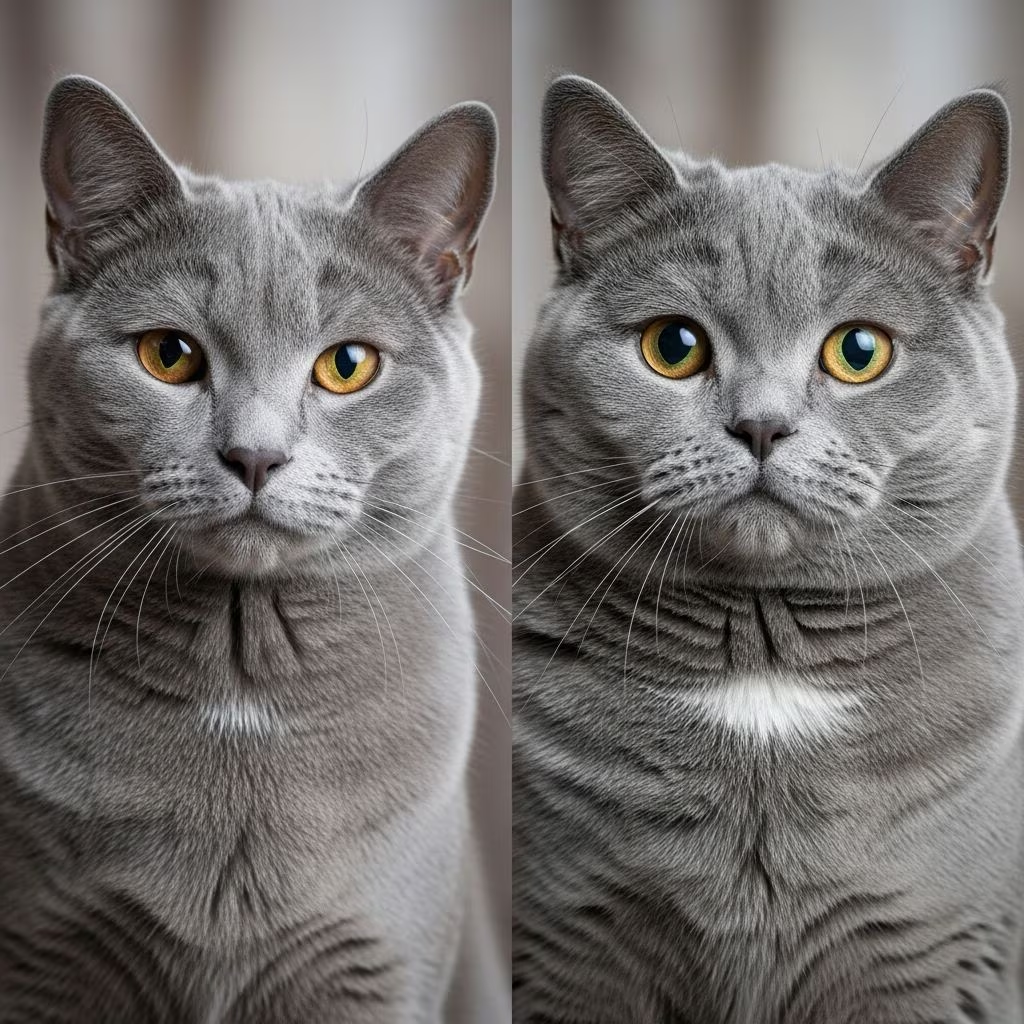
When browsing cat breeds, potential pet owners frequently encounter two striking felines with remarkably similar appearances: the Chartreux and the British Shorthair. Both breeds boast luxurious gray coats, sturdy builds, and captivating amber or copper-colored eyes. However, despite their aesthetic similarities, these cats possess distinct characteristics that make them unique companions. Understanding the differences between these two breeds is essential for anyone considering adding one to their household.
The Historical Background of Both Breeds
The Chartreux represents an ancient feline lineage with deep French roots. This breed gained recognition during the 15th century and appears in historical documentation from that period. The breed developed in isolation within French monasteries and rural regions, creating a distinct genetic profile that remained relatively unchanged for centuries.
The British Shorthair follows a markedly different historical trajectory. This breed emerged during the late 19th century through deliberate crossbreeding between European Shorthair cats and Persian cats. The British Shorthair was specifically developed to create a robust, healthy working cat suitable for homes across the United Kingdom. While the British Shorthair may be newer in terms of formal breed development, the ancestry of shorthaired cats in Britain traces back much further, with evidence suggesting these cats accompanied Roman settlers to the British Isles as early as the first century AD.
Physical Characteristics and Appearance
Head Structure and Facial Features
The most distinguishing physical feature between these breeds lies in their facial structure. The Chartreux possesses a narrower, more tapered face with a skull that is not bulging. The head shape resembles a trapezium, creating a distinctive silhouette that cat enthusiasts can learn to recognize. The muzzle of a Chartreux is slender and relatively lengthy.
In contrast, the British Shorthair displays a rounder, more massive head. The skull is broad and well-developed, giving the face a more compact appearance. The British Shorthair’s muzzle is notably shorter and broader, with a slight stop between the nose and forehead that creates a distinctive profile.
Facial Features Comparison
| Feature | Chartreux | British Shorthair |
|---|---|---|
| Head Shape | Trapezium-shaped, narrow | Round and massive |
| Nose | Broad and straight | Short, broad, with slight stop |
| Eyes | Large, almond-shaped, slightly upturned | Large, round, wide-set |
| Ears | Medium, high-set, alert appearance | Small, slightly rounded, wide-set |
| Muzzle | Narrow, longer | Broad, shorter |
Body Structure and Size
The Chartreux maintains a more compact and refined physique compared to the British Shorthair. This breed typically weighs between 7 to 17 pounds and stands 12 to 14 inches in height. The Chartreux body is solid and muscular with a well-developed chest, but the overall frame remains lean and graceful.
British Shorthairs tend toward a stockier, more robust build. These cats can weigh 7 to 16 pounds and stand 9 to 11 inches tall. However, the British Shorthair’s compact height masks a significantly more substantial body composition. The breed has short, strong legs and a broad chest, shoulders, and back that contribute to their cobby appearance.
Coat Characteristics
The coat texture represents another crucial distinction between these breeds. The Chartreux features a medium-short coat with a distinctly woolly texture. This double coat stands away from the body, creating a plush, luxurious appearance. The coat is glossy and dense, with a slightly woolly base that provides exceptional insulation.
The British Shorthair possesses a short, dense single coat that does not lie flat against the body. The texture is described as crisp to the touch with a good undercoat. While both breeds have gray coats, the Chartreux typically displays all shades of blue-gray, with pale blue-grey being preferred. The British Shorthair also favors pale blue-grey coloring, though individual hairs maintain uniform color down to the roots.
Personality and Behavioral Traits
The Chartreux Temperament
The Chartreux earned a reputation as an exceptionally quiet breed. This cat barely vocalizes in typical situations, and when it does produce sounds, they resemble small chirping noises rather than traditional meows. This quiet demeanor does not indicate shyness or lack of engagement; rather, the Chartreux maintains constant observation of its owner. These cats develop strong bonds with one particular family member, often following them around the home in a dog-like fashion.
Intelligence defines much of the Chartreux personality. These cats possess remarkable cognitive abilities, sometimes learning to operate buttons on radios or open door latches. This intelligence, combined with their observant nature, can lead to mischievous behavior and skilled escape attempts. However, this same intelligence makes them highly trainable, capable of learning tricks and commands that would challenge many other feline breeds.
The British Shorthair Temperament
British Shorthairs present a more independent and aloof personality profile. While not unfriendly, these cats maintain a degree of emotional distance from their human companions. They take time warming up to new people but eventually demonstrate graciousness toward strangers. British Shorthairs are not lap cats, though they develop their own special ways of showing affection toward family members.
These cats prefer not to be picked up or carried around, partly due to their dense fur and tendency to overheat. They are naturally gentle and laid-back, making them excellent companions for households with children and other animals. British Shorthairs do not become nervous or agitated when left alone, as their independent nature allows them to entertain themselves without constant human interaction.
Health, Lifespan, and Care Requirements
Longevity and Lifespan
The Chartreux typically lives between 15 to 20 years, providing families with nearly two decades of companionship. British Shorthairs have a shorter average lifespan of 11 to 15 years. This difference in longevity is an important consideration for families planning long-term commitments to their feline companions.
Exercise and Activity Levels
The Chartreux requires approximately one hour of daily exercise, reflecting their active and playful nature. These cats engage in energetic play sessions and benefit from interactive toys and environmental enrichment. Their intelligence and athleticism make them suitable candidates for leash training and outdoor exploration in secure environments.
British Shorthairs need less than one hour of daily exercise. These cats have lower activity levels and are content with casual play and mental stimulation. Their reduced exercise needs mean owners must be vigilant about obesity prevention, as these cats are prone to excessive weight gain without proper dietary management.
Grooming and Coat Maintenance
Both breeds have low grooming needs despite their dense coats. Regular brushing helps maintain coat health and reduces shedding, but neither breed requires intensive grooming routines. The wooly texture of the Chartreux coat and the crisp texture of the British Shorthair coat both resist matting when brushed occasionally.
Feeding and Nutritional Considerations
Both breeds require careful dietary management, though for different reasons. The Chartreux, with its higher activity level, needs adequate nutrition to support its energetic lifestyle. British Shorthairs must be monitored closely to prevent obesity, as their lower activity levels combined with slower maturation (they continue growing until three years of age) can lead to excessive weight gain. Owners of British Shorthairs need to measure food portions carefully and maintain consistent feeding schedules.
Family Compatibility and Ideal Living Situations
The Chartreux as a Family Pet
The Chartreux suits pet owners who spend considerable time away from home, as these cats are self-sufficient and do not experience separation anxiety. They make excellent companions for families with children and other pets. Their quiet nature makes them ideal for apartment living, where excessive vocalization might disturb neighbors. The Chartreux’s high intelligence and trainability appeal to families seeking an interactive pet that can learn commands and participate in engaging activities.
The British Shorthair as a Family Pet
The British Shorthair represents the perfect choice for households seeking an affectionate but not overly demanding companion. These cats like people and thrive in homes with children and other animals. However, families with small children should establish clear boundaries and teach youngsters to handle the British Shorthair gently, as these cats do not appreciate rough handling. The breed’s independent nature makes them suitable for owners who want feline companionship without constant neediness.
Making Your Choice: Key Decision Factors
Considerations for Activity and Engagement
Families seeking an active, engaging pet that participates in play and learning should consider the Chartreux. These cats thrive on interaction, mental stimulation, and activity. Conversely, those preferring a more relaxed, low-maintenance companion should lean toward the British Shorthair.
Vocalization Preferences
The Chartreux’s exceptional quietness appeals to those living in noise-sensitive environments or preferring silent companionship. The British Shorthair, while not excessively vocal, does vocalize more frequently than the nearly silent Chartreux.
Space and Living Environment
Both breeds adapt well to apartment living, but for different reasons. The Chartreux’s quiet nature suits compact spaces perfectly, while the British Shorthair’s lower activity level requires minimal space for exercise.
Commitment and Lifespan
The Chartreux’s longer lifespan means a commitment of up to 20 years, while the British Shorthair typically requires commitment for 11 to 15 years. Families considering a long-term feline companion should factor this difference into their decision.
Frequently Asked Questions
Are Chartreux and British Shorthair cats the same breed?
No, they are distinct breeds with different origins. The Chartreux originates from France with a documented history dating back to the 15th century, while the British Shorthair was developed in the 19th century through specific breeding programs. Though they were temporarily grouped together by the FIFé (International Cat Federation) from 1970 to 1977 due to phenotypic similarities, they have been recognized as separate breeds for approximately 30 years.
Which breed lives longer?
The Chartreux has a longer average lifespan of 15 to 20 years, compared to the British Shorthair’s 11 to 15 years.
Do these breeds get along with other pets?
Both breeds can coexist with other pets. The Chartreux is suitable for families with other animals, and British Shorthairs are also good for multi-pet households. Individual temperament varies, so proper introduction is essential.
Which breed requires more grooming?
Both breeds have low grooming needs. While the Chartreux has a wooly double coat and the British Shorthair has a dense single coat, neither requires intensive grooming routines.
Are these breeds good for first-time cat owners?
Both breeds are relatively easy to train, making them suitable for first-time cat owners. The British Shorthair’s independent nature may be easier for novice owners, while the Chartreux’s intelligence and activity level suit those willing to invest in interactive play and training.
References
- Chartreux vs. British Shorthair: The Differences (With Info & Pictures) — Catster. 2024. https://www.catster.com/cat-breeds/chartreux-vs-british-shorthair/
- Comparison of Carthusians (CHA) and British Shorthair Blue (BRIa) — Chartreux Club. https://www.chartreux-club.de/en/comparison-of-carthusians-and-british-shorthair-blue/
- British Shorthair vs Russian Blue vs Korat vs Chartreux — Kitty in NY. https://www.kittyinny.com/blog/difference-british-shorthairrussian-blue-korat-and-chartreux



