

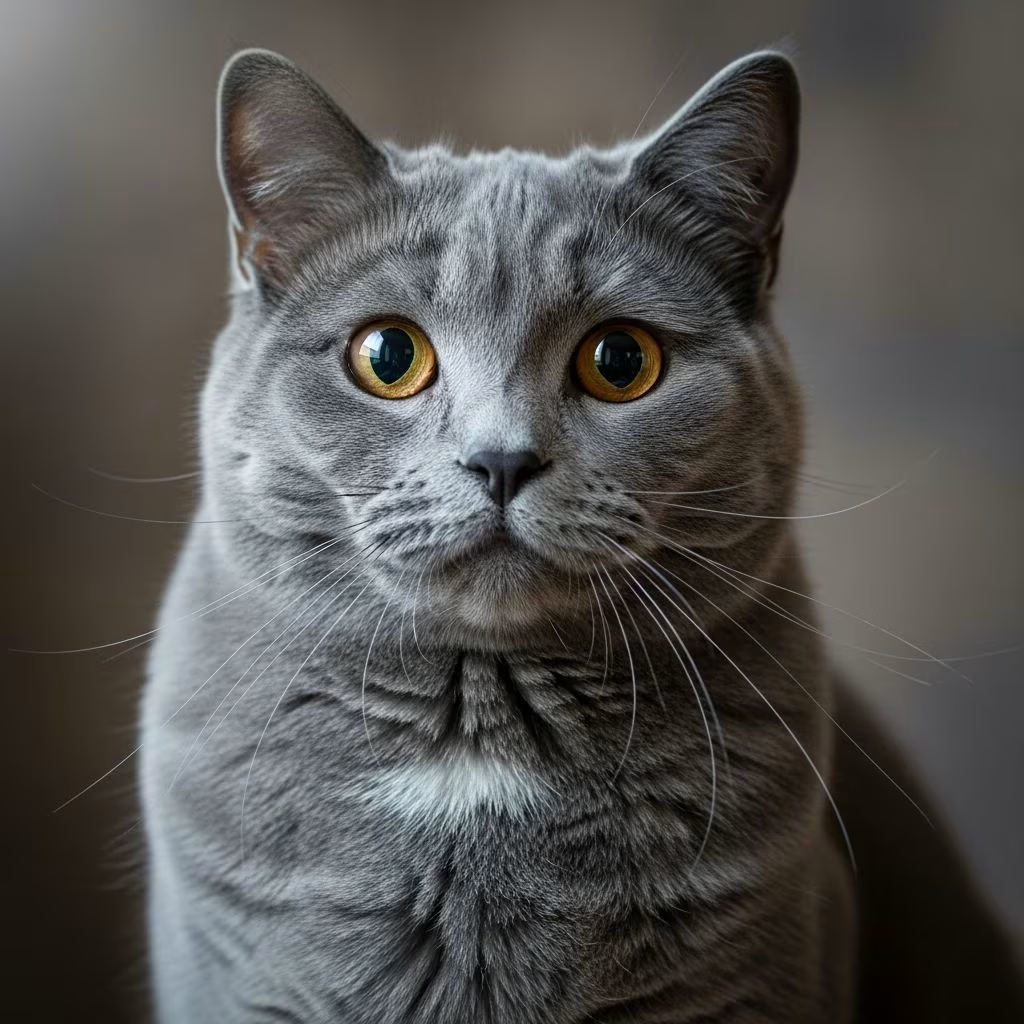
The Chartreux stands as one of the oldest natural cat breeds originating from France, celebrated for its distinctive ash-gray coat, sturdy physique, and serene demeanor. This muscular feline, often likened to a potato on delicate stems due to its robust body and finer legs, embodies a blend of strength and subtlety that has captivated enthusiasts for centuries.
Origins and Ancient Roots
References to blue-coated cats resembling the Chartreux trace back to the 16th century, with naturalist Ulisse Aldrovandi describing a ‘Cat of Syria’ featuring a stocky frame, developed jowls, and striking almond-shaped eyes in vivid hues. These early accounts suggest the breed’s presence in Europe possibly via Crusaders or Silk Road traders as early as the 13th century.
By the 18th century, the Chartreux gained recognition in France for its prized pelts, which furriers valued for their dense, dyeable quality mimicking otter fur. Naturalist Georges-Louis Leclerc, Comte de Buffon, noted these cats’ familiarity, comparing Persian shades to their signature blue-gray woolliness. Historical texts even mention their consumption in stews, highlighting their plump, well-fed build.
Legends link the breed to Carthusian monks, who supposedly bred them in monasteries for companionship and pest control, tying the name to the Chartreuse liqueur. However, modern Carthusian records lack confirmation, pointing instead to natural colonies of blue shorthairs thriving in rural France.
Revival in the 20th Century
World War I decimated natural populations, but post-war efforts by French breeders preserved the lineage. Key figures like the Léger sisters on Belle Île en Mer discovered a colony of blue cats around 1925. They initiated selective breeding under the ‘de Guerveur’ prefix, producing champions like Mignonne de Guerveur, who won top honors in 1931 and 1933 Paris shows.
Simultaneously, Paris Cat Club members in the Massif Central region crossed native blue ferals with a blue Persian male, Japouk du Fouilloux, imported from England. This infusion deepened eye color and enhanced massiveness, though later inbreeding prompted outcrosses to British Blues and others by the 1960s. The first official standard appeared in 1935 via ‘Vie à la Campagne’.
Exhibitions began in 1928 under the Fédération Féline Française, solidifying the breed’s standards based on 18th-century descriptions. Post-WWII, international recognition grew, with bodies like CFA and TICA establishing guidelines emphasizing the breed’s unique traits.
Physical Characteristics
Chartreux cats boast a powerful, rectangular body with broad shoulders, deep chest, and relatively short, fine-boned legs ending in compact, rounded paws. Males develop prominent jowls, contributing to their smiling expression. The head is trapezoidal with high cheekbones, medium ears, and large, rounded eyes in vivid gold to copper—never blue or green.
The hallmark is the coat: a dense, short to medium-length double layer of ash-blue wool, plush undercoat, and resilient guard hairs. It parts naturally at the neck and flanks like sheepskin, achieving peak texture after three years. Kittens sport a kitten-blue fuzz transitioning to adult hues.
| Feature | Description |
|---|---|
| Body Type | Muscular, cobby; less massive than British Shorthair |
| Legs & Paws | Fine-boned legs, compact oval feet |
| Head | Trapezoid, high cheeks, strong chin |
| Eyes | Round, gold/copper |
| Coat Color | Any shade of blue-gray (no patterns) |
Temperament and Personality
Renowned for gentleness, Chartreux cats exhibit a quiet, observant nature with a soft, trill-like voice—earning the moniker ‘vow of silence’. They bond deeply with families, offering lap affection without clinginess, and adapt well to travel or new environments. Excellent hunters, they retain working instincts while thriving indoors.
Playful yet mellow, they greet owners at doors and enjoy interactive toys, but prefer calm over chaos. Social with children and dogs, they suit multi-pet homes, though early socialization prevents shyness. Their smiling face and potato-like plushness endear them as ultimate companions.
- Affectionate: Loves laps and pets but respects space.
- Quiet: Minimal meowing; communicates via chirps.
- Intelligent: Learns tricks, solves puzzles.
- Adaptable: Good travelers, apartment-friendly.
- Hunter: Vigilant rodent patrol.
Grooming and Everyday Care
Low-maintenance, the woolly coat requires weekly brushing to manage seasonal shedding and distribute oils. Bathing is rare; a comb suffices. Check ears bi-weekly, trim nails monthly, and provide dental care via brushing or treats.
Diet should emphasize high-protein kibble or wet food for muscle maintenance. Adults weigh 10-15 lbs (males larger), needing portion control to prevent obesity. Fresh water and scratching posts support claw health.
Health Considerations
Robust with longevity of 12-15 years, Chartreux face few breed-specific issues. Monitor for patellar luxation, hip dysplasia, or obesity from overfeeding. Regular vet checkups, vaccinations, and spaying/neutering promote wellness. Their slow maturation means full growth by 3-4 years.
Bringing a Chartreux Home
Acquire from reputable breeders adhering to standards from CFA, TICA, or FIFe. Expect $800-$1500 USD; rescues occasionally list them. Prepare with elevated perches, puzzle feeders, and quiet zones. Kittens integrate best under 12 weeks.
Chartreux in Modern Culture
Beyond shows, Chartreux appear in literature praising their loyalty. Their rarity (top 40 breeds) adds exclusivity, but growing clubs like Chartreux Cat Club UK preserve purity.
Frequently Asked Questions (FAQs)
What makes the Chartreux coat unique?
The double-layered woolly blue fur parts naturally and peaks in texture after age three, offering plush resilience.
Are Chartreux good with kids?
Yes, their patient, gentle nature suits families; supervise young children.
How active is a Chartreux?
Moderately playful; enjoys hunts and laps over hyper antics.
Do they shed much?
Minimally; weekly brushing controls it.
What’s the origin myth?
Carthusian monks bred them, though evidence favors natural French blues.
References
- THE CHARTREUX CAT – AN EARLY HISTORY — Messybeast. Accessed 2026. http://messybeast.com/chartreux-history.htm
- History of the Chartreux — Chartreux Cat Club UK. Accessed 2026. https://chartreuxcatclubuk.org.uk/about-the-breed/history-of-the-chartreux
- Chartreux: Cat Breed FAQ — Cat Fanciers. Accessed 2026. https://fanciers.com/cat-breeds-a-l/chartreux-faq/
- Early History — CFA Chartreux Breed Council. Accessed 2026. https://www.chartreuxbc.org/breed/early-history/
- Chartreux Cat Breed Information — Vetstreet. Accessed 2026. https://www.vetstreet.com/cats/chartreux
- Chartreux — Wikipedia. Accessed 2026. https://en.wikipedia.org/wiki/Chartreux
- Get to Know Chartreux Cats: 10 Fun Facts — FELIWAY Cat Experts. Accessed 2026. https://www.feliway.co.uk/blogs/news/get-to-know-chartreux-cats-10-fun-facts



