

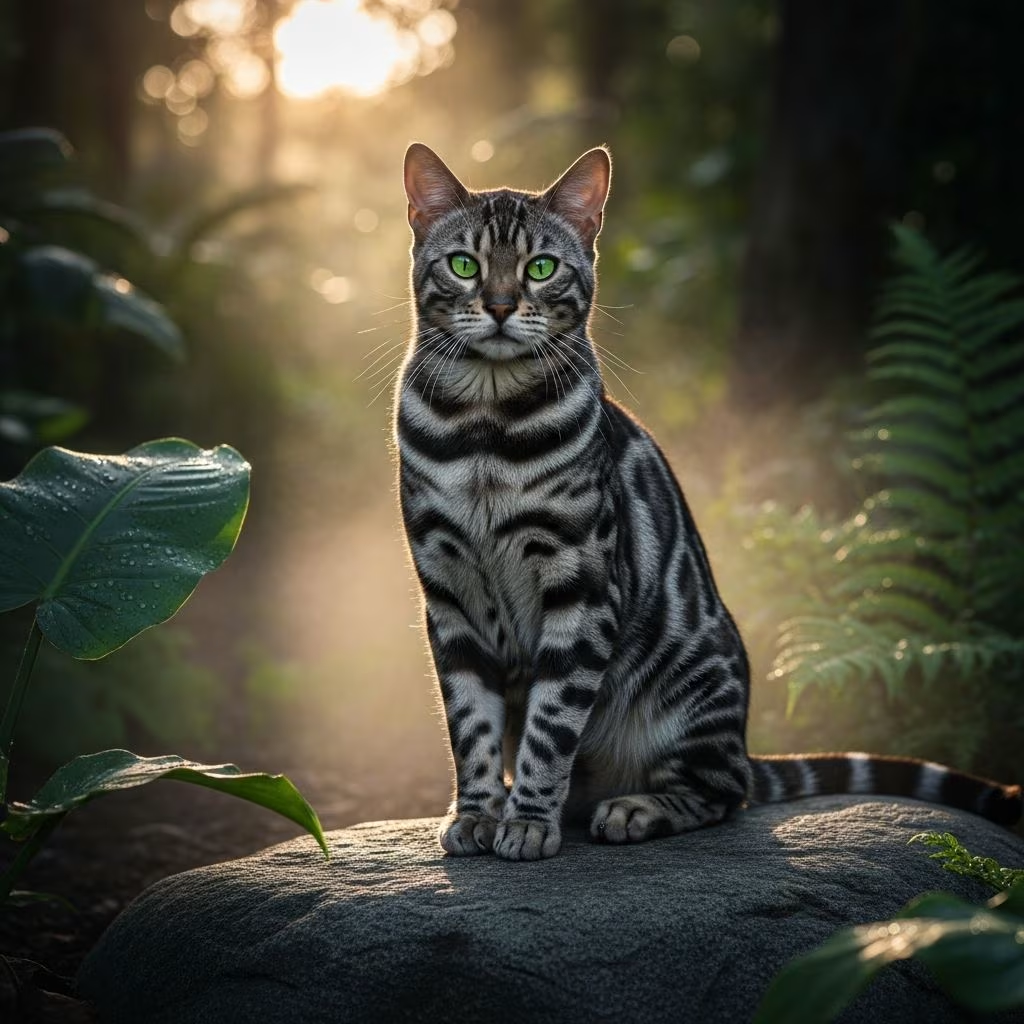
Charcoal Bengal cats stand out as one of the most visually dramatic variants within the Bengal breed, characterized by their intensely shaded coats, distinctive facial markings, and robust athleticism. These felines inherit a wild heritage from the Asian Leopard Cat crossed with domestic breeds, resulting in a domestic companion that exudes exotic appeal without the untamed behaviors of true wildcats.
Origins and Genetic Foundations
The Bengal breed emerged in the 1970s through selective breeding aimed at capturing the leopard-like aesthetics of the Asian Leopard Cat (ALC) in a pet-friendly package. Charcoal Bengals represent a specific genetic expression arising from the interaction between the ALC’s agouti gene (Apb) and the domestic cat’s non-agouti gene (a), producing kittens that are heterozygous Apb/a. This combination yields the signature dark overlay known as the “cape” and a bold facial mask reminiscent of Zorro.
Unlike solid black or melanistic Bengals, which carry two non-agouti genes (a/a), Charcoals maintain underlying spotted or marbled patterns partially obscured by the heavy pigmentation. Genetic testing is essential to distinguish carriers, as visual cues alone can mislead—dark kittens without pale eye goggles often indicate melanistics rather than Charcoals. Breeders pair Apb carriers strategically to produce these shades, with outcomes including 25% Charcoal kittens from specific matings.
Early foundation cats (F1-F3 generations) were closer to their wild roots and typically reserved for breeding, while later generations (F4+) exhibit stable domestic temperaments suitable for homes. Today, Charcoals are recognized in various registries, though not always as a standalone color class, often grouped under brown or silver divisions.
Distinctive Physical Traits
Charcoal Bengals possess a muscular, medium-to-large frame, with males weighing 9-15 pounds and females 6-12 pounds, spanning 14-18 inches in body length. Their bodies are sleek and powerful, with long hind legs for explosive leaps and thick tails providing exceptional balance.
The coat is short, plush, and luxuriously soft, featuring a glittery sheen where light catches the fur tips. Charcoals display an overall darker tone than standard Browns, with a prominent “Zorro mask”—a solid black bridge from forehead to nose, connecting bold mascara lines. White or near-white goggles encircle the eyes, contrasting sharply against the dark face; smoky or solid shading around the eyes disqualifies the Charcoal look. A dorsal cape extends along the spine, sometimes enveloping the body and muting the underlying spots or marbles.
| Feature | Charcoal Bengal Specifics | General Bengal Comparison |
|---|---|---|
| Coat Pattern | Spotted/marble under dark cape & mask | Clear spots/marbles in buff/orange base |
| Eye Area | White goggles, black Zorro mask | Often darker without stark contrast |
| Body Shading | Heavy overlay, very dark overall | Lighter, more defined wild markings |
| Ears | Medium, rounded tips, wide base | Similar, wildcat-like |
Eyes range from green, gold, to hazel, occasionally aqua in pointed varieties, set in an oval shape with a slight slant. Paws are large and rounded, noses broad with puffed leather, enhancing their feral visage.
Temperament and Behavioral Profile
Renowned for high intelligence and boundless energy, Charcoal Bengals mirror the Bengal breed’s playful, confident demeanor. They thrive on interaction, forming deep bonds with owners while retaining an independent streak. Expect a cat that fetches toys, explores tirelessly, and demands engagement through climbing, hunting simulations, and puzzle toys.
- Affectionate yet Active: Bengals love human company but prefer action over laps, often curling up at night.
- Mischievous Explorers: Their curiosity drives them to high shelves, cabinets, and outdoor leashed adventures.
- Social Butterflies: They befriend other pets readily but may dominate timid companions.
- Low Vocalizers: Selective meows punctuate their communications.
Young Charcoals burst with kitten-like vigor into adulthood, calming somewhat after age one but remaining athletic seniors. Not ideal for young children due to strong wills and playful pounces.
Health and Wellness Considerations
Bengals, including Charcoals, boast lifespans of 12-20 years with proper care. Common concerns include medium health risks like hypertrophic cardiomyopathy (HCM), progressive retinal atrophy (PRA), and hip dysplasia, warranting annual vet checks and genetic screening in breeding lines. Their high energy demands robust nutrition to prevent obesity.
Grooming is minimal—weekly brushing maintains coat health and distributes natural oils. Dental care and nail trims are routine, given their active lifestyles.
Daily Care and Environmental Needs
Provide expansive vertical spaces: cat trees, shelves, and wheels to channel their acrobatics. Enrichment prevents boredom-induced mischief, such as interactive feeders and scent games. High-protein diets mimic their carnivorous ancestry, supporting muscle tone.
Socialization from kittenhood ensures well-adjusted adults. Leash training unlocks safe outdoor stimulation.
Acquiring and Selecting a Charcoal Bengal
Seek reputable breeders who prioritize health testing for Apb genetics and HCM/PRA. Kittens develop masks and capes progressively, with Snow Charcoals showing facial patterns first. Early generations (F1-F3) suit experienced owners; F4+ are pet-ready. Adoption from rescues offers viable Charcoals too.
Prepare for commitment: these cats demand time, space, and stimulation for 15+ years.
Charcoal Bengals in Popular Culture and Breeding Trends
Charcoals gain traction for their gothic elegance, appearing in shows and social media. Breeding charts illustrate pairings yielding Charcoals alongside carriers and standards. Hybrids like Charcoal Snows blend sepia/lynx points with the dark overlay.
Frequently Asked Questions (FAQs)
What makes a Bengal a Charcoal?
The Apb/a genotype creates the dark cape, Zorro mask, and white goggles overlaying spots or marbles.
Are Charcoal Bengals good for first-time owners?
Best for active households; their energy and independence challenge novices.
How do I differentiate Charcoal from black Bengals?
Charcoals have pale goggles and visible patterns under the cape; blacks lack these.
What’s the lifespan and common health issues?
12-20 years; watch for HCM, PRA.
Do they shed much?
Medium shedding; short coats are low-maintenance.
Pros and Cons of Owning a Charcoal Bengal
| Pros | Cons |
|---|---|
| Stunning, unique appearance | High exercise needs |
| Intelligent and trainable | May not suit young kids |
| Affectionate companion | Potential health screenings needed |
| Long lifespan | Requires enrichment to avoid boredom |
References
- Bengal Cat Breed: Facts, Temperament, and Care Info — Chewy. Accessed 2026. https://www.chewy.com/education/cat/general/bengal-cat-breed-facts-temperament-and-care-info
- Charcoal Bengal Cat Genetic — LynxLand Bengals. Accessed 2026. https://www.lynx-land.com/post/charcoal-bengal-genetic
- Bengal — The Governing Council of the Cat Fancy (GCCF). Accessed 2026. https://www.gccfcats.org/getting-a-cat/choosing/cat-breeds/bengal/
- About Bengal Cats: Breed Profile & Care Tips — Pawlicy Advisor. Accessed 2026. https://www.pawlicy.com/blog/bengal-cat-breed/
- Bengal Kitten Personality — Belle Ami Bengals. Accessed 2026. https://www.belleamibengals.com/bengal-cat-kitten-personality
- What is a Charcoal — Elysian Bengals. Accessed 2026. https://www.elysianbengals.com/what-is-a-charcoal



