

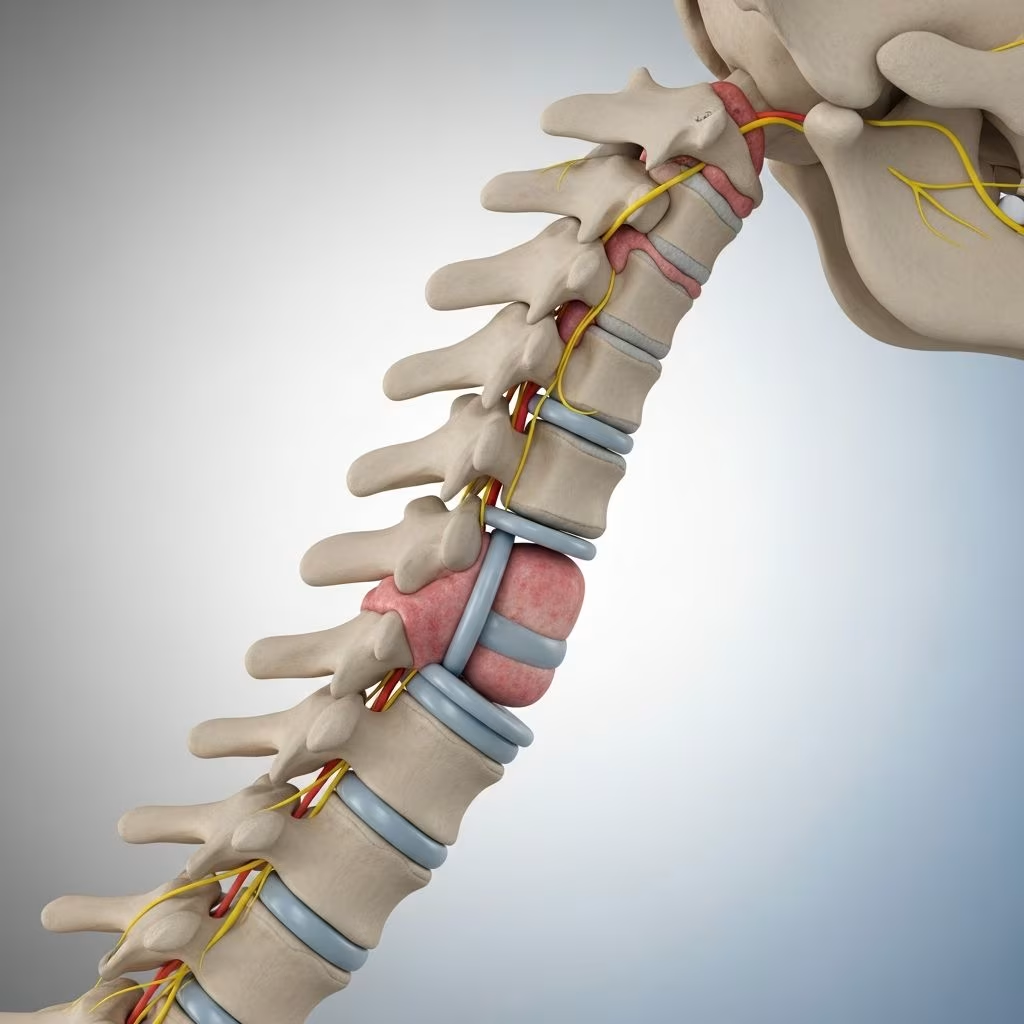
Understanding Cervical Intervertebral Disc Disease in Dogs
Cervical intervertebral disc disease (IVDD) is a common neurological condition affecting the neck region of dogs’ spines. The disease occurs when the cushioning discs between the vertebrae in the cervical spine deteriorate, protrude, or extrude, placing pressure on the spinal cord and nerve roots. This condition can range from mild discomfort to severe neurological dysfunction, significantly impacting a dog’s quality of life. Understanding the signs, treatment options, and management strategies is essential for dog owners whose pets may be affected by this condition.
What Causes Cervical Intervertebral Disc Disease?
The intervertebral discs act as shock absorbers between the vertebrae of the spine. These discs consist of an outer fibrous layer (annulus fibrosus) and an inner gel-like core (nucleus pulposus). Over time, these discs can degenerate due to age, breed predisposition, or trauma. When disc material protrudes or extrudes into the spinal canal, it compresses the spinal cord and nerve roots, leading to pain and neurological symptoms.
Certain dog breeds are more prone to developing cervical disc disease, including dachshunds, poodles, beagles, and other small breeds with elongated spines. However, any dog can develop this condition, particularly as they age. The severity of symptoms depends on the rate and volume of disc protrusion, the amount of pressure on the spinal cord and nerve roots, and how suddenly the disc material extrudes.
Signs and Symptoms of Cervical Disc Disease
The clinical signs of cervical disc disease vary significantly in appearance and severity, depending on the extent of spinal cord compression and which nerve roots are affected. Recognizing these symptoms early is crucial for prompt treatment.
Common Clinical Signs Include:
Neck-Related Symptoms:
- Stiff neck with reluctance to move the head and neck
- Obvious neck pain, particularly during flexion and extension movements
- Lowered head stance with a kyphotic or hunched posture
- Muscle spasms of the head, neck, and shoulders
- Spontaneous crying or yelping without apparent reason
- Visible muscle atrophy over the shoulders over time
Neurological and Mobility Symptoms:
- Altered walking patterns or unsteady gait
- Front leg lameness, knuckling, or weakness
- Partial paralysis in one or more limbs, known as tetraparesis (affecting approximately 10% of dogs with cervical IVDD)
- Reluctance to jump onto furniture or perform normal activities
- Loss of coordination and balance
General Behavioral Changes:
- Decreased activity level and reluctance to exercise
- Anxious behavior, including shivering and excessive panting
- Decreased appetite
- Difficulty assuming normal postures for urination or defecation
During a physical examination, veterinarians can typically elicit pain by flexing and extending the neck, turning it side to side, or through deep palpation of the cervical muscles. In severe cases, loss of bladder or bowel control may occur, indicating significant spinal cord compression requiring immediate veterinary attention.
Diagnostic Evaluation
A thorough diagnostic process is essential for confirming cervical intervertebral disc disease and determining the appropriate treatment plan. Your veterinarian will begin with a detailed history of your dog’s symptoms and a comprehensive physical and neurological examination.
Diagnostic imaging techniques include:
- X-rays (Radiographs): Can show degenerative changes and disc space collapse but may not clearly visualize soft tissue damage
- Myelography: Involves injecting contrast dye around the spinal cord to visualize compression areas
- Computed Tomography (CT): Provides detailed cross-sectional images of the spine
- Magnetic Resonance Imaging (MRI): The gold standard for visualizing intervertebral discs and spinal cord compression with excellent soft tissue detail
In many mild cases where treatment response is straightforward, advanced imaging may not be necessary. However, imaging becomes important when considering surgical intervention or when conservative treatment fails.
Treatment Options for Cervical Disc Disease
Treatment for cervical intervertebral disc disease depends on the severity of symptoms, the degree of spinal cord compression, and how the dog responds to initial management. Two primary treatment approaches exist: conservative management and surgical intervention.
Conservative Management
Conservative treatment is recommended when there is a gradual onset of clinical signs or when symptoms are limited to pain and mild neurological deficits such as a slightly wobbly gait. Many dogs with mild cervical disc disease show improvement within 48 hours when managed conservatively.
Conservative treatment typically includes:
- Strict Rest and Confinement: Crate or cage confinement is the most critical component, limiting further disc extrusion and allowing the body’s natural healing processes to repair spinal cord damage
- Pain Relievers: Medications such as NSAIDs (non-steroidal anti-inflammatory drugs) and other analgesics to manage discomfort
- Muscle Relaxants: Medications to reduce muscle tension and spasms in the neck and shoulders
- Anti-Inflammatory Medications: Corticosteroids or other anti-inflammatory agents to reduce swelling around the spinal cord
During conservative treatment, dogs should be confined to a small area where they cannot run, jump, play, or perform strenuous exercise. Short walks on a harness (never a collar) for toileting purposes may be necessary. The timeline for strict rest typically ranges from three to six weeks, depending on the specific injury and the rate of healing. Dogs with mild to moderate symptoms often respond well to conservative management, with success rates around 75% for pain-only cases in the first treatment episode.
Surgical Treatment
Surgery is recommended in the following scenarios:
- Repeated episodes of severe neck pain
- Severe neurological deficits or progressive worsening of symptoms
- Failure to respond adequately to conservative treatment
- Acute onset of significant paralysis
- Complete loss of function in one or more limbs
Surgical Procedure: The primary surgical approach involves a ventral slot procedure or hemilaminectomy, where the veterinary surgeon creates a small window in the bone surrounding the spinal cord to access the herniated disc material. The hardened or protruding disc material is carefully removed, relieving compression on the spinal cord and promoting healing.
Surgical outcomes are most successful in dogs that retain some ability to walk or feel sensation. Dogs that are unable to walk have approximately a 50% chance of regaining function with conservative management alone, compared to much higher success rates with surgical intervention. Most dogs experience faster improvement after surgery and have better overall response rates compared to medical management alone.
Post-operative care requires the same activity restrictions as conservative management, typically for six to eight weeks, combined with appropriate pain management and monitoring.
Rehabilitation and Physical Therapy
Whether managed conservatively or surgically, physiotherapy plays a critical role in healing and recovery. Physical rehabilitation helps prevent muscle loss, promotes circulation, and facilitates neurological recovery.
Physiotherapy modalities include:
- Acupuncture: May help manage pain and promote healing through stimulation of specific points
- Therapeutic Laser: Reduces inflammation and promotes tissue healing
- Massage Therapy: Improves circulation and prevents muscle atrophy
- Hydrotherapy: Provides low-impact exercise in a controlled environment
- Passive Range of Motion: Helps maintain joint flexibility and prevents muscle loss
Physical therapy should be guided by a veterinary rehabilitation specialist and tailored to your dog’s specific condition and recovery stage.
Recovery Timeline and Prognosis
The recovery timeline varies depending on treatment approach and individual factors. Dogs with mild pain often show improvement within the first week of treatment. Those undergoing conservative management typically require four to six weeks of restricted activity, while post-surgical patients need six to eight weeks of recovery.
For most patients, the long-term outlook is favorable. Dogs that have not lost function prior to treatment have excellent prognosis, with most regaining normal mobility and resuming regular activities. However, dogs with chronic disc disease or multiple disc involvement have a higher likelihood of experiencing recurrent episodes.
Long-term complications are relatively uncommon but may include persistent neck pain or deterioration in standing and walking ability in some cases. Monitoring for bladder and bowel function is essential, as loss of control indicates urgent need for intervention.
Prevention and Long-Term Management
Important care recommendations include:
- Use a Harness, Not a Collar: Dogs with cervical disc disease should always be walked using a harness rather than having a leash attached to a collar, as collar pressure can exacerbate neck pain and spinal compression
- Maintain Healthy Weight: Obesity increases stress on the spine and can worsen degenerative disc disease
- Limit Jumping: Restrict jumping on and off furniture, beds, or vehicles
- Controlled Exercise: Provide moderate, controlled activity rather than strenuous or high-impact exercise
- Ergonomic Support: Use supportive bedding and minimize repetitive neck strain
- Regular Monitoring: Watch for early signs of recurrent symptoms and seek prompt veterinary attention if symptoms return
Frequently Asked Questions
Q: Can cervical disc disease in dogs be prevented?
A: While you cannot completely prevent intervertebral disc disease, you can reduce risk by maintaining a healthy weight, avoiding excessive jumping, using appropriate harnesses, and providing supportive care for breeds predisposed to the condition.
Q: What is the success rate for conservative treatment of cervical IVDD?
A: For dogs experiencing only neck pain in their first episode, conservative management has approximately a 75% success rate. Dogs without loss of function have better outcomes with conservative treatment than those with neurological deficits.
Q: How long does recovery take after surgery for cervical disc disease?
A: Most dogs require six to eight weeks of restricted activity following surgical correction. However, many dogs feel significantly better within days and show marked improvement within the first two weeks of recovery.
Q: What does a harness do differently than a collar for dogs with cervical IVDD?
A: A harness distributes pressure across the chest and back rather than concentrating it on the neck. This prevents additional stress on the cervical spine and minimizes exacerbation of disc disease symptoms during walking.
Q: Can a dog with cervical IVDD live a normal life?
A: Yes, many dogs with cervical intervertebral disc disease return to normal or near-normal function with appropriate treatment and management. Even dogs with permanent neurological deficits can enjoy good quality of life with adaptive equipment and supportive care.
Q: Is MRI necessary for diagnosing cervical disc disease?
A: MRI is the gold standard for diagnosis but may not be necessary in all cases. Dogs responding well to initial conservative treatment may not require advanced imaging, while surgical candidates typically benefit from MRI to precisely localize compression and plan surgical approach.
References
- Cervical Intervertebral Disc Disease in Dogs — VCA Animal Hospitals. 2024. https://vcahospitals.com/know-your-pet/cervical-intervertebral-disk-disease-in-dogs
- IVDD (Intervertebral Disc Disease) in Dogs — PetMD. 2024. https://www.petmd.com/dog/conditions/neurological/c_dg_intervertebral_disc_disease
- Intervertebral Disc Disease (IVDD) and Treatment in Dogs — MedVet. 2024. https://www.medvet.com/canine-intervertebral-disk-disease-treatment/
- Intervertebral Disc Disease in Dogs Treatment, Symptoms, Causes — American Kennel Club. 2024. https://www.akc.org/expert-advice/health/intervertebral-disk-disease-dogs/
- Intervertebral Disc Disease (IVDD) — Fitzpatrick Referrals. 2024. https://www.fitzpatrickreferrals.co.uk/neurology/intervertebral-disc-disease/



