

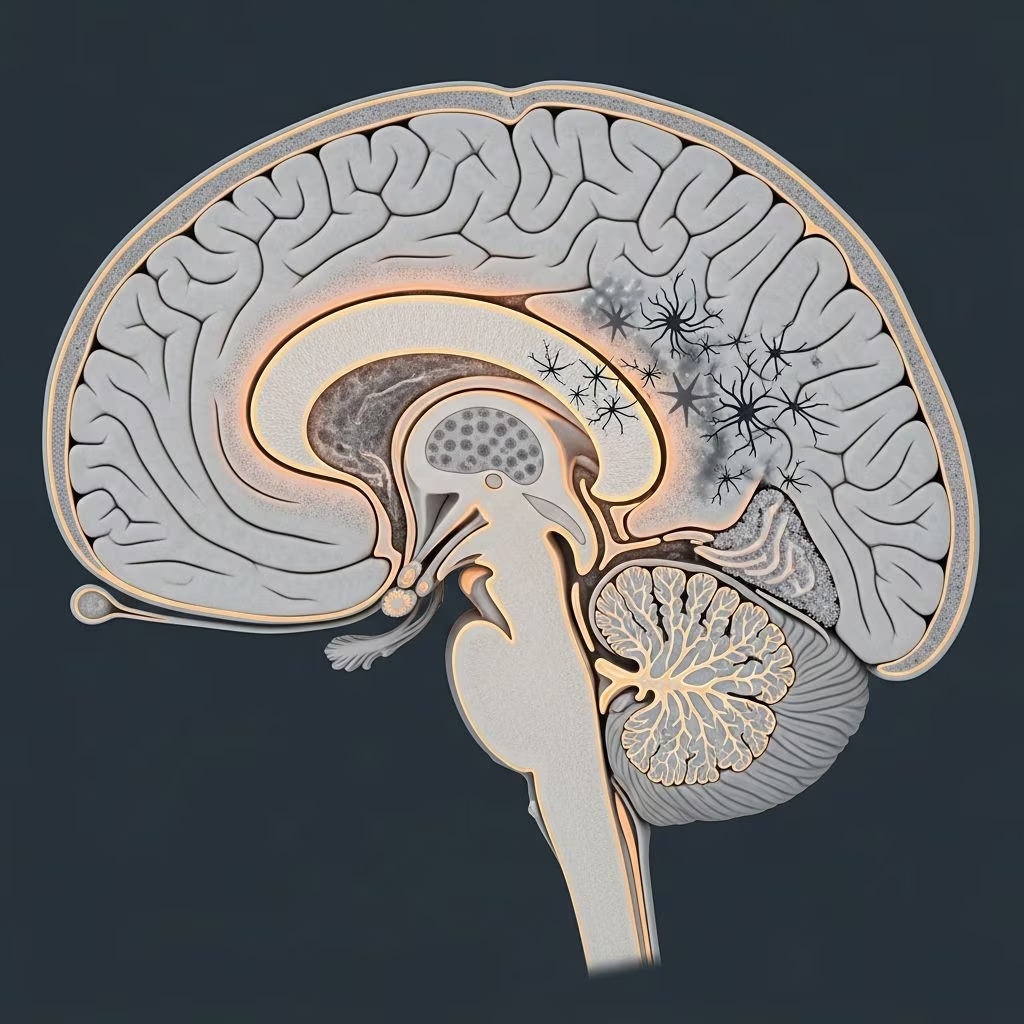
The cerebellum plays a crucial role in coordinating movement, balance, and posture in animals. When this brain region is affected by congenital or inherited anomalies, it leads to noticeable neurological deficits that can significantly impact quality of life. These disorders, ranging from underdeveloped cerebellar tissue to progressive cell degeneration, manifest differently across species and breeds. Early recognition and appropriate management are key to supporting affected animals.
The Role of the Cerebellum in Animal Health
The cerebellum, located at the back of the brain, fine-tunes motor activities, ensuring smooth and precise movements. It integrates sensory input with motor output, helping animals maintain posture and execute complex actions like walking or jumping. Disruptions in cerebellar function result in characteristic signs such as intention tremors, wide-based stance, and hypermetria—exaggerated limb movements.
In healthy animals, the cerebellum develops fully during gestation and early postnatal periods. Any interference during these stages, whether genetic or environmental, can lead to lifelong impairments. Veterinary neurologists emphasize that while some conditions are static (non-progressive), others worsen over time, necessitating vigilant monitoring.
Key Types of Cerebellar Malformations
Cerebellar disorders in animals primarily fall into two categories: hypoplasia, involving incomplete development, and abiotrophy, characterized by premature cell death. Each type presents unique challenges based on onset and progression.
Cerebellar Hypoplasia: Underdeveloped Coordination Center
Cerebellar hypoplasia occurs when the cerebellum fails to reach normal size, often due to insults during fetal development. Affected animals display a classic ‘drunken sailor’ gait, with head tremors and difficulty standing, yet they remain cognitively sharp.
- In dogs: Primarily hereditary, seen in breeds like Boston Terriers, Chow Chows, Bull Terriers, and Airedales. Puppies show symptoms from birth, including broad-based stance and limb ataxia.
- In cats: Commonly linked to in utero panleukopenia virus exposure from the dam. Kittens wobble but adapt well to stable environments.
- In cattle: Caused by bovine viral diarrhea (BVD) virus infection between 90-130 days of gestation, resulting in lowered head and incoordination. No treatment exists; prevention via vaccination is critical.
Diagnosis typically involves clinical observation, ruling out infectious causes via serology, and imaging like MRI to confirm reduced cerebellar volume.
Cerebellar Abiotrophy: Progressive Neuronal Loss
Unlike hypoplasia, abiotrophy involves the gradual degeneration of cerebellar neurons after normal initial development. Symptoms emerge and intensify, leading to severe disability.
This condition is breed-specific with varied onset:
| Onset Type | Age of Appearance | Affected Breeds |
|---|---|---|
| Neonatal | Soon after birth | Beagle, Coton de Tulear, Dachshund mix, Irish Setter, Rhodesian Ridgeback, Samoyed |
| Juvenile | 6 weeks to 6 months | Airedale Terrier, Australian Kelpie, Bernese Mountain Dog, Border Collie, Chinese Crested, English Bulldog, Rough Collie |
| Adult | 1-8 years | American Pit Bull Terrier, American Staffordshire Terrier, Brittany, Scottish Terrier, Schnauzer |
Clinical progression includes worsening ataxia, nystagmus (eye oscillations), and dysmetria. Histopathology reveals Purkinje cell loss, confirming the diagnosis postmortem.
Breeds and Species at Highest Risk
Certain genetic predispositions make specific breeds vulnerable. Purebred dogs dominate reports, but mixed breeds and other species are not immune.
- Dogs: Herding and terrier breeds like Border Collies and Airedales face elevated risks due to selective breeding amplifying recessive genes.
- Cats: Less breed-specific; viral etiology predominates over genetics.
- Large animals: Cattle with BVD exposure show hypoplasia; ruminants may exhibit hypermetric gaits from various cerebellar insults.
Genetic testing is advancing, allowing breeders to screen carriers and reduce incidence in at-risk lines.
Recognizing Clinical Signs Across Species
Owners often notice issues early, as affected animals struggle with everyday activities. Common indicators include:
- Intention tremors: Shaking worsens with purposeful movement.
- Ataxia: Unsteady gait, falling to one side.
- Head tilt and nystagmus: Abnormal eye movements.
- Hypermetria: Overshooting targets during locomotion.
In ruminants, signs like lowered head carriage and wide stance mimic hypoplasia from viral causes. Progression varies; hypoplasia stabilizes, while abiotrophy deteriorates, potentially leading to recumbency.
Diagnostic Approaches for Accurate Identification
Veterinarians employ a multi-step process:
- History and Exam: Age of onset, breed, and family history guide suspicion.
- Neurological Testing: Assess menace response, proprioception, and gait.
- Imaging: MRI or CT reveals cerebellar atrophy or hypoplasia; ultrasound for neonates.
- Labs: Rule out metabolic or infectious mimics via CSF analysis and serology.
- Genetics: PCR tests for known mutations in predisposed breeds.
Differential diagnoses include toxins, infections, or neoplasia, underscoring comprehensive evaluation.
Management and Supportive Care Strategies
No cure exists for most cerebellar disorders, but supportive measures enhance welfare:
- Environment: Non-slip flooring, ramps, and padded areas prevent injury.
- Physiotherapy: Balance exercises improve proprioception in mild cases.
- Nutrition: High-quality diets support overall health; antioxidants may slow degeneration.
- Medications: Anti-seizure drugs if tremors interfere with eating; omeprazole for hydrocephalus-associated cases.
Euthanasia is considered when quality of life declines, balancing mobility loss against pain-free companionship.
Prevention Through Breeding and Vaccination
Responsible breeding avoids carrier matings, with emerging genetic markers aiding selection. For viral-induced hypoplasia, vaccinate dams pre-breeding—crucial for cats (panleukopenia) and cattle (BVD).
Education for breeders and owners reduces prevalence, promoting healthier populations.
Research Advances and Future Outlook
Ongoing studies explore gene therapies and neuroprotective agents. Aquaporin-4 research in hydrocephalus models hints at broader applications. Collaborative registries track breed incidences, informing prevention.
Frequently Asked Questions (FAQs)
Can animals with cerebellar hypoplasia live normal lives?
Yes, many adapt remarkably, especially in safe homes. They learn compensatory strategies despite lifelong ataxia.
Is cerebellar abiotrophy painful?
No direct pain, but frustration from mobility issues and secondary injuries can occur. Comfortable environments mitigate this.
How do I know if my puppy has a cerebellar disorder?
Watch for wobbling, tremors, or falls from birth or early weeks. Consult a vet promptly for assessment.
Are there treatments to reverse degeneration?
Currently supportive only; research into stem cells and gene editing shows promise.
Which breeds should avoid breeding if affected?
Carriers in high-risk lines like Bernese Mountain Dogs or Irish Setters; genetic counseling is advised.
Cerebellar disorders highlight the cerebellum’s vital role and the impact of genetics and environment. With informed care, affected animals thrive, underscoring veterinary compassion.
References
- Cerebellar Hypoplasia & Cerebellar Degeneration in Dogs — Carolina Veterinary Specialists (Rock Hill). 2020-11-11. https://www.rock-hill.carolinavet.com/site/blog/2020/11/11/cerebellar-degeneration-in-dogs
- Cerebellar Degeneration in Dogs — Columbia River Veterinary Specialists. 2023-05-15. https://www.columbiarivervet.com/site/blog/2023/05/15/cerebellar-degeneration-dogs
- Congenital and Inherited Disorders of the Nervous System in Dogs — Merck Veterinary Manual. Recent access (2026). https://www.merckvetmanual.com/dog-owners/brain-spinal-cord-and-nerve-disorders-of-dogs/congenital-and-inherited-disorders-of-the-nervous-system-in-dogs
- Congenital and Inherited Cerebral Disorders in Animals — MSD Veterinary Manual. Recent access (2026). https://www.msdvetmanual.com/nervous-system/congenital-and-inherited-anomalies-of-the-nervous-system/congenital-and-inherited-cerebral-disorders-in-animals
- What is Cerebellar Hypoplasia? — Oregon Humane Society. Recent access (2026). https://www.oregonhumane.org/cerebellar-hypoplasia/
- Nervous Diseases in Cattle — NADIS. Recent access (2026). https://www.nadis.org.uk/disease-a-z/cattle/nervous-diseases-in-cattle/
- Cerebellar Hypoplasia in Cats — VCA Animal Hospitals. Recent access (2026). https://vcahospitals.com/know-your-pet/cerebellar-hypoplasia-in-cats
- Cerebellar Disease of Ruminants — PubMed (Peer-reviewed). 2017-02-06. https://pubmed.ncbi.nlm.nih.gov/28166936/



