

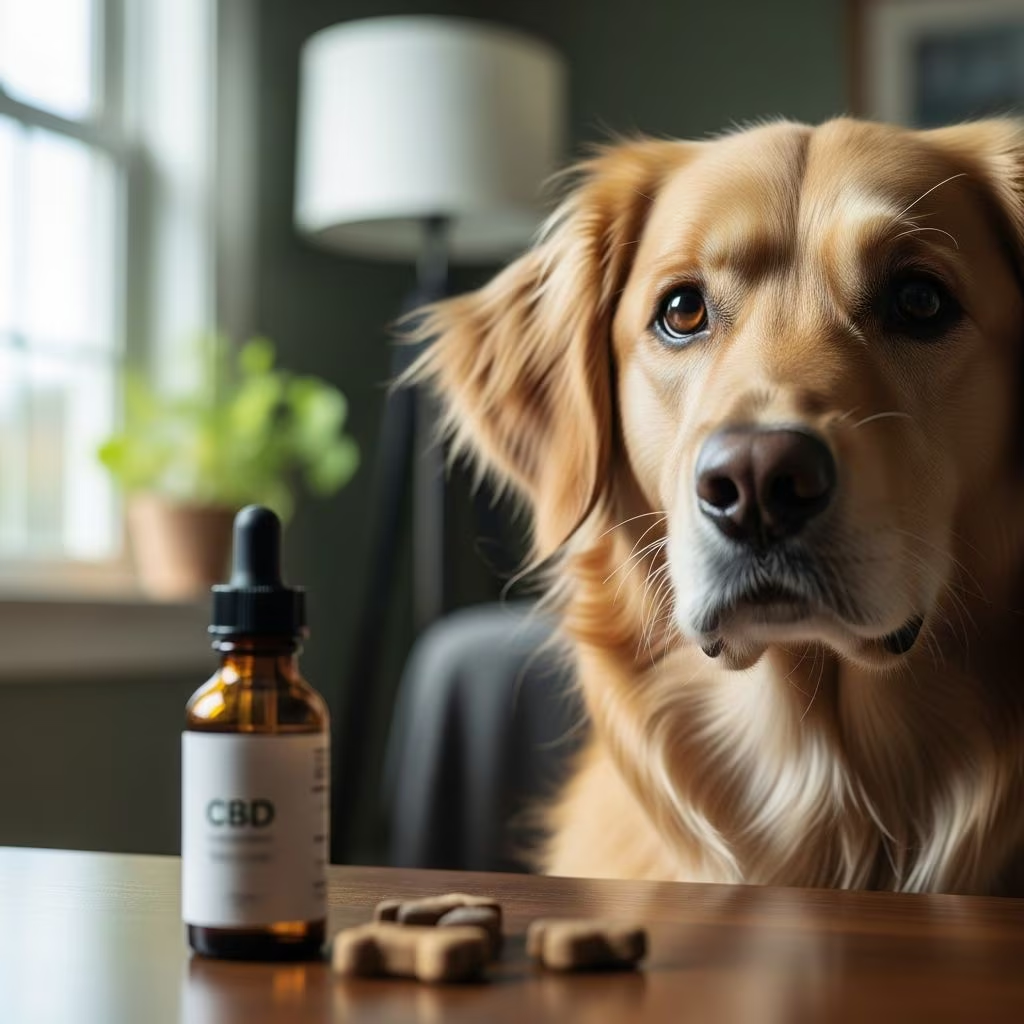
CBD products have surged in popularity for dogs, marketed for anxiety, pain relief, and more. However, significant safety risks persist due to lack of FDA approval, inconsistent quality, and potential side effects. This article examines these concerns, drawing from veterinary studies and regulatory warnings to guide responsible pet ownership.
What Is CBD and Why Is It Popular for Dogs?
Cannabidiol (CBD) is a non-psychoactive compound from hemp plants, touted for dogs to manage conditions like osteoarthritis, epilepsy, and stress. Pet owners increasingly turn to CBD amid promises of natural relief, but without FDA regulation, products vary widely in purity and potency. A study evaluating 29 pet CBD products found heavy metal contamination in four, highlighting quality issues.
Popularity stems from anecdotal success stories, yet scientific evidence remains limited. Hemp-derived CBD with less than 0.3% THC is federally legal, but veterinary use lacks approval, raising safety questions.
Common Side Effects of CBD in Dogs
While often mild, CBD can cause side effects in dogs. The most frequent is gastrointestinal upset, particularly diarrhea or soft stool.
- Diarrhea: In a 2019 study by Koli Deabold et al., 44 of 53 adverse events in dogs and cats were soft stool after single-dose CBD-rich hemp nutraceutical.
- Lethargy and Drowsiness: Dogs may appear sleepy, especially with calming treats containing higher doses.
- Dry Mouth: Reduced saliva production leads to increased thirst.
- Dizziness: Unsteadiness or balance issues, often from low-quality products with excess THC.
- Vomiting: Observed in safety trials, alongside head shaking and licking lips.
These effects are typically transient and dose-dependent. A Frontiers in Veterinary Science study dosed healthy beagles with CBD at 5 mg/kg/day for 90 days, reporting mild adverse events like vomiting and diarrhea, with no serious endpoints reached.
Serious Health Risks Associated with CBD Use in Dogs
Beyond mild effects, CBD poses risks like increased bleeding and toxicity from contaminants.
- Increased Bleeding Risk: CBD acts as a blood thinner, necessitating discontinuation before surgeries.
- Drug Interactions: CBD inhibits cytochrome P450 enzymes, potentially altering metabolism of medications like anti-seizure drugs or chemotherapy.
- THC Toxicity: Products exceeding 0.3% THC can cause severe reactions; THC is more toxic to dogs than CBD.
- Allergies: Rare sensitivities to cannabinoids or carriers like MCT oil.
Post-market surveillance via NAERS™ shows adverse event rates of 1.6–2.8 per million administrations for hemp products, indicating low but present risks.
Quality Control Issues in the Pet CBD Market
The pet CBD market is underregulated, leading to mislabeling and contamination. A Leafreport analysis found up to 56% of products mislabeled. CBD concentrations in oils ranged 0–154% of label claims, with unexpected CBDA levels.
| Issue | Prevalence | Source |
|---|---|---|
| Mislabeled Potency | Up to 56% | |
| Heavy Metals | Found in 4/29 products | |
| Pesticides/Contaminants | Reported in FDA warnings | |
| Excess THC | Common in low-quality |
Unlicensed products often skip rigorous testing, risking high selenium or other toxins. Always demand third-party Certificates of Analysis (COAs) verifying THC <0.3%, no contaminants, and accurate CBD levels.
Regulatory Concerns and FDA Warnings
The FDA has not approved any CBD products for animals, classifying them as unapproved drugs. Warning letters were issued to four companies in 2021 for illegal sales to food-producing animals, citing unknown residues in meat, milk, and eggs.
Concerns include:
- Lack of efficacy, dosage, and interaction data.
- Potential delay in professional veterinary care due to unproven claims.
- Bans in some states on vets advising CBD use.
In the EU/UK, CBD pet products are supplements, evading medicine regulations; none hold veterinary marketing authorizations.
Research on CBD Safety in Dogs: What Studies Show
Emerging studies offer insights. A 90-day trial found CBD, CBD+CBG, and CBD+CBDA well-tolerated at tested doses in beagles.
- Single-dose pharmacokinetics noted mostly diarrhea.
- High-dose (640 mg) CBD caused only mild effects vs. severe THC reactions.
- No overdose risk from quality hemp CBD; no brainstem impact.
Long-term data is sparse. Michigan State experts urge caution until more pharmacokinetic studies confirm safety. Broad-spectrum products show slightly higher adverse rates than isolates, but all low.
How to Safely Give CBD to Your Dog
To minimize risks:
- Consult a Vet: Discuss health history, medications, and conditions.
- Choose Quality: Broad- or full-spectrum hemp CBD <0.3% THC from reputable brands with COAs.
- Start Low: Begin at 0.1–0.5 mg/kg twice daily, titrate slowly.
- Monitor: Watch for side effects; discontinue if issues arise.
- Avoid Pre-Surgery: Stop 1–2 weeks before procedures.
For food animals, avoid entirely due to residue risks.
When to Avoid CBD for Your Dog
Steer clear if your dog:
- Is pregnant, nursing, or a puppy <6 months.
- Takes interacting drugs (e.g., phenobarbital).
- Has bleeding disorders or upcoming surgery.
- Shows allergies to hemp/cannabinoids.
Seek vet diagnosis first; CBD isn’t a cure-all.
Frequently Asked Questions (FAQs)
What are the most common CBD side effects in dogs?
Diarrhea, lethargy, dry mouth, and mild vomiting are most common, usually resolving quickly.
Can dogs overdose on CBD?
No, quality hemp CBD lacks lethal overdose potential; excess causes temporary upset.
Is CBD legal for dogs?
Hemp CBD <0.3% THC is legal federally, but not FDA-approved for pets.
Does CBD interact with other dog medications?
Yes, via liver enzymes; consult vets for polypharmacy cases.
Are all CBD products safe for dogs?
No; many are mislabeled or contaminated. Verify COAs.
Pet owners must prioritize evidence-based care over hype. While CBD shows promise, risks from poor quality and unknowns demand vigilance. Partner with veterinarians for tailored advice.
References
- 10 Known Side Effects of CBD in Animals — Total.Vet. 2023. https://total.vet/cbd-animals-side-effects/
- FDA Warns Four Companies for Illegally Selling CBD Products — U.S. Food and Drug Administration (FDA). 2021-04-26. https://www.fda.gov/animal-veterinary/cvm-updates/fda-warns-four-companies-illegally-selling-cbd-products-intended-use-food-producing-animals
- CBD for pets: navigating quality assurance, safety standards — PMC (PubMed Central). 2024. https://pmc.ncbi.nlm.nih.gov/articles/PMC11755934/
- Safety study of cannabidiol products in healthy dogs — Frontiers in Veterinary Science. 2024. https://www.frontiersin.org/journals/veterinary-science/articles/10.3389/fvets.2024.1349590/full
- FDA issues warning letters to companies selling unapproved CBD products — American Veterinary Medical Association (AVMA). 2021. https://www.avma.org/news/fda-issues-warning-letters-companies-selling-unapproved-cbd-products
- Canines and Cannabis—Is CBD Safe for Your Pet? — Michigan State University College of Veterinary Medicine. 2019. https://cvm.msu.edu/news/perspectives-magazine/perspectives-fall-2019/canines-and-cannabis-is-cbd-safe-for-your-pet
- Does Your Pet Want in On Your CBD? — Kinship. N/A. https://www.kinship.com/pet-health/cbd-for-pets
- CBD: What you need to know about its uses and efficacy — Cornell University College of Veterinary Medicine. N/A. https://www.vet.cornell.edu/departments-centers-and-institutes/riney-canine-health-center/canine-health-topics/cbd-what-you-need-know-about-its-uses-and-efficacy



