

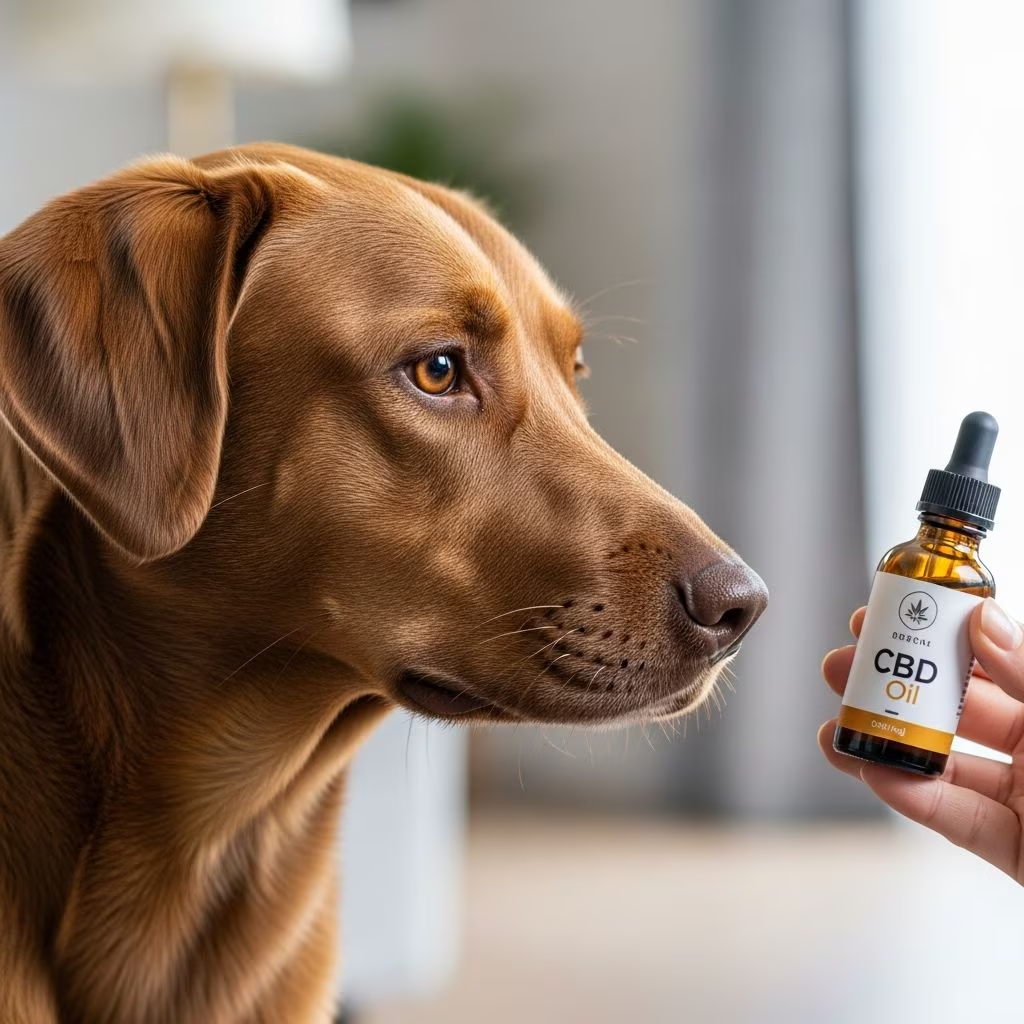
Everything You Need to Know About Using CBD Oil for Dog Seizures
Seizures in dogs can be a heartbreaking and unpredictable condition for pet owners to manage. When a beloved dog experiences a seizure, the concern about their safety and long-term health becomes paramount. Lately, CBD treats and supplements have become increasingly popular, with companies claiming they can treat a wide range of conditions including chronic pain, arthritis, anxiety, and seizures. But are these claims legitimate? Can CBD actually help dogs with seizures, and are there ways to safely incorporate these compounds into your dog’s treatment plan? The answer is complicated, and there is still much we don’t know about CBD’s true effectiveness for canine seizure management.
Understanding Canine Seizures and Epilepsy
Before exploring CBD as a potential treatment, it’s important to understand what seizures are and why they occur in dogs. Epilepsy in dogs, particularly idiopathic epilepsy, is a condition where dogs experience recurrent seizures without an identifiable underlying cause. These seizures can be frightening for both the dog and the owner, often involving loss of consciousness, involuntary muscle contractions, and behavioral changes.
Traditional treatment for dog seizures typically involves anti-seizure medications (ASMs), which can be effective for many dogs. However, a significant challenge in veterinary medicine is that approximately one in four dogs do not respond adequately to standard anti-seizure medications. These dogs are said to have refractory epilepsy, meaning their seizures are only partially controlled or resistant to conventional treatment. For owners of these dogs, the search for alternative or complementary therapies becomes especially urgent.
What is CBD and How Might It Help?
Cannabidiol (CBD) is a naturally occurring compound found in hemp and cannabis plants. Unlike THC (tetrahydrocannabinol), which produces psychoactive effects, CBD does not make dogs “high.” Instead, CBD has been studied for its potential anti-inflammatory and anticonvulsant properties.
Research suggests that CBD may work by calming overactive neurons in the brain, which is the underlying mechanism behind seizures. This neurological action is why CBD has attracted interest from both human and veterinary medical communities as a potential seizure management tool. However, it’s important to note that while this mechanism is promising in theory, the practical effectiveness in dogs remains an area of ongoing research.
Current Research on CBD for Dog Seizures
Key Studies and Their Findings
To date, no studies have evaluated CBD oil alone in the treatment of dog seizures. Instead, research has focused on using CBD in combination with traditional anti-seizure medications. Several important studies have emerged:
- A groundbreaking study funded by the AKC Canine Health Foundation and conducted at Colorado State University showed that dogs taking CBD oil had fewer seizure days than when taking a placebo. This double-blind study included 39 dogs of various breeds and was published in the Journal of Veterinary Internal Medicine in 2023.
- A study published in Frontiers in Veterinary Science found that a dose of 2 mg/kg of a CBD/CBDA-rich hemp extract given every 12 hours could have benefits in reducing epileptic seizure incidence when used with other anti-seizure medications. In this study, 6 of 14 dogs showed a 50% or greater reduction in seizure events while on CBD treatment compared to placebo.
- Research by McGrath and colleagues found a significant 33% reduction in epileptic seizure days in dogs administered CBD alongside traditional medications compared to baseline. Two of nine dogs in the treatment group showed a 50% or greater reduction in epileptic seizure events.
Mixed Results and Important Caveats
While these studies show some promising results, it’s crucial to understand their limitations. Most studies are small, involving fewer than 50 dogs, and conducted over relatively short time periods. Additionally, some research indicates conflicting information about CBD’s effectiveness. One analysis noted that even dogs in placebo groups who were receiving only traditional medications showed similar improvements in seizure control, making it difficult to determine exactly how much benefit the CBD itself provided.
The bottom line from current research is that CBD has not been definitively shown to be effective in reducing seizures in dogs, especially for those already having breakthrough seizures on traditional medications. Early studies have shown some promise, but larger, longer-term studies are needed to draw firm conclusions.
Dosing Guidelines for CBD in Dogs
Recommended Dosage Ranges
Unfortunately, at this time, there is no specific known optimal dose for CBD in dogs with seizures, nor is it clear if one exists. However, toxicity studies have provided some guidance:
- Studies have shown that CBD/CBDA-rich hemp extract at 2 mg/kg every 12 hours appears to be safe and potentially beneficial.
- One study used a dose of 2.5 grams of CBD per kilogram of body weight, twice daily for 12 weeks in combination with epilepsy medication, which resulted in a 33% reduction in seizures.
- General safety data suggests that doses between 2 and 10 mg/kg body weight have been shown to be safe when administered orally as an oil.
Practical Dosing Examples
For dogs with mild symptoms, mild side effects have been observed at doses around 2 milligrams per kilogram of body weight. To give concrete examples:
| Dog Weight | Conservative Dose (2 mg/kg) | Moderate Dose (5 mg/kg) |
|---|---|---|
| 10-pound dog | Approximately 9 mg | Approximately 23 mg |
| 25-pound dog | Approximately 23 mg | Approximately 57 mg |
| 50-pound dog | Approximately 45 mg | Approximately 114 mg |
It is not recommended to exceed higher doses, as these are associated with more serious side effects. Always consult with your veterinarian to determine the appropriate dose for your specific dog based on their weight, health status, and current medications.
Safety Considerations and Side Effects
Common Side Effects
According to research, CBD was generally well-tolerated in dogs, but some side effects have been documented:
- Vomiting
- Reduced or decreased appetite
- Somnolence (sleepiness)
- Transient increases in ataxia (loss of coordination)
- Gastrointestinal signs
It’s important to note that some gastrointestinal side effects have been attributed to the medium-chain triglyceride oil base of CBD products rather than the cannabinoids themselves. This distinction is valuable because it suggests that choosing a product with a different oil carrier might reduce these side effects.
Liver Enzyme Changes
A significant finding from recent studies is that elevated liver enzyme levels were observed in some dogs receiving CBD. This is an important safety consideration that indicates the need for additional research and monitoring. If your dog is on CBD, your veterinarian may recommend periodic liver function tests to ensure the treatment is not causing harm.
The THC Concern
Risks with THC ingestion in dogs include an increased chance of seizures along with many other toxic effects, so avoid products that contain THC completely. When selecting a CBD product for your dog, ensure it is specifically labeled as THC-free or contains only trace amounts that meet legal requirements. THC toxicity in dogs can manifest as anxiety, tremors, and paradoxically, an increased risk of seizures—the opposite of what you’re trying to achieve.
Regulatory Status and FDA Approval
It’s important to understand the current regulatory landscape surrounding CBD for pets. There are no cannabis-based drugs or products approved by the FDA for use in animals at this time. This means that CBD products for dogs remain largely unregulated, and the quality, potency, and safety of available products can vary significantly.
The legal environment is also confusing for pet owners. Generally, cannabis products are still not legal for veterinary use, and therefore remain unregulated at the federal level. However, some states have different regulations, so it’s worth checking your local laws. More importantly, consult with your veterinarian before giving your dog any CBD product, as they may have specific guidance based on your location and your dog’s health situation.
How to Talk to Your Veterinarian About CBD
If your dog has been diagnosed with canine idiopathic epilepsy and Western medicine isn’t adequately controlling their seizures, it’s worth having a conversation with your veterinarian about CBD. Vets are increasingly comfortable discussing this option, though opinions may vary. Here are some tips for this discussion:
- Ask specifically whether CBD might be appropriate as a complementary therapy alongside existing anti-seizure medications, not as a replacement.
- Inquire about the current evidence and what your veterinarian’s experience has been with CBD in their practice.
- Discuss appropriate dosing based on your dog’s specific weight and health status.
- Ask about monitoring protocols, including whether liver function tests would be recommended.
- Request recommendations for high-quality, tested products if your vet believes CBD might be worth trying.
- Establish a timeline for evaluating whether the CBD is having any noticeable effect on seizure frequency.
Does CBD Work for Dogs With Seizures?
At this time, the short answer is that we do not know with certainty, but there is no convincing evidence that it works as a standalone treatment. In humans, there have been some promising reports of CBD helping to reduce the frequency of seizures, but these have mostly been for specific genetic conditions that cause seizures rather than generalized epilepsy.
In dogs, there have not been long-term, large-scale studies to determine if CBD is truly effective for seizure management. The existing studies show some positive trends, but also significant limitations. Most importantly, none of the current evidence suggests that CBD should be used instead of traditional anti-seizure medications.
What some research does suggest is that CBD might provide modest additional benefit when used alongside traditional medications for dogs whose seizures are not fully controlled by conventional treatment alone. However, this benefit appears to be modest rather than dramatic, and it’s not guaranteed for every dog.
Frequently Asked Questions About CBD for Dog Seizures
Q: Can CBD replace my dog’s anti-seizure medication?
A: No. CBD should never replace traditional anti-seizure medications. Instead, it may potentially be considered as an additional therapy when used alongside conventional treatments, and only under veterinary supervision.
Q: How long does it take for CBD to work in dogs?
A: There is no clear timeline established in the literature. Studies have typically evaluated CBD over 12-week periods, but the time to see any effect varies. It may take several weeks of consistent dosing to observe changes in seizure frequency, if any occur at all.
Q: Is CBD safe for dogs on other medications?
A: CBD may interact with other medications, particularly those metabolized by the liver. Your veterinarian should evaluate any potential drug interactions before you give your dog CBD, especially if they’re already on anti-seizure medications.
Q: What should I look for in a quality CBD product for dogs?
A: Look for products that have been third-party tested, contain no THC or only trace amounts, clearly list the CBD concentration, and come from reputable manufacturers. Your veterinarian may have specific product recommendations.
Q: Are there any dogs for whom CBD is contraindicated?
A: Dogs with liver disease or those taking medications metabolized by the liver should probably avoid CBD. Additionally, pregnant or nursing dogs should not receive CBD without veterinary guidance. Always discuss your dog’s complete health history with your vet.
Q: Will my veterinarian prescribe CBD for my dog’s seizures?
A: Since CBD products are not FDA-approved for veterinary use, most veterinarians cannot officially prescribe them. However, they can recommend products and provide guidance on their use alongside traditional treatments.
The Bottom Line
CBD represents a potentially promising avenue for dog owners struggling with refractory epilepsy, but the current evidence base remains limited. While some studies show modest improvements in seizure frequency when CBD is combined with traditional medications, the effect is not guaranteed, and we still have many unanswered questions about optimal dosing, long-term safety, and effectiveness.
If you’re considering CBD for your dog’s seizures, the most important step is to work closely with your veterinarian. They can help you weigh the potential benefits against the current evidence and monitor your dog for any adverse effects. Remember that CBD should be viewed as a potential complementary therapy, not a replacement for proven anti-seizure medications.
Larger, longer-term studies are currently underway to better understand CBD’s effects on canine seizures, and future research may provide clearer answers to these important questions.
References
- Safety and efficacy of cannabidiol-cannabidiolic acid rich hemp extract in dogs with epilepsy — Frontiers in Veterinary Science. 2022-09-22. https://www.frontiersin.org/journals/veterinary-science/articles/10.3389/fvets.2022.939966/full
- Evidence for the Use of CBD to Treat Canine Idiopathic Epilepsy — AKC Canine Health Foundation. https://www.akcchf.org/breakthrough/evidence-for-the-use-of-cbd/
- The efficacy and safety of cannabidiol as adjunct treatment for drug-resistant seizures in dogs — PubMed Central/National Center for Biotechnology Information. https://pmc.ncbi.nlm.nih.gov/articles/PMC10658598/
- CBD for Dog Seizures: The Honest Truth — Southeastern Veterinary Neurology. https://sevneurology.com/blog/cbd-for-dog-seizures
- The ABC’s of cannabidiol (CBD) from hemp — Cornell University College of Veterinary Medicine, Riney Canine Health Center. https://www.vet.cornell.edu/departments-centers-and-institutes/riney-canine-health-center/canine-health-topics/abcs-cannabidiol-cbd-hemp



