

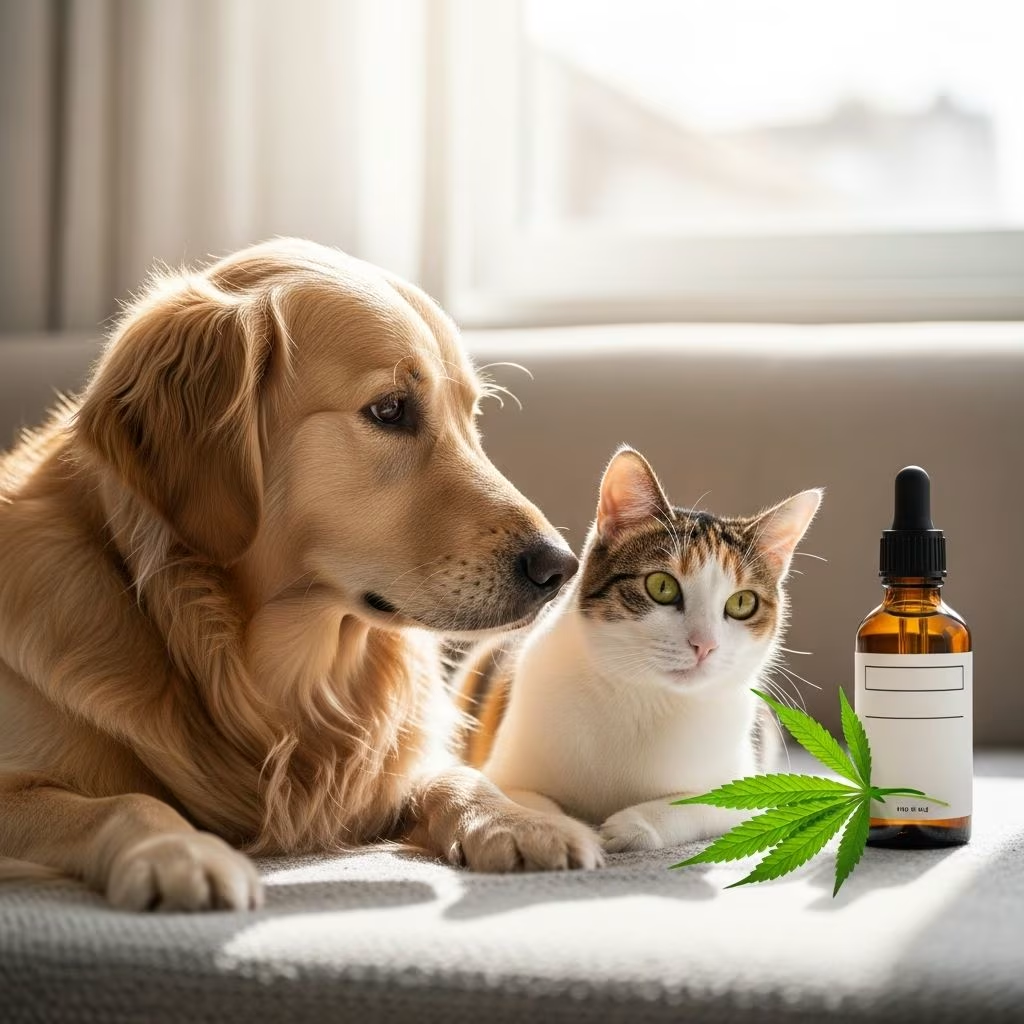
CBD derived from hemp shows promising safety profiles for pets, particularly dogs, with studies indicating good tolerance at doses up to 5 mg/kg body weight daily when free of THC. Emerging research also explores benefits for conditions like arthritis, anxiety, and seizures, though product quality and regulatory oversight remain critical concerns.
Understanding CBD and Hemp in Pet Wellness
Cannabidiol (CBD) is a non-psychoactive compound extracted from hemp plants, distinct from THC which causes psychoactive effects. Hemp products for pets typically contain less than 0.3% THC to comply with federal guidelines in the US, making them legal for interstate commerce. Pet owners increasingly turn to these supplements for natural support in managing age-related issues, stress, and chronic discomfort.
Unlike human CBD markets, pet products operate in a regulatory gray area. The FDA has not approved CBD for animal use, leading to variability in potency and purity. Third-party lab testing is essential to verify cannabinoid content, absence of contaminants like heavy metals, pesticides, and microbes.
Scientific Evidence on Safety in Dogs
A 90-day study on healthy beagles administered hemp-derived CBD, CBG, or CBD+CBDA at 5 mg/kg/day found no serious adverse events (SAEs). Dogs underwent daily observations, weekly exams, body weight monitoring, and clinical pathology tests, with all completing the trial successfully. Post-market surveillance from 2010-2023 reported adverse event rates of 2.10 per million administrations and SAEs at 0.01 per million, underscoring low risk.
Other trials corroborate these findings. A six-month placebo-controlled study gave dogs 4 mg/kg/day broad-spectrum CBD with no health impacts, despite minor alkaline phosphatase (ALP) elevations deemed clinically irrelevant. A 28-day trial tested doses up to 12 mg/kg/day, noting only mild hypersalivation, not classified as an SAE. These results align across multiple studies, supporting long-term use in healthy dogs.
| Study | Dose (mg/kg/day) | Duration | Key Findings |
|---|---|---|---|
| 90-day beagle trial | 5 | 90 days | No AEs or SAEs; well-tolerated |
| 6-month broad-spectrum | 4 | 6 months | No adverse health effects |
| 28-day escalating dose | 1-12 | 28 days | Mild hypersalivation only |
CBD Safety Considerations for Cats
Data on cats is sparser than for dogs. A 2021 study tested high doses of CBD (30.5 mg/kg), THC (41.5 mg/kg), and blends, observing mild effects like hypothermia and lethargy. THC-inclusive products caused more pronounced issues, emphasizing the need for THC-free formulations. Tolerance appears similar to dogs at lower doses, but further research is needed for chronic use.
Potential Benefits Backed by Research
- Arthritis and Pain Relief: Owners of dogs with osteoarthritis reported improved mobility after CBD supplementation, with 12.5% prevalence of use in affected dogs.
- Seizure Control: Preliminary trials suggest CBD reduces epileptic seizures when standard therapies fall short.
- Anxiety Reduction: Data from nearly 50,000 dogs showed CBD users exhibited fewer aggressive behaviors over time, beneficial for welfare and safety.
- Other Conditions: Associations with dementia (18.2% usage) and cancer (10%) indicate targeted applications.
Dogs receiving CBD were typically older (3 years on average) and had health issues, with 7.3% of US companion dogs using such supplements. Gastrointestinal upset or diarrhea can occur if overdosed, highlighting dosage precision.
Risks and Side Effects to Watch For
Common mild effects include hypersalivation, lethargy, and hypothermia, especially with THC contamination. High THC doses led to severe neurological symptoms in dogs. Contaminants pose risks; one evaluation of 29 pet CBD products found heavy metals in four.
Broad-spectrum products had AE rates of 2.40 per million, full-spectrum slightly higher at 2.83. Always start low and monitor closely.
How to Choose High-Quality Pet CBD Products
- Opt for hemp-derived with <0.3% THC.
- Seek third-party COAs confirming purity and potency.
- Prefer vet-formulated or NASC seal products.
- Avoid isolates if hypersalivation is a concern; consider ratios like CBD+CBDA.
State laws vary; check local restrictions beyond federal hemp rules.
Veterinary Perspectives and Dosing Guidelines
Vets report success with CBD for pain, anxiety, GI issues, and seizures in dogs and cats. Recommended starting dose: 1-2 mg/kg twice daily, titrating to 5 mg/kg based on response. Consult a vet before use, especially with medications, as interactions may occur.
Legal Status and Future Outlook
Hemp CBD is federally legal if THC-compliant, but FDA approval awaits more data. Ongoing trials, like those from the Dog Aging Project, promise deeper insights into behavioral and health outcomes. Advances in quality control could solidify CBD’s role in pet care.
Frequently Asked Questions (FAQs)
Is CBD safe for my dog?
Yes, studies show hemp-derived CBD is well-tolerated in healthy dogs up to 5 mg/kg/day, with low adverse event rates.
What about cats?
Limited data suggests mild effects at high doses; use THC-free products cautiously.
Can CBD help with my pet’s anxiety?
Research links CBD to reduced aggression and stress responses in dogs.
How do I know if a product is good quality?
Look for third-party lab results free of contaminants.
Is CBD legal for pets?
Hemp-derived under 0.3% THC is federally legal, but FDA-unapproved.
Conclusion: Informed Use for Pet Health
CBD and hemp offer valuable options for pet wellness when sourced responsibly. Grounded in peer-reviewed evidence, they support aging dogs particularly well, but vigilance on quality and dosing is paramount. Collaborate with veterinarians to optimize benefits safely.
References
- Safety study of cannabidiol products in healthy dogs — National Library of Medicine. 2024. https://pmc.ncbi.nlm.nih.gov/articles/PMC10940325/
- CBD for pets: navigating quality assurance, safety standards — National Library of Medicine. 2024. https://pmc.ncbi.nlm.nih.gov/articles/PMC11755934/
- What You Should Know Before Giving Your Dog CBD — Montclair Veterinary Hospital. 2025. https://montclairvets.com/dog-cbd-safety-guide/
- What is that dog taking? CBD supplements could make dogs less aggressive — Frontiers. 2025-11-28. https://www.frontiersin.org/news/2025/11/28/dog-cbd-supplements-less-aggressive
- Are CBD and hemp safe for pets? — Humane World for Animals. 2023. https://www.humaneworld.org/en/resources/are-cbd-and-hemp-safe-pets
- CBD: What you need to know about its uses and efficacy — Cornell University College of Veterinary Medicine. 2023. https://www.vet.cornell.edu/departments-centers-and-institutes/riney-canine-health-center/canine-health-topics/cbd-what-you-need-know-about-its-uses-and-efficacy



