

Introduction to Cattle Grub Infestations
Cattle grubs represent one of the most economically significant parasitic infestations affecting livestock production in the Northern Hemisphere. These parasites, scientifically classified as obligate parasites, cause a condition known as myiasis in cattle. The two primary species responsible for cattle grub infestations are Hypoderma lineatum, commonly referred to as the common cattle grub or lesser cattle grub, and Hypoderma bovis, known as the northern cattle grub. Understanding the biology, lifecycle, and impact of these parasites is essential for cattle producers seeking to minimize economic losses and maintain herd health.
Cattle grub infestations have affected livestock production for centuries, and their economic significance remains substantial in modern agricultural systems. The parasites cause direct production losses through weight reduction, milk production decreases, and hide damage, while also creating indirect losses through animal stress and reduced feed efficiency. Despite advances in parasiticide development and management strategies, cattle grubs continue to pose challenges for producers in endemic regions.
Physical Characteristics and Morphological Identification
Adult Fly Characteristics
Adult cattle grub flies exhibit distinctive morphological features that facilitate their identification in the field. The flies measure approximately 11 to 18 millimeters in length, though some sources indicate they can reach up to 15 millimeters. These insects possess a robust, heavily hair-covered body structure that creates a striking resemblance to bumblebees. This bee-like appearance, combined with their size and behavior, often triggers recognition among experienced livestock managers.
Notably, adult cattle grubs possess non-functional mouthparts, meaning they cannot feed during their brief adult stage. The energy required to sustain their short lifespan—typically 3 to 5 days, though potentially extending to 10 to 15 days under laboratory conditions—is entirely derived from nutritional reserves accumulated during the larval development stage. This adaptation represents an evolutionary specialization where the adult stage functions solely for mating and reproduction.
Larval and Egg Morphology
Cattle grub eggs are minute structures, measuring approximately 1 millimeter in length. These eggs display a slender, white coloration and feature specialized terminal structures—small clasp-like appendages positioned at one end that serve as anchoring mechanisms. These clasps firmly attach the eggs to individual hair shafts of the host animal. The eggs exhibit substrate specificity, being deposited primarily on the legs and lower body regions of cattle, though deposition sometimes occurs on the body proper.
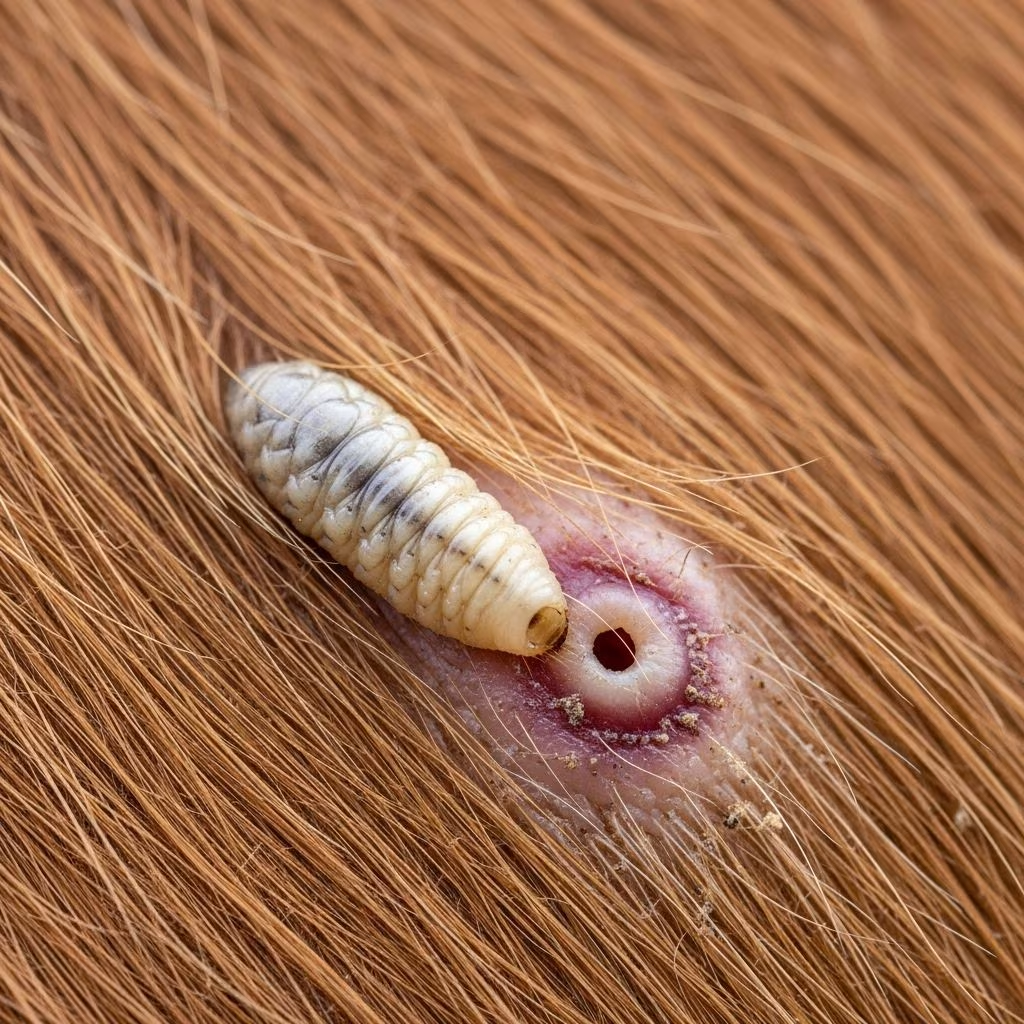
Newly hatched larvae are true maggots characterized by the absence of legs and sclerotized segments. The larvae possess retractable heads, which represents an adaptive feature for their parasitic lifestyle. Following hatching, which occurs within four to six days of egg deposition, the larvae display a white coloration that darkens progressively as they mature and migrate through the host’s tissues. This pigmentation change serves as a morphological indicator of developmental advancement.
Geographic Distribution and Climate Considerations
Regional Prevalence Patterns
Cattle grub distribution exhibits distinct geographic patterns across the Northern Hemisphere. Hypoderma lineatum occurs naturally in cattle populations across at least 50 countries spanning Africa, Asia, Europe, and North America, with principal distribution concentrated between 25 and 60 degrees latitude in the Northern Hemisphere. The southern limit of natural distribution extends to the Punjab region of India, Libya, northern Mexico, and Hawaii. In North America specifically, the common cattle grub ranges extensively from northern Mexico through northern Canada, with notable exceptions in southern Texas and Alaska.
In the United States, cattle grubs demonstrate highest prevalence in the northern and central states, where environmental conditions prove conducive to completing their lifecycle. These geographic patterns reflect the ecological requirements of the parasite species and the distribution of susceptible cattle populations. Understanding these distribution patterns enables producers to implement region-appropriate management strategies.
Environmental and Climatic Factors
Environmental conditions significantly influence cattle grub activity and lifecycle completion. Adult heel flies exhibit pronounced preferences for specific climatic conditions, demonstrating maximum activity during warm, sunny days characterized by low wind velocity. These environmental parameters directly facilitate adult fly flight capability, host-seeking behavior, and successful egg deposition on cattle. Warm temperatures provide essential metabolic energy for flight, while calm wind conditions improve the flies’ ability to land accurately on host animals.
Conversely, very hot climates paradoxically reduce cattle grub problems by suppressing fly activity and diminishing larval and adult survival rates. This phenomenon suggests an upper thermal threshold beyond which developmental and survival rates decline significantly. The timing of adult emergence and egg-laying activity varies according to regional weather patterns, with adult flies generally appearing during summer months, particularly June and July, when conditions optimize fly activity and reproduction.
Lifecycle Progression and Development Timeline
Egg Deposition and Species Differences
The lifecycle of cattle grubs initiates when adult flies locate suitable cattle hosts and deposit eggs on hair shafts. The egg-laying behavior differs markedly between the two primary species, representing an important distinction for identification and management purposes. Hypoderma lineatum deposits eggs in connected rows containing 3 to 10 eggs per hair shaft, often while the host animal remains at rest. This concentrated deposition pattern creates localized egg clusters. Hypoderma bovis, conversely, employs a different strategy, depositing single eggs on individual hair shafts through repeated darting movements.
The egg deposition behavior of H. bovis generates considerable disturbance, as the persistent activity and characteristic buzzing of this species triggers a strong behavioral response in cattle—an agitated, instinctive flight response termed “gadding.” A single female can deposit up to 800 eggs on one individual animal, demonstrating the potential for heavy infestations.
Larval Development and Warble Formation
Following egg deposition, larvae emerge from eggs within four to six days and immediately initiate a remarkable migration pattern. Upon hatching, larvae penetrate the host’s skin and embark on an extended intracorporeal journey toward the dorsal surface. During this migration phase, larvae tunnel through host tissues, eventually establishing themselves on the animal’s back where they create specialized breathing holes that develop into cyst-like structures termed warbles. These warbles appear as furuncle-like nodules or cysts distributed along the dorsal aspect of infested cattle.
The complete lifecycle encompasses approximately one year, with the majority of this duration occurring within the host animal’s body. The timing of warble appearance, larval emergence, pupation in soil, and adult emergence corresponds to varying weather conditions across different geographic regions, though the timing tends to remain consistent year to year within a given locality.
Emergence and Pupation
As larvae approach maturity within warbles, they undergo distinct darkening, becoming substantially darker in appearance immediately prior to warble exit. Fully mature larvae exit warbles through specialized pores and drop to the ground as motile organisms. Upon reaching soil, the larvae crawl beneath leaf litter or burrow into loose soil near the surface, where they undergo pupation and transformation into pupae. Following this subterranean developmental period, adult flies emerge to complete the lifecycle cycle.
Economic Impact and Production Losses
Quantifiable Production Losses
Cattle grub infestations generate substantial economic losses across multiple production parameters. Heavy infestations can induce significant weight loss in affected cattle, ranging from 20 to 50 kilograms per animal. These weight losses result from the combined stress and irritation caused by larvae, leading to reduced feed intake and compromised growth efficiency. Heavily infested animals may harbor between 100 and 500 larvae simultaneously, creating cumulative physiological stress.
Milk-producing cattle experience documented reductions in milk secretion estimated at 10 to 20 percent of normal production levels. This production decline occurs due to the systemic stress response triggered by parasitic infection and the specific irritation caused by larval migration and warble formation. For dairy operations, this milk production loss represents a direct economic impact on farm profitability.
Additional Economic Consequences
Beyond direct production losses, cattle grub infestations create secondary economic impacts through carcass depreciation and hide damage. Carcass tissue at warble sites undergoes distinctive pathological changes, becoming greenish-yellow with a jelly-like consistency that renders the meat unfit for consumption. This tissue damage reduces carcass value and may necessitate tissue trimming, further diminishing product value. Hide quality deterioration represents another significant economic consequence, as infested hides become riddled with holes where grubs emerge, a condition termed “grubbiness.” This hide damage substantially reduces hide value, an important economic consideration for beef cattle operations.
During active infestation periods, cattle exhibit behavioral disturbances including increased activity, water-seeking behavior, and preference for shaded areas to avoid flies. These behavioral changes reduce grazing efficiency and feed consumption, contributing to the overall production losses. The cumulative economic impact of cattle grub infestations across production sectors demonstrates why effective management strategies remain essential for livestock profitability.
Frequently Asked Questions
What are the primary cattle grub species affecting livestock?
The two principal species are Hypoderma lineatum (common cattle grub) and Hypoderma bovis (northern cattle grub). Both species are obligate parasites affecting cattle in the Northern Hemisphere, though their egg deposition behaviors and geographic distributions vary.
How can producers detect cattle grub infestations?
Producers detect cattle grub infestations by palpating warbles on the back of cattle during late winter and spring. These palpable cyst-like structures along the dorsal surface indicate active infestation and warrant immediate attention for infestation assessment and management planning.
What environmental conditions favor cattle grub activity?
Adult cattle grub flies demonstrate maximum activity during warm, sunny days with low wind velocity. These conditions optimize fly flight capability and host-seeking behavior, making such weather periods critical for implementing preventive management strategies.
How much weight loss can infested cattle experience?
Heavily infested cattle can lose between 20 and 50 kilograms of body weight per animal. These substantial weight losses result from stress, reduced feed intake, and the physiological demands of supporting larval populations.
What is the total duration of the cattle grub lifecycle?
The complete lifecycle spans approximately one year, with the majority of development occurring within the host animal’s body. The specific timing of lifecycle stages varies according to regional environmental conditions but tends to remain consistent year to year within geographic regions.
Management and Control Considerations
Effective management of cattle grub infestations requires comprehensive understanding of parasite biology, lifecycle timing, and regional epidemiology. Producers must recognize that successful control strategies incorporate multiple approaches, including parasite detection through warble palpation, judicious use of antiparasitic treatments, and environmental management where feasible. The economic significance of these parasites, combined with their biological adaptations and widespread distribution, necessitates proactive, informed management decisions that balance treatment costs against production losses prevented.
References
- Cattle Grub (Insect) – Study Guide — StudyGuides.com. Accessed February 2026. https://studyguides.com/study-methods/study-guide/cmircfu9a5du201aagr8nathf
- Common Cattle Grub, Hypoderma lineatum (Villers) — University of Florida IFAS. https://ask.ifas.ufl.edu/publication/IN146
- Biology and Control of Cattle Grubs — University of Nebraska–Lincoln Digital Commons. https://digitalcommons.unl.edu/cgi/viewcontent.cgi?article=2057&context=usdaarsfacpub
- Hypoderma lineatum — Animal Diversity Web. https://www.animaldiversity.org/accounts/Hypoderma_lineatum/
- Hypoderma spp – Integumentary System — Merck Veterinary Manual. https://www.merckvetmanual.com/integumentary-system/cattle-grubs/hypoderma-spp
- Dairy Cattle-Cattle Grub — Pacific Northwest Pest Management Handbooks. https://pnwhandbooks.org/insect/livestock/dairy/dairy-cattle-cattle-grub
- Overview of Cattle Grubs – Integumentary System — Merck Veterinary Manual. https://www.merckvetmanual.com/integumentary-system/cattle-grubs/overview-of-cattle-grubs



