
Cattle Farming Essentials: Practical Guide To Profitability
Master the fundamentals of launching and managing a successful cattle operation with proven strategies for profitability and sustainability.
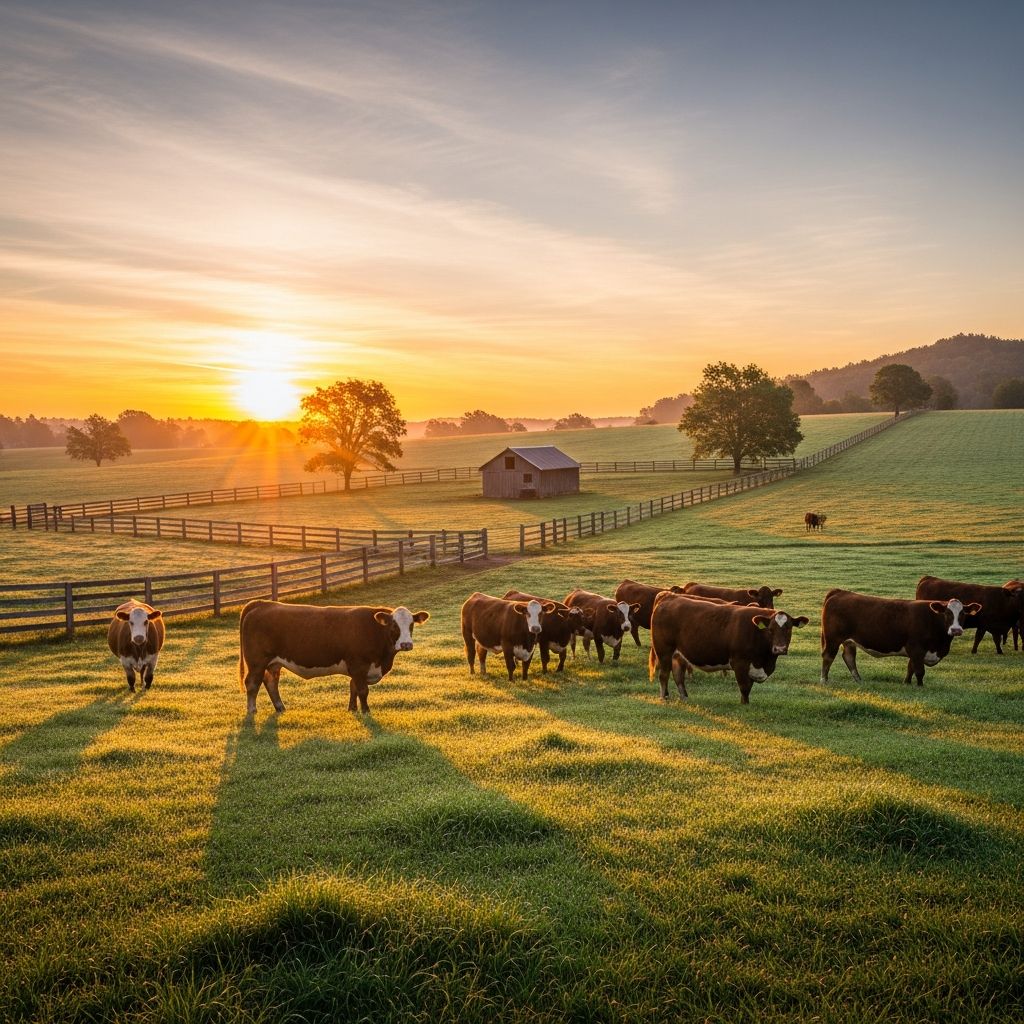
Cattle farming represents a cornerstone of agricultural enterprise, offering opportunities in beef and dairy production through diverse operational models. Success hinges on meticulous planning, resource management, and adaptive strategies tailored to market demands and environmental factors.
Defining Your Cattle Farming Goals and Operation Type
Before investing in land or livestock, clarify your objectives to shape every aspect of the venture. Producers often pursue beef production for meat markets or dairy for milk output, with some integrating both for diversified revenue streams. Common operation types include cow-calf systems, where breeding cows produce calves for sale; stocker operations that grow young cattle on pasture; and feedlot finishing for market-ready animals.
Small-scale farms can capitalize on niche demands like grass-fed or organic beef, selling directly to consumers via markets or online platforms. Over 96% of U.S. farm households rely on off-farm income, underscoring the need for realistic financial expectations.
- Cow-Calf: Focuses on breeding and weaning calves, ideal for pasture-based setups.
- Stocker/Backgrounder: Grows weaned calves to 800 pounds before sale to feedlots.
- Feedlot: Intensive grain-feeding for rapid weight gain and slaughter readiness.
- Dairy: Daily milking with emphasis on cow health and calf replacement.
Crafting a Robust Business Plan
A detailed business plan serves as the blueprint for viability, covering goals, costs, markets, and risks. It aids in securing loans and guides daily decisions.
Key components include:
- Executive summary outlining farm vision, location, and projections.
- Market analysis of local demand, competitors, and pricing for calves or beef.
- Operations detailing herd size, breeds, and facilities.
- Financials with startup costs ($10,000–$50,000 typically), revenue forecasts, and break-even points.
- Risk assessment for weather, disease, and market fluctuations.
Tools like AI-assisted planners streamline financial modeling, while USDA resources provide templates for beginning farmers.
Securing Land and Infrastructure
Adequate land—ideally 1-2 acres per cow-calf pair—supports grazing and waste management. Fencing must be sturdy to contain cattle, with water access every 1-2 miles of perimeter. Shelters protect against weather, and handling facilities enable safe veterinary work and loading.
| Infrastructure Item | Purpose | Estimated Cost Range |
|---|---|---|
| Perimeter Fencing | Containment and rotation | $5,000–$20,000 |
| Water Systems | Hydration via troughs/pipes | $2,000–$10,000 |
| Barns/Shelters | Weather protection | $10,000–$50,000 |
| Handling Chutes | Health checks and sorting | $5,000–$15,000 |
Start small to test feasibility, expanding as cash flow stabilizes.
Selecting the Right Cattle Breeds
Breed choice aligns with goals: Angus or Hereford for beef marbling and hardiness; Holsteins for high milk yield in dairy. Consider local climate, forage quality, and market preferences. Purchase from reputable sources with health records to avoid disease introduction.
- Beef Breeds: Black Angus (feed efficiency), Charolais (growth rate).
- Dairy Breeds: Jersey (butterfat content), Brown Swiss (longevity).
- Hybrid vigor from crossbreeding enhances resilience.
Nutrition and Forage Management
Balanced feeding drives growth and reproduction. Pasture-based systems rely on rotational grazing to maintain soil health, supplemented by hay in winter or silage for energy. Dairy cows require higher protein for lactation.
Monitor body condition scores to adjust rations, using tools for precise tracking. Costs form a major expense, so efficiency yields profits.
Breeding and Reproduction Strategies
Effective breeding sustains herd replacement. Natural service or artificial insemination (AI) offers genetic improvement. Track estrus cycles and pregnancy via ultrasound for 90%+ calving rates. Calving seasons align with forage peaks.
Health Protocols and Biosecurity
Veterinary partnerships are vital for vaccinations, deworming, and parasite control. Biosecurity prevents outbreaks like foot-and-mouth. Records of treatments ensure traceability, appealing to premium buyers.
Common issues: respiratory diseases in feedlots, mastitis in dairy. Early detection via monitoring tech reduces losses.
Marketing Your Cattle and Products
Direct sales, auctions, or contracts with processors maximize returns. Build networks for advice and buyers. Certifications like grass-fed boost prices.
Leverage social media and farmers’ markets for branded beef or dairy.
Financial Management and Risk Mitigation
Track expenses meticulously: feed (50%+ of costs), vet care, labor. Insurance covers livestock mortality and liability.
Diversify income via agritourism or crops. Government programs aid beginners.
Integrating Technology for Efficiency
Digital tools monitor health, weights, and genetics in real-time, optimizing decisions. Drones assess pastures; apps log data for compliance.
Sustainable Practices for Long-Term Viability
Regenerative grazing improves soil carbon, reducing inputs. Water conservation and manure management minimize environmental impact, aligning with consumer trends.
Frequently Asked Questions (FAQs)
What is the initial investment for a cattle farm?
Expect $10,000–$50,000 for small operations, covering land prep, cattle, and basics. Scale per business plan.
Beef or dairy: Which is better for beginners?
Beef suits pasture-focused starters; dairy demands daily milking infrastructure.
How many acres per cow?
1-2 acres for cow-calf in good forage areas; varies by climate and management.
What are common beginner mistakes?
Poor breed selection, inadequate fencing, neglecting records, and underestimating labor.
Can cattle farming be profitable?
Yes, with planning—focus on efficiency, markets, and off-farm income initially.
References
- How to Start A Cow Farm: A Beginner’s Guide to Cattle Farming — Tractor Supply Co. 2023. https://www.tractorsupply.com/tsc/cms/life-out-here/the-barn/livestock/how-to-start-a-cow-farm
- A Beginner’s Guide on How to Start a Cattle Farm Right — Cattlytics. 2024. https://www.cattlytics.com/blog/guide-on-how-to-start-a-cattle-farm/
- Cattle Farm Business Plan Template: Your Step-by-Step Guide — Wexford Insurance. 2023. https://www.wexfordins.com/post/cattle-farm-business-plan-template-your-step-by-step-guide
- Ranch Business Planning and Management — Oklahoma State University. 2022. http://agecon.okstate.edu/cattleman/files/chapter_3.pdf
- 8 Things You Need to Know Before Starting Your Own Dairy Farm — Penn State Extension. 2024. https://extension.psu.edu/8-things-you-need-to-know-before-starting-your-own-dairy-farm/
- How to Start a Cattle Farm: Easy & Essential Steps for Beginners — YouTube (Video). 2023. https://www.youtube.com/watch?v=K78dEI1U6oM
- How to Start a Farm: Beginning Farmers and Ranchers — USDA Farmers.gov. 2025. https://www.farmers.gov/your-business/beginning-farmers
Similar Articles








Read full bio of Sneha Tete


