

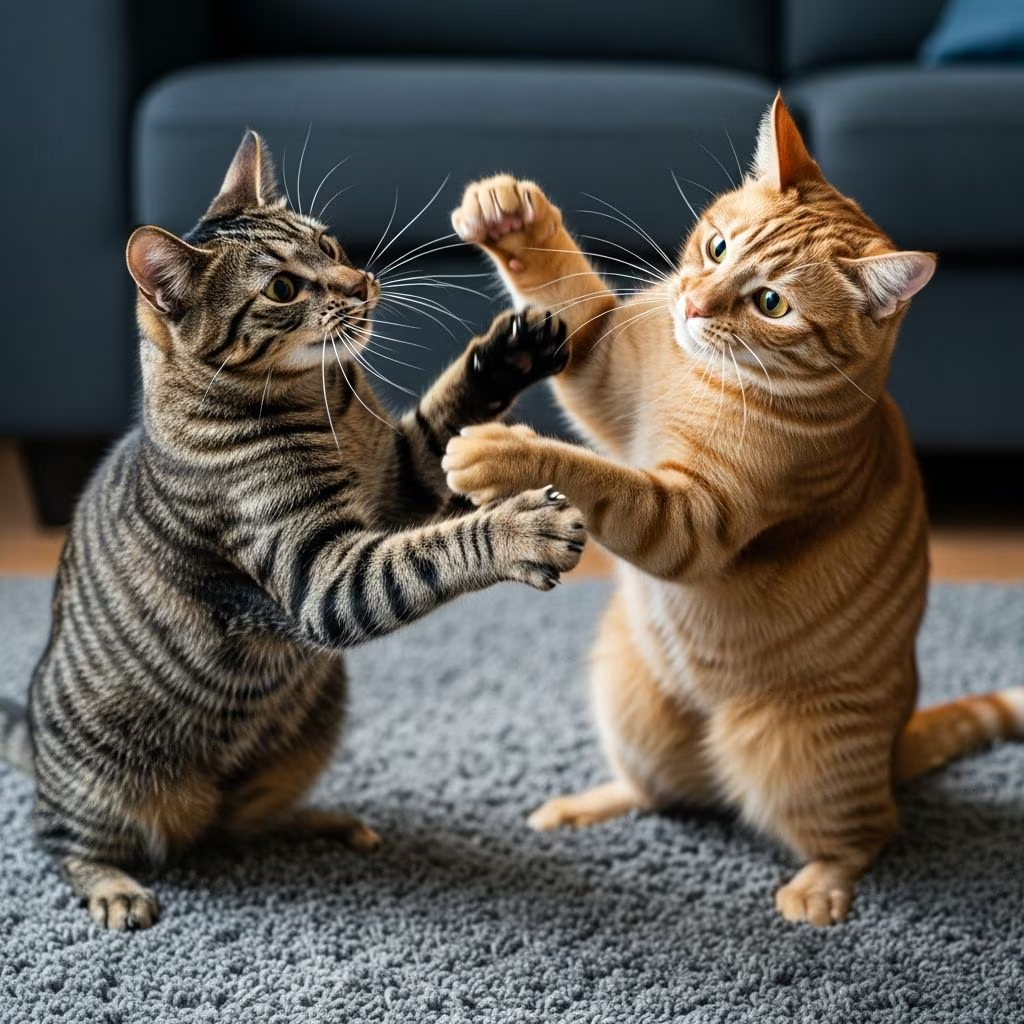
Rough play is a natural and common behavior in cats, especially kittens and young adults, mimicking their innate predatory instincts through mock aggression. This article explores the reasons behind cats who play rough, how to identify true play versus real aggression, and practical strategies to manage it effectively for a harmonious household.
Understanding Rough Play in Cats
Cats, particularly kittens and young cats under two or three years old, frequently engage in rough, active play as all feline play involves elements of mock aggression. During these sessions, cats stalk, chase, sneak, pounce, swat, kick, scratch, ambush, attack, and bite each other or objects—all typically in good fun. This behavior helps them practice essential hunting skills like exploration, investigation, and predation, which are vital for survival in the wild.
Many cats retain this energetic, kitten-like playfulness well into adulthood, especially those in single-cat households where they lack feline playmates. Play aggression often stems from boredom, insufficient outlets for energy, or early weaning/orphaning, which deprives them of learning bite inhibition from littermates. Solitary play targets objects like toys or boxes, while social play involves people or other animals, sometimes leading to issues when directed at humans.
Recognizing the difference between playful roughhousing and true aggression is crucial. In genuine play, actions are reciprocal—cats switch roles, ears point forward, claws may extend but don’t cause real harm, and bodies lean forward rather than backward. Problems arise when bites aren’t inhibited or claws strike too forcefully, potentially injuring owners and escalating into fear-based responses.
Recognizing Signs of Play Aggression
Play aggression often manifests as predatory actions toward moving targets like hands, feet, legs, or ankles. Key signs include a crouched stalking posture, intense focused stare, dilated pupils, twitching or side-to-side tail movement, ears flattened back, and behaviors such as chasing, pouncing, scratching, biting, or swatting.
Cats seeking play appear alert with forward whiskers, twitching ears and tail, and a tense body, unlike those desiring pets who show relaxed postures. Subtle precursors to escalation might include low growling, hissing, yowling, exposing teeth and claws, or rolling to display nails. Overstimulation during play can tip the balance, turning fun into aggressive outbursts, particularly in under-socialized cats weaned early or hand-raised without littermates.
- Crouched body and focused stare: Indicates stalking mode.
- Dilated pupils and tail twitching: Signs of high arousal.
- Ears back and swatting/biting: Potential escalation to overstimulation.
- Reciprocal role-switching: Confirms it’s play, not aggression.
Young cats in one-cat homes are most prone due to excess energy without appropriate outlets.
Why Do Cats Play Rough?
Rough play serves multiple purposes: honing predatory skills, burning energy, and socializing. In multi-cat homes, it’s usually balanced, but single cats redirect it toward owners. Causes include:
- Boredom and lack of enrichment: Insufficient toys or activities lead to human-targeted play.
- Early weaning/orphan status: Missed learning from siblings on gentle play.
- Overstimulation: Play sessions too intense without breaks.
- Fear or poor socialization: Cats missing the 3-16 week window may react aggressively when cornered.
- High energy in youth: Common under age 2-3, especially active breeds.
Hand-play with owners reinforces that roughhousing with humans is acceptable, worsening the issue.
How to Manage and Reduce Rough Play
A tired cat is a happy cat—proactive management focuses on meeting predatory needs through scheduled, enriching activities. Key strategies include:
- Scheduled play sessions: Offer multiple daily routines of energetic play followed by meals to simulate hunting. Use times of peak activity like dawn/dusk.
- Variety of toys: Provide batting toys (balls, mice), wand toys with feathers for stalking/chasing, and novel items like bags/boxes. Rotate to maintain interest.
- Redirect from body parts: Never use hands/feet as toys; employ long dangly toys or toss favorites. Carry toys for ambushes.
- Read body language: Pet relaxed cats; play with alert ones. Stop if play mode activates during petting.
- Ignore or withdraw: For rough play, freeze movement, redirect to toy, or leave the room briefly to teach boundaries.
Avoid physical punishment, yelling, or water spraying—these can escalate play, induce fear, or foster true aggression. Never run or block with feet, as movement triggers pursuit.
| Do’s | Don’ts |
|---|---|
| Play with toys only | Use hands/feet as targets |
| Schedule sessions | Punish physically |
| Provide enrichment | Run from cat |
| Reward calm behavior | Yell or spray water |
Environmental Enrichment and Prevention
Create an interactive environment to prevent rough play. DIY ideas abound: search for low-cost setups using household items. Toss ping-pong balls down stairs, drag strings, or use boxes for hiding/ambushing safely. Vertical spaces like cat trees allow climbing and perching, reducing ground-level pounces.
For multi-pet homes, monitor interactions and intervene early. Teach children to redirect play and supervise young kids. Positive reinforcement works wonders: treat/praise calm play to build good habits.
Frequently Asked Questions (FAQs)
Is rough play normal for adult cats?
Yes, many retain kitten-like play into adulthood, especially in single-cat homes, but it should be managed to avoid injury.
How do I stop my cat from attacking my feet?
Carry toys to toss ahead, redirect to appropriate play, and ignore ambushes by freezing.
What if play turns into real aggression?
Distinguish by non-reciprocal bites, backward lean, or damage. Consult a vet/behaviorist if persistent.
Can punishment help?
No— it worsens fear or play. Use redirection and enrichment instead.
How often should I play with my cat?
Multiple 10-15 minute sessions daily, especially at active times.
Long-Term Solutions and When to Seek Help
Consistency yields results: most cats improve with routine play and boundaries. If aggression persists, involves fear (hiding, avoidance), or injures despite efforts, rule out medical issues via vet check. Behaviorists can address underlying anxiety. Spaying/neutering reduces some aggression, and fostering another compatible cat provides outlets.
By understanding rough play as a natural outlet, owners can transform chaotic interactions into bonding opportunities. Patience and positivity ensure a scratch-free home.
References
- Aggression Between Cats in Your Household — ASPCA. Accessed 2026. https://www.aspca.org/pet-care/cat-care/common-cat-behavior-issues/aggression-between-cats-your-household
- Rough play in a kitten or adult cat — Humane Society of Huron Valley (HSHV). Accessed 2026. https://www.hshv.org/rough-kitten-play/
- Understanding Play Aggression in Cats — Ontario SPCA. Accessed 2026. https://ontariospca.ca/blog/understanding-play-aggression-in-cats-2/
- Why Is My Cat Aggressive? — ASPCA Pet Health Insurance. Accessed 2026. https://www.aspcapetinsurance.com/resources/cat-aggression/
- Appropriate Play Behaviour for Kittens — SPCA St. John’s. Accessed 2026. https://spcastjohns.org/advice/appropriate-play-behaviour-for-kittens/
- Play Aggression — Nebraska Humane Society. Accessed 2026. https://nehumanesociety.org/services/pet-tips-behavior-help-and-resources/play-aggression/



