

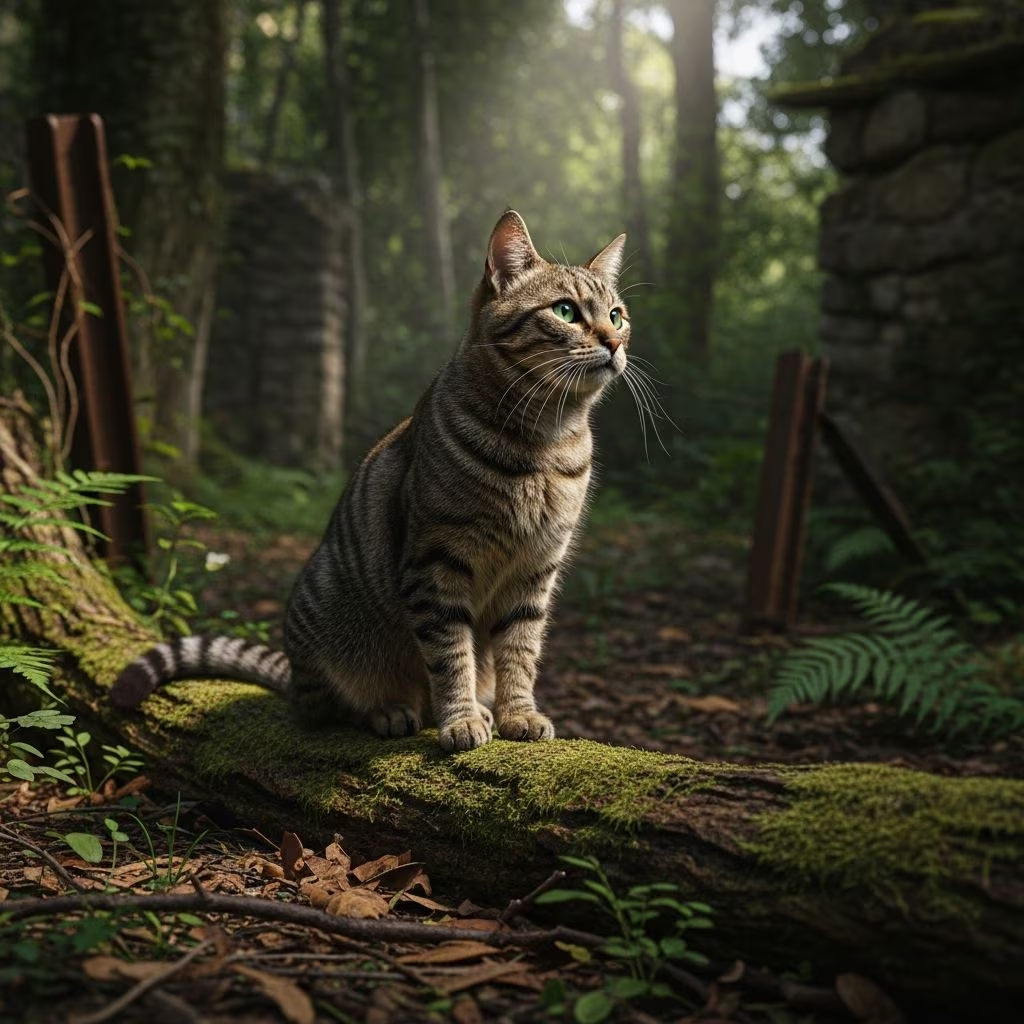
Domestic cats possess remarkable adaptability rooted in their semi-wild heritage, enabling many to potentially endure in a world devoid of human presence. While pampered house cats might face initial hardships, their innate hunting skills, scavenging abilities, and reproductive prowess suggest long-term viability for the species.
The Evolutionary Roots of Feline Self-Reliance
Cats descend from the African wildcat, a solitary hunter that thrives in diverse environments without reliance on social structures. This ancestry equips modern felines with sharp claws, keen senses, and predatory instincts that persist despite domestication. Unlike fully domesticated species like dogs, cats remain ‘self-domesticating,’ choosing proximity to humans for mutual benefit rather than absolute dependence.
Genetic studies confirm that domestic cats retain nearly identical traits to their wild counterparts, including the ability to hunt small prey effectively. In natural settings, they stalk rodents, birds, and insects using stealth and agility honed over millennia. This biological toolkit positions cats favorably for independence.
Distinctions Among Cat Populations
Not all cats enter a human-less scenario equally prepared. Understanding the spectrum from indoor pets to fully feral individuals reveals varying prospects.
- Indoor House Cats: Accustomed to scheduled meals and shelter, these cats may experience shock without routine care. However, retained instincts allow many to hunt and scavenge, transitioning over time.
- Stray Cats: Semi-dependent on human discards or caregivers, strays bridge domesticated and wild lifestyles, often seeking food in urban trash or handouts.
- Feral Cats: Born and raised without human contact, ferals embody wild survival, forming loose colonies for protection while hunting independently.
This gradient highlights how exposure to humans influences but does not erase survival capabilities. Feral colonies worldwide demonstrate sustained populations without direct intervention.
Essential Survival Mechanisms
Cats employ multiple strategies to secure food, water, shelter, and reproduction in challenging conditions.
Hunting and Foraging Proficiency
A cat’s diet in the wild consists primarily of small mammals, birds, and invertebrates. House cats demonstrate this through play-hunting behaviors, pouncing on toys mimicking prey. In practice, even novices catch mice or lizards within days of release.
| Prey Type | Accessibility | Nutritional Value |
|---|---|---|
| Rodents | High in urban/rural areas | Protein-rich, complete meals |
| Birds | Moderate, requires skill | High energy, fats |
| Insects/Reptiles | Abundant seasonally | Supplemental hydration/protein |
| Scavenged Waste | Initial urban boon | Variable, risks disease |
Water sources include streams, puddles, and prey moisture content, minimizing dehydration risks.
Shelter and Territory Management
Felines are territorial, claiming safe havens like abandoned structures, dense foliage, or burrows. In human absence, derelict buildings and overgrown lots provide ample cover from weather and predators. Claws aid in climbing to evade threats like coyotes or foxes.
Reproduction and Population Dynamics
Cats reach maturity quickly, with females producing 2-3 litters annually, each yielding 4-6 kittens. High fecundity ensures species persistence despite elevated mortality. Feral groups already exemplify explosive growth, becoming established in new regions rapidly.
Challenges in a Post-Human Landscape
Survival demands overcoming significant hurdles, mirroring current feral experiences.
- Predation Risks: Larger animals pose threats, yet cats’ agility and nocturnal habits mitigate dangers.
- Disease and Injury: Without veterinary aid, infections spread, but natural immunity and avoidance behaviors help.
- Competition: Rival cats or wildlife vie for resources, prompting territorial skirmishes.
- Environmental Extremes: Harsh winters or droughts test resilience, favoring adaptable individuals.
Statistics from feral studies show average lifespans of 2-5 years outdoors versus 12-15 indoors, yet sufficient reproduction sustains numbers.
Behavioral Adaptations Over Time
Indoor cats might initially struggle, vocalizing for absent owners or rejecting novel foods. Adaptation phases include exploration, failed hunts, and eventual proficiency. Observations of dumped pets forming feral bands confirm this plasticity.
Socially, cats form matriarchal colonies for kitten-rearing, sharing nursing duties. Solitary adults patrol larger ranges, optimizing energy use.
Ecological Role and Long-Term Prospects
In human absence, cats could regulate rodent populations, filling a niche akin to wild felids. Urban decay offers initial feasts from perishables, transitioning to wild foraging. Globally, billions of feral cats already prove viability across climates.
Compared to dogs, cats fare better due to obligate carnivory and independence; canines rely more on pack hunting suited to larger prey.
Frequently Asked Questions
Could my indoor cat hunt effectively right away?
Many possess latent skills but require practice; success rates improve within weeks.
How quickly would cat populations rebound?
Unneutered females breed year-round, potentially doubling numbers annually.
Would cats overrun ecosystems without humans?
As invasives in some areas, they might expand, preying on native wildlife.
Can all cats become feral?
Socialization varies; early outdoor exposure aids transition.
What about declawed or obese house cats?
These face steeper odds, relying on scavenging and evasion.
Key Takeaways for Cat Owners
Recognizing cats’ resilient nature underscores their autonomy. While we provide comfort, their wild essence endures. In a hypothetical human-free world, felines would reclaim ancestral roles, navigating perils with instinctual grace.
References
- Could Cats Survive in a World Without Humans? Feline Independence Explained — Catster. 2023. https://www.catster.com/cat-behavior/could-a-cat-survive-in-a-world-without-humans/
- The Cat Socialization Continuum: A Guide to Interactions — Alley Cat Allies. 2023. https://www.alleycat.org/resources/cat-socialization-continuum-guide/
- Can Cats Survive By Themselves? — YouTube (Transcript). 2023. https://www.youtube.com/watch?v=WoRKiV03Hgw
- Socializing Cats That Are Nonsocial to Humans — American Pets Alive!. 2022. https://americanpetsalive.org/uploads/resources/BFAS-Socializing-Cats-that-are-nonsocial-to-humans52F6.pdf
- Community Cat Behavior — Southern Pines Animal Shelter. 2023. https://www.southernpinesanimalshelter.org/communitycatbehavior.html
- Why Our Cats Cannot Make It in the Wild — Way of Cats. 2023. https://www.wayofcats.com/blog/why-our-cats-cannot-make-it-in-the-wild/11630
- If We Weren’t Around, Would Cats Fare Better Than Dogs? — Psychology Today. 2023-06-01. https://www.psychologytoday.com/us/blog/animal-emotions/202306/would-cats-do-better-than-dogs-if-we-werent-around



