

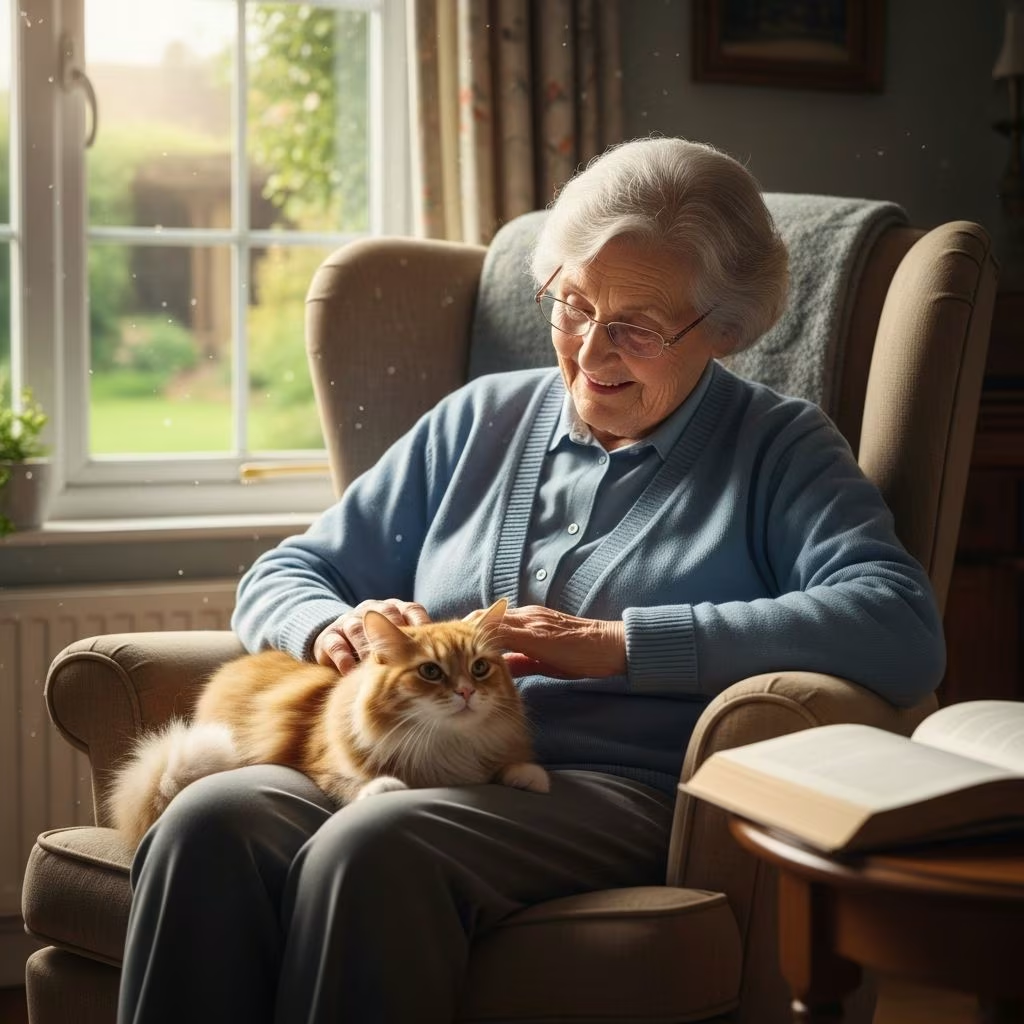
Cats May Protect Humans from Memory Loss Later in Life
The relationship between humans and cats has long been cherished for emotional and companionship reasons, but emerging scientific research suggests that living with feline friends may offer significant cognitive benefits, particularly for older adults. A groundbreaking study sponsored by the American Academy of Neurology indicates that cat ownership could be a key factor in maintaining memory sharpness and preventing cognitive decline as we age. This discovery provides cat lovers with compelling scientific evidence that their beloved pets offer far more than just comfort and companionship—they may actually protect brain health during the senior years.
Understanding the Research Behind Pet Ownership and Cognitive Health
Researchers at the University of Michigan Medical Center conducted an extensive analysis of cognitive data from a national study of Medicare beneficiaries to determine how pets influence memory and cognitive function. The study examined data from 1,369 adults over the age of 65, with 53% of participants owning at least one pet and 32% classified as long-term pet owners with sustained ownership lasting more than five years.
The research methodology was rigorous and comprehensive. Each participant underwent multiple cognitive tests designed to assess common mental skills, including subtraction, word recall, and other measures of cognitive performance. Researchers compiled these results into a composite cognitive score ranging from zero to 27 points, allowing for standardized comparison across the entire study population.
Over a six-year period, participants were retested multiple times, with researchers tracking changes in their cognitive scores relative to their pet ownership status and duration of pet care. The longitudinal design of this study strengthens the reliability of the findings, as it captures cognitive changes over an extended timeframe rather than relying on a single snapshot in time.
Key Findings: How Pet Ownership Affects Cognitive Scores
The results of this research are striking and consistent with other recent studies on pet ownership and brain health. Long-term pet owners demonstrated an average cognitive score 1.2 points higher than non-pet owners at the six-year mark. While this may seem like a modest difference numerically, in the context of cognitive decline prevention, this represents a meaningful protective effect that could slow the progression of memory loss.
The study revealed that sustained pet ownership was associated with higher scores on both immediate and delayed word recall tests, which are critical indicators of verbal memory function. This finding is particularly important because verbal memory decline is often one of the earliest signs of cognitive impairment in older adults.
Importantly, the cognitive benefits of pet ownership were not equally distributed across all demographic groups. The research found that the protective effects were strongest among:
- Black adults
- College-educated individuals
- Men
This variation suggests that the mechanisms by which pets provide cognitive protection may interact with other sociodemographic factors, highlighting the complexity of cognitive health disparities and the multifaceted nature of aging.
Why Cats and Dogs Show Greater Benefits Than Other Pets
An intriguing aspect of recent pet ownership research is the differential effect observed across different types of pets. While dogs and cats were associated with slower cognitive decline, fish and bird owners did not demonstrate similar protective effects on memory or cognitive function.
This distinction suggests that the cognitive benefits of pet ownership are not simply the result of having a living creature in one’s home, but rather depend on specific characteristics and interaction patterns associated with dogs and cats. The more interactive, responsive nature of cats and dogs compared to fish and birds likely plays a crucial role in explaining these differences.
The Stress-Buffering Effect: How Cats Protect Brain Health
One of the primary mechanisms through which cats may protect memory involves their remarkable ability to reduce stress and anxiety in their owners. Researcher Tiffany Braley, who led the University of Michigan study, theorizes that pet ownership’s stress-buffering effects provide a plausible explanation for the observed cognitive benefits. Since chronic stress is well-documented as a risk factor for cognitive decline and dementia, anything that reduces stress naturally supports brain health.
The stress-reduction benefits of cat companionship are well-established in the scientific literature. Simply spending time with a purring cat can significantly lower cortisol levels, reduce blood pressure, and alleviate feelings of anxiety and loneliness. These physiological and psychological benefits create a protective environment for cognitive health, helping to maintain neural function and prevent the accelerated decline often associated with chronic stress.
The act of petting a cat triggers positive neurological responses that activate the prefrontal cortex—the brain region responsible for executive functions including memory, planning, and decision-making. This direct activation of brain regions involved in cognition suggests a biological pathway through which cat interactions may enhance mental function.
Physical Activity and Cognitive Function
Beyond stress reduction, Braley and her team identified another important mechanism: pet owners tend to be more physically active than non-pet owners. This increased physical activity has direct implications for cognitive health, as exercise is one of the most evidence-based interventions for maintaining brain function and preventing cognitive decline.
Cat owners engage in physical activity through play sessions with their feline companions. Whether it’s a rousing game of Catch the Feather Wand, Chase the Catnip Mouse, or simply chasing a cat around the house, these interactive play sessions provide cardiovascular exercise that supports overall health and brain function. Regular physical activity improves blood flow to the brain, promotes the growth of new neural connections, and helps maintain the structural integrity of brain regions involved in memory and learning.
Mental Stimulation Through Pet Care Responsibilities
Another often-overlooked cognitive benefit of cat ownership involves the mental demands of caring for a pet. The routine responsibilities of pet care—remembering feeding schedules, refilling water bowls, and scheduling veterinary appointments—exercise mental muscles and keep the mind active and fresh.
These daily cognitive tasks engage multiple brain systems involved in memory, planning, organization, and attention. For older adults who may be retired or have fewer occupational demands on their cognitive abilities, the structured responsibility of pet care provides essential mental stimulation. This cognitive engagement may help maintain neural plasticity and prevent the mental atrophy that can occur with reduced cognitive demand.
The Prefrontal Cortex and Cat Interactions
Recent neuroscience research has identified a more direct mechanism linking cat interactions to cognitive health. Studies using functional neuroimaging have demonstrated that interactions with cats activate the prefrontal cortex, including the inferior frontal gyrus region, regardless of the type of interaction.
The prefrontal cortex is crucial for executive function—the set of cognitive abilities including working memory, attention, planning, and impulse control. By regularly activating this region through cat interactions, owners may be maintaining and strengthening these critical cognitive functions. This mechanism is particularly relevant for preventing cognitive decline, as executive function deficits often precede and predict more severe cognitive impairment.
Long-Term Pet Ownership: Duration Matters
An important finding from the research is that the cognitive benefits of pet ownership increase with duration. Adults age 65 and older who owned a pet for more than five years demonstrated higher composite cognitive scores compared to those with shorter pet ownership or no pet ownership.
This duration effect suggests that the cognitive benefits of pet companionship may accrue over time, similar to how cognitive reserve develops through lifelong mental engagement. The five-year threshold appears to be significant, marking the transition from short-term pet owners to long-term, sustained pet ownership. This finding emphasizes the importance of maintaining pet companionship throughout older adulthood rather than viewing pet ownership as a short-term intervention.
Comparing Cognitive Outcomes Across Age Groups
An important caveat from the research is that the cognitive benefits of pet ownership were most pronounced in adults age 65 and older. No significant differences in cognitive scores were found between pet owners and non-owners aged 65 or younger. This age-related pattern suggests that the protective effects of pet ownership become increasingly important during the senior years when cognitive decline risk naturally increases.
This finding has important implications for older adults and their families. If you’re in your senior years and concerned about cognitive health, establishing or maintaining a pet relationship may provide meaningful protection against memory loss and cognitive decline.
Addressing the Research Limitations
While these findings are encouraging, it’s important to acknowledge that the current research provides correlational evidence rather than definitive proof of causation. The studies show associations between pet ownership and better cognitive outcomes, but cannot definitively prove that pet ownership directly causes improved cognition. It remains possible that healthier individuals with better baseline cognitive function are more likely to adopt and maintain pets—a concept known as reverse causation.
Additionally, most of the research to date focuses on dogs and cats, with limited investigation into other pet types and their effects on cognitive health. Future research will need to explore these relationships more thoroughly and determine the optimal characteristics of pets for cognitive protection.
Practical Implications for Older Adults
Despite the need for additional research, current evidence suggests several practical recommendations for older adults concerned about cognitive health:
- Consider adopting a cat or dog if you don’t currently have a pet and are physically and financially able to care for one
- Maintain long-term pet ownership rather than viewing pets as temporary companions
- Engage actively with your cat through play, training, and interactive activities
- Use pet care responsibilities as an opportunity for mental engagement and routine-building
- Combine pet ownership with other evidence-based cognitive protection strategies such as physical exercise, social engagement, and intellectual stimulation
Frequently Asked Questions (FAQs)
Q: At what age do the cognitive benefits of cat ownership become apparent?
A: Research shows that cognitive benefits from pet ownership are most significant in adults age 65 and older. While younger pet owners may experience other benefits, the protective effects against cognitive decline appear to strengthen with age.
Q: How long do I need to own a cat to see cognitive benefits?
A: Studies suggest that sustained pet ownership of more than five years shows the strongest cognitive benefits. However, even shorter-term pet ownership may provide some protective effects through stress reduction and physical activity.
Q: Can cat ownership prevent dementia?
A: While research shows that cat ownership may slow cognitive decline and protect memory, it is not a guaranteed prevention for dementia. Pet ownership should be considered one of multiple strategies, alongside exercise, social engagement, cognitive stimulation, and a healthy diet.
Q: Are there differences between dogs and cats in terms of cognitive benefits?
A: Research indicates that both dogs and cats provide similar cognitive benefits, though dogs may offer additional advantages through increased physical activity demands. The choice between the two may depend on individual lifestyle, living situation, and personal preference.
Q: What if I’m allergic to cats but want cognitive protection?
A: If cat ownership isn’t feasible due to allergies, dog ownership may provide similar cognitive benefits. Alternatively, focus on other evidence-based approaches to cognitive health including regular exercise, social engagement, mental stimulation, and cognitive training.
References
- Study Shows Your Cat May Be the Key To Preventing Memory Loss — Cats.com. 2024. https://cats.com/study-shows-your-cat-may-be-the-key-to-preventing-memory-loss
- Can Your Pet Help Protect Your Mind as You Age? — Psychology Today. 2025-07. https://www.psychologytoday.com/us/blog/all-dogs-go-to-heaven/202507/can-your-pet-help-protect-your-mind-as-you-age
- The Impact of Sustained Ownership of a Pet on Cognitive Health — National Institutes of Health. 2023. https://pmc.ncbi.nlm.nih.gov/articles/PMC10280126/
- Effects of the Characteristic Temperament of Cats on the Emotions and Cognitive Function — National Institutes of Health. 2020. https://pmc.ncbi.nlm.nih.gov/articles/PMC7316254/
- Can Pet Ownership Help Protect Against Cognitive Decline? — UC Davis Alzheimer’s Disease Center. 2024. https://www.alzdiscovery.org/cognitive-vitality/blog/can-pet-ownership-help-protect-against-cognitive-decline
- How Pets Can Protect Cognitive Health in Older Adults — American Psychiatric Association. 2024. https://www.psychiatry.org/news-room/apa-blogs/pets-can-protect-cognitive-health-in-older-adults



