

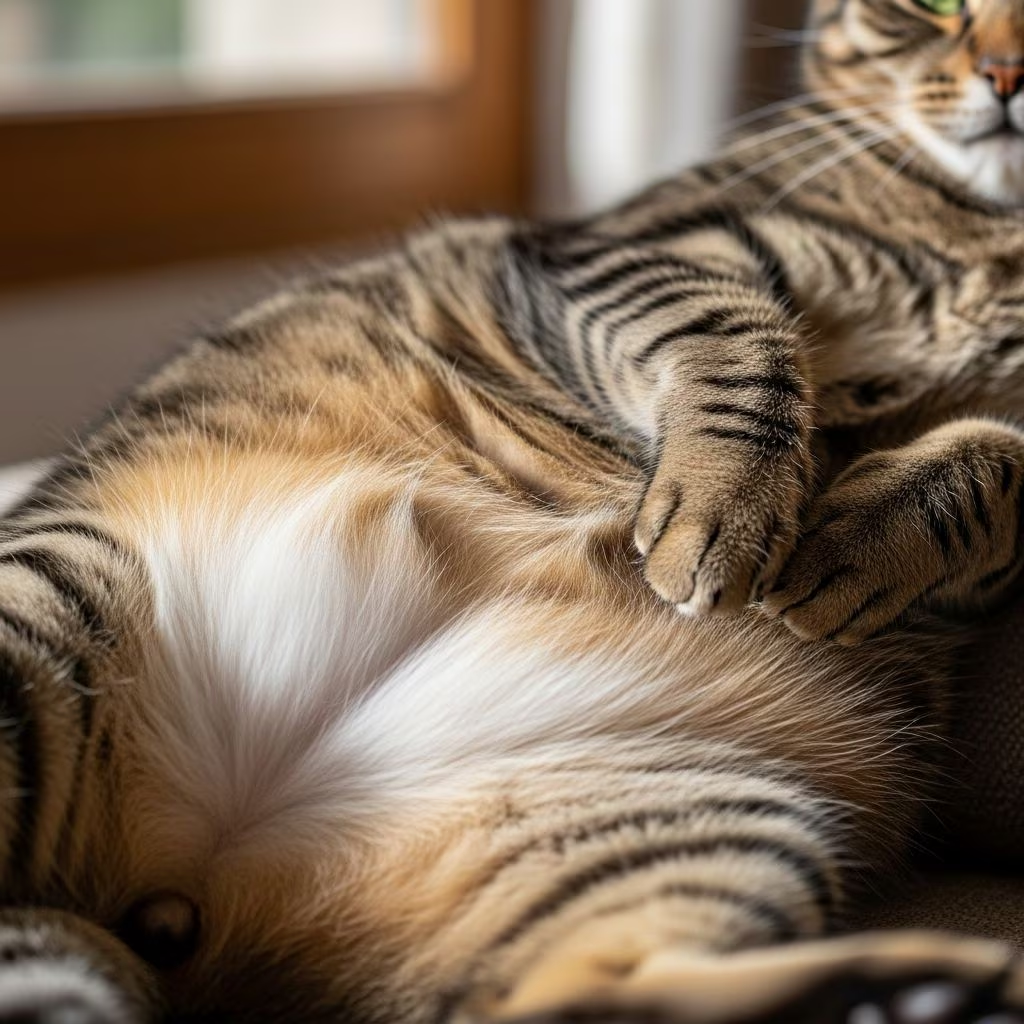
What Is a Primordial Pouch?
If you’ve ever noticed your feline friend has a slightly saggy belly that sways from side to side when they walk, you’ve spotted what veterinarians call a primordial pouch. This adorable feature is nothing to worry about—in fact, it’s a completely normal and universal part of cat anatomy. The primordial pouch is simply a fancy scientific term for the soft, loose flap of skin that hangs beneath your cat’s belly, typically running along the length of the underside but appearing most pronounced near the back legs.
The primordial pouch consists of a combination of loose skin, fatty tissue, and fur. According to veterinary experts, this unique abdominal flap is present in all cats, regardless of gender, age, or breed. What makes this feature even more interesting is that it’s not exclusive to domestic house cats. Big cats like lions and tigers also possess primordial pouches, suggesting this is a deeply rooted evolutionary trait across the entire feline family.
When Do Cats Develop a Primordial Pouch?
Kittens are not born with noticeable primordial pouches. Instead, cats typically begin developing these belly flaps during kittenhood, usually around six months of age. As your kitten matures, this pouch becomes more evident, though the size and prominence vary significantly from cat to cat. Some felines sport quite a noticeable pouch that jiggle noticeably when they move, while others have such a subtle pouch that it’s barely visible. The variation in pouch size depends on several factors, including your cat’s age, breed, genetics, and overall weight.
The Evolutionary Purposes Behind the Primordial Pouch
While scientists don’t know with absolute certainty why cats evolved primordial pouches, veterinary researchers have developed several well-supported theories about the functional benefits these belly flaps provide. Understanding these purposes helps cat owners appreciate this quirky anatomical feature even more.
Protection During Combat
One of the primary theories about the primordial pouch’s purpose centers on protection. Cats are equipped with sharp claws and teeth, and when they engage in fights with predators, other cats, or even during playful combat with their littermates, their lower belly becomes particularly vulnerable. The primordial pouch acts as a protective shield for vital organs located in this sensitive region. During the famous “bunny kick”—that adorable yet surprisingly fierce move cats perform where they grab an opponent with their front paws and rake with their hind legs—the pouch provides cushioning and protection against potential injury.
Enhanced Flexibility and Agility
Perhaps one of the most important functions of the primordial pouch relates to feline athleticism. The loose skin and tissue of the pouch allow cats to stretch their bodies more extensively during movement, enabling them to take longer strides when running and achieve bigger leaps when jumping. This enhanced flexibility is crucial for a cat’s hunting success and predator evasion. When a cat is sprinting to catch prey or fleeing from danger, the primordial pouch stretches and compresses, allowing the abdomen to move more freely. Additionally, this extra skin facilitates the remarkable ability cats have to twist their bodies mid-air and land on their feet, their famous righting reflex.
Food Storage and Energy Reserves
In the wild, cats cannot guarantee when their next meal will arrive. This unpredictability led to evolutionary adaptations that help felines survive periods of food scarcity. The primordial pouch serves as a functional food storage system, allowing a cat’s belly to expand significantly when they consume a large meal. Rather than having a rigid abdomen that limits meal size, the pouch provides elasticity that permits cats to gorge themselves when prey is abundant. The fatty tissue component of the pouch can store excess energy that the cat’s body can mobilize during lean times when food is unavailable. This is particularly relevant for wild cats and feral populations that must manage unpredictable feeding schedules.
Thermal Regulation
While less commonly discussed than other theories, some experts believe the primordial pouch may also play a role in temperature regulation. The loose skin and tissue structure could potentially aid with air circulation around the abdomen, helping cats maintain optimal body temperature in various environmental conditions. While this theory is less widely accepted than others, it represents another possible evolutionary advantage the pouch provides.
Is the Primordial Pouch the Same as the Scruff?
Many cat owners notice that cats also have loose skin on the back of their neck, known as the “scruff.” While both the primordial pouch and the scruff consist of excess skin, they serve different purposes and are located in different areas. The scruff is the loose skin on the back of a cat’s neck, and it has a specific functional purpose: it allows mother cats to safely pick up their kittens using their teeth without causing injury. The primordial pouch, by contrast, runs along the length of the cat’s belly and primarily serves the protective and flexibility functions discussed above.
Why Some Cats Have More Prominent Pouches Than Others
If you’ve noticed that your cat’s primordial pouch is more noticeable than your friend’s cat, you’re not imagining things. Several factors influence how pronounced a cat’s belly flap becomes.
Age and Skin Elasticity
As cats age, their skin loses elasticity, much like humans experience. This natural aging process means that the primordial pouch often becomes more sagging and visible in senior cats compared to younger felines. Additionally, a cat’s metabolism slows down with age, making it more challenging for older cats to maintain a lean physique. This combination of reduced skin elasticity and slower metabolism contributes to a more prominent pouch in senior cats.
Weight and Body Condition
While the primordial pouch is not primarily determined by weight, cats that are overweight or were previously overweight may display a more noticeable pouch. If a formerly overweight cat loses weight, they may retain loose skin in the abdominal area, making the pouch appear larger. However, it’s important to understand that even extremely lean cats possess primordial pouches—the feature is not an indicator of obesity or poor health.
Genetics and Breed
Just as humans have different body types determined by genetics, cats also have hereditary variations in how pronounced their primordial pouches are. Some breeds or individual cats may naturally develop larger pouches due to genetic factors, while others maintain subtle, barely noticeable pouches throughout their lives.
Is Your Cat’s Primordial Pouch a Health Concern?
One of the most common questions cat owners ask veterinarians is whether a primordial pouch indicates a health problem. The answer is reassuring: a normal primordial pouch is not a sign of illness, obesity, or poor nutrition. It’s a completely normal anatomical feature that all healthy cats possess.
However, cat owners should be aware of the distinction between a healthy primordial pouch and signs of actual weight gain or health issues. A healthy pouch should feel somewhat soft and floppy, and it should move relatively freely when your cat walks or runs. If you notice other signs of weight gain—such as difficulty moving, labored breathing, or an overall rounded body shape—it’s worth consulting with your veterinarian.
As cats age, particularly around age seven and beyond, it becomes increasingly important to monitor their weight and nutrition. Senior cats have slower metabolisms and may benefit from specialized senior cat food formulas. Discussing your aging cat’s nutritional needs with your veterinarian can help prevent excess weight gain and maintain optimal health during their golden years.
Common Questions About the Primordial Pouch
Q: Can I make my cat’s primordial pouch go away?
A: No, the primordial pouch is a permanent anatomical feature that all cats possess. It doesn’t go away with age, weight loss, or any intervention. It’s a normal part of feline anatomy and should not be considered a problem to solve.
Q: Is the primordial pouch part of the stomach?
A: No, despite its position on the belly, the primordial pouch is not part of the stomach. It’s a separate flap of loose skin and fatty tissue that hangs between the midsection and hind legs. The stomach is located internally.
Q: Why does my cat’s pouch sway when they walk?
A: The swaying motion is completely normal and expected. The loose skin and tissue of the primordial pouch move naturally as your cat walks, runs, and jumps. This movement is actually evidence that the pouch is functioning as intended, providing the flexibility and mobility that cats need.
Q: Should I be concerned if my cat’s pouch seems larger than other cats?
A: Not necessarily. Pouch size varies greatly among individual cats due to genetics, age, and breed. Some cats naturally have more prominent pouches than others. As long as your cat is otherwise healthy and active, a larger pouch is nothing to worry about.
Q: Do male and female cats both have primordial pouches?
A: Yes, all cats, regardless of gender, possess primordial pouches. Both male and female felines have this anatomical feature from around six months of age onward.
Embracing Your Cat’s Unique Anatomy
The primordial pouch is one of those wonderful quirks of feline anatomy that makes cats even more fascinating and lovable. What might initially look like a sign of weight gain is actually an elegant evolutionary adaptation that serves multiple important functions for your cat’s health, agility, and survival instincts. From providing protection during combat to enabling the incredible athletic feats cats are famous for, the primordial pouch is a testament to the remarkable design of feline anatomy.
Understanding what your cat’s belly flap is and why it exists helps you appreciate your feline friend on a deeper level. Rather than viewing the pouch as an imperfection or health concern, you can recognize it as a normal, healthy, and even somewhat adorable feature of cat physiology. So the next time you see your cat’s primordial pouch jiggling as they leap onto the couch or sway as they saunter across the room, you can smile knowing that it’s serving important purposes and is absolutely nothing to worry about.
References
- The Primordial Pouch: All About Your Cat’s Adorable Belly Flap — Chewy Education. 2024. https://www.chewy.com/education/cat/health-and-wellness/yes-your-cats-belly-flap-aka-primordial-pouch-is-adorable-but-what-exactly-is-it
- What Is a Cat’s Primordial Pouch? — Hill’s Pet Nutrition. 2024. https://www.hillspet.com/cat-care/behavior-appearance/primordial-pouch-in-cats
- What Is a Cat’s Primordial Pouch? — PetMD. 2024. https://www.petmd.com/cat/general-health/cat-primordial-pouch
- Cat Primordial Pouch — Cats Protection. 2024. https://www.cats.org.uk/cats-blog/why-do-cats-have-a-primordial-pouch
- Why Your Cat Has A Belly Flap – Primordial Pouch — Whisker. 2024. https://www.whisker.com/blog/your-cat-has-a-primordial-pouch



