

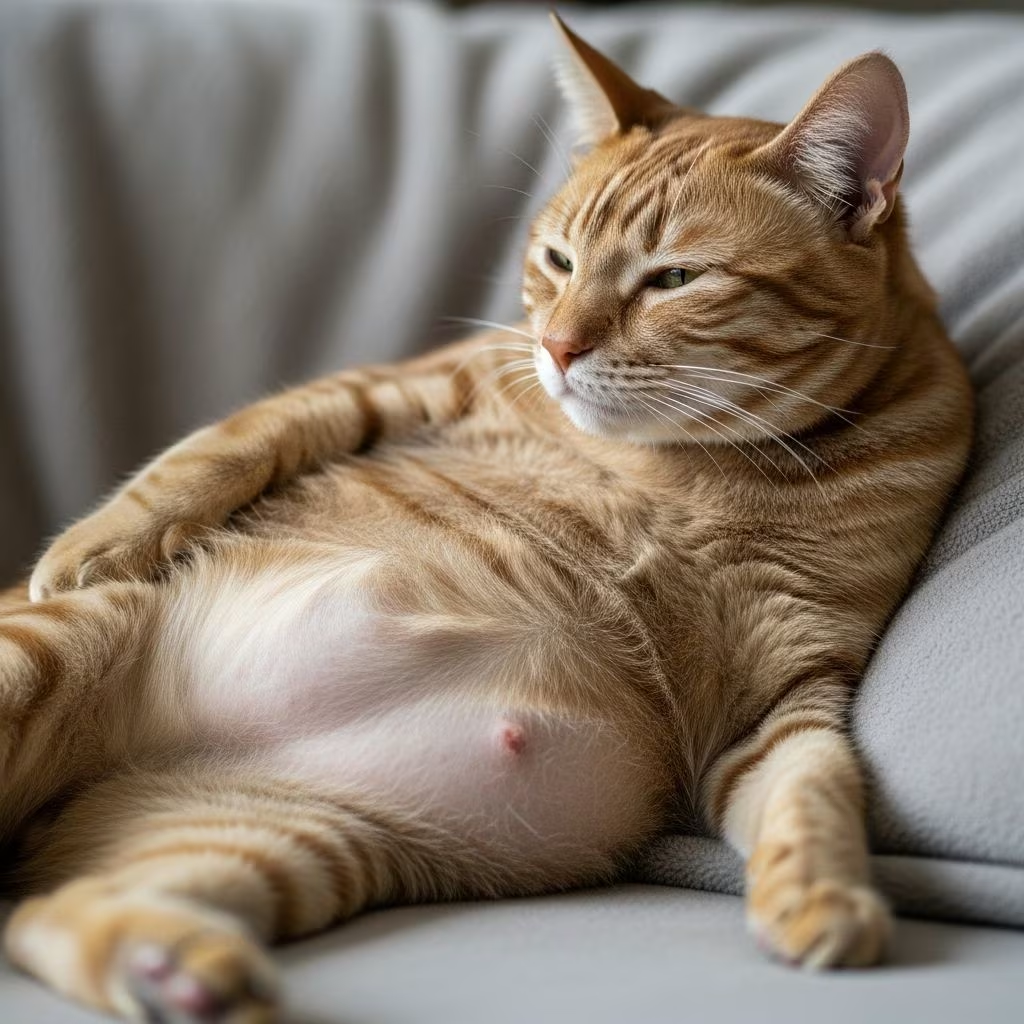
The primordial pouch is a natural flap of loose skin on your cat’s belly, most noticeable toward the rear legs. Present in all cats, including wild felines like lions and tigers, it serves evolutionary purposes and is often mistaken for a sign of obesity.
What Is a Primordial Pouch?
The **primordial pouch**, also known as the belly flap, is a sagging layer of skin, fat, and fur that runs along the underside of a cat’s abdomen, becoming more pronounced between the hind legs. This feature is a normal part of feline anatomy, visible when cats walk, run, or stretch, as it swings freely.
All cats—male and female, domestic and wild—possess a primordial pouch from birth, though it may not be obvious in kittens. It consists of loose skin not tightly attached to the abdominal wall, allowing flexibility and movement. Unlike excess fat, it feels floppy and empty when gently palpated, with minimal fat padding inside.
This pouch is evolutionarily conserved, appearing in big cats as well, indicating its importance in feline biology. For indoor cats, it remains a vestigial trait from wild ancestors who needed it for survival.
Why Do Cats Have a Primordial Pouch?
Veterinarians propose several theories for the pouch’s function, rooted in cats’ wild heritage:
- Protection: The extra layer of skin and tissue shields vital organs like the intestines from scratches, kicks, or predator attacks during fights or hunts.
- Flexibility: Loose attachment to the abdomen allows greater stretch for running, jumping, and climbing without straining internal muscles.
- Energy Storage: It may store fat as an energy reserve during food scarcity, accessible when meals are missed.
These benefits explain its persistence in domestic cats, even without survival pressures. As cats age, skin loses elasticity, making the pouch more saggy and prominent.
When Do Cats Develop a Primordial Pouch?
Kittens are born with the foundational skin structure, but the pouch typically becomes noticeable around **6 months to 1 year** of age as they mature. It grows more defined with adulthood, varying in size by breed, genetics, and individual variation—slimmer cats often show it more prominently.
Not all pouches are equally visible; some cats have subtler ones hidden under fur or minimal sag. Big cats like tigers display exaggerated versions, underscoring its universal presence in felines.
Primordial Pouch vs. Obesity: How to Tell the Difference
Many owners panic seeing a swinging belly, fearing overweight issues. However, a healthy primordial pouch differs markedly from obesity:
| Signs of Primordial Pouch (Healthy Weight) | Signs of Obesity |
|---|---|
| Loose, floppy skin that swings when walking | Firm, rounded belly with thick fat pad |
| Visible waist from above; ribs felt under thin fat layer | No defined waist; ribs hard to feel under padding |
| Pouch hangs low between hind legs | Even fat distribution around body, including back |
| Feels empty or softly padded | Feels solid and doughy |
Use the **Body Condition Score (BCS)**: Ideal cats have a visible waist, palpable ribs without excess fat, and an abdominal tuck. A prominent swinging pouch often signals good health, while a firm belly does not. Consult a vet for accurate assessment, especially if unsure.
Is a Large Primordial Pouch Normal?
Yes, size varies naturally—some cats have large, bouncy pouches due to genetics or loose skin, not overeating. It’s more obvious in lean cats without obscuring belly fat. Spayed/neutered cats or seniors may show larger pouches from hormonal changes or elasticity loss.
However, if the pouch accompanies weight gain symptoms (e.g., lethargy, no waist), monitor diet and activity. Obesity risks include diabetes and joint issues, so annual vet checks are vital.
When to Worry About Your Cat’s Primordial Pouch
A healthy pouch feels soft without lumps. Seek veterinary care if you notice:
- Lumps or Masses: Could indicate infections, abscesses, swollen lymph nodes, or tumors like mammary cancer (especially in unspayed females).
- Hardening or Firmness: Suggests fat accumulation over the pouch.
- Sudden Changes: Rapid growth, redness, discharge, or illness signs like vomiting.
- Pregnancy: May swell with mammary glands, but confirm with vet.
Early detection improves outcomes; don’t delay for any abnormality.
Caring for Your Cat’s Primordial Pouch
Support pouch health through overall wellness:
- Diet: Feed measured portions of high-quality food; switch to weight-control formulas if needed.
- Exercise: Encourage play with toys, lasers, or climbing trees for 15-30 minutes daily.
- Grooming: Gently brush the area to prevent mats; avoid plucking fur.
- Regular Vets: Weigh-ins and BCS evaluations catch issues early.
Trim nails and monitor for injuries during rough play, as the pouch protects but isn’t invincible.
Fun Facts About the Primordial Pouch
- Lions, tigers, and cheetahs have massive pouches for intense hunts.
- The pouch resembles the ‘scruff’ on a cat’s neck, used for carrying kittens.
- It’s more visible in breeds like Bengals or Abyssinians due to lean builds.
- Humans lack it, but some animals like kangaroos have analogous pouches.
Frequently Asked Questions (FAQs)
What is a cat’s primordial pouch?
A loose flap of skin, fat, and fur on the belly, normal in all cats for protection and flexibility.
Do all cats have a primordial pouch?
Yes, every cat has one, though visibility varies by age, breed, and body type.
Is the primordial pouch a sign my cat is fat?
No—a swinging, floppy pouch indicates health; firm belly fat signals overweight.
When does a cat’s primordial pouch appear?
Around 6 months to 1 year, becoming more prominent in adulthood.
Should I be concerned about lumps in the pouch?
Yes, see a vet promptly for possible infections or masses.
Can I reduce my cat’s primordial pouch size?
You can’t or shouldn’t; it’s natural. Focus on preventing obesity instead.
References
- What Is The Primordial Pouch In Cats? — VCA Animal Hospitals. 2023-05-15. https://vcahospitals.com/pediatric/kitten/health-wellness/what-is-the-primordial-pouch
- Cat Primordial Pouch: What Is It, When Do Cats Get It — Rover.com (Veterinary Review). 2024-02-10. https://www.rover.com/blog/cat-primordial-pouch/
- The Primordial Pouch: All About Your Cat’s Adorable Belly Flap — Chewy.com (Dr. Chyrle Bonk, DVM). 2023-11-20. https://www.chewy.com/education/cat/health-and-wellness/yes-your-cats-belly-flap-aka-primordial-pouch-is-adorable-but-what-exactly-is-it
- What Is a Cat’s Primordial Pouch? — PetMD (Veterinarian Reviewed). 2024-01-05. https://www.petmd.com/cat/general-health/cat-primordial-pouch
- What Is a Primordial Pouch? — PetPlace.com. 2023-08-12. https://www.petplace.com/article/cats/pet-health/what-is-a-primordial-pouch
- What Is a Cat’s Primordial Pouch? — Hill’s Pet Nutrition. 2024-03-18. https://www.hillspet.com/cat-care/behavior-appearance/primordial-pouch-in-cats



