

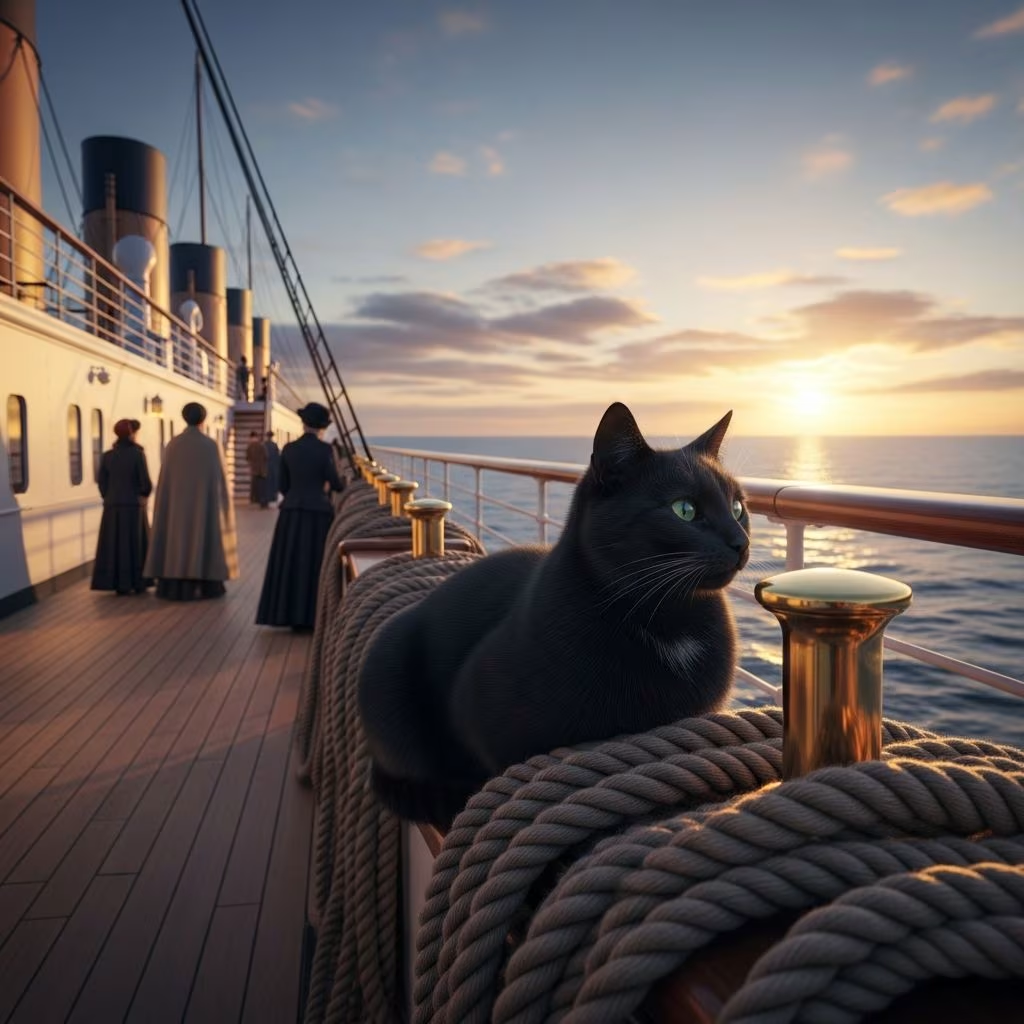
The RMS Titanic’s sinking on April 15, 1912, remains one of history’s greatest maritime tragedies, claiming over 1,500 lives. Amid the human stories of heroism and loss, the presence of animals aboard the luxury liner adds a poignant layer. Cats, in particular, played a vital role on ships like the Titanic, serving as essential crew members for pest control. This article delves into the documented and legendary accounts of feline passengers, centering on Jenny, the ship’s official cat, whose story blends fact with folklore.
The Essential Role of Ship Cats in the Early 20th Century
Before modern pest control methods, ships relied on cats to manage rodent infestations. Rats posed severe threats by damaging provisions, spreading disease, and gnawing through ropes and cargo. On grand vessels like the Titanic, operated by the White Star Line, a dedicated ship cat was standard practice. These felines roamed freely, hunting in galleys, holds, and decks.
Jenny exemplified this tradition. Transferred from the Titanic’s sister ship, the RMS Olympic, she joined the Titanic during its construction phase in Belfast. Her duties were clear: patrol for rats, which survivors later confirmed were abundant despite the ship’s luxury. One account describes a rat dashing through the first-class dining saloon, causing panic among passengers.
- Rodent Control Benefits: Cats prevented food spoilage and maintained hygiene.
- Free Roam Privileges: Unlike passenger pets, ship cats had unrestricted access to all areas.
- Crew Companions: They provided morale boosts during long voyages.
Jenny’s Journey from Olympic to Titanic
Jenny’s career began on the Olympic, where she effectively curbed the rat population. When the Olympic suffered propeller damage in 1911, requiring repairs, Jenny was relocated to the nearly completed Titanic in Belfast. There, she adapted quickly, favoring the galley as her base—a warm spot near food sources.
Crew members adored her. Irish stoker Joseph Mulholland (sometimes referred to as Jim) became her primary caretaker, ensuring she was fed and comfortable. Jenny’s presence was a comforting constant amid the bustle of final preparations.
Speculation Surrounding Jenny’s Kittens
Adding intrigue, Jenny was pregnant upon boarding the Titanic. In early April 1912, just before the maiden voyage, she gave birth to a litter in the galley. This timing fueled legends, as the kittens’ fate intertwined with the ship’s doomed path.
Official records indicate Jenny and her offspring remained aboard when the Titanic departed Southampton on April 10, 1912, bound for New York. No manifests listed them as passenger pets, confirming their status as working animals. Survivor testimonies, including from stewardess Violet Jessop—who endured disasters on Olympic, Titanic, and Britannic—mention the cat and kittens.
Did Jenny Foresee Disaster and Escape?
The most captivating tale claims Jenny exhibited uncanny instinct. While docked in Southampton, witnesses allegedly saw her carrying each kitten ashore one by one, departing with the last. Joseph Mulholland, interpreting this as an ill omen, chose not to reboard, thus surviving.
This narrative portrays Jenny as prescient, saving herself, her litter, and a crewman. However, no definitive proof exists. Ship logs and inquiries post-sinking list Jenny as lost, with no post-departure sightings confirmed. The story persists in folklore, symbolizing animal intuition against human hubris.
| Version of Events | Details | Source Support |
|---|---|---|
| Tragic Loss | Jenny and kittens perish with ship on April 15, 1912. | Official records, survivor accounts |
| Legendary Escape | Jenny removes kittens in Southampton; Mulholland follows suit. | Anecdotal reports, Jessop testimony |
Other Animals Aboard the Titanic
Cats weren’t alone. Approximately 12 dogs, mostly belonging to first-class passengers, held tickets costing up to £100—equivalent to thousands today. Breeds included Pomeranians and Pekingese. Tragically, only three dogs survived: two Pomeranians smuggled in lifeboats and one Pekingese.
Additional animals included chickens for fresh eggs, a canary, and inevitable rats. No other cats appear in records, underscoring Jenny’s unique status.
- Dogs: 12+ confirmed, 3 survivors.
- Birds: Chickens and one canary perished.
- Rodents: Unquantified, targeted by Jenny.
Lessons from Jenny for Modern Maritime Practices
Jenny’s legacy extends beyond tragedy. Ship cats served until the mid-20th century; the UK mandated them until 1975. Today, while pesticides dominate, some vessels maintain feline mascots for tradition and companionship.
Her story highlights animal contributions to seafaring. Investigators note her ‘instinct’ as a metaphor for heeding subtle warnings, relevant in risk assessment.
Debunking Myths and Verifying Facts
Distinguishing legend from history is crucial. While Jenny’s existence is verified via crew accounts and White Star Line practices, the escape myth lacks documentation. Post-sinking inquiries focused on humans, omitting pets. Mental Floss and historical analyses confirm her as the sole documented cat.
YouTube retellings amplify the romance but align with primary anecdotes.
FAQs
Was Jenny the only cat on the Titanic?
Yes, records confirm Jenny as the official ship cat; no other felines are documented.
Did any of Jenny’s kittens survive?
Official accounts say no, but legends claim she offloaded them in Southampton.
Why were dogs allowed on the Titanic but not guaranteed safety?
Dogs were passenger pets in kennels; only small ones were rescued informally.
How common were ship cats in 1912?
Very common for pest control on merchant and passenger vessels.
What happened to Titanic survivors’ pets?
Three dogs lived; others, including likely rats and birds, did not.
The Enduring Appeal of Titanic Animal Stories
Jenny’s tale humanizes the Titanic narrative, blending sorrow with wonder. It reminds us of overlooked crew—furry ones included—who ensured the ship’s operations. As research continues, her legend endures, inspiring books, videos, and reflections on history’s unsung heroes.
References
- The Legend of Jenny, the ‘Titanic’ Cat Said to Have Predicted the Disaster — Mental Floss. 2023-04-14. https://www.mentalfloss.com/history/titanic/jenny-titanic-cat
- How Many Cats Lived on the Titanic? Facts & History — Catster. 2024-01-15. https://www.catster.com/lifestyle/how-many-cats-lived-on-the-titanic/
- The story of Jenny, the cat on the Titanic — YouTube (Historic Travels). 2022-05-20. https://www.youtube.com/watch?v=ZXaTsdvXGrE
- The Titanic’s Smartest Passenger: What Jenny the Cat Teaches Modern Investigators — JGL Forensics. 2023-11-10. https://jglforensics.co.za/the-titanics-smartest-passenger-what-jenny-the-cat-teaches-modern-investigators/



