

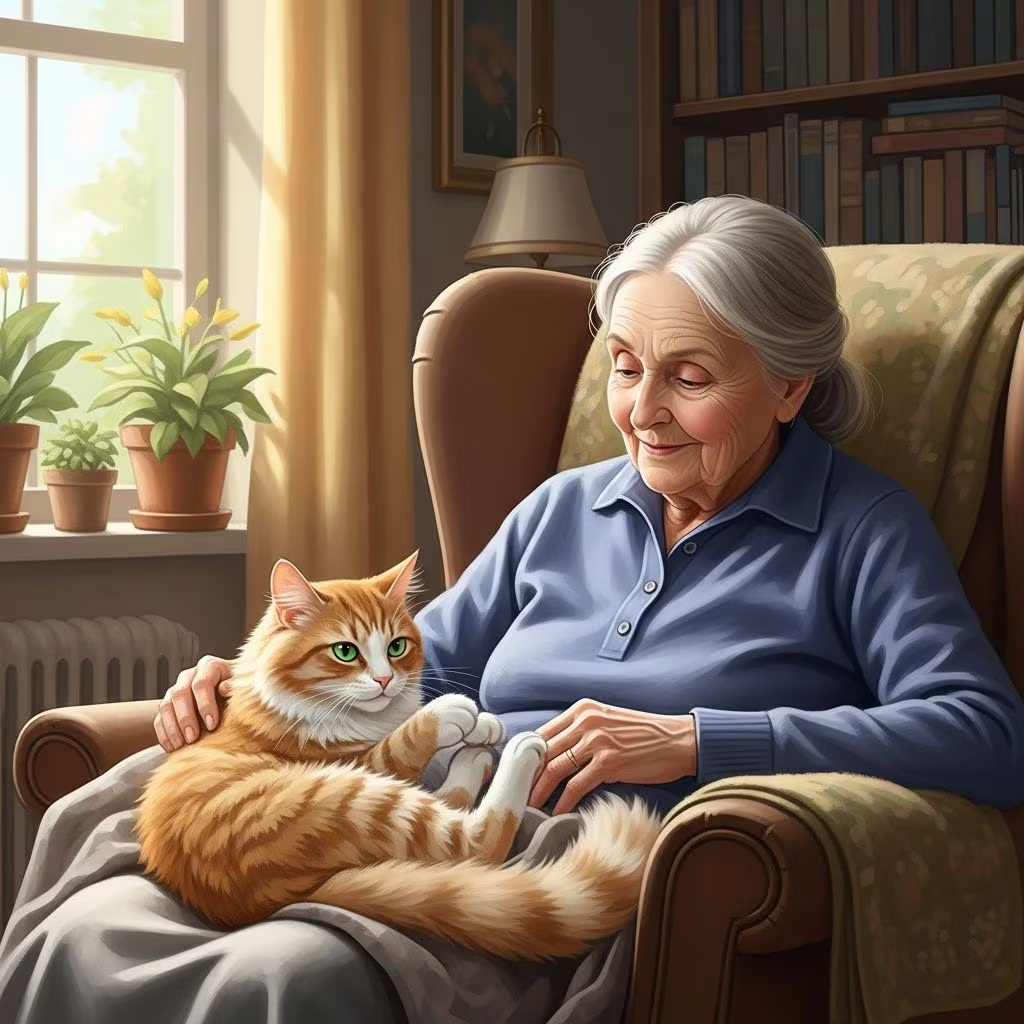
Recent studies suggest that owning a cat could play a vital role in preserving cognitive function and protecting against memory loss as people age. Long-term pet owners, particularly those with cats, demonstrate higher cognitive scores compared to non-owners, offering a compelling case for feline companionship in senior years.
What the Research Says About Cats and Cognitive Health
Scientific investigations into pet ownership and brain health have yielded promising results. A preliminary study sponsored by the American Academy of Neurology analyzed data from 1,369 adults over 65, finding that 53% owned pets and 32% were long-term owners. Over six years, long-term pet owners maintained cognitive scores 1.2 points higher on a 0-27 scale than non-owners, with tests covering subtraction, word recall, and other skills.
A national longitudinal study of U.S. adults aged 50+ confirmed that those 65+ with pets owned for over five years had higher composite cognitive scores (β=0.76, p=0.03), especially in immediate (β=0.3, p=0.02) and delayed (β=0.4, p=0.007) word recall. No significant differences appeared in those under 65, highlighting benefits for older adults.
Another study in Scientific Reports linked dog and cat ownership to slower cognitive decline, unlike fish or bird ownership, which showed no protective effects. Cat and dog owners had higher baseline scores and gradual declines, tied to physical activity, routine, and emotional bonds.
How Cats Support Brain Health: Key Mechanisms
Cats influence cognition through multiple pathways. Primary among them is stress reduction, as chronic stress impairs cognitive function. Pet interactions, like cuddling a purring cat, lower cortisol levels, blood pressure, and anxiety while combating loneliness.
Physical activity increases too; playing with toys like feather wands boosts movement, which supports brain health. Routine care—feeding, watering, vet visits—keeps the mind engaged, flexing memory and planning skills.
Neuroimaging research using functional near-infrared spectroscopy on 29 participants showed cat interactions activate the prefrontal cortex (PFC), including the inferior frontal gyrus (IFG), linked to executive functions, empathy, and working memory. Petting, playing, or even training cats elicited PFC activation, improving mood and cognition regardless of interaction success.
Stress Reduction and Emotional Support
- Cats provide non-judgmental companionship, easing anxiety and boosting mental health.
- Purring vibrations and gentle interactions lower blood pressure and promote relaxation.
- Long-term bonds foster emotional stability, crucial for cognitive resilience.
Increased Physical and Mental Activity
- Daily play sessions encourage movement, enhancing overall fitness.
- Care responsibilities stimulate routine and memory, like scheduling feedings.
- Studies link pet-induced activity to better executive function.
Who Benefits Most from Cat Ownership?
Benefits vary by demographics. The Neurology study found strongest effects among Black adults, college-educated individuals, and men. Long-term ownership (>5 years) amplified advantages in verbal memory for seniors.
Dog and cat owners showed superior physical and cognitive outcomes compared to other pets. This may reflect higher interaction levels with mammals requiring care and play.
| Group | Cognitive Benefit | Source |
|---|---|---|
| Long-term pet owners (>5 years, 65+) | +1.2 points higher scores; better word recall | |
| Black adults | Strongest pet ownership benefits | |
| College-educated & men | Enhanced maintenance over 6 years | |
| Cat interactors | PFC activation, mood improvement |
Practical Tips for Integrating Cats into Senior Life
To maximize benefits, choose cats with suitable temperaments. Low-maintenance breeds like British Shorthairs suit sedentary lifestyles, while interactive ones like Abyssinians encourage play.
- Adopt an adult cat: They adapt well to seniors, requiring less energy.
- Set routines: Fixed feeding and play times build mental habits.
- Incorporate interaction: Daily petting or laser play activates brain regions.
- Monitor health: Regular vet visits reinforce responsibility and cognition.
- Combine with lifestyle: Pair with walks or puzzles for compounded effects.
American Psychiatric Association notes pets slow dementia progression, aligning with these findings.
Limitations and Future Research
Studies are correlational, not causal—healthier seniors may adopt pets. Confounders like socioeconomic status need exploration. More randomized trials could confirm causality.
Species-specific research is key; cats uniquely activate PFC via autonomous behaviors. Ongoing studies will clarify optimal ownership duration and breeds.
Frequently Asked Questions (FAQs)
What cognitive tests were used in these studies?
Cognitive assessments included composite scores (0-27) covering subtraction, word recall (immediate/delayed), and verbal fluency. Pet owners excelled in memory tasks.
Do all pets offer the same brain benefits?
No—dogs and cats slow decline via activity and bonds; fish/birds do not.
How long must you own a cat for benefits?
Over five years shows strongest effects in seniors 65+.
Can cats help with dementia prevention?
Evidence suggests slower decline and protection, but not a cure. Consult doctors.
Are there risks for seniors owning cats?
Allergies or mobility issues possible; choose hypoallergenic breeds and easy-care cats.
Does cat temperament matter for brain health?
Yes—autonomous, playful reactions activate PFC more effectively.
Embracing cat ownership could enhance quality of life and cognitive vitality in later years, backed by emerging science.
References
- Study Shows Your Cat May Be the Key To Preventing Memory Loss — Cats.com. 2024. https://cats.com/study-shows-your-cat-may-be-the-key-to-preventing-memory-loss
- Can Your Pet Help Protect Your Mind as You Age? — Psychology Today. 2025-07. https://www.psychologytoday.com/us/blog/all-dogs-go-to-heaven/202507/can-your-pet-help-protect-your-mind-as-you-age
- The impact of sustained ownership of a pet on cognitive health — NIH/PMC. 2023-06-01. https://pmc.ncbi.nlm.nih.gov/articles/PMC10280126/
- Effects of the characteristic temperament of cats on the emotions and… — NIH/PMC. 2020-06-24. https://pmc.ncbi.nlm.nih.gov/articles/PMC7316254/
- Can pet ownership help protect against cognitive decline? — Alzheimer’s Drug Discovery Foundation. 2023. https://www.alzdiscovery.org/cognitive-vitality/blog/can-pet-ownership-help-protect-against-cognitive-decline
- How Pets Can Protect Cognitive Health in Older Adults — American Psychiatric Association. 2024. https://www.psychiatry.org/news-room/apa-blogs/pets-can-protect-cognitive-health-in-older-adults



