

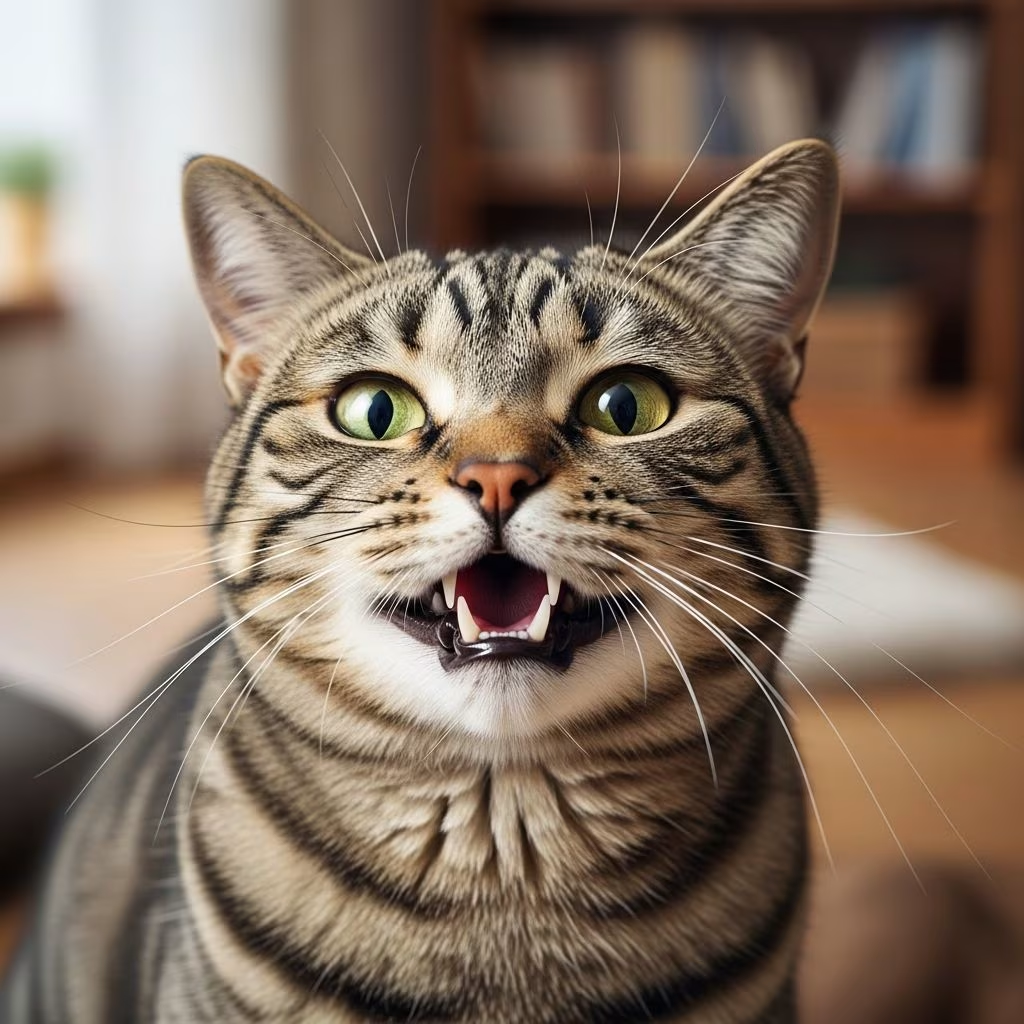
Cat owners worldwide have shared countless moments of amusement watching their feline companions engage in playful antics, acrobatic displays, and seemingly intentional comedic performances. Yet one question often lingers in the minds of cat enthusiasts: can cats actually laugh, or are they simply entertaining us while remaining emotionally unmoved by their own silly behavior? The answer, according to modern scientific research, is more nuanced than a simple yes or no.
Understanding What Laughter Actually Is
Before examining whether cats possess the capacity for laughter, it’s essential to define what laughter truly means in a biological and behavioral context. Laughter is not exclusively a human phenomenon. Recent scientific investigations have revealed that numerous animal species produce vocalizations associated with positive social experiences and playful interactions.
Researchers have identified laughter-like behaviors in a remarkably diverse range of animals. Primates, including chimpanzees and bonobos, produce distinct vocalizations during play sessions that resemble human laughter patterns. Marine mammals such as bottlenose dolphins emit specific sounds during pleasurable social interactions, and even rodents produce ultrasonic vocalizations that scientists interpret as laughter analogs. Some bird species and elephants have also demonstrated behaviors that suggest emotional responses to humorous or playful situations.
However, scientists have established a crucial distinction: true laughter, as humans experience it, involves specific physiological responses including involuntary muscle contractions, respiratory patterns, and facial expressions simultaneously. Most animals that produce laugh-like sounds do so through “play vocalizations”—specialized sounds generated specifically during joyful social engagement. These vocalizations serve communicative functions, signaling to other animals that the individual is experiencing positive emotional states.
The Scientific Verdict on Feline Laughter
When comprehensive research examined which species produce laugh-like vocalizations, an important finding emerged: cats do not exhibit play vocalizations that would constitute laughter. This absence represents a significant distinction between felines and their primate cousins or even domesticated canines.
The reasons for this absence are rooted in feline evolution and physiology. Unlike dogs, which produce panting sounds and facial expressions that researchers interpret as laugh analogs, cats have not developed analogous vocalization patterns through their evolutionary history. While cats possess the requisite facial musculature to theoretically produce expressions resembling smiles or laughter, they do not utilize these muscles in ways that communicate humor or amusement to other animals or humans.
Current scientific evidence does not support the existence of a sense of humor in cats comparable to that found in humans or other primates. Great apes, our closest evolutionary relatives, demonstrate clear evidence of humor recognition and appreciation, but cats have not shown equivalent cognitive abilities in this domain. This does not mean cats lack emotional depth or positive experiences—rather, it indicates that cats process and express emotions through entirely different mechanisms than those involving laughter.
How Cats Actually Express Contentment and Joy
Although cats cannot laugh in any scientifically recognized sense, they possess multiple sophisticated methods for communicating emotional satisfaction and pleasure. Understanding these alternative communication channels provides genuine insight into feline emotional lives.
Purring stands as the most immediately recognizable indicator of feline contentment. When a cat purrs, it produces a continuous, rhythmic vocalization that vibrates through its body. This sound serves multiple communicative functions, signaling safety, comfort, and positive social connection. Purring frequency and intensity can vary depending on the cat’s emotional state and the context of the interaction.
The slow blink represents perhaps the most profound feline expression of affection and trust. When cats deliberately lower their eyelids slowly while maintaining eye contact with their human companions, they are communicating deep emotional bonds and contentment. Veterinary experts confirm that this behavior specifically indicates that cats love and feel happy with their human families. Interestingly, humans can reciprocate this behavior, and many cats respond positively when their owners perform slow blinks toward them.
Body language and physical positioning provide additional clues about feline emotional states. A cat displaying happiness typically carries its tail upright with a slight hook at the tip, indicating confidence and pleasure. Relaxed ears positioned forward suggest engagement and positive interest in their environment. When cats knead with their paws—that rhythmic pressing motion against soft surfaces or their owners—they are expressing deep contentment, often reminiscent of kitten behaviors during nursing.
Vocalizations beyond purring also communicate feline emotions. Cats produce trills—short, rolling sounds that resemble a cross between a meow and a purr—to greet beloved humans or express positive anticipation. Chirping and chattering sounds, while sometimes associated with hunting instincts, can also indicate excitement and engagement during play sessions.
Facial Structure and the Misconception of Cat Smiles
Many cat owners believe they have witnessed their pets “smile,” but scientific examination reveals that these apparent smiles result from feline facial anatomy rather than emotional expression. Certain cat breeds, particularly Russian Blues and particular ginger tabby varieties, possess facial structures where their natural lip positioning creates the appearance of an upturned mouth resembling a human smile.
This anatomical coincidence has led to widespread misinterpretation of feline expressions. A cat’s apparent “grin” reflects nothing more than the placement of their teeth and the natural contours of their jaw structure. Unlike humans, who consciously contract specific facial muscles to smile, cats do not manipulate their facial muscles to create expressions of happiness. Their faces simply look the way they naturally do, regardless of their emotional state.
Understanding this distinction prevents owners from misreading their cats’ emotional signals. A “smiling” cat might be completely neutral in mood, while a cat displaying the slow blink or relaxed body posture is genuinely communicating contentment and affection.
Do Cats Understand Human Laughter?
Research exploring whether cats comprehend human laughter reveals that cats can perceive and process human emotional vocalizations. Studies examining cats’ responses to human emotional signals demonstrate that cats integrate visual and auditory information to recognize human emotions and modulate their behavior accordingly.
When exposed to human happiness vocalizations, cats display fewer stress behaviors compared to their responses to human anger or distress signals. This suggests that cats perceive human laughter and cheerful vocalizations as non-threatening and potentially positive stimuli. However, this recognition does not imply that cats understand laughter as humor or appreciate the comedic aspects of situations.
Cats likely respond to the acoustic properties and emotional tone of laughter rather than its meaning. A cat may enjoy the positive attention and safe emotional environment that human laughter creates, without comprehending why humans find something amusing. In other words, cats respond to the emotional quality of human laughter rather than grasping its humorous content.
Pet Ownership, Laughter, and Human Well-being
While cats themselves may not laugh or appreciate humor, research reveals intriguing relationships between cat ownership and human laughter patterns. Studies examining pet ownership and emotional expression found that dog owners report laughing significantly more frequently than cat owners. Additionally, individuals who own both dogs and cats report higher laughter frequencies than those with cats alone.
Interestingly, people who own neither dogs nor cats also report more frequent laughter than cat owners. This counterintuitive finding suggests that cat ownership may not stimulate as much spontaneous laughter in humans compared to dog ownership or even the absence of pet ownership entirely. The research indicates a complex relationship between feline companionship and human emotional expression that warrants further investigation.
However, this finding should not discourage cat enthusiasts. While cats may not trigger as much human laughter as dogs, they provide different forms of emotional enrichment, comfort, and companionship that enhance quality of life in distinct ways.
The Playfulness Question: Humor Versus Attention-Seeking
Cat owners frequently observe their pets engaging in what appears to be intentionally humorous or mischievous behavior. Cats may deliberately knock objects off tables, pounce on their own tails, or engage in seemingly silly antics. Scientists debate whether these behaviors represent genuine playfulness with potential humorous intent or simply attention-seeking behaviors.
Research on animal emotions suggests that cats do experience play and enjoyment during interactive activities. Studies published in major scientific journals have documented that cats form genuine emotional attachments to their human caregivers and experience positive emotional states during social interactions with them. This evidence confirms that cats possess capacity for joy and positive experiences.
However, the distinction remains important: experiencing joy during play does not equate to possessing a sense of humor. A cat may genuinely enjoy pouncing on a toy mouse or chasing a laser pointer, but this enjoyment differs fundamentally from finding something funny or amusing. The behavior itself is pleasurable without necessarily involving humor appreciation or recognition of comedic elements.
Frequently Asked Questions
Can cats laugh at humans?
No, cats cannot laugh. They lack the vocalization patterns and cognitive mechanisms necessary for laughter. While cats may observe human laughter and respond to the emotional tone, they do not understand humor or laugh at human behavior.
Do cats smile?
Cats do not smile in the way humans understand smiling. What appears to be a cat smile typically results from natural facial structure rather than emotional expression. The slow blink represents a cat’s true expression of happiness and affection.
How can I tell if my cat is happy?
Happy cats typically purr, perform slow blinks, carry their tails upright, position their ears forward, and engage in playful behavior. These behaviors combined indicate contentment and emotional well-being.
Do cats have a sense of humor?
Current scientific evidence does not support the existence of humor recognition in cats comparable to humans or other primates. Cats experience playfulness and joy, but these differ from humor appreciation.
Why do cat owners laugh less than dog owners?
Research suggests dog owners report more frequent laughter, possibly because dogs produce laugh-like vocalizations and display more overtly expressive behaviors that humans interpret as humorous. Cats’ more subtle communication style may not trigger as much human laughter.
Conclusion: Understanding Feline Expression
While cats cannot laugh, they possess rich emotional lives expressed through sophisticated communication systems distinctly different from human expression. The absence of laughter does not diminish feline capacity for joy, contentment, affection, or positive social engagement. Instead, it reflects the unique evolutionary trajectory and behavioral adaptations that define feline existence.
Cat owners need not feel disappointed by their pets’ inability to laugh. Instead, they can appreciate and respond to the genuine emotional signals cats do provide. The slow blink, the gentle purr, the relaxed body posture, and the playful engagement all represent authentic feline expressions of happiness and connection. By understanding these communication channels, humans deepen their relationships with their feline companions and better meet their emotional and behavioral needs.
The scientific journey exploring animal laughter and emotion has revealed that different species express feelings in ways suited to their evolutionary adaptations and social structures. Cats, with their independent nature and sophisticated sensory abilities, have developed emotional expression systems that work perfectly for their species. Human laughter and feline purring, though different in form, both serve the essential function of communicating positive emotional states and strengthening social bonds.
References
- Bioacoustics Study on Animal Laughter — UCLA Researchers, 2021. https://www.frontiersin.org/journals/veterinary-science
- Emotion Recognition in Cats — National Institutes of Health, National Center for Biotechnology Information, 2020. https://pmc.ncbi.nlm.nih.gov/articles/PMC7401521/
- The Domestic Cat and Human Emotions — Current Biology, Peer-reviewed Research, 2019. https://www.cell.com/current-biology/home



