

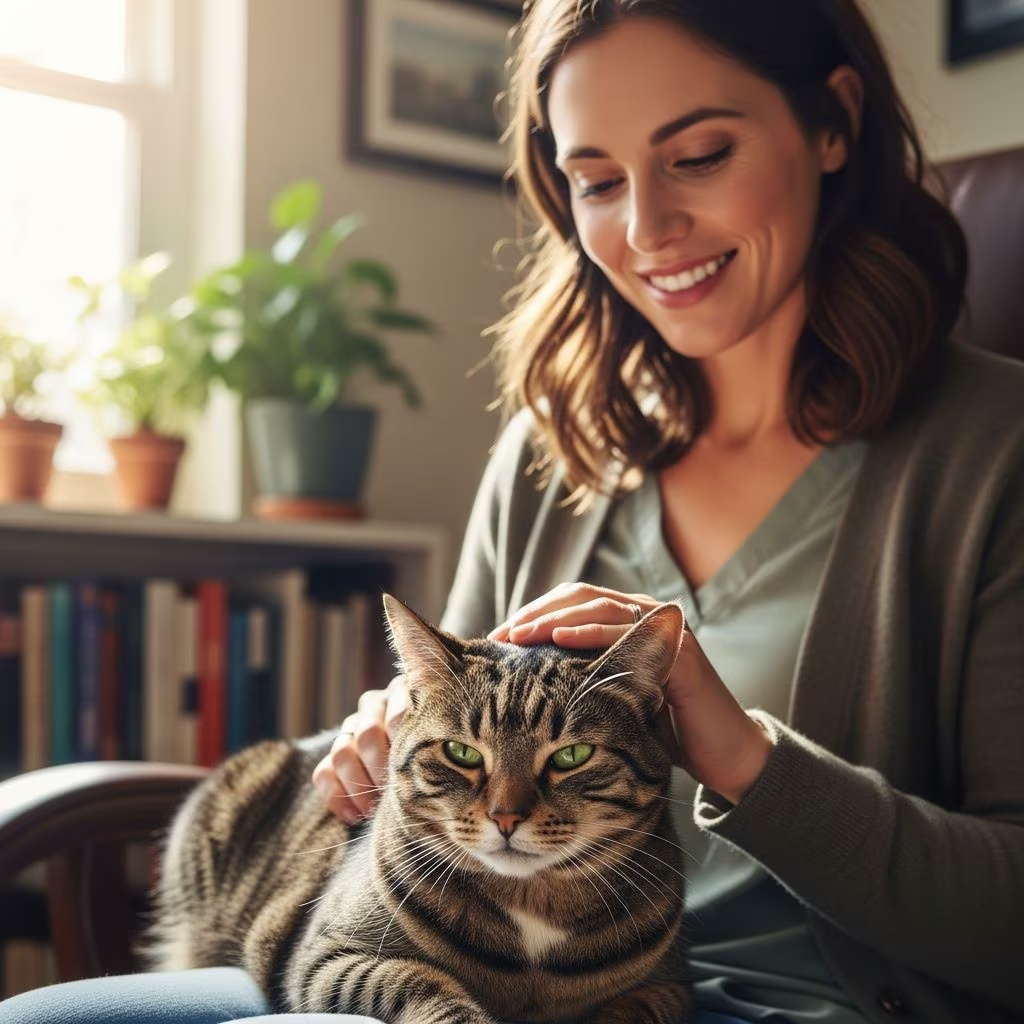
Cats embody a serene wisdom that humans can learn from, basking in the present moment amid life’s chaos. From Thai temple cats grooming peacefully before golden Buddhas to resilient felines in Australia’s arid outback ignoring pandemics, cats model effortless adaptation and self-care. Dr. Lauren, a feline health expert, delves into this reciprocal relationship, highlighting how cats influence human mental health and vice versa through concepts like zooeyia.
What Is Mental Health?
Mental health encompasses emotional, psychological, and social well-being, shaping thoughts, feelings, actions, and reactions across life’s stages—from childhood to old age. The COVID-19 pandemic spotlighted this, forcing humans to confront self-kindness after lifetimes of prioritizing others. For many, it revealed struggles with anxiety, depression, and isolation.
Dr. Lauren envisions mental health as a cat curled by a winter fireplace: recharging, present-focused. Cats master living in the now—happiness thrives here, while past regrets or future worries breed unhappiness. This feline philosophy offers a blueprint for humans seeking balance amid modern stressors.
The Reciprocal Nature of Cats and Human Mental Health
Beyond inspiration, cats actively enhance human mental health via zooeyia, from Greek ‘zoion’ (animal) and ‘Hygeia’ (health goddess). Zooeyia captures health gains from animal interactions, including reduced stress, lower blood pressure, and emotional support. Research shows pet ownership saves national health economies millions in healthcare costs, with benefits studied for decades.
Studies confirm pets moderate mental health transitions, acting as protective factors against moderate-to-high symptoms like depression and anxiety. Attachment to cats or dogs buffers COVID-era stress via physical contact and petting, countering emotional dependence risks. Non-judgmental companions like cats provide unconditional love, vital for those with anxiety, trauma, or chronic illness.
A University of Toledo study paired adults with mental illnesses (anxiety to schizoaffective disorder) with shelter cats/dogs. Participants reported reduced loneliness, stress regulation through purring, warmth, and weight pressure—grounding trauma survivors without words. HABRI research affirms pets alleviate anxiety, depression, loneliness, and stress, supporting mental health across demographics.
Zooeyia in Action: Cats as Mental Health Allies
Cats excel in animal-assisted interventions (AAI), from autism support to elderly care. Best-practice handling boosts cat comfort during human-cat interactions (HCI), increasing affiliative behaviors and reducing aggression—enhancing mutual welfare. In shelters, read-to programs and care facility visits deliver emotional/physical benefits.
Owner personality influences cat wellbeing, paralleling parent-child dynamics. High neuroticism owners report cats with more medical issues, obesity, stress behaviors, aggression, and anxiety—linked to restricted access and poor management. Conversely, conscientious, agreeable, open owners foster gregarious, less fearful cats. This underscores bidirectional impacts: healthier humans yield healthier cats.
- Neuroticism effects: More cat health problems, behavioral issues, overweight status.
- Conscientiousness benefits: Reduced anxious/aggressive cat behaviors, better lifestyles.
- AAI applications: Autism therapy, shelter reading, elder care via cats.
Cats Teaching Humans Serenity
Cats’ temple poise in Thailand—cleaning amid worship—mirrors pandemic resilience: life persists undeterred. Humans, post-pandemic, grapple with self-compassion deficits. Cats teach pausing, recharging, present-living—core to mental health.
Their purring (20-140 Hz) lowers stress hormones, aids healing; kneading evokes comfort; playful antics spark joy. Simple interactions—watching a cat nap or play—induce mindfulness, combating rumination.
Practical Tips for Harnessing Cat-Human Mental Health Bonds
To maximize zooeyia:
- Observe your cat’s present-focus: Mimic during stress for grounding.
- Daily petting sessions: Reduces cortisol, boosts oxytocin.
- Match personalities: Conscientious owners enhance cat welfare.
- Incorporate cats in therapy: Use purrs for anxiety regulation.
- Follow HCI guidelines: Improves cat comfort, reduces scratches.
| Human Benefit | Cat Contribution | Supporting Research |
|---|---|---|
| Stress Reduction | Purring, petting | Lowers stress responses |
| Loneliness Alleviation | Unconditional companionship | Protects against symptoms |
| Mindfulness | Present-moment living | Dr. Lauren’s analogy |
| Mutual Welfare | Personality-matched care | Owner traits impact cat health |
Challenges and Nuances in Pet Mental Health Benefits
Not all studies show uniform benefits; one indicates pets may not significantly aid severe mental illness owners emotionally. Emotional over-dependence risks exist, especially with high attachment amid anxiety. Balance is key—pets complement, not replace, professional care.
Cat temperament assessments like L-CAT gauge friendliness, fearfulness, frustration in HCI, aiding optimal pairings. Individual differences in human-animal styles affect outcomes.
Frequently Asked Questions (FAQs)
What is zooeyia?
Zooeyia refers to health benefits humans gain from animal interactions, derived from ‘zoion’ (animal) and ‘Hygeia’ (health goddess). It includes mental health improvements like reduced anxiety.
Do cats improve human mental health?
Yes, via non-judgmental support, stress reduction, and attachment moderating symptoms, especially in crises like COVID-19.
How does owner personality affect cats?
Neurotic owners link to poorer cat health/behavior; conscientious ones to better wellbeing, mirroring human parenting.
Can cats help with anxiety or trauma?
Absolutely—their purr, warmth, and presence regulate stress responses, grounding individuals.
Are there best practices for cat interactions?
Yes, guidelines boost cat comfort, reduce aggression, enhancing HCI in therapy/AAI.
Conclusion: Simple Joys Define Mental Health
Mental health boils to basics: laughter, a cat, present-moment living. A Dreamie treat never hurts. Cats remind us: recharge by the ‘fireplace’ of now. This bond saves health costs, enriches lives bidirectionally—embrace it mindfully.
Read her previous article: Introducing the Catsters: Dr. Lauren and Pancake & Tiller the Adventurers
References
- Dr. Lauren Discusses Cats, Humans, and Mental Health — Catster. 2023. https://www.catster.com/felines-weekly/dr-lauren-discusses-cats-humans-and-mental-health/
- Attachment to Pets Moderates Transitions in Latent Patterns of Mental Health — PMC/NIH. 2021-03-25. https://pmc.ncbi.nlm.nih.gov/articles/PMC8004029/
- The Animal-Human Connection: How Pets Improve Our Mental Health — Checkup Newsroom/APPA. 2023. https://www.checkupnewsroom.com/the-animal-human-connection-how-pets-improve-our-mental-health/
- Providing Humans With Practical, Best Practice Handling Guidelines — Frontiers in Veterinary Science. 2021-11-08. https://www.frontiersin.org/journals/veterinary-science/articles/10.3389/fvets.2021.714143/full
- Owner Personality & Cat Wellbeing Parallels Parent-Child — PLOS One. 2019-03-13. https://journals.plos.org/plosone/article?id=10.1371/journal.pone.0211862
- Humans Individual Differences & Animal Interaction Styles — SRUC Pure. 2022. https://pure.sruc.ac.uk/files/49123738/s41598_022_15194_7.pdf
- Pets do not significantly benefit the emotional health of owners with severe mental illness — EurekAlert/CABI. 2024. https://www.eurekalert.org/news-releases/994967



