

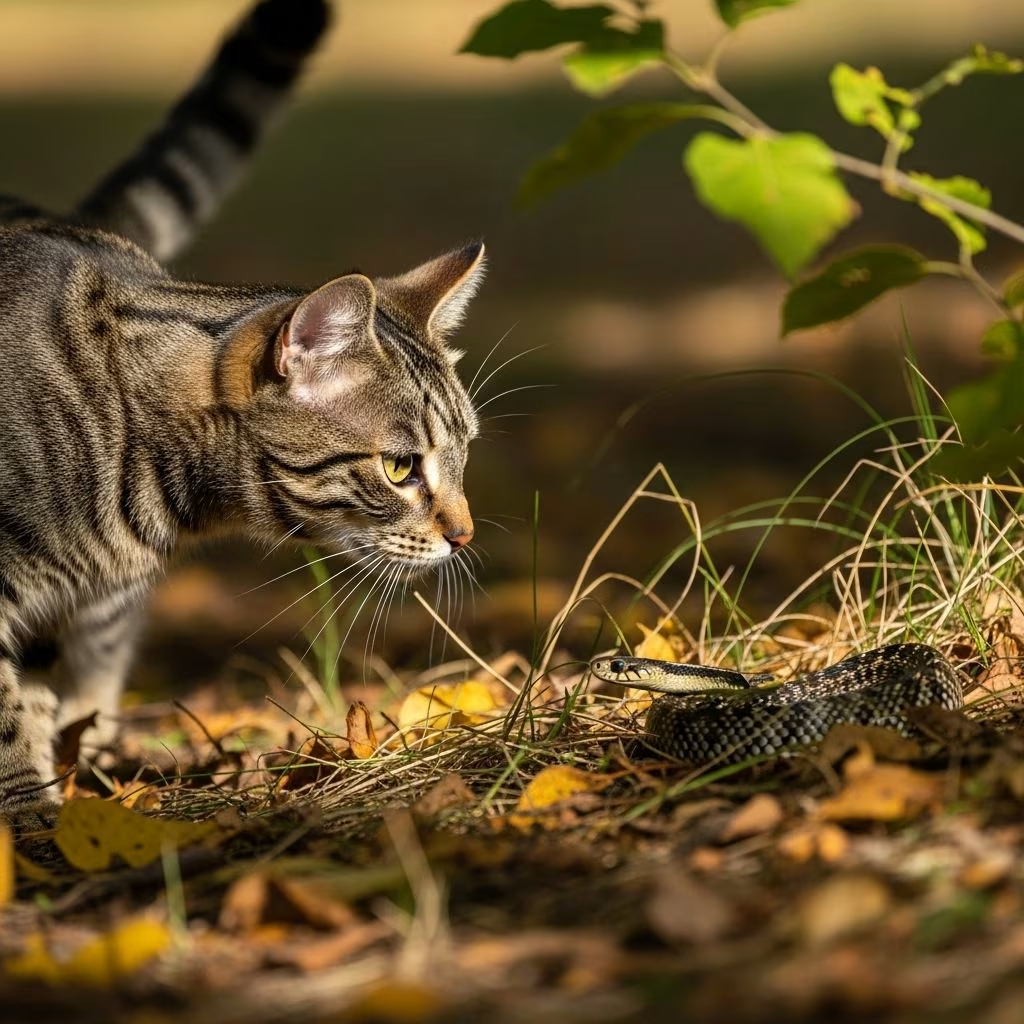
Cats have long been regarded as exceptional hunters with an uncanny ability to sense danger lurking in their surroundings. One of the most intriguing aspects of feline behavior is their apparent capacity to detect snakes, creatures that remain hidden from human perception. This phenomenon raises important questions about the sensory capabilities that distinguish cats from other domesticated animals and how these abilities serve as protective mechanisms in environments where snakes are present.
The Foundation of Feline Sensory Superiority
The domesticated cat possesses sensory systems that have evolved over thousands of years, allowing them to excel as predators and survivors. Unlike humans, who rely heavily on vision to navigate their world, cats have developed a multisensory approach to understanding their environment. This comprehensive sensory network enables them to detect subtle environmental changes that signal the presence of potential prey or threats.
The scientific community has increasingly recognized that cats operate in a sensory realm vastly different from human experience. Where humans perceive emptiness and silence, cats detect movement, vibration, and scent molecules floating through the air. This difference in perception creates scenarios where cats seem to possess almost supernatural awareness, responding to things that appear invisible to their human companions.
Olfactory Mastery: The Primary Detection Method
Among all of a cat’s sensory abilities, their sense of smell stands as perhaps the most powerful tool for detecting snakes. The feline olfactory system is remarkably sophisticated, containing approximately 200 million scent receptors located throughout their nasal passages and supporting tissues. This extraordinary concentration of smell receptors is approximately 14 times more sensitive than the human olfactory system, which contains roughly 5 million receptors.
This olfactory advantage allows cats to detect chemical compounds at concentrations far below the threshold of human detection. When a snake moves through grass or across soil, it leaves behind chemical traces through secretions from specialized glands located along its body. These scent markers persist in the environment even after the snake has moved on, allowing cats to track and locate snakes through smell alone.
Scientific research has demonstrated that cats can distinguish between different species of snakes based purely on olfactory cues. A landmark study revealed that cats possess the neurological capability to identify specific snake species by analyzing venom odors and other chemical signatures unique to each species. This discrimination ability suggests that cats are not simply reacting to the presence of a snake, but are actually processing complex sensory information and categorizing threats based on their characteristics.
Acoustic Awareness: Hearing as a Detection Tool
While smell serves as the primary detection method, cats rely heavily on their superior hearing to locate snakes. The feline ear can detect frequencies ranging up to 64,000 Hz, compared to the human hearing range of approximately 20,000 Hz. This enhanced auditory perception allows cats to hear high-pitched sounds that remain completely inaudible to humans.
Snakes produce various sounds during their movement and interactions with their environment. The rustling of scales against vegetation, the subtle hissing of respiratory air, and the friction generated as snakes navigate through grass create acoustic signatures that alert cats to their presence. Even the vibrations generated by snake movement through soil and leaf litter produce sound frequencies that cats can readily detect.
The whisker system of cats, called vibrissae, adds another dimension to their acoustic detection capabilities. These sensitive facial hairs contain nerve endings that respond to minute changes in air pressure and vibrations in their immediate surroundings. When a snake moves nearby, the displacement of air and ground vibrations create pressure waves that cats’ whiskers detect, providing another layer of sensory information about snake location and movement patterns.
Instinctive Vigilance: The Third Pillar of Detection
Beyond the measurable sensory systems of smell and hearing, cats possess an innate behavioral pattern known as hyperawareness or heightened vigilance. This psychological state, driven by their evolutionary heritage as both hunters and potential prey animals, creates a constant monitoring of environmental conditions.
When cats detect potential threats or interesting stimuli through their sensory systems, they enter an enhanced state of alertness characterized by focused attention and rapid behavioral responses. This hyperawareness manifests as the classic hunting posture: lowered body position, intense eye focus, ears positioned forward, and complete stillness punctuated by rapid movements.
The combination of sensory input and instinctive response creates a feedback loop that enhances detection capabilities. A cat might first notice a subtle scent carried on the breeze, which triggers hyperawareness. This mental state causes the cat to pay closer attention to auditory information, and combined with whisker vibrations and visual observation, creates a comprehensive threat assessment system.
Comparative Analysis: Cats Versus Other Domesticated Animals
| Sensory Ability | Cats | Dogs | Humans |
|---|---|---|---|
| Scent Receptors | ~200 million | ~300 million | ~5 million |
| Hearing Range (Hz) | Up to 64,000 | Up to 65,000 | Up to 20,000 |
| Reaction Time (milliseconds) | 100-120 ms | 150-200 ms | 200-300 ms |
| Night Vision Capability | Excellent (6x better) | Good (4x better) | Poor |
| Snake Species Identification | Yes (by scent) | Limited | Visual only |
While dogs possess slightly more olfactory receptors than cats, cats demonstrate superior discrimination abilities in identifying specific chemical compounds. Additionally, cats’ reaction times of 100 to 120 milliseconds represent a significant advantage over both humans and most other animals when responding to detected threats or prey.
The Predator-Prey Relationship Between Cats and Snakes
The relationship between domestic cats and snakes exists within the broader ecological context of predator-prey dynamics. Both cats and snakes occupy similar ecological niches, hunting comparable prey items such as rodents, small birds, and lizards. This resource competition creates natural tension between the two species when they inhabit overlapping territories.
Cats are ambush predators that rely on speed, stealth, and precise strike capabilities. Their sensory abilities enable them to detect stationary or slowly moving prey, assess distance and trajectory, and execute rapid pouncing attacks. Snakes, particularly venomous species, possess different hunting strategies based on their sensory capabilities and physical limitations.
When a cat detects a snake, its response depends on multiple factors including the snake species, size, the cat’s previous experience with snakes, and the cat’s current motivational state. Some cats respond with immediate predatory stalking, attempting to capture and kill the snake. Others maintain distance, displaying defensive behaviors such as hissing and striking with extended claws while avoiding close contact.
Defensive Behaviors and Species Recognition
Cats have evolved several defensive behaviors specifically adapted to encounters with snakes. The feline hiss, while often attributed to mimicry of snake sounds, actually represents a distinct behavioral strategy combining vocalization with physical displays. When cats hiss, they forcibly expel air while positioning their body in a defensive posture, creating an intimidating display intended to deter threats.
Interestingly, some research suggests that cats may have learned or evolved specific responses to different snake species based on their scent profiles. Cats that encounter venomous snakes multiple times within their environment may develop learned recognition patterns that trigger increased caution and defensive positioning rather than aggressive predation.
The vertical pupils characteristic of both cats and snakes provide both species with advantages in low-light predatory situations and enhance depth perception for ambush-based hunting strategies. This shared morphological feature reflects convergent evolution among ambush predators, though it does not appear to influence cat-snake interactions directly.
Safety Considerations for Cat Owners in Snake-Prone Regions
For cat owners living in areas where venomous snakes are present, understanding feline detection capabilities provides both reassurance and caution. While cats can indeed sense and respond to snakes, this ability does not guarantee that encounters will result in positive outcomes for the cat.
- Snake Bite Recognition: Cat owners should familiarize themselves with signs of snake bite including two puncture marks, localized pain and swelling, pale gums, rapid heartbeat, difficulty breathing, vomiting, and in severe cases, paralysis or convulsions.
- Immediate Response Protocol: If a cat suffers a snake bite, immediate veterinary care is essential. Owners should photograph the bite location if possible and attempt to document the snake species at a safe distance to provide veterinarians with critical information about potential venom type.
- Environmental Management: Reducing snake populations near homes involves eliminating rodent populations that attract snakes, removing shelter areas such as brush piles and debris, and sealing gaps in structures where snakes might hide.
- Behavioral Observation: Cats displaying unusual behavior, excessive drooling, swelling around the mouth or face, or sudden lethargy should receive prompt veterinary evaluation regardless of whether a snake bite was observed.
The Evolutionary Arms Race: Predator and Prey Adaptations
The relationship between cats and snakes represents an ongoing evolutionary process where each species develops increasingly sophisticated capabilities in response to the other. Snakes have evolved heat-sensing pit organs that allow detection of warm-blooded predators like cats, enabling them to strike preemptively. Cats, in turn, have evolved whisker systems and enhanced olfactory capabilities that allow them to detect and avoid these heat-sensing snakes.
This arms race has produced two highly specialized predatory species with complementary sensory systems. Where cats emphasize smell, hearing, and rapid response, snakes prioritize infrared detection and reflexive striking capabilities. When these two predators encounter one another, the outcome often depends on which species detects the other first and the speed with which each can execute its characteristic attack strategy.
Practical Applications: Cats as Snake Deterrents
The demonstrated ability of cats to detect and respond to snakes has made them valuable companions for property owners in snake-endemic regions. The presence of an outdoor or indoor-outdoor cat often reduces snake presence on residential properties through a combination of direct predation and deterrent effects.
Snake populations show behavioral avoidance of areas where predators are actively present. The scent of cats, combined with the physical evidence of predation, signals to snakes that the territory is occupied by dangerous predators. Over time, snakes may relocate to less contested areas, effectively creating a protective buffer around human habitations.
However, relying solely on cats for snake management has limitations. Cats may not detect all snakes present on a property, particularly if snakes remain in sheltered areas away from normal cat activity patterns. Additionally, the protective instinct of cats can sometimes place them in dangerous situations where they sustain snake bites while attempting to defend territory.
Frequently Asked Questions About Cat-Snake Interactions
Can cats distinguish between venomous and non-venomous snakes?
Research indicates that cats can identify different snake species through olfactory means, though whether this discrimination includes distinguishing venom presence specifically remains unclear. Cats likely recognize familiar or threatening species based on previous exposure rather than inherent knowledge of venom presence.
How quickly can a cat respond to a detected snake?
Cats possess reaction times of 100 to 120 milliseconds, making them faster than most snakes in initiating defensive or predatory responses. However, some snake species can strike in 60 to 75 milliseconds, potentially creating dangerous situations.
Will a cat always hunt and kill snakes it encounters?
Individual cats vary significantly in their responses to snakes. Some cats demonstrate strong predatory behavior, while others maintain cautious distance or display defensive behaviors. Prior experience, breed tendencies, and individual personality all influence snake-hunting behavior.
Can indoor cats sense snakes outside?
Indoor cats retain their sensory capabilities and may detect snakes outside through windows or door gaps via scent and sound, potentially displaying agitation or intense focus on those locations.
What should I do if my cat brings a snake onto my property?
Remove your cat to a safe location immediately, then carefully document or photograph the snake at a safe distance. If the snake remains on your property, contact local wildlife management or animal control for safe removal.
Conclusion: The Value of Understanding Feline Capabilities
The sensory abilities that allow cats to detect snakes represent millions of years of evolutionary refinement resulting in animals remarkably well-suited to their ecological role. The combination of olfactory sophistication, superior hearing, enhanced night vision, and instinctive hyperawareness creates a detection system that far surpasses human capabilities in identifying hidden snakes.
For cat owners, understanding these capabilities provides context for feline behavior while highlighting the need for vigilance and protection. While cats can sense snakes and may serve as deterrents to snake presence, they remain vulnerable to snake bites and require medical attention if envenomation occurs. By combining knowledge of cat sensory abilities with appropriate environmental management and veterinary awareness, cat owners can create safer environments for their feline companions while respecting the ecological role of both cats and snakes.
References
- Olfactory and Venom Detection in Feline Species — Barua and Mikheyev research. 2020. Available at peer-reviewed biological literature databases.
- Reaction Times and Sensory Capabilities in Predatory Species — EEG Expert. 2024. https://eeg.expert/blog/cats-snakes-and-reaction-times
- Vertical Pupils and Ambush Predator Evolution — Science Advances journal research. 2015. https://www.science.org/doi/10.1126/sciadv.1500391



