

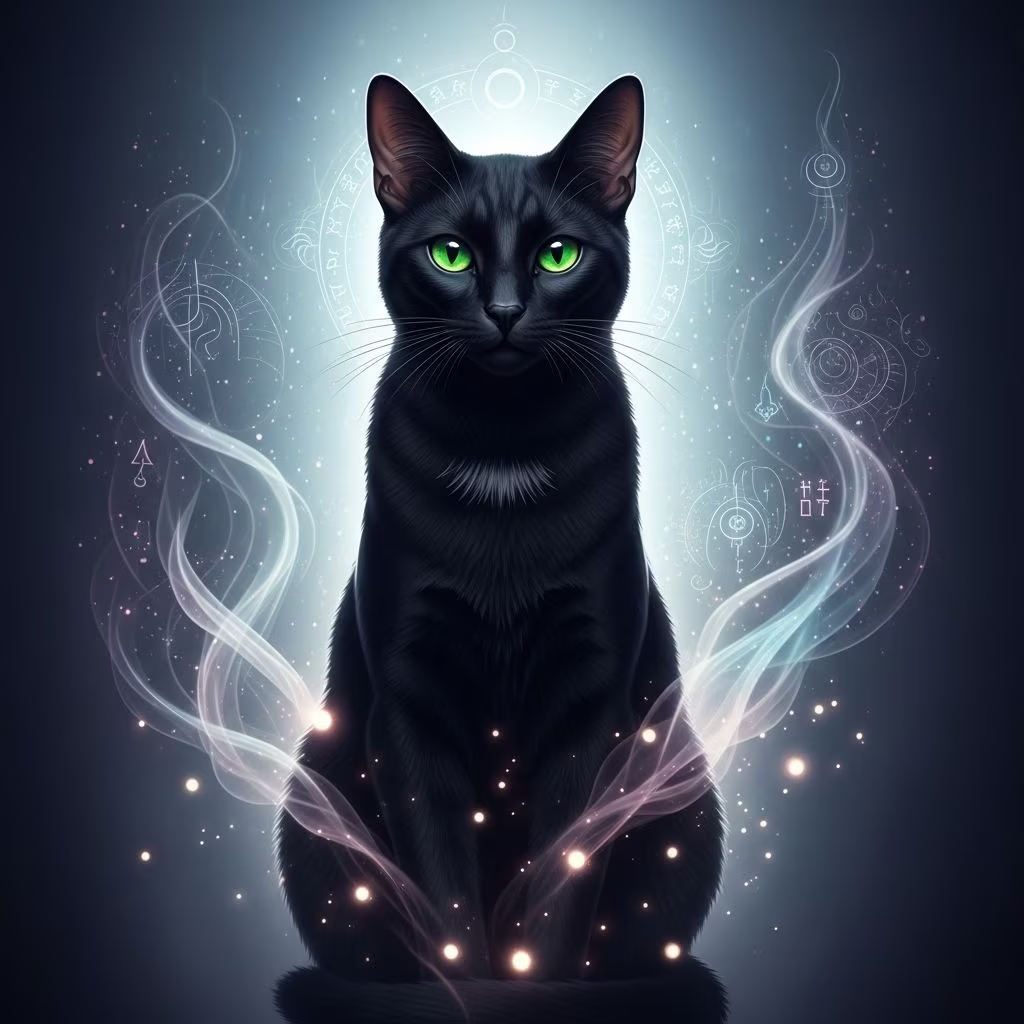
Felines have long captivated human imagination with their enigmatic presence, often viewed as intermediaries between the physical and ethereal realms. Across civilizations, cats embody protection against malevolent forces, drawing from their nocturnal habits and piercing gazes that seem to pierce veils of reality.
The Divine Feline Protectors in Ancient Civilizations
In ancient Egypt, cats held a pivotal role in spiritual defense, linked inextricably to deities who safeguarded homes and families. The goddess Bastet, depicted with a cat or lioness head, symbolized nurturing vigilance and warded off chaos-bringing entities. Households revered cats as earthly extensions of her power, believing their presence repelled intrusive spirits.
This veneration extended beyond affection; cats were sacred vessels. Archaeological evidence reveals vast cemeteries filled with mummified felines, not merely as pets but as votive offerings to secure divine favor. Devotees sacrificed and embalmed cats to invoke Bastet’s protection, a practice underscoring their role in spiritual transactions rather than modern pet-keeping ideals.
Other feline goddesses complemented Bastet. Sekhmet embodied warlike fury, channeling destructive energy against threats, while Mafdet targeted venomous perils and injustice. These deities highlighted cats’ dual nature: gentle sentinels by day, fierce repellents of darkness by night.
- Bastet: Home protector, fertility guardian.
- Sekhmet: Warrior against evil, healer of plagues.
- Mafdet: Slayer of serpents, enforcer of justice.
Egyptian beliefs influenced trade routes, spreading cat reverence globally. Sailors aboard ships carried felines not just for pest control but as talismans. Polydactyl cats, with extra toes for superior grip on stormy decks, were prized for bringing fortune and shielding voyages from spectral misfortunes.
Shifts in Perception: From Sacred to Suspect
Transitioning from antiquity, cats’ spiritual status evolved dramatically in medieval Europe. Initially valued in monasteries for rodent control—depicted in illuminated manuscripts chasing mice—felines enjoyed practical sanctity. An adult cat’s worth matched livestock, reflecting their indispensable utility.
However, the 16th-century witch craze inverted this image. Cats, particularly black ones, transformed into omens of malevolence. Their stealthy, night-prowling ways fueled fears they were demonic incarnations or witches’ shapeshifted allies. The Church amplified these notions, portraying Satan as a black cat during fervent witch hunts.
Black cats became “familiars,” supernatural aides granting witches enhanced senses and magical prowess. This lore peaked around Halloween, when boundaries thinned, allowing spirits to wander. Cats’ glowing eyes in darkness were interpreted as vigilant watchers or harbingers, solidifying their Halloween icon status tied to witches and ghouls.
| Era | Positive View | Negative View |
|---|---|---|
| Ancient Egypt | Sacred guardians of Bastet | Rare; mostly revered |
| Middle Ages Europe | Monastery pest controllers | Witch familiars, devil forms |
| Modern Folklore | Luck symbols | Superstition omens |
Cats in Global Mythologies: Universal Wardens
Beyond Egypt and Europe, cats feature prominently in diverse lore as spirit deterrents. Norse mythology associates them with Freya, goddess of love and fortune, who rode a chariot pulled by massive cats, symbolizing prosperity and otherworldly travel.
Celtic tales position cats as portals to the Otherworld, navigating fairy realms and repelling fae mischief. In Asian cultures, felines like the Japanese Maneki-neko beckon fortune while banishing misfortune spirits. These motifs portray cats as agile traversers of dimensions, their independence mirroring spiritual autonomy.
Islamic traditions echo respect, with stories of Prophet Muhammad praising cats’ purity. Mistreating a cat invites divine retribution, such as laborious afterlife penances involving cat hairs, reinforcing their protective aura.
Modern Echoes of Ancient Beliefs
Today, these myths persist in subtle ways. Halloween imagery pairs black cats with witches, evoking both dread and allure. Pet owners report cats’ uncanny reactions to unseen presences—arching backs, hissing at voids—fueling contemporary tales of spectral vigilance.
While science attributes such behaviors to heightened senses detecting infrasound or subtle cues, folklore endures. Cats’ evolutionary traits—keen night vision, whisker sensitivity—enhance their mythical guardian image. In homes, their prowling routines mimic eternal watches against intruders, seen or unseen.
“Cats’ nocturnal prowess and inscrutable stares have eternally positioned them as bridges to the unknown, guardians in fur.”
Do Cats Truly Sense the Supernatural?
Anecdotes abound of cats avoiding haunted areas or comforting during apparitions. Skeptics cite acute hearing and smell; believers see proof of extrasensory gifts. Cross-culturally, from Egyptian temples to Viking ships, consistent patterns suggest more than coincidence.
Behavioral studies note cats’ sensitivity to electromagnetic fields or pheromones imperceptible to humans, potentially explaining spirit “detections.” Yet, their historical deification as protectors transcends empiricism, rooted in humanity’s quest for security amid the intangible.
Practical Insights for Cat Companions
Whether mythical or not, cats enrich lives with companionship. To honor their guardian legacy:
- Provide elevated perches for “watch posts.”
- Encourage nighttime exploration safely.
- Observe behaviors for environmental cues.
- Celebrate black cats, countering superstitions.
Adopting a cat invites this ancient alliance, blending folklore with everyday joy.
Frequently Asked Questions
Why were cats mummified in ancient Egypt?
Cats underwent mummification as sacred offerings to Bastet, involving organ removal, natron drying, linen wrapping, and burial in cat cemeteries to ensure spiritual protection.
Did witches really use cats as familiars?
In medieval lore, yes—black cats were deemed spirits aiding magic, their nocturnal traits enhancing witches’ powers during persecutions.
Are polydactyl cats luckier?
Sailors believed so, valuing extra toes for balance and fortune on turbulent seas, a tradition persisting in folklore.
Can cats see ghosts?
No scientific proof exists, but their superior senses detect anomalies humans miss, inspiring guardian myths worldwide.
How did cats become Halloween symbols?
From Egyptian spirit-warders to witch associates in Europe, their eerie nighttime presence sealed their spooky festivity role.
References
- Whiskers and Witches: How Cats Became Halloween Icons — Purrr.org. N/A. https://www.purrr.org/blog/articles/whiskers-and-witches-how-cats-became-halloween-icons/
- Cats, Symbolism and the 16th Century Witch Craze — Cheshire & Wain. N/A. https://www.cheshireandwain.com/en-us/blogs/journal/cats-and-the-16th-century-witch-craze
- Feline Folklore – Cats in Mythology — Hobe Sound Veterinary Clinic. N/A. https://www.hobesoundvet.com/feline-folklore/
- Egyptian cat story — Manchester Museum Magazine. N/A. https://www.museum.manchester.ac.uk/magazine/egyptian-cat-story
- The Wild World of Cat Beliefs — Human Relations Area Files (Yale). N/A. https://hraf.yale.edu/the-wild-world-of-cat-beliefs/



