

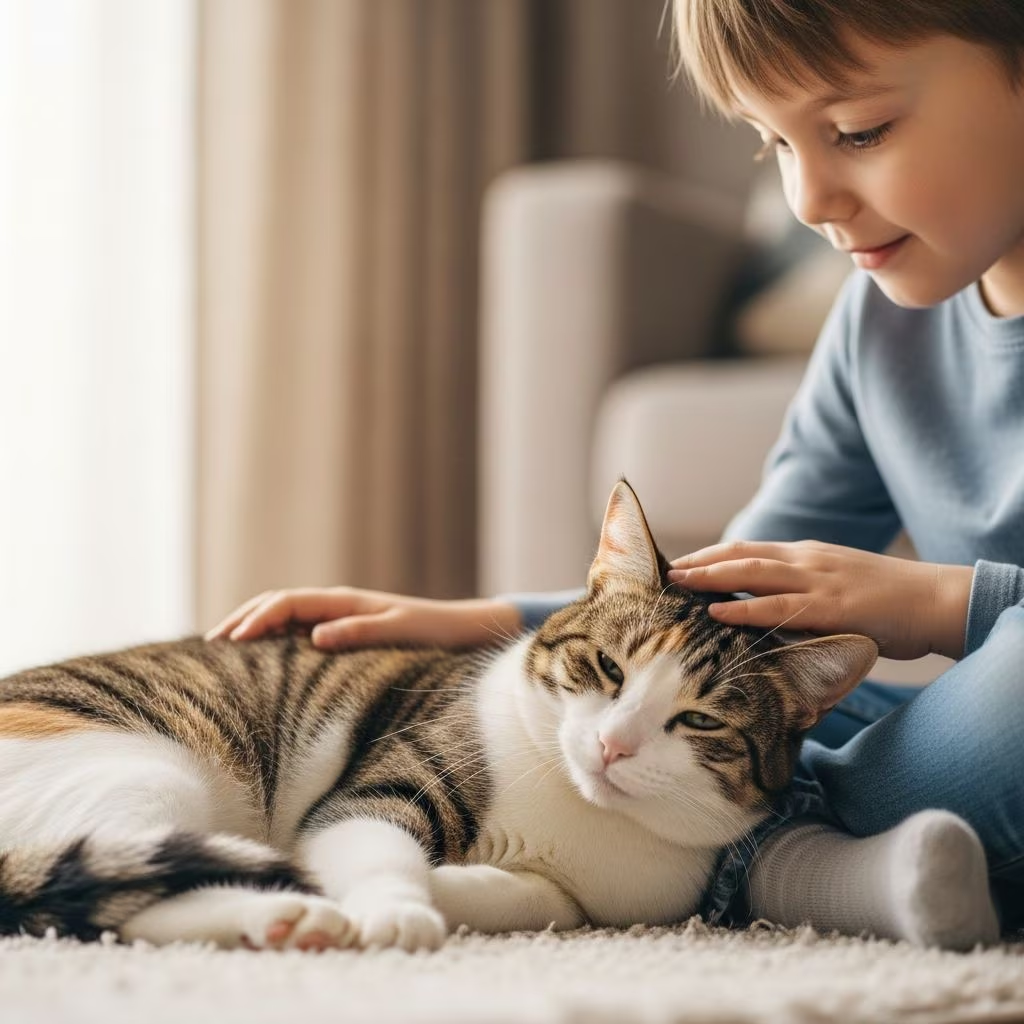
Bringing a cat into a home with children can create lasting memories and foster meaningful growth opportunities. Cats offer companionship that supports emotional development while teaching practical life skills, though success depends on proper guidance and supervision.
The Emotional Growth Cats Inspire in Children
Cats serve as gentle teachers for young hearts, helping children navigate feelings and build resilience. Through daily interactions, kids learn to recognize subtle emotional cues, such as a cat’s relaxed purr or tense tail flick, which mirrors human non-verbal communication.
- Building Empathy: Observing a cat’s needs encourages kids to consider others’ perspectives, promoting kindness toward animals and people alike.
- Boosting Confidence: Successfully caring for a pet provides a sense of achievement, reinforcing self-worth through tangible accomplishments.
- Reducing Stress: The calming presence of a cat can lower anxiety levels, offering a non-judgmental source of comfort during tough times.
These interactions cultivate emotional intelligence, equipping children with tools for healthier relationships throughout life.
How Cats Shape Social Skills
Beyond emotions, cats help children hone interpersonal abilities in a low-pressure environment. Playing with a cat involves reading body language and responding appropriately, skills that transfer to peer interactions.
| Skill | How Cats Help | Real-World Benefit |
|---|---|---|
| Patience | Waiting for a cat to approach on its terms | Better frustration tolerance in group settings |
| Communication | Interpreting meows, purrs, and postures | Improved reading of human cues |
| Cooperation | Sharing pet care duties with family | Stronger teamwork at school or home |
Family-wide pet responsibilities also encourage collaboration, turning chores into bonding experiences that strengthen sibling and parent-child ties.
Physical Health Advantages of Cat Companionship
Early exposure to cats may fortify a child’s immune system. Studies indicate that living with cats from infancy can reduce allergy risks and common illnesses by introducing beneficial microbes.
- Lower allergy likelihood: Babies in cat households show decreased sensitivity to pet dander over time.
- Increased activity: Chasing toys or wrestling play sessions enhance coordination and fitness.
- Motor skill development: Manipulating toys and grooming tools refines fine and gross motor abilities.
These benefits highlight cats as active partners in a child’s physical wellness journey.
Instilling Responsibility and Life Lessons
Pet ownership introduces structure through routines like feeding and litter maintenance. Children gain accountability as they prioritize a living being’s needs over their own impulses.
Cats also provide a gentle introduction to life’s cycles, from playful kittens to serene seniors, teaching acceptance of change and the value of long-term commitment.
Potential Challenges and Research Insights
While benefits abound, research presents a nuanced picture. Some studies link cat ownership to slight increases in attention-related issues, possibly due to high-energy feline behaviors or selection bias in pet-owning families. However, cumulative exposure to attached pets correlates with reduced mental health risks in adolescence.
- Positive mental health links: Cats offer companionship that boosts prosocial behaviors.
- Attention considerations: Higher reported symptoms in some cat-owning kids warrant monitoring.
- Overall prosocial gains: Children with cats often exhibit greater empathy than pet-free peers.
Parents should weigh these factors, consulting pediatricians for personalized advice.
Choosing the Right Cat for Your Family
Not all cats suit every household. Opt for breeds or individuals known for tolerance, such as Ragdolls or laid-back rescues. Age-appropriate matches matter: older, calmer cats pair well with toddlers, while energetic kittens suit school-aged kids.
- Assess lifestyle: Active families may prefer playful cats; quieter homes benefit from mellow ones.
- Visit shelters: Observe interactions to gauge compatibility.
- Consider health: Spayed/neutered, vaccinated cats minimize risks.
Safety Strategies for Harmonious Living
Prevention is key to avoiding mishaps. Supervise all interactions to model gentle handling and intervene at early signs of overstimulation, like ear flattening or swatting.
- Teach boundaries: No tail-pulling or face-leaning; respect the cat’s space.
- Maintain hygiene: Regular litter changes and handwashing curb infections.
- Provide escapes: Cat trees and safe rooms allow retreat from rambunctious play.
These habits ensure scratches or bites—more infection-prone from cats—remain rare.
Practical Daily Routines for Success
Integrate cat care into family life seamlessly. Assign age-suited tasks: toddlers can scatter kibble under watch, while older kids handle grooming.
| Child Age | Suitable Tasks | Supervision Level |
|---|---|---|
| 2-4 years | Adding food/water with help | Full |
| 5-8 years | Litter scooping, brushing | Partial |
| 9+ years | Full feeding, vet visits | Minimal |
Consistent routines build habits without overwhelming anyone.
Addressing Common Health Concerns
Cat scratches demand prompt cleaning due to bacteria like Pasteurella. Keep tetanus shots current and monitor for fever post-incident.
Toxoplasmosis risks are low with basic hygiene, especially for pregnant households. Covered litter boxes and gloves during cleaning suffice.
Long-Term Bonds and Memories
The cat-child connection often endures, creating nostalgia-filled stories. Many adults credit childhood pets for shaping compassionate traits, proving the investment yields lifelong rewards.
Frequently Asked Questions
Are cats safe around babies?
With supervision and safe sleep practices (no shared beds), yes. Early exposure may even bolster immunity.
Can cats help kids with autism?
Some evidence suggests improved social skills through non-verbal pet interactions.
What if my cat hisses at kids?
Provide separate spaces initially; gradual, positive introductions with treats can rebuild trust.
Do cats make kids more allergic?
Often the reverse: infancy exposure cuts allergy risks by up to 48% for cats.
How to pick a kid-friendly cat?
Seek sociable, patient individuals via temperament testing at shelters.
References
- Cats | Healthy Pets, Healthy People — Centers for Disease Control and Prevention (CDC). 2023. https://www.cdc.gov/healthy-pets/about/cats.html
- Household Cats and Children’s Mental Health — CABI Digital Library. 2018-10-01. https://www.cabidigitallibrary.org/doi/full/10.1079/hai.2018.0010
- Impact of pet dog or cat exposure during childhood on mental illness — PubMed Central (PMC). 2022. https://pmc.ncbi.nlm.nih.gov/articles/PMC9532803/
- How to Raise a Child with a Cat Safely — The Animal Medical Center. 2021-11-24. https://www.amcny.org/blog/2021/11/24/how-to-raise-a-child-with-a-cat-safely/
- Top 5 Health Benefits of Cat Ownership – Infographic — Human-Animal Bond Research Institute (HABRI). Undated. https://habri.org/assets/uploads/Top-5-Health-Benefits-of-Cat-Ownership-Infographic.pdf



