

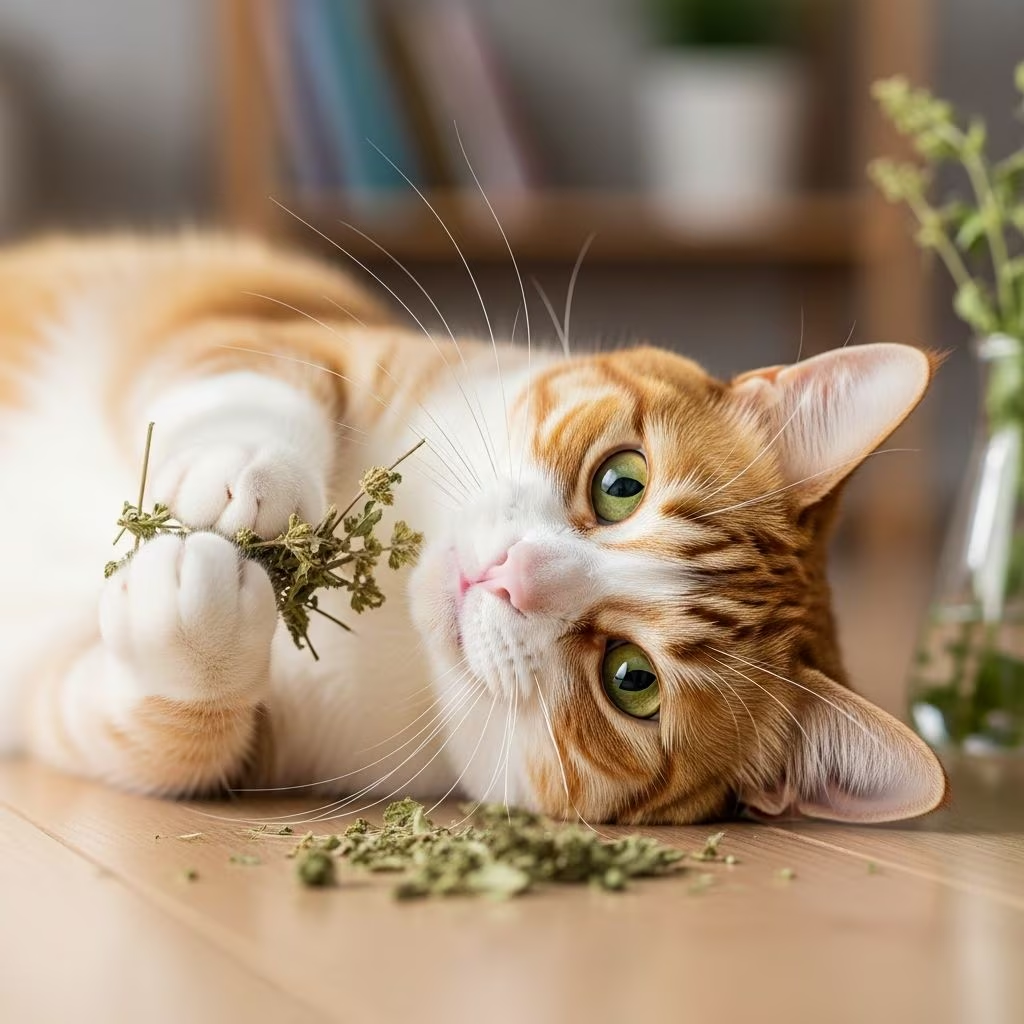
Catnip has fascinated cat owners for generations, triggering seemingly unpredictable and entertaining responses in their feline companions. However, what appears to be simple amusement is actually a complex neurological interaction involving specialized compounds and brain chemistry. Understanding how catnip works can help pet owners use it responsibly while maximizing its benefits for feline enrichment and well-being.
What Is Catnip and Where Does Its Power Come From?
Catnip, scientifically known as Nepeta cataria, is an herbaceous plant that contains a potent oil compound called nepetalactone. This aromatic substance is the primary active ingredient responsible for the characteristic reactions observed in cats when they encounter the plant or products containing it. The nepetalactone compound exists naturally within the plant’s leaves and stems, serving as a defense mechanism in nature.
When cats come into contact with catnip, they interact with it through their highly developed olfactory system. Cats possess a specialized sensory organ called the vomeronasal gland, located in the roof of their mouth, which works in conjunction with their nose to process scents. This dual-pathway system allows cats to detect and respond to compounds like nepetalactone with remarkable sensitivity, triggering a cascade of behavioral and neurological responses that vary significantly from one individual cat to another.
The Neurological Pathway: How Catnip Reaches the Brain
The journey of catnip’s effects begins at the moment a cat detects the herb’s scent. The nepetalactone molecules bind to specific receptors located in a cat’s nasal tissue. Once activated, these receptors send neural signals to various regions of the brain, particularly those associated with emotion, memory, and behavioral regulation. The aromatic oil travels through the nasal passages and reaches the limbic system, the brain region that controls emotional responses and instinctive behaviors.
This neurological pathway explains why catnip produces such diverse responses across different cats. The limbic system governs everything from fear and aggression to contentment and playfulness. When nepetalactone activates this region, it essentially unlocks various behavioral possibilities, which manifest differently depending on each cat’s individual temperament, age, and neurochemistry.
Behavioral Responses: Understanding Your Cat’s Reactions
Catnip exposure triggers a wide spectrum of behavioral changes in responsive cats. These reactions typically fall into several distinct categories:
- Increased Playfulness and Hyperactivity: Many cats become significantly more active and energetic when exposed to catnip. They may run at high speeds, perform exaggerated jumping movements, and engage in vigorous play sessions with toys or other objects.
- Physical Manipulation: Rolling, rubbing, and ground-based behaviors are among the most commonly observed responses. Cats often roll repeatedly on the catnip source or nearby surfaces, seemingly attempting to coat themselves thoroughly.
- Vocalization Changes: Affected cats frequently increase their meowing, purring, and yowling. Some cats become noticeably more vocal during their catnip experience, producing sounds they don’t typically make.
- Relaxation and Calm States: Interestingly, some cats respond to catnip with the opposite effect of hyperactivity, instead becoming noticeably calm, content, and drowsy. These cats may sit quietly, purr softly, or settle into comfortable resting positions.
- Enhanced Affection: Certain cats display increased attachment-seeking behavior, approaching their owners more frequently and seeking additional petting and attention.
- Grooming Behavior: Some cats intensify their self-grooming activities when under catnip’s influence, nibbling at their fur more frequently than normal.
- Salivation: Drooling occasionally accompanies catnip exposure in some felines.
The Difference Between Smelling and Eating Catnip
A crucial distinction exists in how catnip affects cats depending on the method of exposure. When cats smell or inhale catnip, they typically exhibit the excitatory behaviors described above—increased playfulness, rolling, and vocalization. However, when cats consume catnip by eating or ingesting it, the neurological response reverses dramatically. Cats that eat catnip generally become calm and relaxed rather than energized.
This dichotomy in response relates to different neural pathways and chemical processing within the digestive system versus the olfactory system. Owners who wish to encourage play and enrichment should present catnip in forms that encourage sniffing rather than eating, such as dried catnip in breathable pouches or catnip-infused toys. Conversely, owners seeking to help anxious or overstimulated cats might consider edible catnip products, though traditional inhalation remains the more common and predictable method of application.
Duration and Recovery: Timing Your Cat’s Catnip Experience
The effects of catnip exposure are temporary and follow a predictable pattern. Most catnip sessions last between 5 and 15 minutes, with typical reactions averaging around 10 minutes. During this window, cats experience the full intensity of the neurological response, displaying whatever behavioral manifestations their individual chemistry produces.
Following the cessation of active effects, cats enter a recovery phase that typically lasts 30 minutes to 2 hours. During this interval, cats become temporarily desensitized or immune to catnip’s effects, meaning that immediate re-exposure will produce little to no response. After this recovery period concludes, cats regain their sensitivity to the herb, and exposure will once again trigger behavioral changes.
| Response Timeline | Duration |
|---|---|
| Active catnip response | 5-15 minutes (typically ~10 min) |
| Temporary desensitization period | 30 minutes to 2 hours |
| Sensitivity recovery | After desensitization period |
Enrichment and Mental Stimulation Benefits
Beyond mere entertainment, catnip serves important psychological functions for domestic cats. Enrichment—defined as activities and stimuli that allow cats to engage their natural instincts and mental faculties—is essential for feline well-being, particularly for indoor cats who lack opportunities to hunt, explore, and interact with natural environments.
Catnip provides valuable enrichment by stimulating predatory behaviors, encouraging physical activity, and creating novel sensory experiences. Indoor cats that lack adequate enrichment are prone to boredom-related behavioral problems including destructive scratching, inappropriate elimination, and aggression. Strategically incorporating catnip into a cat’s environment can address these issues by providing appropriate outlets for natural instincts.
The behavioral expressions cats display during catnip exposure—pouncing, rolling, chasing, and vocalization—mirror behaviors observed during hunting and territorial interactions. By facilitating these natural behaviors in a safe, controlled environment, catnip contributes to psychological satisfaction and overall contentment.
Stress Reduction and Calming Properties
Research suggests that catnip may reduce stress and anxiety in cats through its effects on the limbic system, the brain region governing emotional regulation. In one study examining shelter cats, catnip exposure prompted increased sleeping behavior and reduced time spent standing and exploring—behaviors consistent with a relaxation response. While researchers did not directly attribute these changes to stress reduction, the evidence suggests a physiological calming mechanism.
Furthermore, catnip’s chemical composition appears to interact with neurological systems in ways similar to serotonin, a neurotransmitter associated with mood improvement and emotional well-being in cats. This connection, though not yet fully understood through rigorous scientific investigation, provides theoretical support for catnip’s use as a natural anxiety management tool.
Some cat owners utilize catnip to help anxious cats navigate stressful situations such as veterinary visits or car travel. The herb’s potential to promote relaxation may help cats approach these challenging experiences with reduced anxiety and tension.
Pest Deterrent and Natural Insect Repellent
The same nepetalactone compound that triggers behavioral responses in cats also provides practical benefits beyond entertainment. Research indicates that nepetalactone effectively repels mosquitoes and other pests. This natural insect-repelling property may explain, from an evolutionary perspective, why cats developed sensitivity to catnip in the first place.
When cats roll and rub against catnip, they coat their fur with the potent oil, effectively covering themselves with a natural insect repellent. This behavior, while appearing playful or frivolous, may have served ancestral cats by reducing their exposure to disease-carrying insects. Modern domestic cats, though removed from the selective pressures that shaped their wild ancestors, retain this instinctive response to the plant.
Recommended Usage Frequency and Moderation
While catnip is non-toxic and safe for cats, responsible use requires moderation to prevent diminishing returns and potential overstimulation. Veterinarians recommend limiting catnip exposure to only a couple of times per week. This frequency allows cats to maintain their neurological sensitivity to the herb while preventing the buildup of tolerance that occurs with excessive use.
Cats exposed to catnip too frequently develop desensitization not only in the immediate recovery period but also over longer timeframes. Regular overuse gradually reduces the intensity and duration of catnip-induced responses, diminishing the enrichment value the herb provides. By spacing out catnip sessions, owners maintain their cats’ robust reactions to the plant and maximize the behavioral and enrichment benefits each exposure provides.
Monitoring individual cats during catnip use is important. Some cats may become overstimulated or display aggressive behavior toward other pets during particularly intense responses. In such cases, separating the stimulated cat from other animals until the effects wear off prevents conflict and injury.
Safety Considerations and Potential Adverse Effects
Catnip is generally considered safe and non-addictive for cats. Most cats naturally self-regulate their catnip consumption and will move away when they have experienced enough stimulation. However, extreme overconsumption can produce mild adverse effects.
Excessive catnip ingestion may cause gastrointestinal upset, including diarrhea and vomiting. In rare instances, very large quantities have been associated with more severe symptoms such as loss of coordination, lethargy, and in exceptionally rare cases, seizures. Cats with a history of seizure disorders should avoid catnip exposure, particularly in large quantities.
It is important to distinguish between catnip’s effects and true substance intoxication. While catnip can produce euphoria and behavioral changes resembling intoxication, cats under catnip’s influence typically do not exhibit the severe neurological signs associated with actual drug intoxication, such as significant disorientation, dilated pupils, vomiting, or wobbly walking. Catnip’s effects remain relatively mild and temporary compared to genuinely dangerous substances.
Variability in Feline Response and Genetic Factors
Not all cats respond to catnip, and responses vary dramatically among those who do. Approximately 30-50% of cats display little to no sensitivity to catnip, a trait determined by genetic factors. Additionally, young kittens under approximately six months of age often do not respond to catnip, regardless of their genetic predisposition.
Among responsive cats, the manifestation of catnip effects ranges from mild to intense. Some cats become gently playful and affectionate, while others display dramatic hyperactivity or appear to enter dream-like states of relaxation. This variability reflects individual differences in neurochemistry, temperament, and genetic sensitivity thresholds.
Owners of non-responsive cats need not feel concerned about their pets missing out on enrichment. Alternative enrichment sources, including interactive toys, climbing structures, puzzle feeders, and play sessions with owners, provide comparable mental and physical stimulation.
Forms and Delivery Methods
Catnip is available in numerous commercial forms designed to suit different preferences and situations:
- Dried catnip in breathable pouches
- Catnip-infused toys and plush animals
- Catnip sprays and essential oils
- Fresh catnip plants
- Edible catnip treats and supplements
Dried catnip typically offers the most potent and consistent effects, as the drying process concentrates nepetalactone. Fresh catnip plants, while appealing, may be less intensely aromatic than dried preparations. Catnip-infused toys provide convenient enrichment options that can be incorporated into regular play sessions.
Frequently Asked Questions
Does catnip make cats high?
Catnip produces euphoria and intense behavioral changes that may superficially resemble intoxication, but cats under catnip’s influence do not experience the severe neurological effects associated with substances that truly make animals “high”. Catnip exposure does not typically cause disorientation, dilated pupils, vomiting, or impaired coordination—signs that would accompany genuine intoxication.
Can cats become addicted to catnip?
Catnip is not addictive, though some cats may seek it out compulsively if given unlimited access. The herb’s non-addictive nature is confirmed by cats’ natural tendency to self-regulate consumption. Responsible owners prevent compulsive-seeking behavior by controlling the frequency and amount of catnip exposure.
At what age can kittens enjoy catnip?
Kittens typically do not respond to catnip until they reach approximately six months of age. Young kittens lack the neurological maturity and development to process catnip’s effects, even if they possess the genetic predisposition for sensitivity.
Is there a safe dose of catnip?
No specific safe dosage recommendation exists for catnip, as the herb is generally non-toxic even in substantial quantities. However, moderation remains advisable to prevent overstimulation, tolerance buildup, and the rare gastrointestinal upset associated with excessive consumption.
What should I do if my cat doesn’t respond to catnip?
Approximately 30-50% of cats do not respond to catnip due to genetic factors. If your cat shows no catnip response, explore alternative enrichment methods such as interactive toys, climbing structures, puzzle feeders, and dedicated play sessions to maintain mental and physical stimulation.
References
- How Does Catnip Affect Cats? — Humane World for Animals. 2024. https://www.humaneworld.org/en/resources/catnip-benefits-uses-for-cats
- What is Catnip? The Effects Catnip Has on Cats — Boulder Veterinary Clinic. 2024. https://bouldervet.com/blog/the-effects-catnip-has-on-cats/
- What Does Catnip Do to Cats? It’s More Than Just Entertainment — GoodRx Pet Health. 2024. https://www.goodrx.com/pet-health/cat/what-does-catnip-do-to-cats
- What Is Catnip and What Does It Do to Cats? — PetMD. 2024. https://www.petmd.com/cat/general-health/what-is-catnip
- The Effects of Catnip on Cats — Animal Care Center of Castle Pines. 2024. https://www.animalcarectr.com/blog/the-effects-of-catnip-on-cats
- What does catnip do to cats? — Rivergate Veterinary Clinic. 2024-01-15. https://www.rivergateveterinaryclinic.com/site/blog/2024/01/15/catnip-cats
- Everything You Need to Know About Catnip — Small Door Veterinary. 2024. https://www.smalldoorvet.com/learning-center/medical/catnip



