

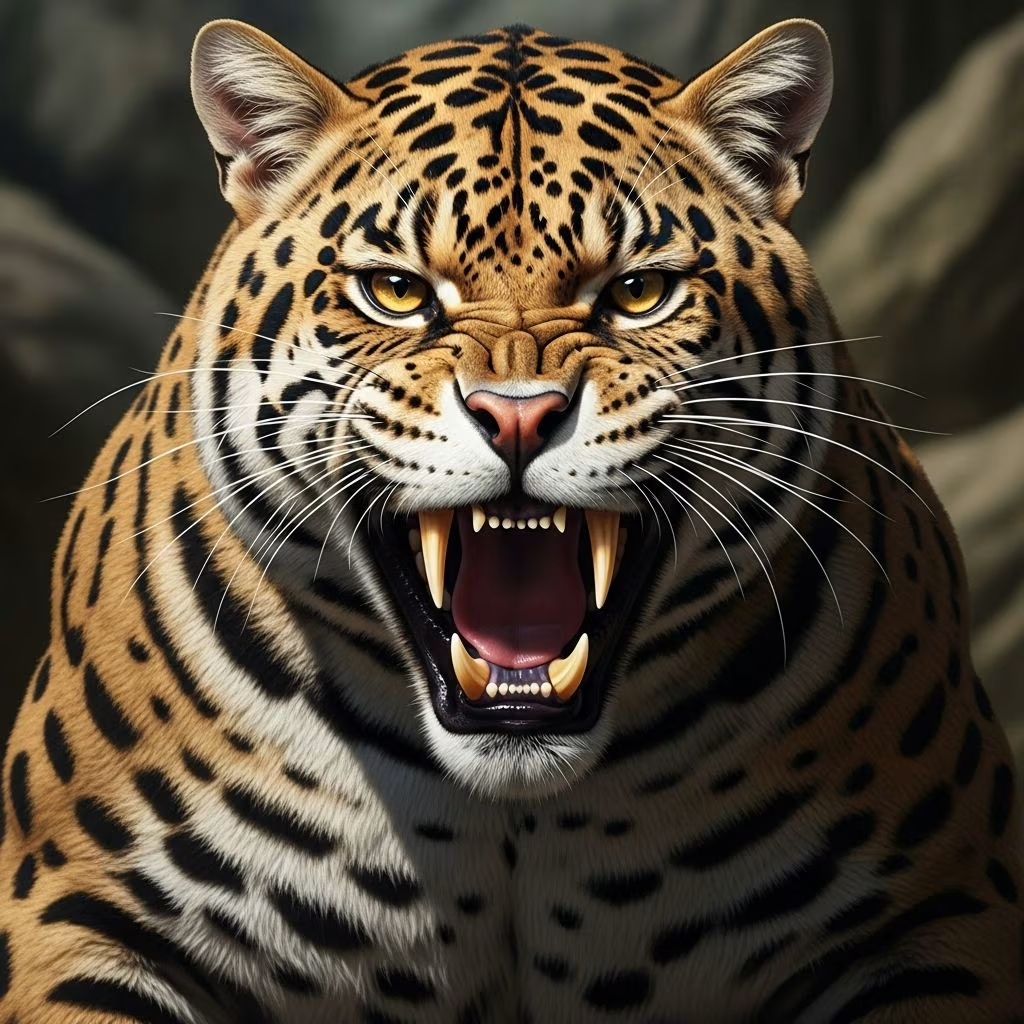
The world of felines encompasses a stunning variety of species, each adapted with unique physical traits for survival. Among these, bite force stands out as a critical measure of predatory prowess, determining how effectively a cat can subdue prey, defend territory, or assert dominance. While absolute bite strength often correlates with body size, relative bite force—power adjusted for mass—reveals surprising champions. Jaguars emerge as the standout in this arena, delivering unparalleled jaw power pound-for-pound compared to their larger relatives like tigers and lions.
Understanding Bite Force in Felines
Bite force, quantified in pounds per square inch (PSI) or Newtons (N), gauges the pressure exerted by a cat’s jaws. This metric hinges on jaw muscle arrangement, skull morphology, and tooth structure. Shorter, robust jaws amplify leverage, enabling deeper penetration, while powerful temporalis and masseter muscles provide the raw clamping strength. In wild cats, this capability evolved for cracking bones, piercing thick hides, and dispatching formidable prey like caimans or turtles.
Domestic cats, though diminutive, retain ancestral jaw mechanics scaled down proportionally. Their bites, around 70 PSI, suffice for small game but pale against wild counterparts. Measuring bite force involves advanced techniques like strain gauges on anesthetized animals or biomechanical modeling from skull scans, ensuring ethical and precise data.
Big Cats: Absolute Powerhouses of the Jaw
Big cats of the genus Panthera dominate discussions of raw bite strength due to their size and predatory lifestyles. Tigers hold the crown for absolute force, leveraging massive bodies up to 600 pounds to generate over 1,050 PSI. Siberian tigers, the largest subspecies, exemplify this with muscular builds, sharp canines, and camouflage stripes aiding ambush hunts. They overpower large ungulates and even bears, their jaws crushing vertebrae with ease.
Lions follow closely at 650 PSI, embodying pride-based cooperative hunting. Males, with prominent manes signaling vitality, deliver bites suited for wrestling down buffalo or zebras in savanna showdowns. Yet, their force yields to tigers in direct comparisons.
Jaguar’s Relative Supremacy
Despite smaller stature—averaging 120-200 pounds—jaguars unleash 1,500-2,000 PSI, the highest relative bite among big cats. Their compact skulls, shorter jaws, and hypertrophied jaw muscles create mechanical advantages, allowing skull-crushing bites that pierce caiman hides or turtle shells. Studies confirm this edge: a jaguar’s force rivals three-quarters of a tiger’s absolute power at half the mass. Researchers note, “pound for pound, jaguars pack a stronger punch,” ideal for aquatic ambushes in Amazonian habitats.
Leopards and Other Wild Contenders
Leopards, agile climbers with bites around 300-500 PSI, excel in versatility. Their strength facilitates hauling prey twice their weight into trees, evading scavengers. Snow leopards and clouded leopards add intrigue: the latter boasts the longest fangs relative to body size, opening jaws to 80 degrees for gape-limited kills, though absolute force lags.
Cougars (pumas) at 400 PSI and bobcats at 548 N (roughly 123 PSI) demonstrate mid-tier power suited to North American terrains. Bobcats rival coyotes in jaw strength despite smaller frames, ambushing rodents and rabbits effectively.
Domestic Cats: Surprisingly Sturdy Biters
House cats average 70 PSI, potent for their size with needle-like teeth causing deep punctures. Breeds amplify this heritage:
- Maine Coon: Largest domestic breed, muscular frames suggest enhanced bite via scale, adept at vermin control.
- Norwegian Forest Cat: Heavy-boned with powerful hindquarters, their jaws support tree-climbing prey hauls, mirroring wild ancestors.
- Bengal: Hybrid vigor from Asian leopard cat lineage yields stamina and strength, demanding intense play to channel energy.
- Chausie: Jungle cat infusion boosts athleticism and bite resilience for rugged pursuits.
These breeds highlight how selective breeding preserves wild potency in pets.
Bite Force Comparisons Across Cats
| Species | Bite Force (PSI) | Weight (lbs) | Notes |
|---|---|---|---|
| Tiger | 1,050 | 400-600 | Strongest absolute; bear-killers |
| Lion | 650 | 300-500 | Cooperative hunters |
| Jaguar | 1,500-2,000 | 120-250 | Top relative force; skull-crusher |
| Leopard | 300-500 | 60-200 | Tree-hauling agility |
| Domestic Cat | 70 | 8-20 | Sharp punctures |
This table underscores jaguars’ outlier status in efficiency.
Evolutionary Drivers of Feline Jaw Power
Feline bite evolution traces to Miocene epochs, when saber-toothed cats like Smilodon wielded elongated canines for throat stabs, though modern cats favor crushing force. Jaguars’ adaptations—robust zygomatic arches and sagittal crests—maximize muscle attachment, suiting solitary, opportunistic predation. Comparatively, lions’ social structure permits less specialized jaws.
Domestic breeds echo this: Norwegian Forest Cats’ rugged builds stem from Nordic survival needs, while Bengals retain wild hybrids’ intensity.
Implications for Ecology and Conservation
Powerful bites underpin ecosystems: jaguars regulate caiman populations, preventing overgrazing cascades. Tigers maintain forest balance by culling herbivores. Habitat loss threatens these apex roles, with jaguar ranges shrinking 50% in decades. Conservation prioritizes corridors preserving genetic diversity for sustained predatory efficacy.
Human Interactions and Safety
While domestic bites risk infection from bacteria-laden saliva, wild encounters demand respect. Jaguar attacks, rare but lethal, leverage PSI advantages. Understanding these dynamics informs zoo protocols and ecotourism.
Frequently Asked Questions
Which cat has the absolute strongest bite?
Tigers top absolute charts at 1,050 PSI, driven by sheer mass.
Why do jaguars bite harder relative to size?
Shorter jaws and stronger muscles per weight boost leverage.
Can domestic cats match wild bite forces?
No, but breeds like Maine Coons scale up effectively for their class.
How is bite force measured?
Via transducers or skull-based models on live or fossil specimens.
Are clouded leopards strong biters?
They have impressive fangs but lag in PSI to jaguars.
References
- Which big cat has the strongest bite? And just how deadly is that bite? — Discover Wildlife. 2023-05-15. https://www.discoverwildlife.com/animal-facts/mammals/which-big-cat-has-the-strongest-bite
- The 10 Strongest Cats (From Wild to Domestic!) — A-Z Animals. 2024-08-20. https://a-z-animals.com/animals/lists/strongest-cats/
- Revealing The Cat with the BIGGEST Bite | BBC Earth Kids — BBC Earth/YouTube. 2022-11-10. https://www.youtube.com/watch?v=hvgLsooXSmY
- Who Has the Strongest Jaws in the Animal Kingdom? — Castle Lake Dental. 2023-02-28. https://www.castlelakedental.com/post/who-has-the-strongest-jaws-in-the-animal-kingdom-with-your-lewisville-tx-family-general-dentist



